Indoor cat or outdoor cat? Pros and cons
 AI
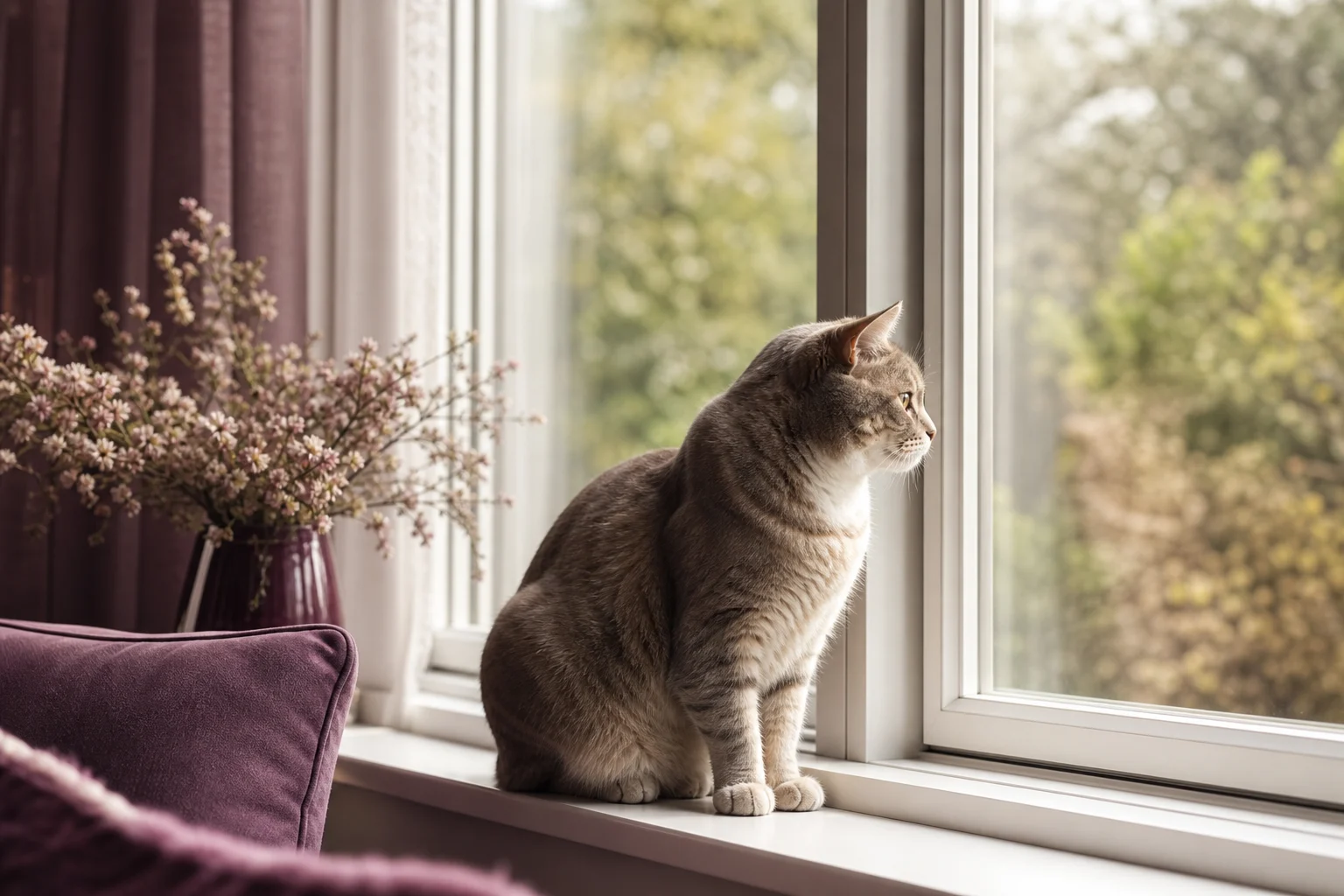
AINo question in cat keeping is as fundamental as this one: should your cat go outside or live indoors only? Both paths can lead to a happy cat life — but they differ sharply in safety, life expectancy and the effort you need to put into enrichment. An honest look at the trade-offs.
The numbers first: life expectancy
The clearest argument comes from statistics. Indoor-only cats commonly reach 12 to 18 years, many considerably more. Cats with unsupervised outdoor access average more like 7 to 12 years. The difference has concrete causes: road traffic, infectious diseases such as FIV and FeLV, poison baits, dog attacks and territorial fights. None of this means an outdoor cat cannot grow old — but the risk profile is fundamentally different.
What outdoor access offers
Free roaming delivers what no living room can fully replace: hunting, climbing, sun, weather, territory patrols and a wealth of stimuli that keep body and mind busy. Outdoor cats are rarely bored, rarely overweight and live out their natural behaviour to the fullest. The price is the risk — and a few duties for you: complete vaccination cover, neutering, microchip and registration are non-negotiable for any cat that goes outside.
What speaks for indoor living
Safety, above all — plus protection for the local wildlife that domestic cats otherwise hunt. Indoor cats are shielded from traffic, disease and conflict, and you always know where they are. The catch: an under-stimulated indoor cat is genuinely worse off than an outdoor one. Indoor living is only species-appropriate when you actively provide what the territory would otherwise offer:
- Vertical space: stable climbing furniture, catwalks, elevated lookouts and window seats.
- Daily play: hunting-style sessions with wand toys, puzzle feeders and food hunts.
- Company: ideally a second, compatible cat — especially when nobody is home during the day.
- Scratching and retreat options in every part of the home.
The best of both: secured outdoor space
A cat-proof netted balcony or a catio — a fully enclosed outdoor run attached to a window, terrace or garden — combines fresh air, sun and stimuli with the safety of indoor living. For most cats in cities, this is the ideal compromise, and even very active breeds benefit noticeably.
Make sure the net is tear-proof, fine-meshed and tensioned without gaps, that no furniture serves as a springboard over it, and that only non-toxic plants stand within reach — our guide on plants toxic to cats lists the critical ones.
Which cats suit which lifestyle
Temperament matters. Calm, people-oriented breeds such as the British Shorthair, Ragdoll, Persian or Birman thrive indoors. Very active, hunting-driven breeds such as the Bengal or Savannah need either secured outdoor space or an unusually rich indoor programme. Pedigree cats in general should not roam freely — theft and their often lower street-smartness argue against it. Our "Which cat fits me?" test factors your living situation in.
If you choose outdoor access
Wait until the cat is fully vaccinated, neutered, chipped and thoroughly settled — usually around five to six months and at least four weeks after moving in. Start with supervised outings before meals (hunger brings them back), establish a recall signal, and let the cat in at dusk: night is when most accidents and fights happen. A cat flap with chip recognition keeps strange cats out of your home.
Switching later is hard — decide early
A cat that has known free roaming rarely accepts a window-only life without protest; the reverse move is easier but still needs patience. Decide the lifestyle before the cat moves in, ideally matching how the animal grew up — a rescue that has always lived indoors will not miss the outdoors, while a former farm cat will. If a move forces the change, compensate with a catio, more play and a lot of patience.
How to keep an indoor home genuinely engaging is covered in the breed lists for indoor cats; what a cat costs in either lifestyle, the cat cost calculator shows.
Frequently asked questions
Do indoor cats live longer than outdoor cats?
On average yes, considerably: indoor-only cats often reach 12–18 years, while outdoor cats statistically live more like 7–12 years due to traffic, disease and territorial fights. Safety is the strongest argument for indoor living.
Is indoor-only keeping cruel?
No — as long as the home is cat-friendly: enough space, climbing opportunities, scratching posts, daily play and ideally a second cat. Understimulation and loneliness are the real danger, not the lack of outdoor access.
Which cats suit indoor living?
Calm, people-oriented breeds such as the British Shorthair, Ragdoll, Persian or Birman. Very active or hunting-driven breeds need more enrichment or secured outdoor time.
What is a good compromise?
A cat-proof netted balcony or a "catio" (secured outdoor enclosure) combines fresh air, sun and stimuli with the safety of indoor living — ideal for most cats.
Can an outdoor cat become an indoor cat?
A move to indoor-only living is possible but delicate: it takes a lot of patience, extra enrichment and often a transition period. It is easier to choose the right lifestyle from the start.
From what age may a cat go outside?
At the earliest after the basic vaccinations and neutering, usually at five to six months — and only once the cat has settled in and reliably responds to a recall signal.
How do I make a balcony cat-proof?
With a tear-proof, fine-meshed cat net that covers the entire open area including gaps at the top and sides, firmly tensioned. Make sure no furniture serves as a springboard, and keep only non-toxic plants.
What is a catio?
A catio (from cat + patio) is a fully enclosed outdoor run attached to a window, terrace or garden. It offers sun, fresh air and stimuli without any of the risks of free roaming and is ideal even for very active breeds.