Plants toxic to cats: the essential list
 AI
AIMany of the most popular house and garden plants are toxic to cats — some mildly irritating, a few outright deadly. Since cats nibble on greenery out of boredom or instinct, every cat household should know the critical species. The most important list, the symptoms and what to do in an emergency.
The most dangerous plants at a glance
- Lilies (Lilium, Hemerocallis) — the number one danger. Leaves, flowers, pollen and even the vase water can trigger acute kidney failure. A cat that brushes past and licks pollen off its coat is already at risk. Lilies do not belong in any household with a cat.
- Dieffenbachia — its sap irritates and burns the mouth and throat massively; swelling can obstruct breathing.
- Poinsettia, oleander, ivy, philodendron and monstera — classic decorative plants whose sap or leaves cause vomiting, diarrhoea and drooling, oleander additionally heart problems.
- Tulips, daffodils, hyacinths and amaryllis — spring bulbs; the bulbs are the most toxic part, but cut flowers are a risk too.
- Sago palm (Cycas) — severely liver-toxic; even small amounts are life-threatening.
- Yew, laburnum, autumn crocus and angel's trumpet — garden classics with potent toxins.
Rule of thumb: before any new plant enters a cat household, check the specific species. "Pet-friendly" labels in shops are not reliable — a minute of research protects your cat.
Why cats nibble on plants at all
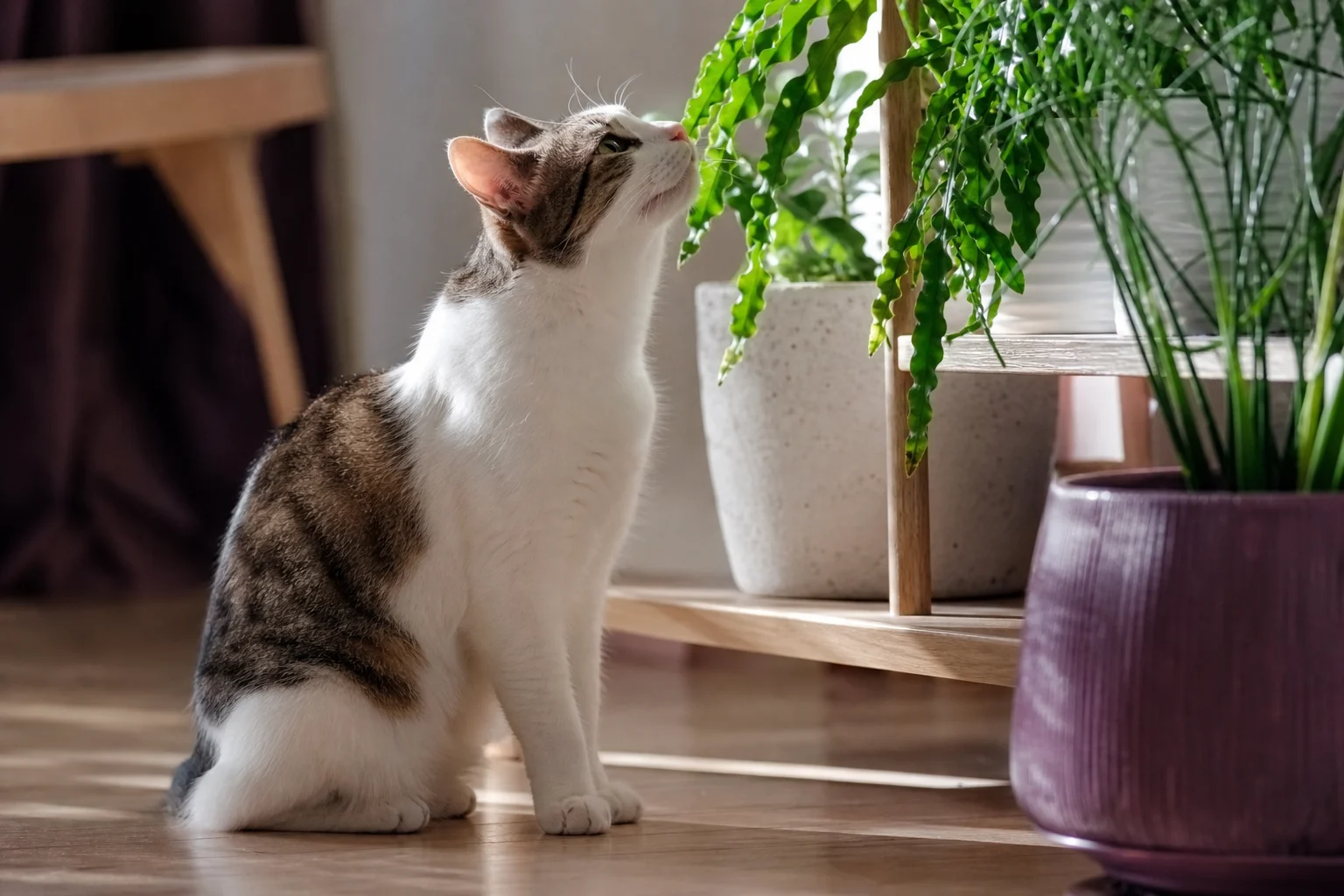
Cats nibble greenery to aid digestion — plant fibre helps bring up swallowed hair — and out of curiosity or boredom. Dangling leaves and moving stems trigger play instinct. That is why the solution is never just removal, but replacement: offer cat grass as a safe alternative, and give bored indoor cats more play. Our lists of indoor cats explain what keeps them busy.
Symptoms of plant poisoning
The signs depend on plant and amount. Typical are drooling, vomiting, diarrhoea, a sore mouth (pawing at the face), apathy, staggering, tremors and — with lilies — the delayed signs of kidney failure: reduced urine, loss of appetite, dullness one to three days later. Some poisonings show within minutes, others only after hours. Never wait for the full picture.
Emergency: what to do
- Identify the plant — take a photo or a piece of it with you.
- Contact the vet or the emergency veterinary service immediately, even if the cat still seems fine.
- Never induce vomiting on your own and give no home remedies.
- If the sap touched coat or paws, wipe it off with a damp cloth so the cat does not lick more of it.
Safe alternatives for a green home
You do not have to live without plants. Considered safe are cat grass, spider plant (Chlorophytum), areca and kentia palms, Calathea, maranta, peperomia and most true ferns — plus kitchen herbs such as basil and parsley in moderation. Two caveats: the spider plant is harmless but attracts nibbling, so it empties quickly; and even safe plants can carry pesticide residues — rinse new purchases and repot them into fresh soil.
Cut flowers: the underestimated risk
Bouquets are the most common way lilies enter cat households — often unnoticed as filler in mixed arrangements. Check every bouquet for lilies and tulips, place vases out of reach, and remember that the vase water collects toxins too. In households with young, curious cats, the safest line is to skip risky bouquets entirely.
What belongs on the food side of the danger list — from chocolate to onions — is covered in our food guide and the quick food checker.
Frequently asked questions
Which plant is most dangerous for cats?
Lilies (Lilium and Hemerocallis) are especially insidious: even the smallest amounts — leaves, flowers, pollen or the vase water — can trigger acute kidney failure in cats. Lilies do not belong in any household with a cat.
My cat nibbled on a toxic plant — what now?
Note the plant (ideally with a photo or a piece of it) and contact your vet or the emergency veterinary service immediately. Do not try to induce vomiting on your own.
Why do cats nibble on plants?
Often out of boredom, for digestion or because movement attracts them. Offer non-toxic cat grass as an alternative — it distracts from nibbling on house plants.
Are cut flowers a risk?
Yes, especially bouquets containing lilies. The vase water can also be toxic. Place bouquets out of reach or skip risky species entirely in cat households.
Which plants are safe for cats?
Cat grass, spider plant (Chlorophytum), lucky bamboo, Calathea and many herbs count as harmless. In case of doubt, check the specific species before buying.
How fast do symptoms of poisoning appear?
That depends on plant and amount — some symptoms appear within minutes, others such as kidney failure from lilies only after hours. If in doubt, never wait — contact the vet immediately.
Are cacti and succulents toxic to cats?
Most cacti are not toxic, but the spines can injure. Some succulents, such as certain aloe species, are toxic. Always check the specific species before bringing a plant into a cat household.
Does cat grass really help against nibbling?
Yes, cat grass is the most important measure: it offers a safe nibbling alternative, distracts from house plants and helps bring up swallowed hair. Combine it with enough play against boredom.