 AI
AIBengal
A mini leopard with an engine that never idles — brilliant, demanding, unforgettable.
| Size | Large |
|---|---|
| Weight | 4–7 kg |
| Life expectancy | 12–16 years |
| Origin | United States |
| Type | Hybrid breed (USA) |
| Grooming | low |
| Activity needs | very high |
| Beginner friendly | with some experience |
Temperament & suitability
Editorial assessment based on the FIFe breed standard and breed association data.
Guideline for movement & enrichment for this breed.
Traits
Origin & history
The Bengal began as a scientific cross: in the 1960s and 70s, American breeders — most prominently Jean Mill — paired the wild Asian leopard cat with domestic cats, initially in feline leukaemia research. From the fourth generation on, the hybrids count as domestic cats, and selective breeding turned the experiment into one of the most striking breeds in existence. The wild grandparent is generations away in today's lines, but its energy visibly is not.
Appearance & size
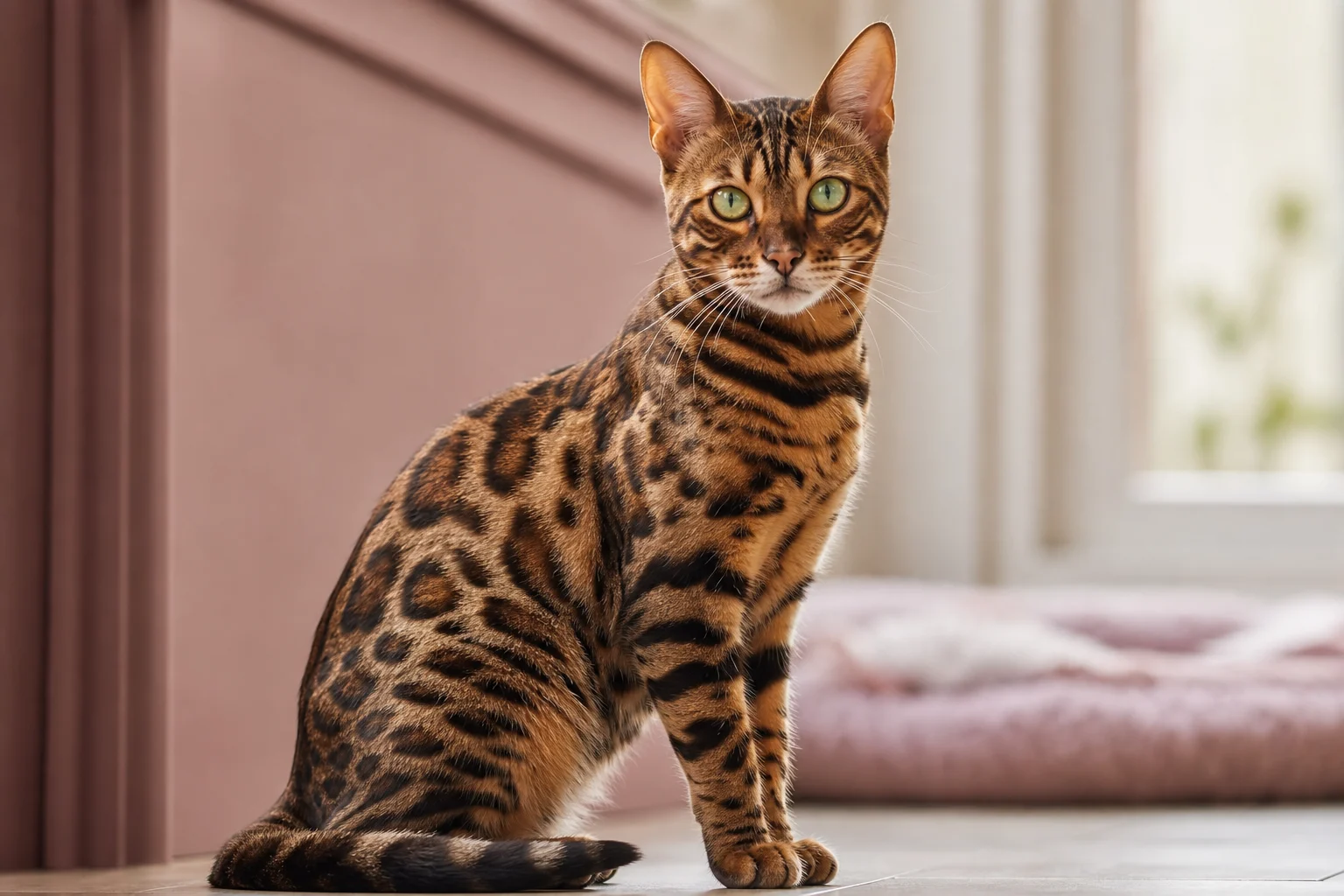
The Bengal looks like a jungle cat that wandered into the living room: a muscular, athletic body, a low-slung predator's gait and a short, glittering coat in rosetted or marbled brown, silver and charcoal tones. Males weigh five to seven kilograms; the whole cat is dense muscle. No other breed's coat shimmers quite like a well-bred Bengal's in sunlight.
Personality & temperament
Everything about the Bengal is intense. It is extremely intelligent, learns doors, drawers and taps in days, talks loudly and often, and possesses a play and hunting drive that never really switches off. It loves water genuinely — some Bengals join their owners in the shower. Affection is real but on Bengal terms: an under-employed Bengal turns its brilliance against the furniture, the wallpaper and your nerves. This breed does not have off-days.
Indoor or outdoor living
A flat alone is not enough. The Bengal needs either a secured outdoor run — a catio is ideal — or an indoor landscape that would make a zoo keeper proud: ceiling-high climbing walls, catwalks, running wheels. Unsecured free roaming is risky here too, not least because Bengals are theft targets. Realistic expectations are the difference between a dream cat and a rehomed one; the guide Indoor cat or outdoor cat? helps set them.
Enrichment & activity
Plan on serious daily engagement: multiple long play sessions, clicker training, fetch, puzzle feeders on rotation, water games. A compatible, similarly energetic second cat is near-essential to carry the hours you cannot. If your evenings are short, this is the wrong breed — no gadget replaces an involved human.
Grooming
The short pelt is the easiest thing about the Bengal: a weekly rubber-brush pass and shine control, little shedding, done. The grooming hours other breeds need go into playtime here.
Feeding & health
An athlete's metabolism wants high-protein, meat-first food — portion via the food amount calculator and expect the upper end of normal intake. Screening topics in the breed are PK deficiency, progressive retinal atrophy (PRA-b) and HCM; serious breeders test all three. Some lines are sensitive to stress-related bladder issues — another argument for enough enrichment.
Costs
Well-bred, tested Bengals cost €1,200–2,000, exceptional lines more. Add the infrastructure — climbing walls, wheel, catio — and above-average food bills; the cat cost calculator shows the honest total.
For beginners, children and other pets
Not a beginner cat. With cat-experienced, active families the Bengal thrives, and it usually respects dogs that play fair. Small children and a young Bengal can overwhelm each other. The non-negotiable is time: this breed punishes neglect faster and more creatively than any other on this site.
Similar breeds compared
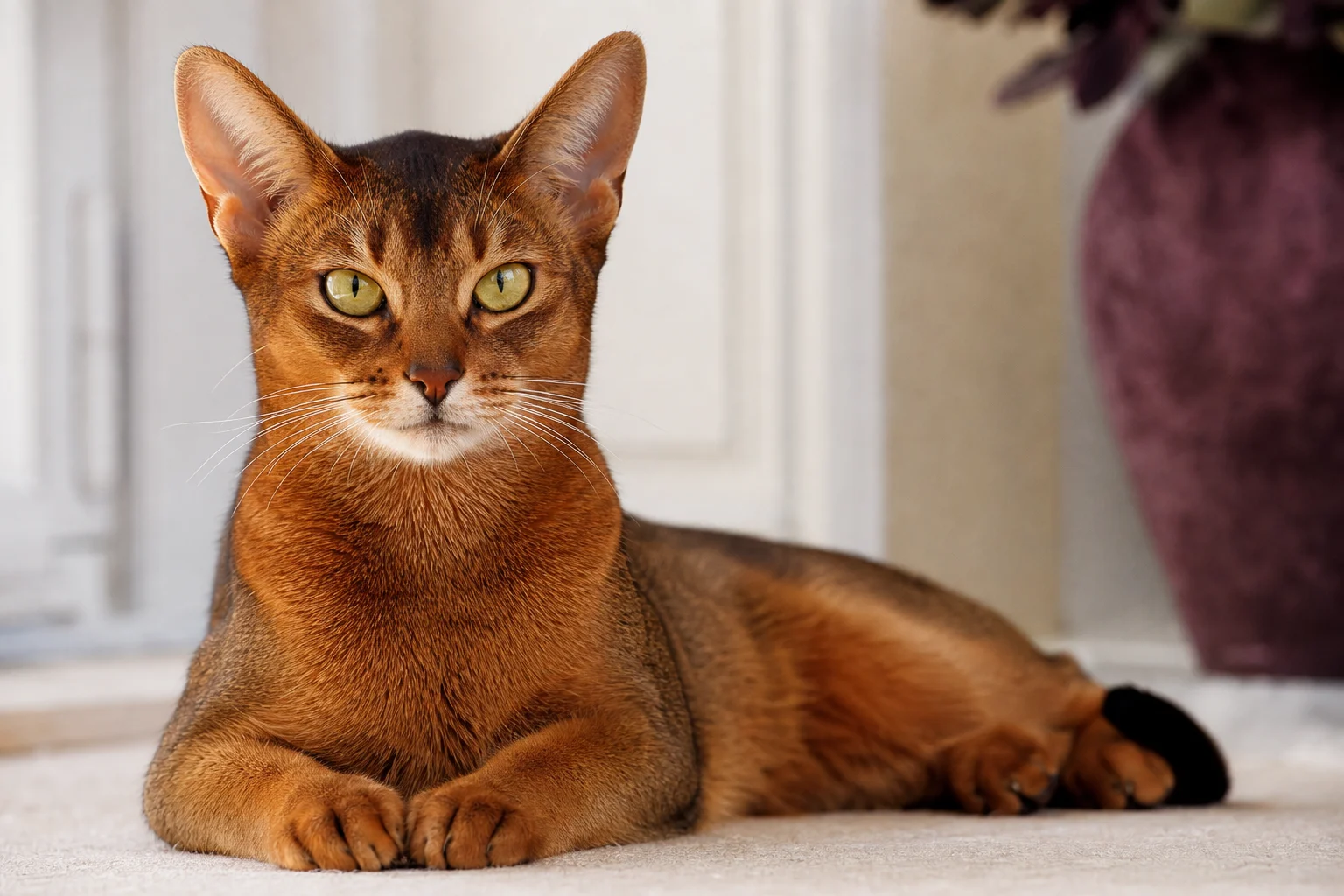
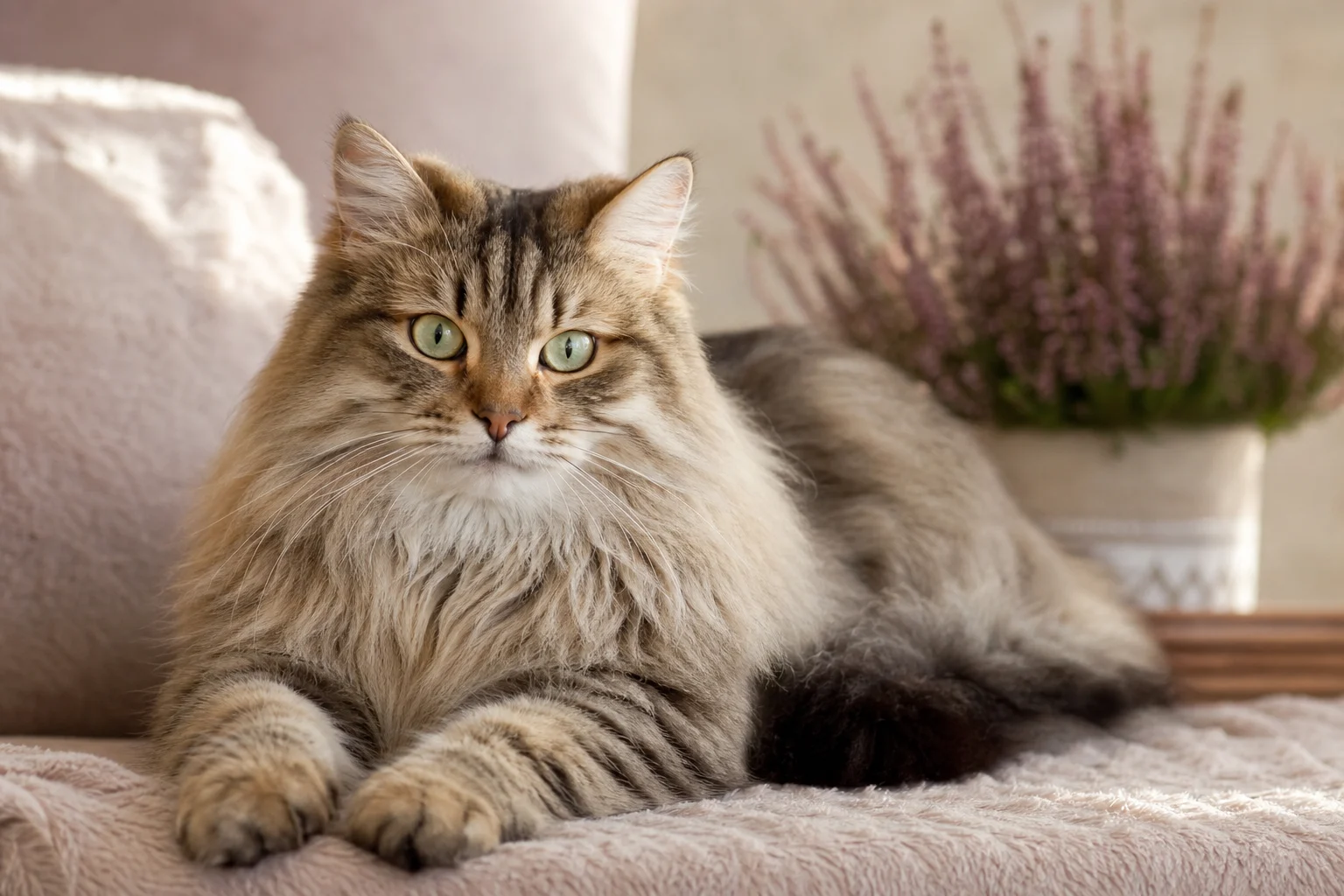
The Abyssinian delivers comparable energy in a smaller, less demanding format; the Savannah raises the wildness and the requirements further still; the Siberian offers robust playfulness with far more domestic calm.
Who this breed suits
Experienced, active households that want a spectacular, brilliant companion and can genuinely invest hours daily — ideally with a catio and a second cat. Honest self-assessment first: the "Which cat fits me?" test weighs your time budget against what the Bengal demands.
Not sure what a Bengal may eat? The food checker rates individual foods on a traffic-light scale, and the food guide explains what cats can eat and what is toxic.
A good fit for you if …
Frequently asked questions
Are Bengals still wild animals?
No. From the fourth generation after the leopard-cat cross they are domestic cats, and today's pet lines are many generations removed. The energy level, however, remains distinctly above average.
Are Bengals suitable for beginners?
Honestly: no. The combination of intelligence, energy and demand for engagement overwhelms most first-time owners. Experience with active cats helps enormously.
Do Bengals really like water?
Most do — playing with taps, dipping toys in bowls, joining showers. It is one of the breed's signature quirks.
Can a Bengal live in a flat?
Only with serious infrastructure: ceiling-high climbing, catwalks, a running wheel, daily long play sessions and ideally a catio. A normal flat setup under-employs this breed.
Which health tests matter?
PK deficiency, PRA-b (eyes) and HCM (heart). Reputable breeders present all three results unprompted.
How loud are Bengals?
Loud and talkative — they comment, demand and negotiate vocally. In a small building with thin walls, worth knowing beforehand.
Similar breeds
Sources: FIFe/TICA breed standard · breed association data · editorial assessment · Last updated 08/2026. On health questions this article never replaces a visit to the vet.