 AI
AIAbyssinian
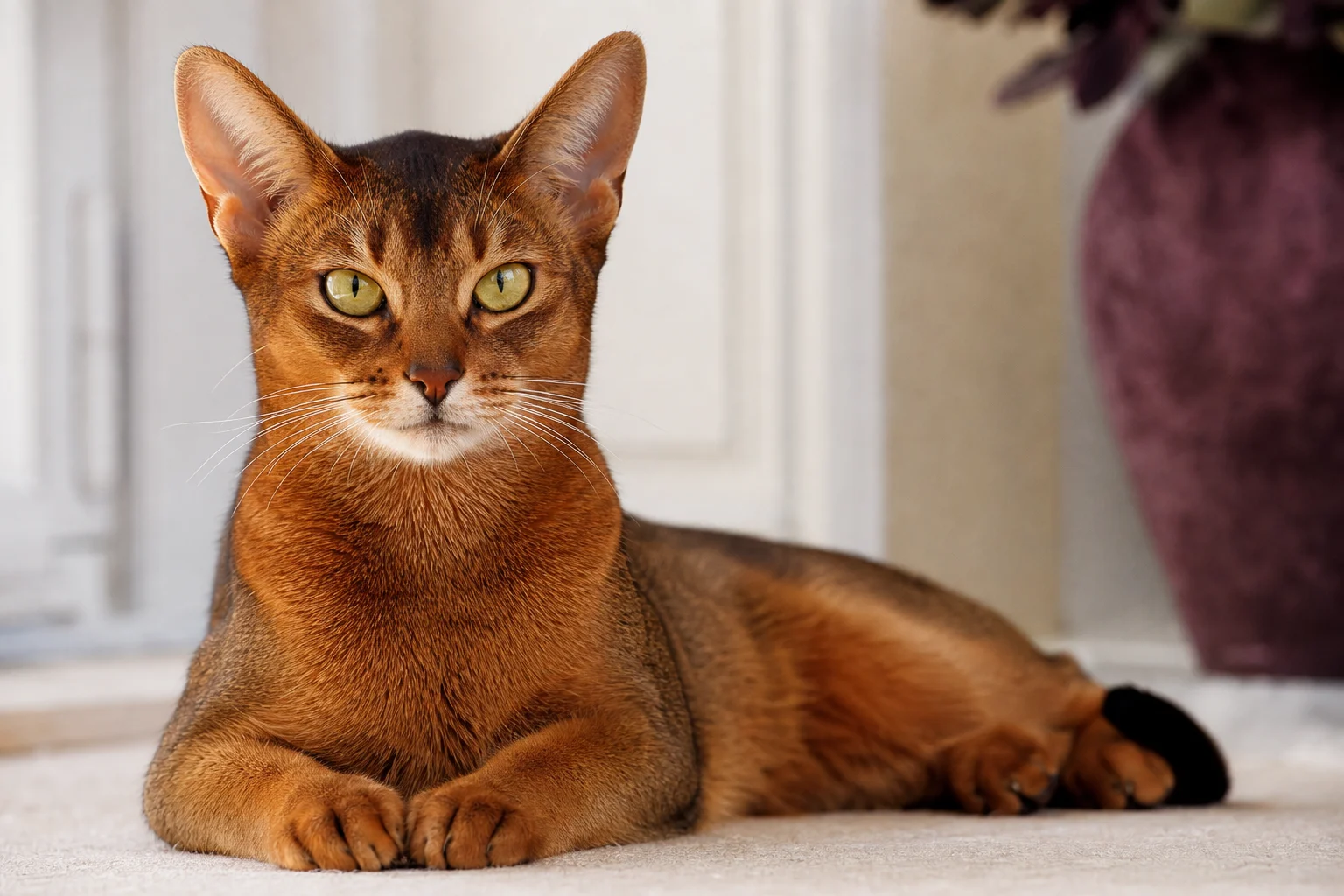
A perpetual-motion clown in a ticked wildcat coat — curious, quick and always mid-project.
| Size | Medium |
|---|---|
| Weight | 3–5 kg |
| Life expectancy | 12–15 years |
| Origin | Ethiopia / United Kingdom |
| Type | Natural breed / pedigree |
| Grooming | low |
| Activity needs | very high |
| Beginner friendly | with some experience |
Temperament & suitability
Editorial assessment based on the FIFe breed standard and breed association data.
Guideline for movement & enrichment for this breed.
Traits
Origin & history
The Abyssinian's name points to Ethiopia — the first show cat, Zula, supposedly travelled home with British soldiers from Abyssinia in 1868 — but genetics point to the Indian Ocean coast, and the breed as we know it was shaped in Victorian Britain. It is one of the oldest pedigree breeds anywhere, standardised in the 1880s, and its ticked coat still whispers of the African wildcat: every hair banded in several colours, producing that shimmering, sun-warmed look.
Appearance & size
A lithe, medium athlete of three to five kilograms on long legs, with large attentive ears, expressive almond eyes and a fine, close-lying coat without stripes or patches — the ticking does all the work, in warm ruddy, sorrel, blue and fawn plus silver variants. An Aby in motion looks like it was designed by someone who loved both cats and gazelles.
Personality & temperament
The Abyssinian is curiosity on four paws. It patrols every shelf, supervises every task, opens what can be opened and learns games faster than you invent them. Constant, busy motion is its resting state; it loves its people intensely but shows it by participating, not by lap-sitting. The voice is quiet — the activity is not. An Aby household is never entirely tidy and never boring.
Indoor or outdoor living
Indoor life works if the flat is a playground: tall trees, wall runways, window perches and rotating toys. A secured balcony or catio suits the breed splendidly; unsecured roaming is too risky for this trusting sprinter. And because an Aby alone is an unhappy Aby, plan a second lively cat for the hours you are gone — the framework is in Indoor cat or outdoor cat?
Enrichment & activity
Daily sessions are non-negotiable: fetch, clicker tricks, puzzle feeders, chase games until the engine drops to idle. The Aby is a top candidate for cat wheels and adventure setups. Understimulation converts into shelf clearing and wallpaper studies within days.
Grooming
Nearly none: the fine ticked coat needs a weekly polish with a rubber mitt and sheds modestly. All the effort this breed asks for goes into engagement, not brushing.
Feeding & health
An athlete's appetite on a slim frame — quality protein, portioned via the food amount calculator. Screening topics in the breed: pyruvate kinase deficiency (PK-Def, gene test available), progressive retinal atrophy (PRA) and, historically, renal amyloidosis in some lines — ask breeders about all three.
Costs
Kittens from tested lines cost €800–1,200. Budget more for enrichment infrastructure than for grooming tools; the cat cost calculator totals the honest monthly figure.
For beginners, children and other pets
For active families with older children the Aby is a fantastic playmate; toddler chaos plus a whirlwind cat can overwhelm both sides. It gets along with cats and cat-friendly dogs that match its energy. Beginners should be honest about time: the cat is easy, its schedule is not.
Similar breeds compared
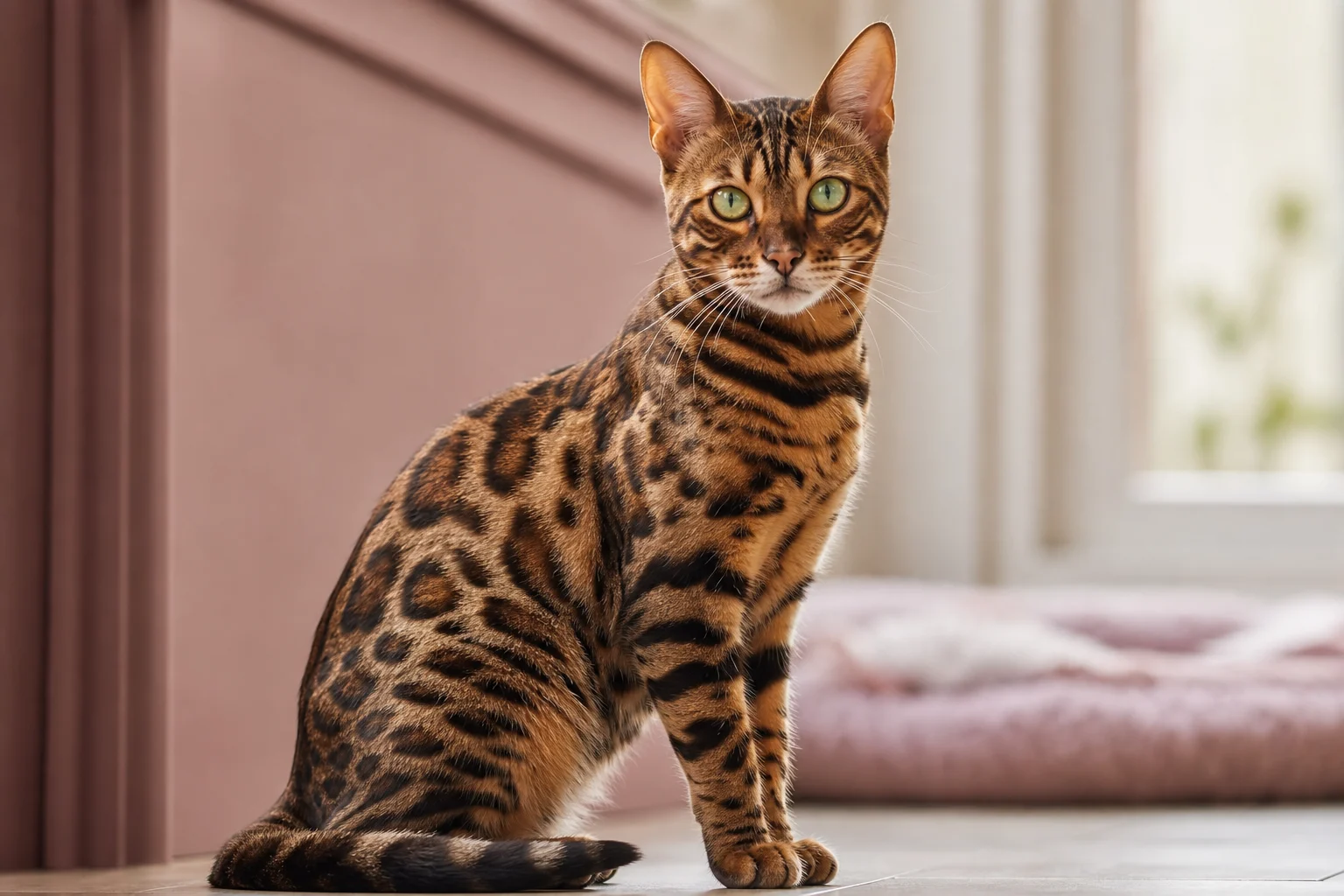
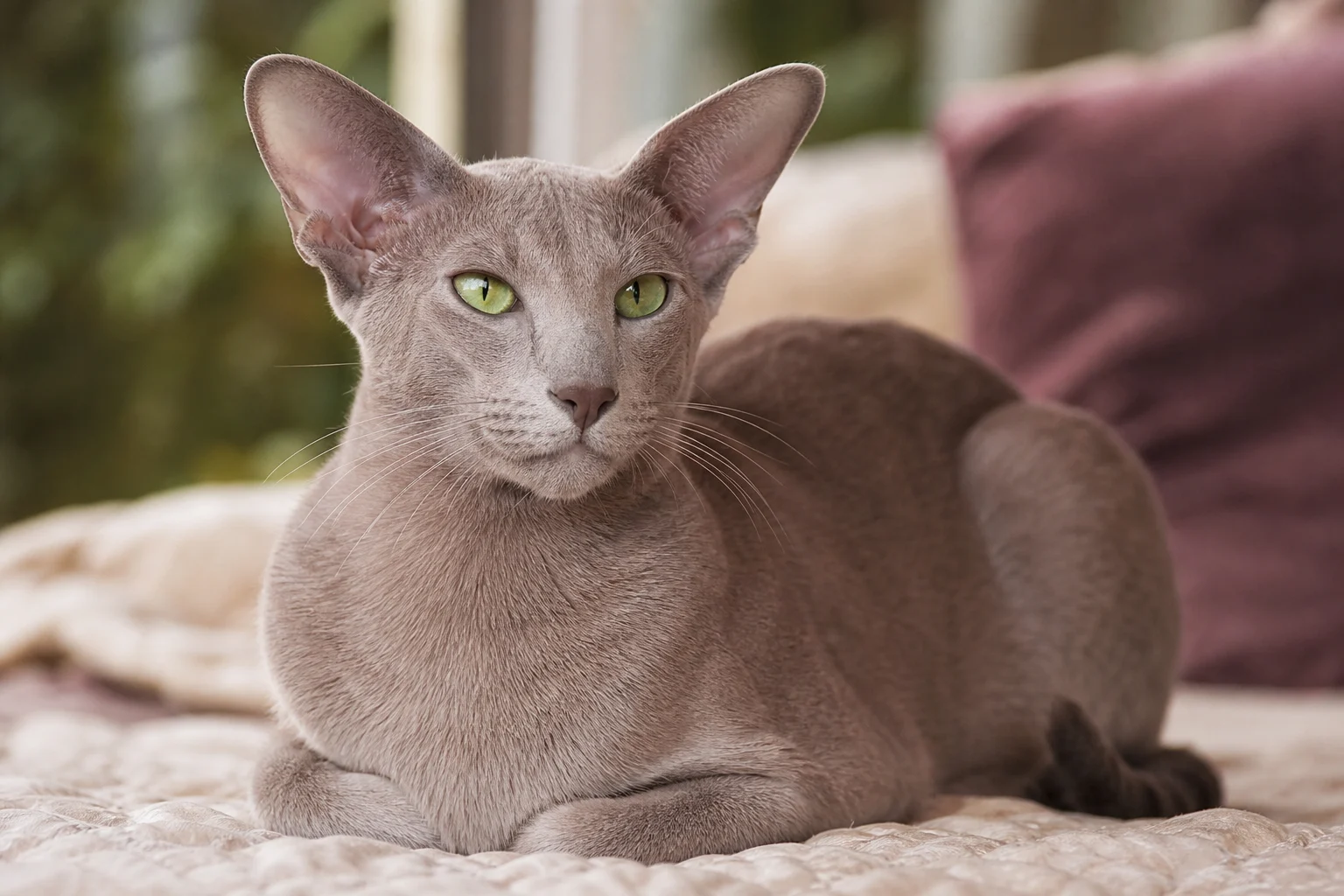
The Somali is the Abyssinian in a semi-long fox coat; the Bengal raises energy and demands further; the Oriental Shorthair matches the intelligence with more voice and more lap.
Who this breed suits
Busy, playful households that want a clever co-conspirator and can offer daily engagement plus a feline partner. Check your energy match in the "Which cat fits me?" test.
Not sure what a Abyssinian may eat? The food checker rates individual foods on a traffic-light scale, and the food guide explains what cats can eat and what is toxic.
A good fit for you if …
Frequently asked questions
Are Abyssinians lap cats?
Rarely. They love their people intensely but show it through participation — supervising, playing, following. Sitting still is not their love language.
How much activity does an Aby need?
A lot, daily: real play sessions, climbing options and puzzle toys. Combined with a second lively cat, the workload becomes manageable.
What makes the ticked coat special?
Each hair carries several colour bands — no stripes, no patches, just a shimmering wildcat glow. Grooming is minimal.
Which health tests matter?
PK deficiency (gene test), PRA (eyes) and questions about amyloidosis history in the line. Good breeders answer all three unprompted.
Are Abyssinians good with children?
With older, play-loving children they are wonderful partners. Toddler households should wait — the energy levels collide.
Can an Abyssinian live in a flat?
Yes, if the flat offers vertical space, daily engagement and ideally a feline playmate. A secured balcony or catio is a big plus.
Similar breeds
Sources: FIFe/TICA breed standard · breed association data · editorial assessment · Last updated 08/2026. On health questions this article never replaces a visit to the vet.