 AI
AISiamese
Talkative, brilliant and utterly devoted — a shadow with a voice that follows you everywhere.
| Size | Medium |
|---|---|
| Weight | 3–5 kg |
| Life expectancy | 12–16 years |
| Origin | Thailand |
| Type | Natural breed (Thailand) |
| Grooming | low |
| Activity needs | very high |
| Beginner friendly | with some experience |
Temperament & suitability
Editorial assessment based on the FIFe breed standard and breed association data.
Guideline for movement & enrichment for this breed.
Traits
Origin & history
Temple and palace cats of old Siam — today's Thailand — the Siamese appears in Bangkok manuscripts centuries old. The first pair reached Britain in 1884 as a royal gift, caused a sensation at London shows and founded the Western line. Over the 20th century show breeding stretched the type ever more extreme; the older, rounder form survives as the Thai. The pointed coat, by the way, is temperature-dependent: cool body zones darken, which is why kittens are born white.
Appearance & size
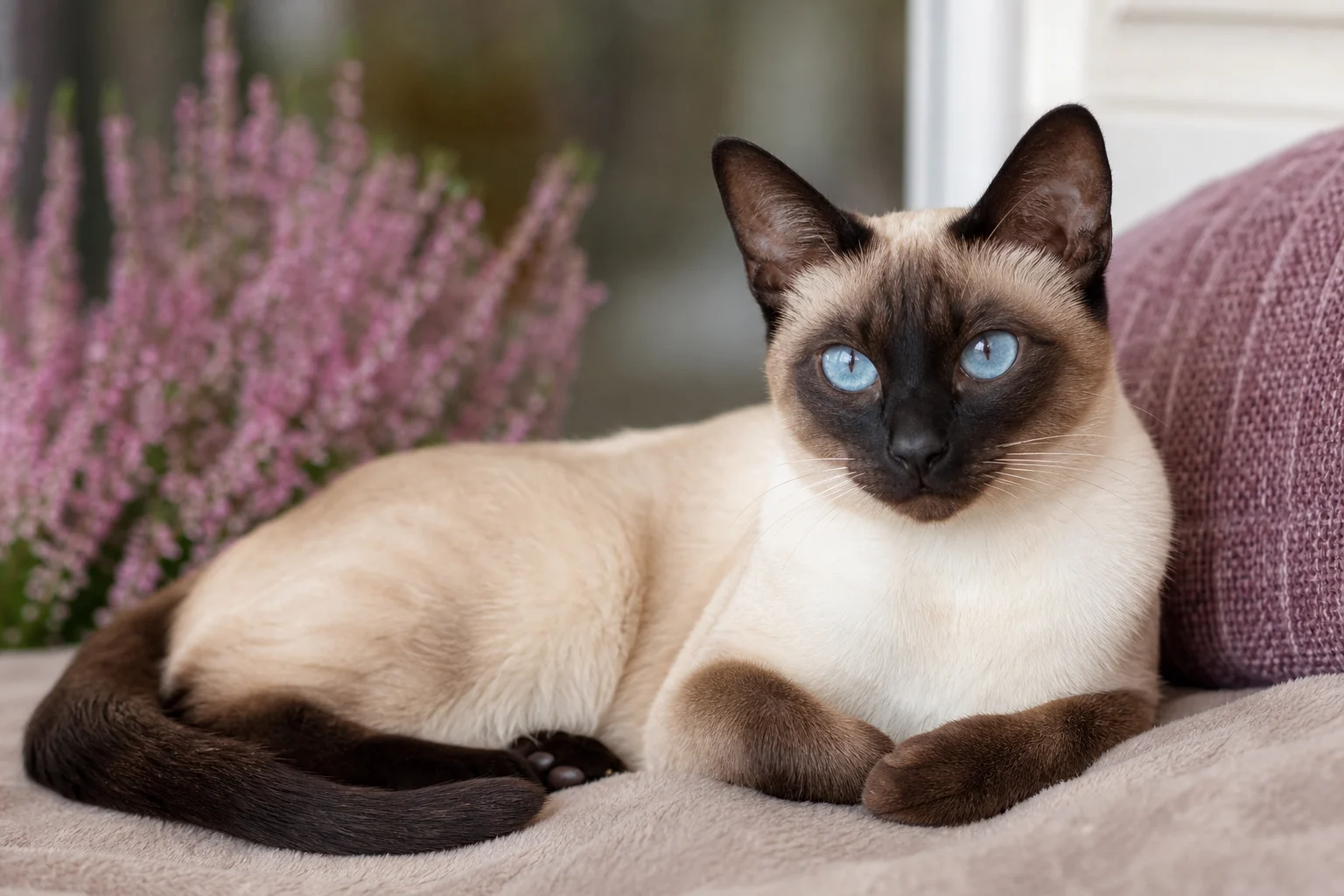
A slim, elegant athlete of three to five kilograms: long lines, fine bones, large ears on a wedge-shaped head and the piercing blue eyes that define the breed. The short, silky coat shows the classic points — seal, blue, chocolate and lilac on face, ears, paws and tail against a light body.
Personality & temperament
The Siamese redefines attachment. It follows its person from room to room, comments on everything in a loud, raspy voice that carries arguments, questions and demands, and takes silence personally. The intelligence is exceptional — doors, drawers, fetch and tricks are learned in passing — and the energy stays kitten-high for years. This breed does not do background: it is either the centre of your attention or working loudly on becoming it.
Indoor or outdoor living
An indoor cat with a strong case for a secured balcony: trusting, people-fixated and valuable, the Siamese has no business roaming free. Indoors it needs less square meterage than stimulation — climbing paths, window seats and above all company. Alone-time is this breed's weak point; a second, similarly social cat is close to mandatory for working households. Our guide Indoor cat or outdoor cat? helps with the setup.
Enrichment & activity
Plan genuine daily engagement: intelligence toys on rotation, clicker training, fetch, hunting games until the motor idles. The Siamese is one of the few breeds that genuinely enjoys learning leash walking. Boredom converts directly into volume and mischief — an under-employed Siamese is a loud, destructive unhappy cat.
Grooming
Trivial: the fine short coat needs a weekly polish with a rubber brush at most, sheds little and keeps itself immaculate. All the care this breed demands is social, not cosmetic.
Feeding & health
An active metabolism on a fine frame — feed quality protein, portion with the food amount calculator and watch that treats do not inflate the slim line. Breeding topics to ask about: progressive retinal atrophy (PRA), for which a gene test exists, plus amyloidosis history in some lines; the once-typical squint and kinked tail have been bred out of serious lines.
Costs
Kittens from tested lines cost €700–1,100. Running costs are modest — the real investment is time, every single day, for fifteen-plus years; the cat cost calculator covers the money side.
For beginners, children and other pets
For committed beginners who genuinely want an interactive cat, the Siamese works; for anyone seeking a quiet ornament it is the wrong address entirely. With respectful children it is a playful partner, with cats and cat-friendly dogs sociable — company ranks above species for this breed.
Similar breeds compared
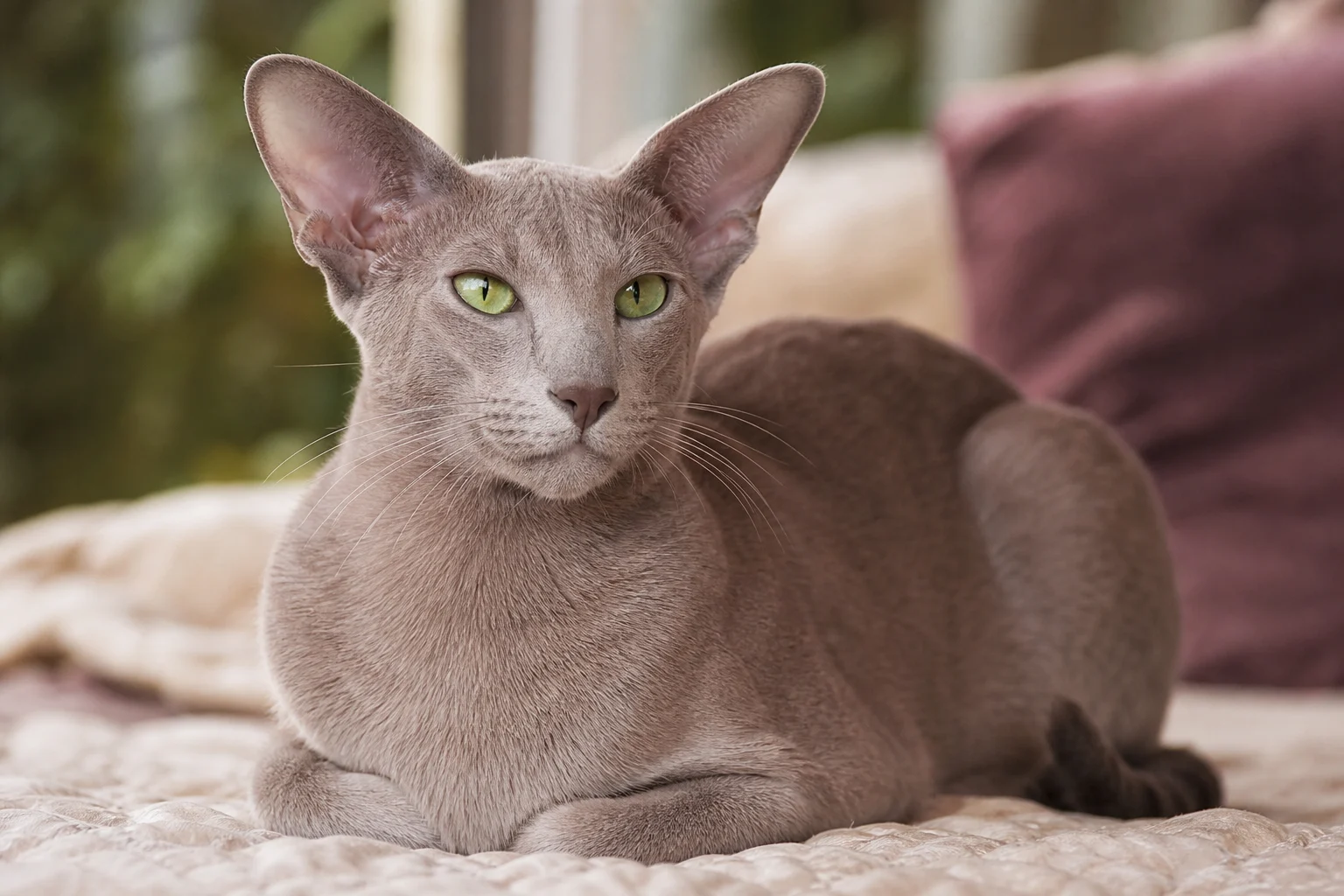
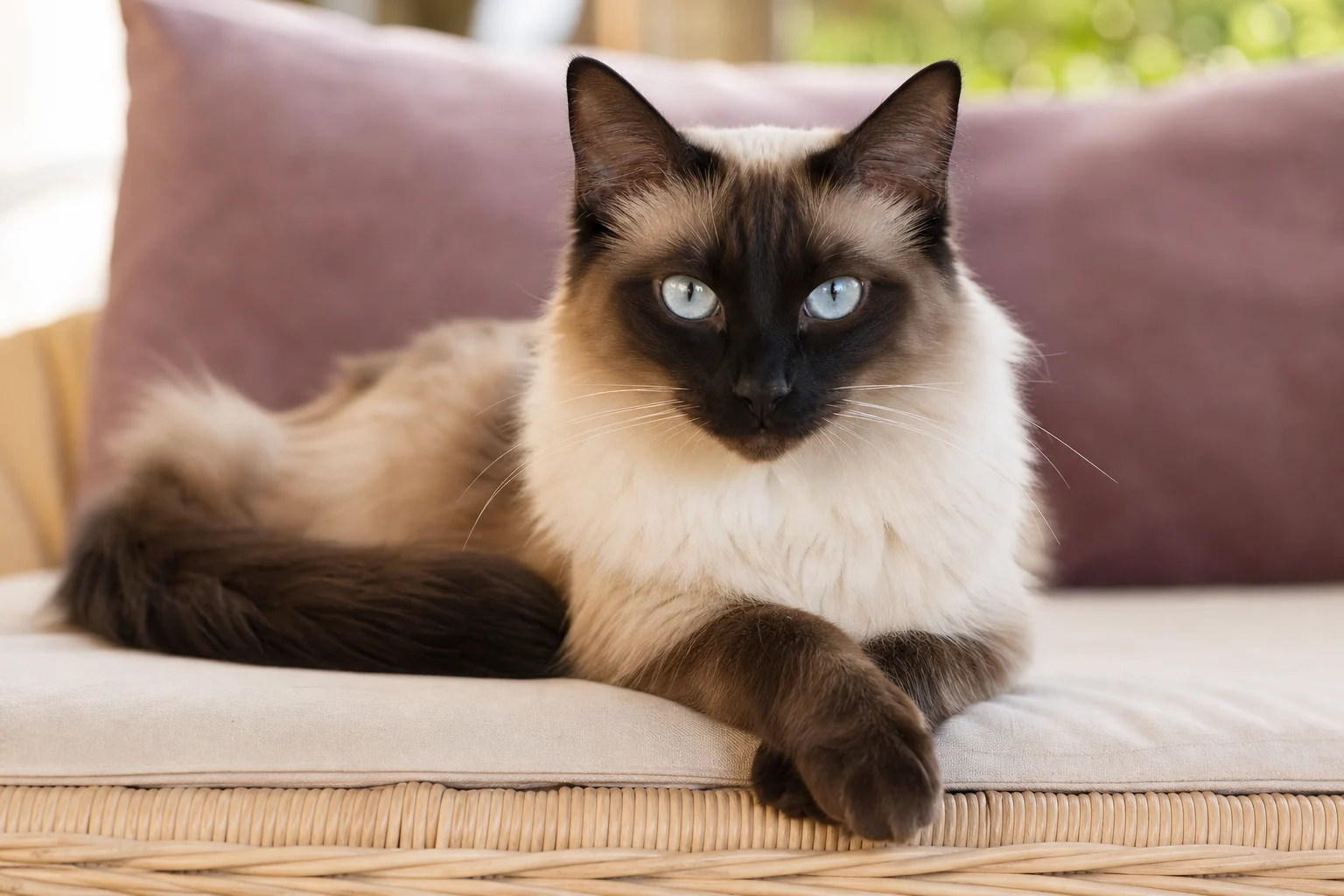
The Oriental Shorthair is the same cat in a hundred solid colours; the Balinese adds silky semi-long fur to the identical soul; the Thai offers the old-type, slightly mellower Siamese experience.
Who this breed suits
People who want a conversation partner, not a pet in the background — home-office households, families, anyone who finds cat chatter charming rather than noisy. The "Which cat fits me?" test shows whether your day has Siamese-sized room in it.
Not sure what a Siamese may eat? The food checker rates individual foods on a traffic-light scale, and the food guide explains what cats can eat and what is toxic.
A good fit for you if …
Frequently asked questions
Are Siamese cats really that loud?
Yes — the raspy, carrying voice is a breed signature, used generously for comments, demands and conversation. If vocal cats charm you, wonderful; if not, choose differently.
Can a Siamese stay alone during work hours?
Poorly. The breed is extremely people-fixated and suffers alone; for working households a second social cat is practically required.
Why are the points dark and the body light?
The point gene is temperature-sensitive: cooler body zones — face, ears, paws, tail — develop pigment, warm zones stay light. Kittens are born white and darken over weeks.
What is the difference between Siamese and Thai?
The Thai preserves the older, rounder Siamese type with a slightly mellower temperament; the modern Siamese is more extreme in build and intensity.
Which health tests matter?
The PRA gene test above all; ask also about heart screening and amyloidosis history in the line.
Are Siamese good with children?
With respectful children, very — the breed loves play and interaction. It defends its dignity vocally rather than with claws.
Similar breeds
Sources: FIFe/TICA breed standard · breed association data · editorial assessment · Last updated 08/2026. On health questions this article never replaces a visit to the vet.