 AI
AIOriental Shorthair
A Siamese in a hundred colours — brilliant, loud, endlessly devoted and never, ever boring.
| Size | Medium |
|---|---|
| Weight | 3–5 kg |
| Life expectancy | 12–16 years |
| Origin | Thailand / United Kingdom |
| Type | Pedigree breed |
| Grooming | very low |
| Activity needs | very high |
| Beginner friendly | with some experience |
Temperament & suitability
Editorial assessment based on the FIFe breed standard and breed association data.
Guideline for movement & enrichment for this breed.
Traits
Origin & history
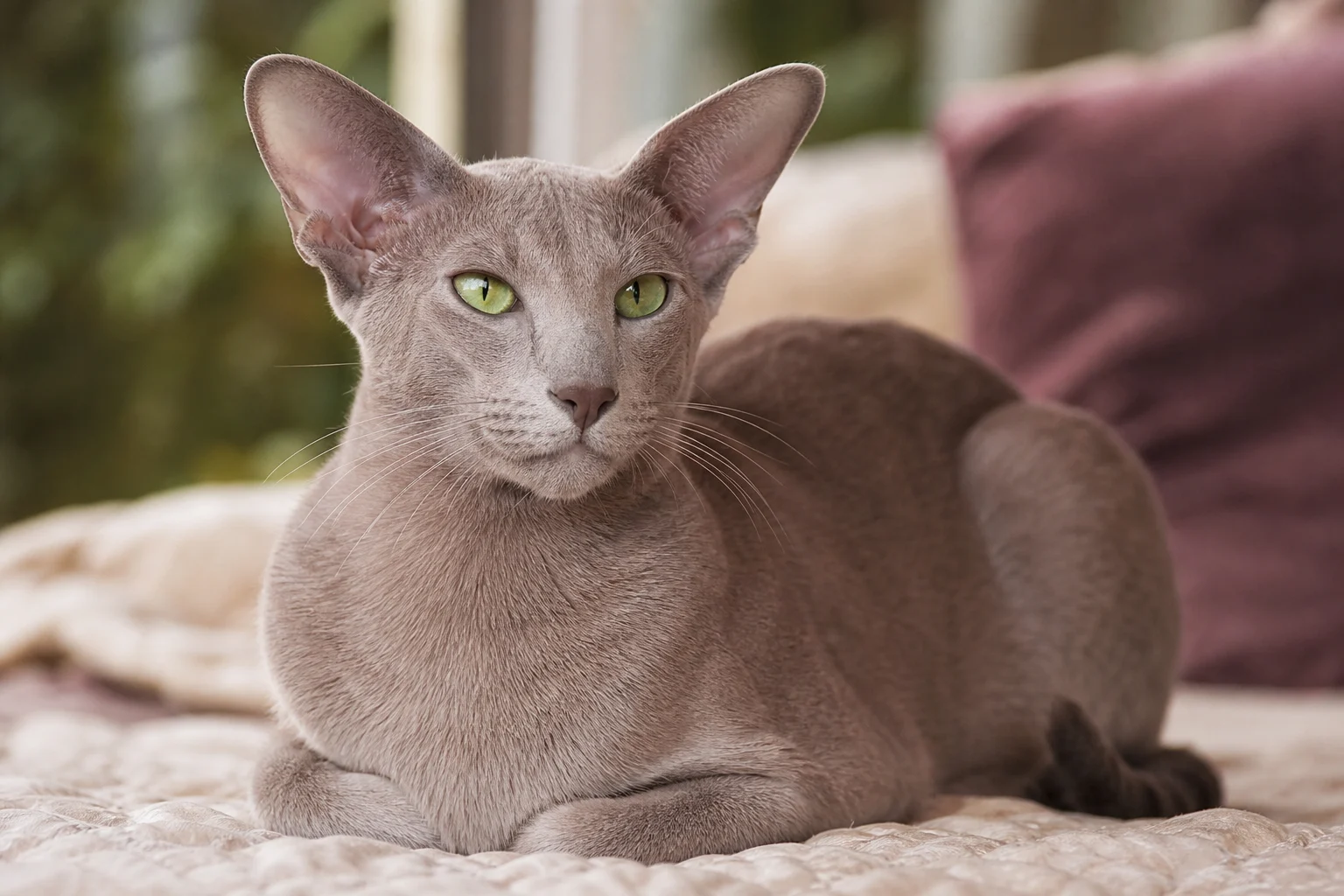
When British breeders in the 1950s asked what a Siamese would look like without the point restriction, the Oriental Shorthair was the answer: the same elegant cat, freed into every colour genetics allows. Solid ebony, ivory white, blue, chestnut, tabby, silver — over 300 recognised variants make the Oriental the most colourful branch of the Siamese family, with green eyes replacing the Siamese blue in most colours.
Appearance & size
Pure line: a slender three-to-five-kilogram body on tall legs, a long wedge head with strikingly large ears and a fine, glossy coat that lies like lacquer. The Oriental is all angles and elegance — a cat drawn with a fountain pen.
Personality & temperament
Everything said about the Siamese applies here at full volume: extreme people-attachment, constant commentary in a raspy voice, kitten energy for a decade and an intelligence that opens doors, learns fetch and dismantles boredom-proofing for sport. An Oriental chooses its people completely and expects the favour returned — solitude wounds this breed.
Indoor or outdoor living
Indoors with a secured balcony is the right frame; the trusting, slim sprinter has no business in traffic. It needs vertical territory — tall trees, wardrobes, shoulder rides — and above all social density: a second oriental-type cat is the single best investment in this breed's happiness. Basics in Indoor cat or outdoor cat?
Enrichment & activity
Plan genuine daily engagement — clicker training, fetch marathons, puzzle feeders, hunting games until the motor finally idles. Orientals excel at learned routines and even leash walking. Under-employment converts directly into decibels and demolition.
Grooming
A polish with a silk cloth is nearly literal: the lacquer coat needs a weekly rubber-mitt pass at most and sheds minimally. All real care is social.
Feeding & health
Fast metabolism, fine frame: quality protein portioned via the food amount calculator. Screening topics mirror the Siamese family: PRA gene test, amyloidosis history, plus dental care — the fine wedge jaw tends to tartar. Ask breeders openly.
Costs
Kittens from tested lines cost €800–1,200. The material costs stay modest; the time cost is the honest line item, daily and for fifteen years. Money side: cat cost calculator.
For beginners, children and other pets
For interactive households with older children the Oriental is a spectacular companion; quiet-loving homes will regret the volume. It pairs superbly with equally social cats and accepts respectful dogs. Beginners succeed only with honest time budgets.
Similar breeds compared
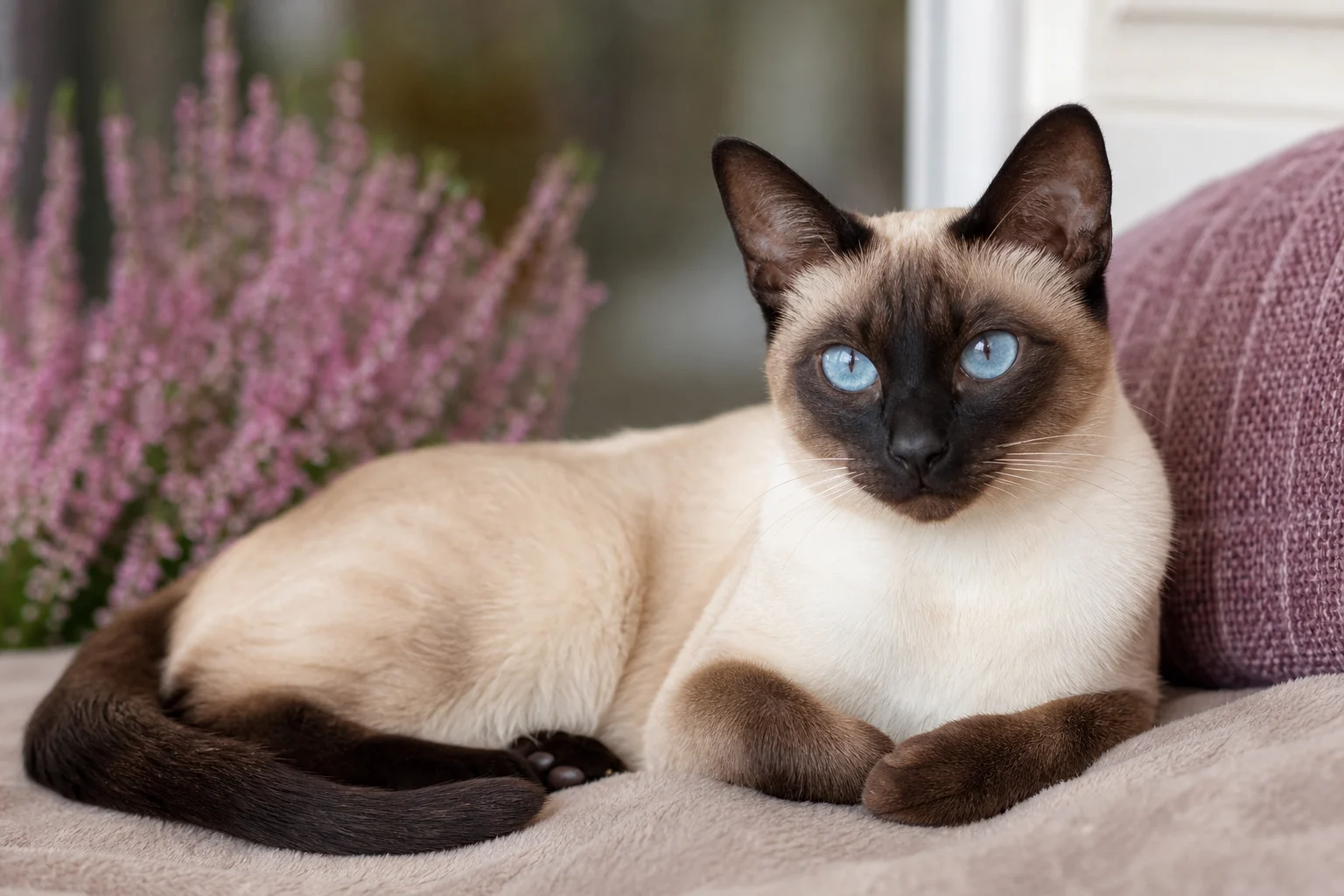
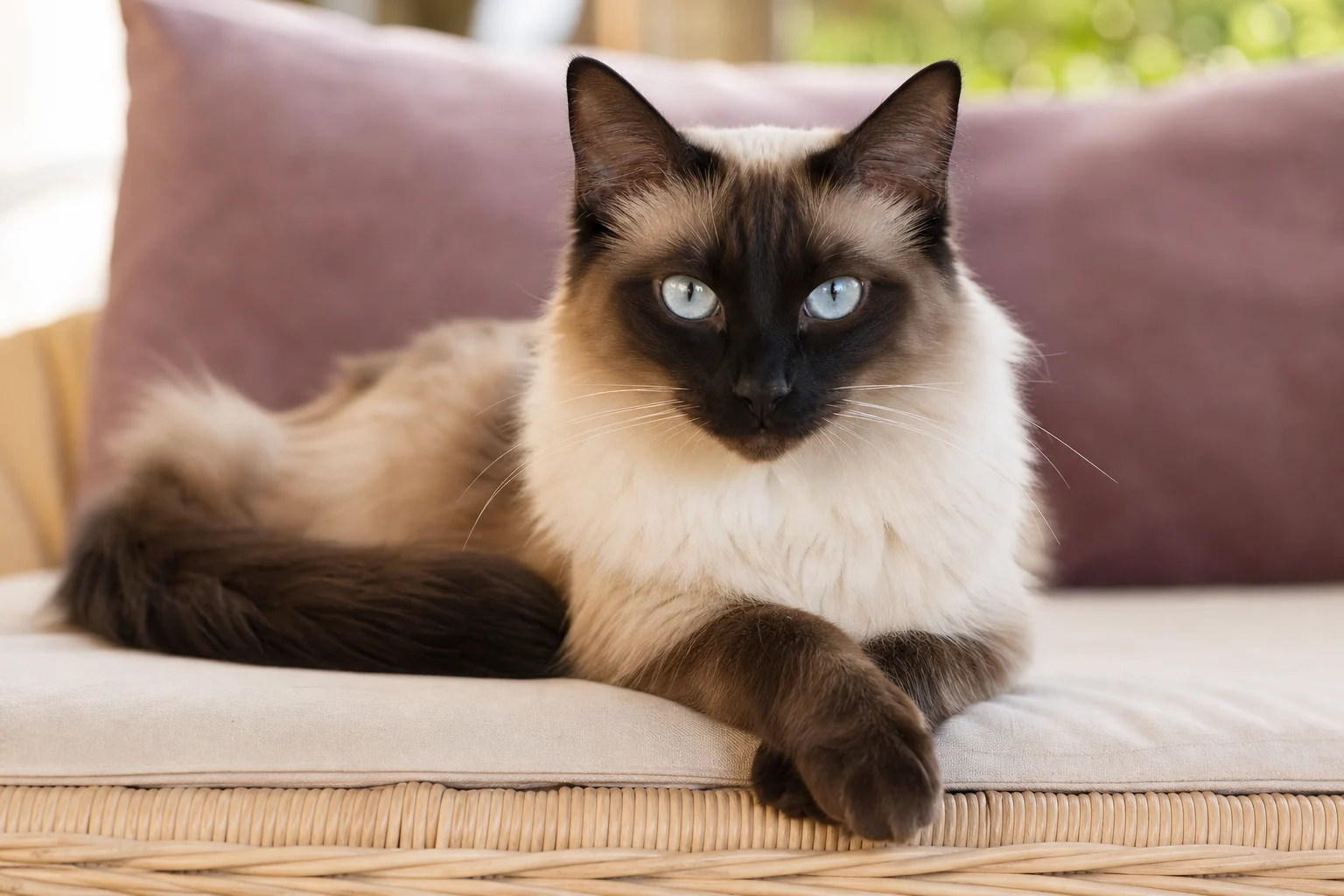
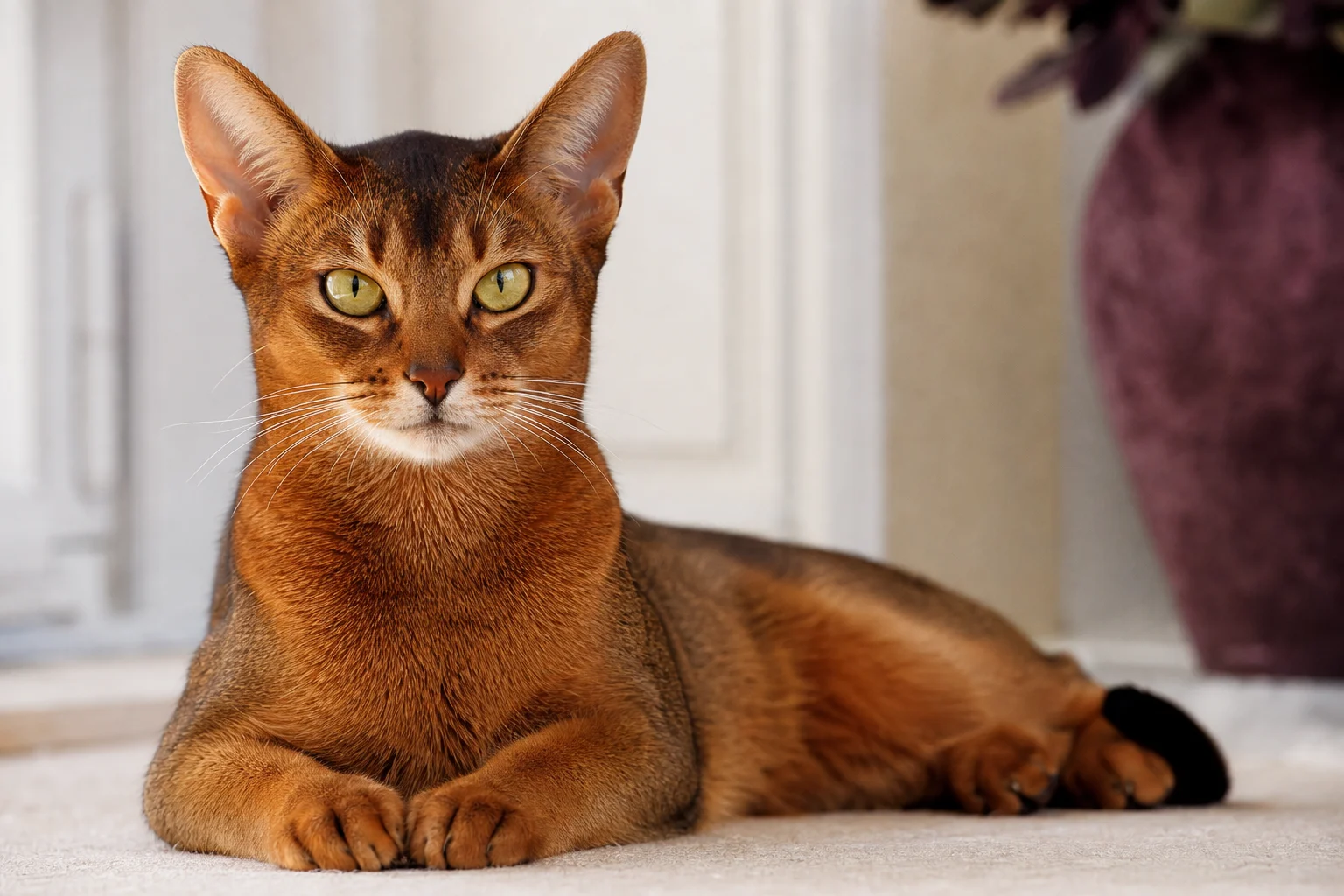
The Siamese is the pointed original; the Balinese adds semi-long silk; the Oriental Longhair is this cat with a flowing coat; the Abyssinian offers similar energy with less voice.
Who this breed suits
People who want a loud, brilliant life companion and are home enough to be one in return. The "Which cat fits me?" test tells you if your day has room for an Oriental.
Not sure what a Oriental Shorthair may eat? The food checker rates individual foods on a traffic-light scale, and the food guide explains what cats can eat and what is toxic.
A good fit for you if …
Frequently asked questions
How does the Oriental differ from the Siamese?
Only in coat genetics: the Oriental lacks the point restriction and comes in 300+ colours, usually with green eyes. Temperament, build and volume are identical.
Are Orientals really that loud?
Yes — the raspy Siamese voice with full commentary is standard equipment. For fans it is conversation; for others, noise.
Can an Oriental stay alone?
Poorly. This is one of the most people-dependent breeds; a second social cat is near-mandatory for working households.
Are Orientals hypoallergenic?
Tendentially friendlier — the fine coat sheds little — but Fel d 1 is still produced. Test personal contact before committing.
Which health tests matter?
PRA gene test and amyloidosis history in the line, plus regular dental care.
Do Orientals get along with dogs?
Usually well — a respectful, playful dog is welcome company for this social breed.
Similar breeds
Sources: FIFe/TICA breed standard · breed association data · editorial assessment · Last updated 08/2026. On health questions this article never replaces a visit to the vet.