 AI
AIThai
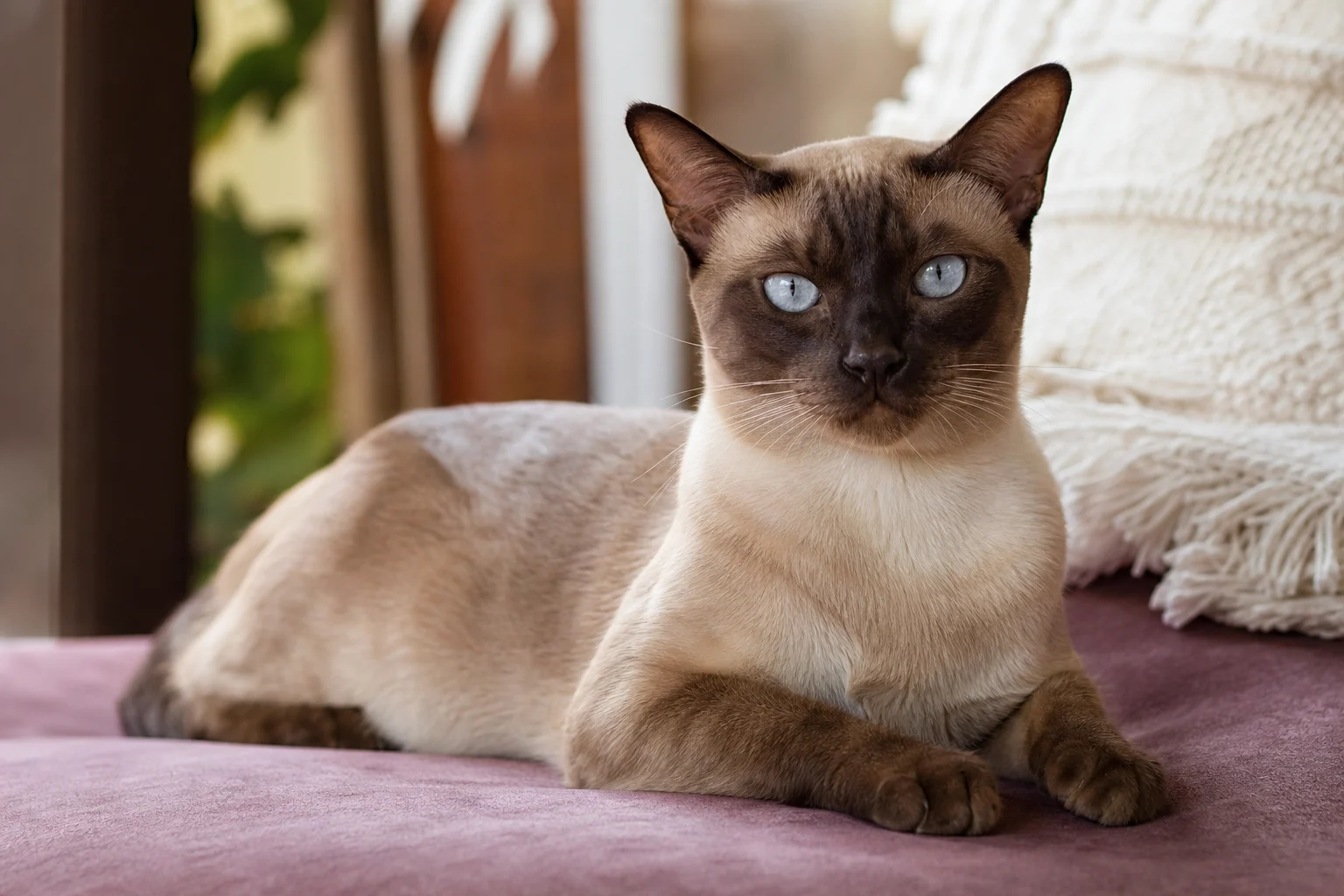
The original Siamese — apple-cheeked, sky-eyed and devoted, with the volume knob one notch gentler.
| Size | Medium |
|---|---|
| Weight | 3–5 kg |
| Life expectancy | 12–16 years |
| Origin | Thailand |
| Type | Natural breed (Thailand) |
| Grooming | low |
| Activity needs | very high |
| Beginner friendly | well suited |
Temperament & suitability
Editorial assessment based on the FIFe breed standard and breed association data.
Guideline for movement & enrichment for this breed.
Traits
Origin & history
When show breeding stretched the Siamese ever more extreme through the late 20th century, lovers of the old type — rounder head, sturdier body, the cat of the historic Bangkok manuscripts — kept breeding it quietly. Registries eventually recognised this "old-style Siamese" as its own breed: the Thai, named for its homeland where the pointed Wichienmaat has been treasured for centuries. Same roots as the modern Siamese, different destination.
Appearance & size
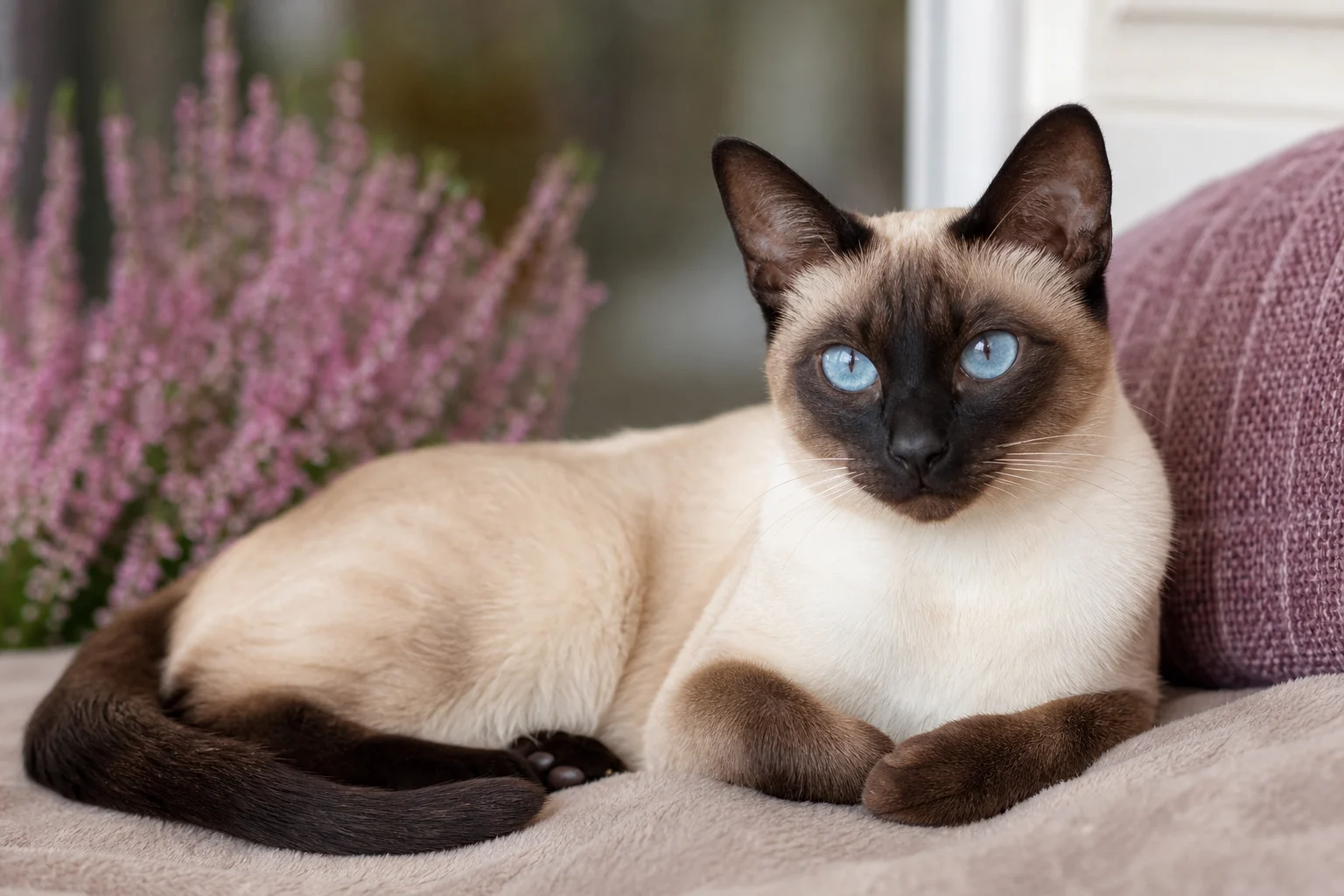
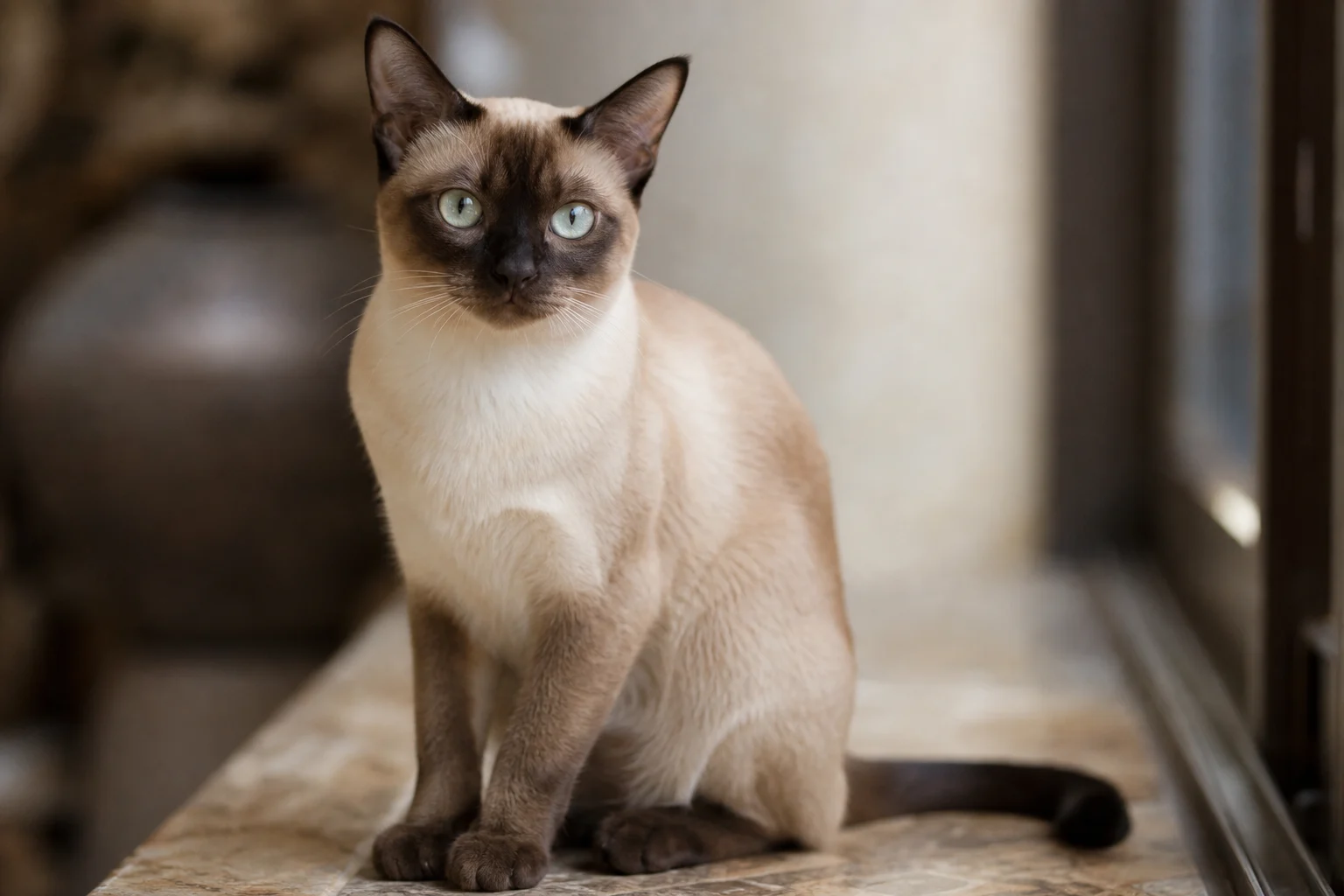
A balanced, moderately built cat of three to five kilograms: an apple-shaped head with rounded cheeks, medium ears, a body athletic without extremes — the silhouette Siamese photos showed a century ago. Points in seal, blue, chocolate and lilac against light bodies, with vivid blue eyes; the short silk coat lies close and gleams.
Personality & temperament
Full Siamese soul, slightly softened edges: the Thai is people-fixated, talkative in expressive tones (a notch below modern-Siamese opera), brilliantly clever and lifelong playful. It follows, supervises, converses and expects involvement in everything; many fans call it the perfect middle between Siamese intensity and household livability. Alone-time remains the breed family's weak point.
Indoor or outdoor living
Indoors with secured balcony; trust and beauty both argue against roaming. Vertical space, window cinema and above all company define quality of life — a second social cat is the right answer to work schedules; see keeping several cats.
Enrichment & activity
Daily genuine engagement: fetch, clicker tricks, puzzle rotations, chase games. The Thai learns household routines to the minute and enforces them charmingly. Boredom is answered with creative mischief and commentary.
Grooming
A weekly silk polish suffices; the coat sheds little and maintains itself.
Feeding & health
Quality protein via the food amount calculator for the active metabolism. Breeder questions mirror the family: PRA gene test, amyloidosis line history, plus general heart checks. The moderate build spared the Thai some extreme-type issues; tested lines are robust and long-lived.
Costs
Kittens from tested lines cost €700–1,100. Modest material costs, substantial time costs — the cat cost calculator handles the former.
For beginners, children and other pets
A wonderful family cat for interactive households: playful with children, sociable with cats and friendly dogs. Committed beginners succeed well — the Thai forgives handling errors, not absence.
Similar breeds compared
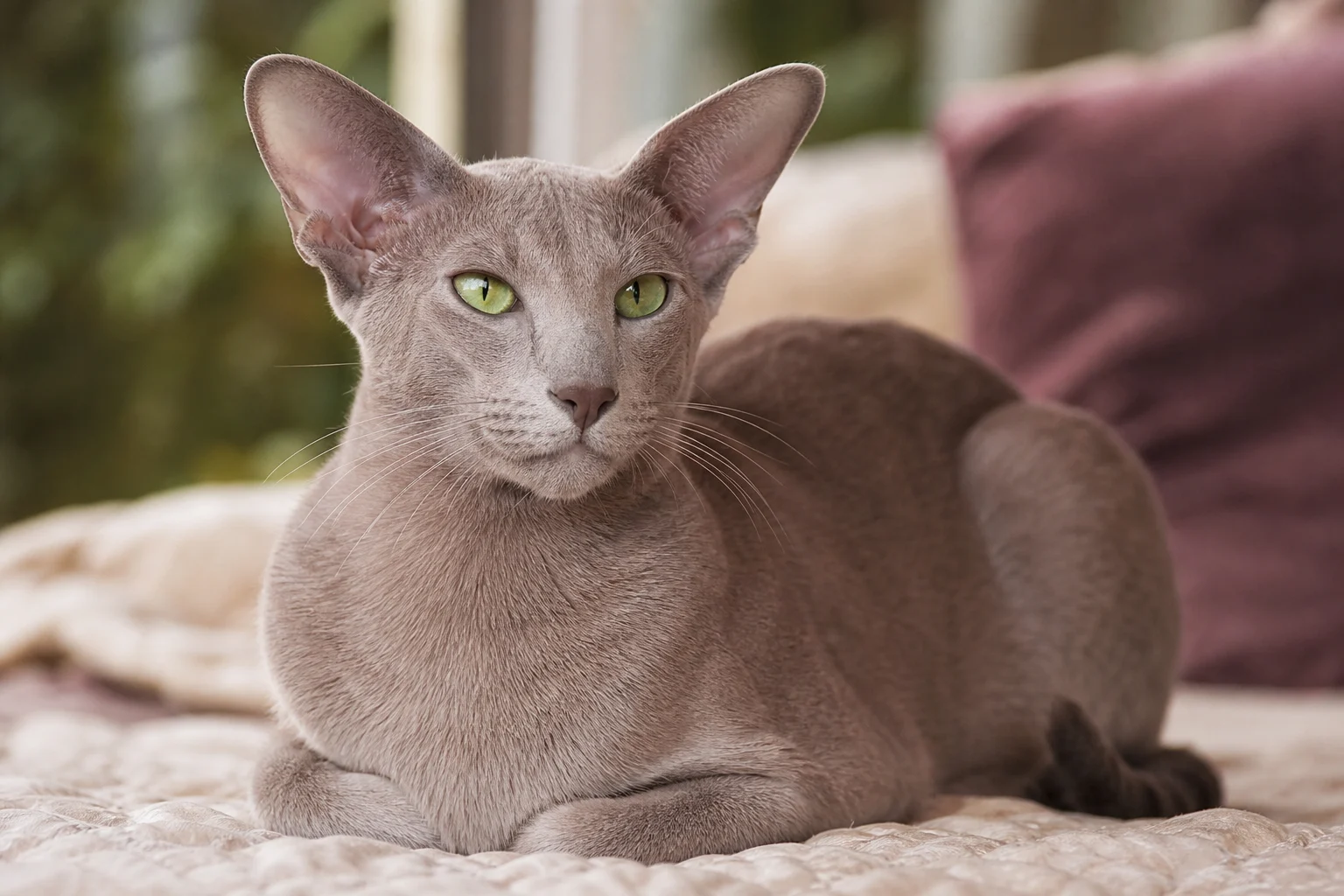
The Siamese is the modern, more extreme sibling; the Tonkinese mixes in Burmese calm; the Korat is Thailand's silver-blue second treasure with similar devotion.
Who this breed suits
People drawn to Siamese devotion who prefer the classic look and a gentler volume. The "Which cat fits me?" test confirms whether your day carries a Thai.
Not sure what a Thai may eat? The food checker rates individual foods on a traffic-light scale, and the food guide explains what cats can eat and what is toxic.
A good fit for you if …
Frequently asked questions
What is the difference between Thai and Siamese?
Type: the Thai preserves the old, rounder, sturdier Siamese form; the modern Siamese is bred longer and more extreme. Roots and character are shared.
Are Thais quieter than Siamese?
A notch — expressive and conversational, but below modern-Siamese opera volume. Silence is still not on offer.
Which health tests matter?
PRA gene test and amyloidosis line history — the Siamese-family standards.
Can a Thai stay alone during work?
Poorly; the family's people-fixation applies. A second social cat makes it work.
What does Wichienmaat mean?
The historic Thai name of the pointed cat — 'moon diamond' — treasured in Bangkok manuscripts for centuries.
Are Thais good with children?
Very, in interactive households: playful, robust and patient with respectful children.
Similar breeds
Sources: FIFe/TICA breed standard · breed association data · editorial assessment · Last updated 08/2026. On health questions this article never replaces a visit to the vet.