 AI
AITonkinese
The golden middle of Burmese and Siamese — aqua eyes, silk coat and sociability dialled to warm.
| Size | Medium |
|---|---|
| Weight | 3–5 kg |
| Life expectancy | 12–16 years |
| Origin | Canada / United States |
| Type | Pedigree breed |
| Grooming | very low |
| Activity needs | high |
| Beginner friendly | well suited |
Temperament & suitability
Editorial assessment based on the FIFe breed standard and breed association data.
Guideline for movement & enrichment for this breed.
Traits
Origin & history
Breeders in 1960s Canada and America asked an obvious question: what lives exactly between Burmese and Siamese? The answer — deliberately bred from both — is the Tonkinese, whose "mink" coat pattern splits the difference: darker than Siamese points, lighter than Burmese sable, with unique aqua eyes marking the perfect intermediate. Wong Mau, the Burmese founder cat, was genetically a Tonk herself; the breed formalised what nature had sketched.
Appearance & size
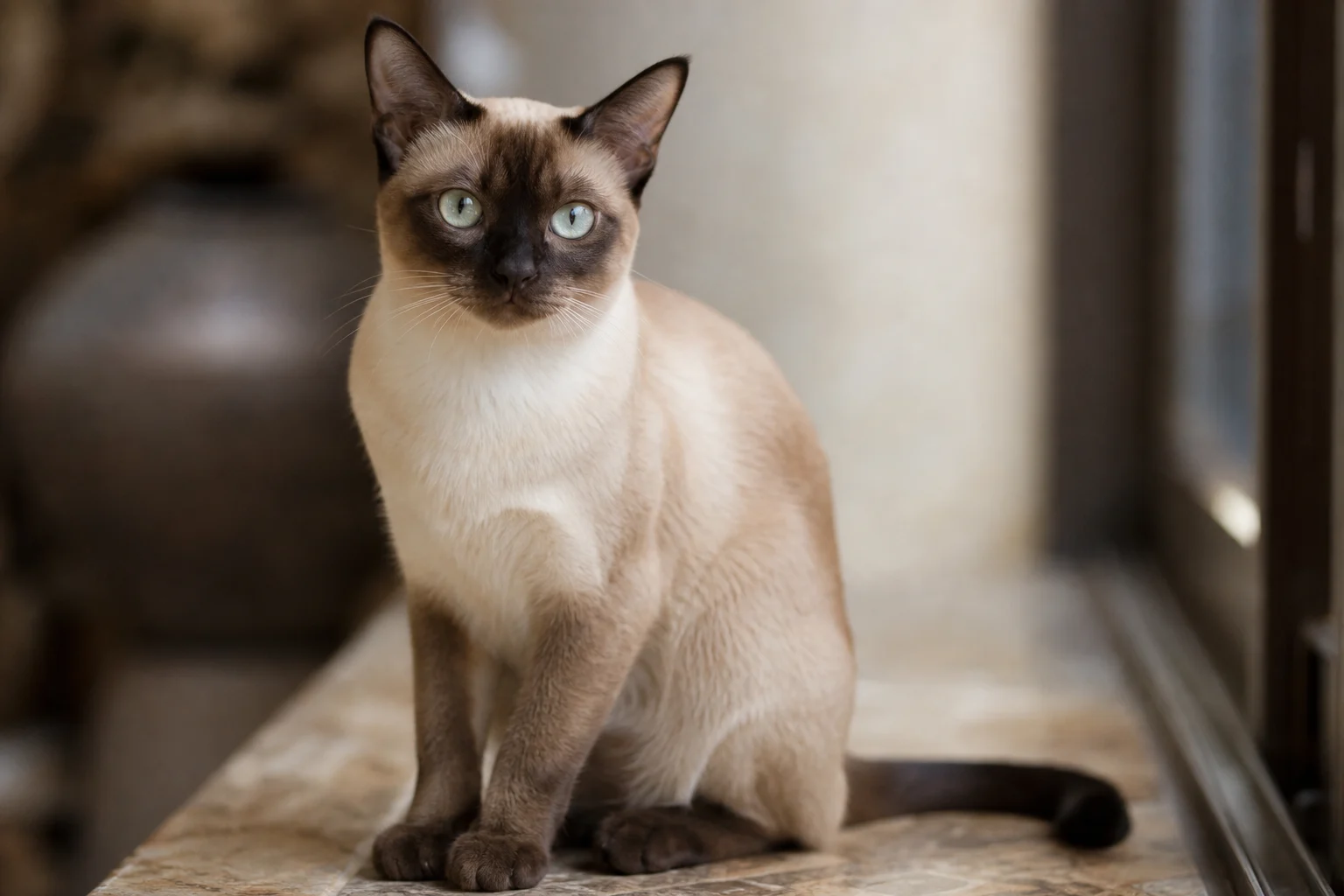
A surprisingly heavy middleweight of three to five kilograms — muscular like the Burmese, elegant like the Siamese. The short silk coat comes in three patterns per colour: pointed (blue eyes), mink (aqua eyes, the breed signature) and solid (gold-green eyes), across champagne, natural, blue and platinum tones.
Personality & temperament
The Tonk inherited the best of both houses: Burmese people-devotion at slightly reduced clinginess, Siamese wit at civilised volume. It rides shoulders, supervises guests with charm — strangers get greeted, not avoided — plays fetch, chats conversationally and holds firm opinions about closed doors. Breeders call the Tonk the cat for people who cannot decide between its parent breeds, and the description holds.
Indoor or outdoor living
Indoors plus secured balcony; the trusting charm has no street survival value. The Tonk needs moderate space and immoderate company — a second social cat is the right setup for any household with work schedules; see keeping several cats for the introduction.
Enrichment & activity
Daily interactive sessions: fetch, teaser hunts, clicker tricks, puzzle toys. Energy sits pleasantly mid-range — real play needs, real cuddle hours. A bored Tonk opens cupboards and comments loudly on the injustice.
Grooming
A weekly silk polish suffices; the coat sheds little and gleams on its own. Care means presence, not brushes.
Feeding & health
Robust when responsibly bred; screening questions span both heritages: hypokalaemia gene test (Burmese side), PRA and amyloidosis history (Siamese side), plus lean-weight discipline via the food amount calculator against the hearty Burmese appetite.
Costs
Kittens from tested lines cost €800–1,200; the breed is pleasantly reasonable to keep — the cat cost calculator totals it.
For beginners, children and other pets
An outstanding family cat: playful with children, sociable with cats and cat-friendly dogs, and warm with everyone including visitors. Beginners succeed well if the company requirement is honestly met — like all its family, the Tonk withers alone.
Similar breeds compared
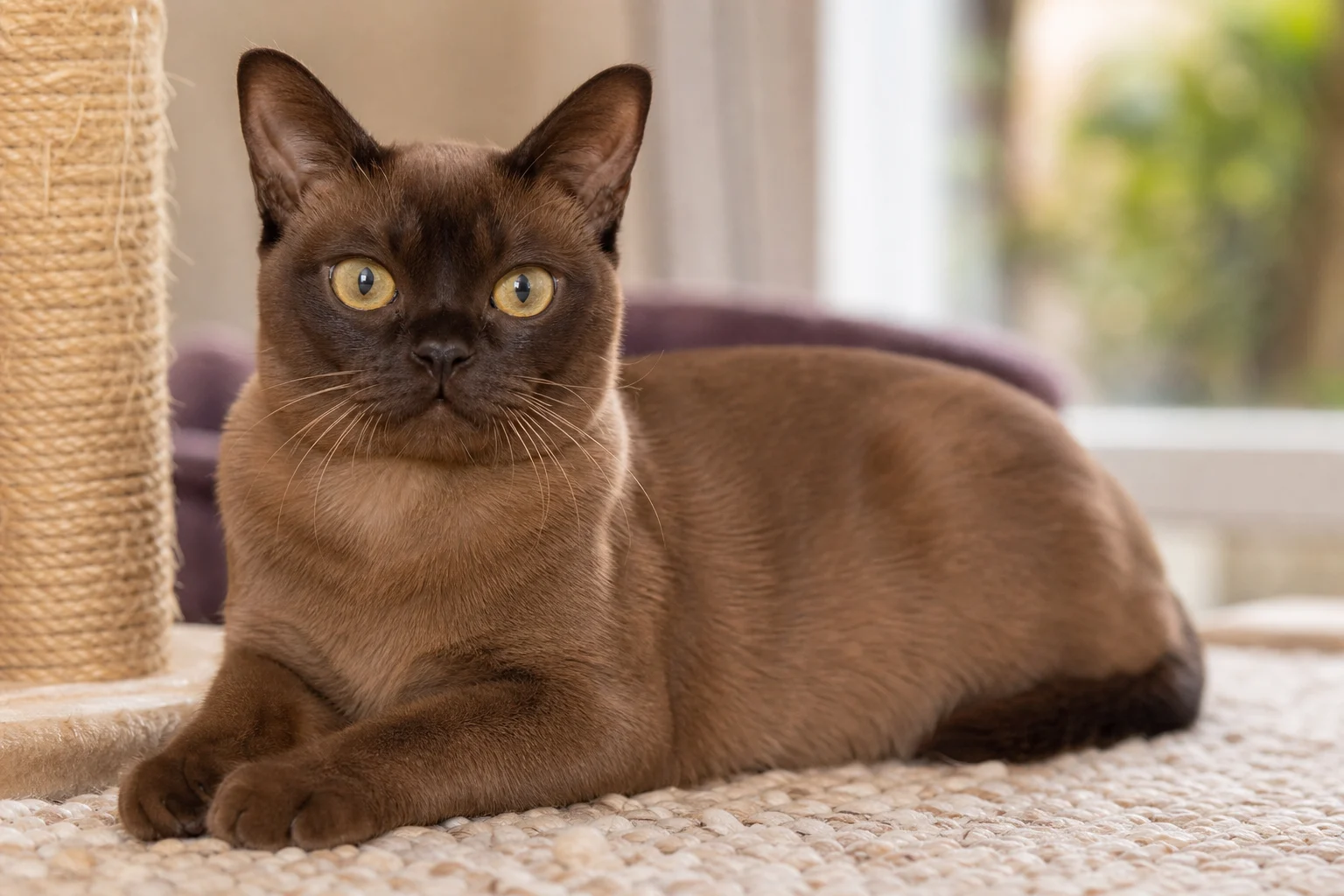
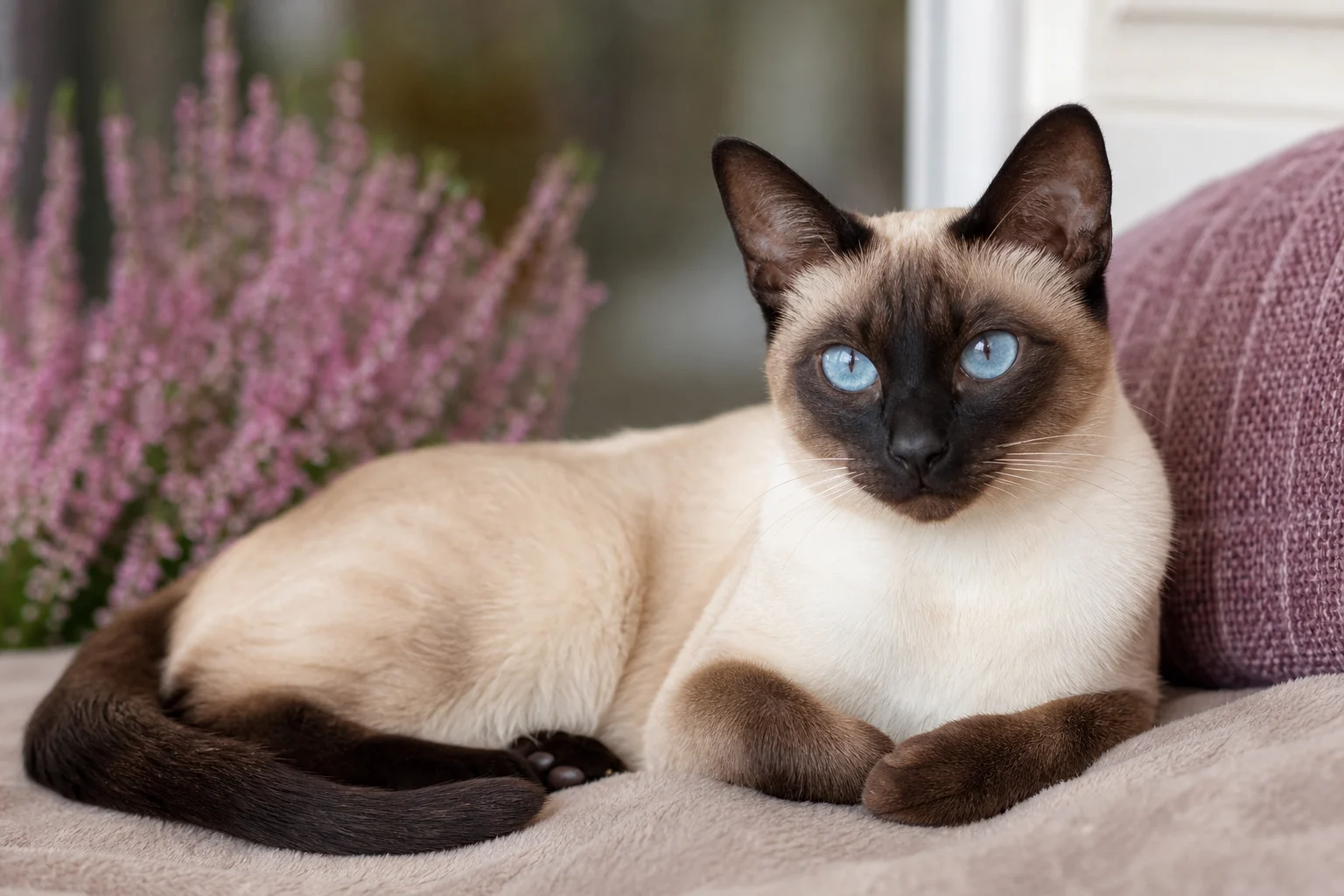
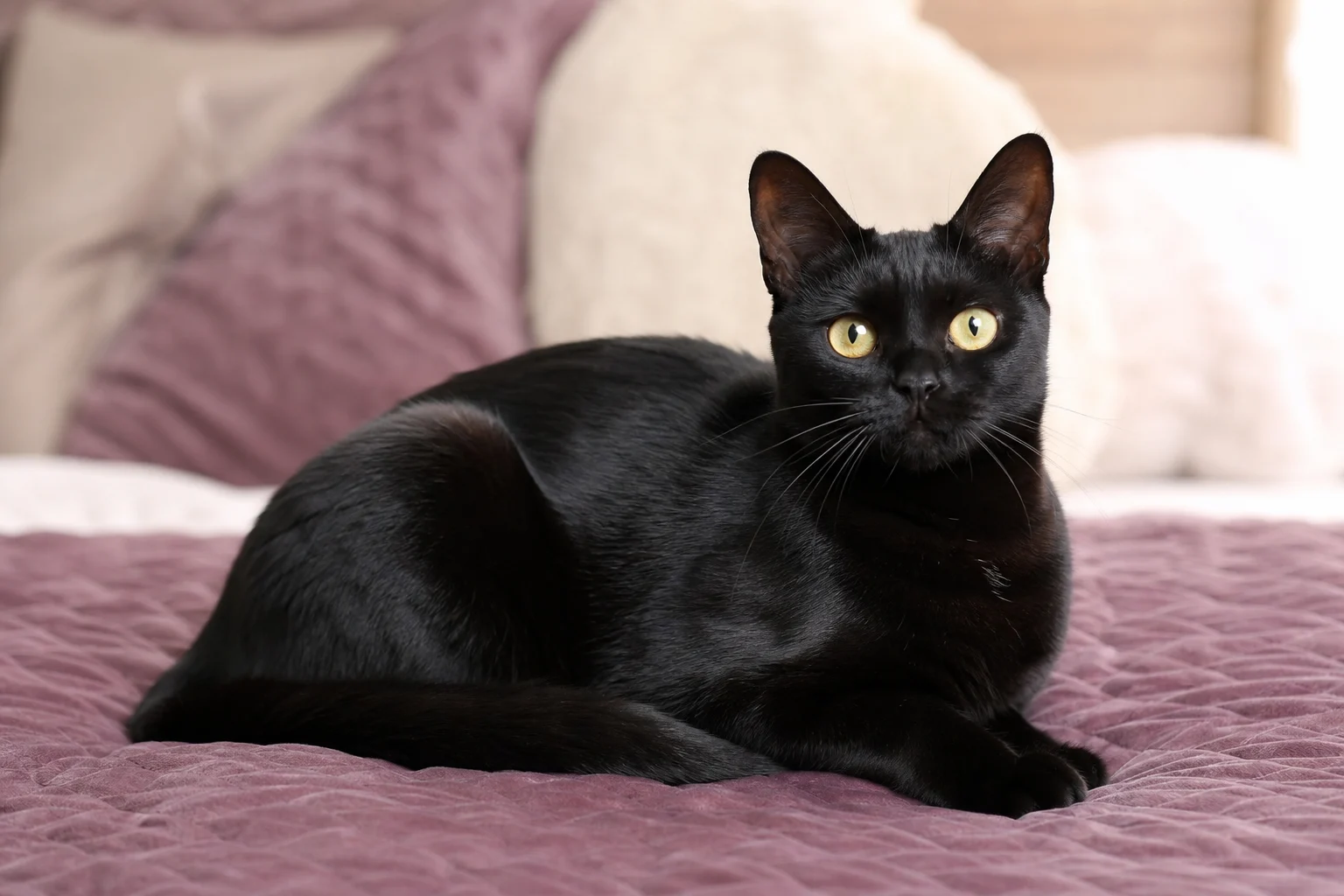
The Burmese is the heavier, even more velcro parent; the Siamese the louder, leggier one; the Bombay a black-lacquered cousin of similar warmth.
Who this breed suits
Households seeking the oriental family's warmth without its extremes — families, home offices, multi-cat homes. The "Which cat fits me?" test shows whether the golden middle fits you.
Not sure what a Tonkinese may eat? The food checker rates individual foods on a traffic-light scale, and the food guide explains what cats can eat and what is toxic.
A good fit for you if …
Frequently asked questions
What exactly is a mink coat?
The Tonk's signature intermediate: point darkening softer than Siamese, body colour lighter than Burmese — with aqua eyes only mink-patterned cats carry.
How loud are Tonkinese?
Conversational: Siamese-adjacent chat at civilised volume. They comment, but rarely lecture.
Can Tonks stay alone?
Poorly — the people-need is Burmese heritage. A second social cat makes working households work.
Which health tests matter?
Hypokalaemia (Burmese side), PRA and amyloidosis history (Siamese side). Ask breeders for all.
Are Tonkinese good with strangers?
Famously — guests get greeted and adopted. Shyness is not in the breed vocabulary.
Tonkinese or Burmese?
The Tonk is a touch lighter, livelier and less clingy; the Burmese heavier and more velcro. Both need company like air.
Similar breeds
Sources: FIFe/TICA breed standard · breed association data · editorial assessment · Last updated 08/2026. On health questions this article never replaces a visit to the vet.