 AI
AIBombay
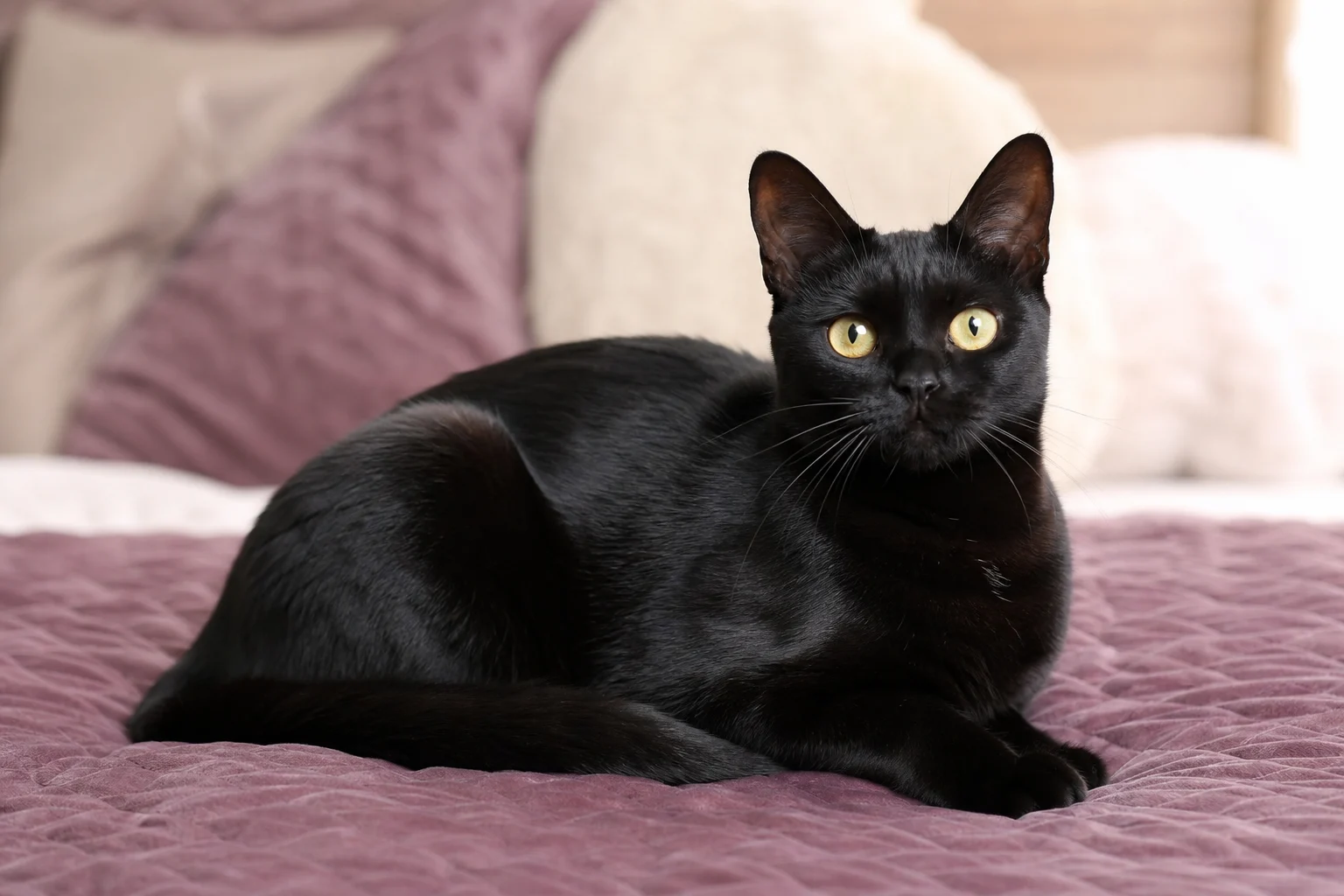
A pocket panther in patent leather — copper eyes, jet-black gloss and a heart set to velcro.
| Size | Medium |
|---|---|
| Weight | 3–5 kg |
| Life expectancy | 12–16 years |
| Origin | United States |
| Type | Pedigree breed (USA) |
| Grooming | very low |
| Activity needs | high |
| Beginner friendly | well suited |
Temperament & suitability
Editorial assessment based on the FIFe breed standard and breed association data.
Guideline for movement & enrichment for this breed.
Traits
Origin & history
Kentucky breeder Nikki Horner spent the 1950s pursuing one image: a miniature black panther with copper eyes. Crossing sable Burmese with black American Shorthairs, she produced exactly that — and named it after India's Bombay, home of the black leopard. Recognised in the 1970s, the "parlor panther" remains a connoisseur's breed: rarer than its charm deserves.
Appearance & size
Everything is black and everything gleams: coat, nose, paw pads — set off by eyes in copper to deep gold. The three-to-five-kilogram body carries Burmese density ("a bowling ball in silk"), and the close-lying coat shines like polished patent leather when healthy. No other colour exists; the uniform is the breed.
Personality & temperament
The panther act ends at the looks. Bombays are warmth incarnate: people-seeking, lap-loyal, playful into age and softly talkative in Burmese tones. They famously monopolise the warmest spot in any room — preferably a human — greet guests, learn fetch and tricks, and handle busy households with sociable ease. Alone is the one thing a Bombay does badly.
Indoor or outdoor living
An indoor companion; the trusting nature and the showpiece gloss both argue against roaming, and a secured balcony covers the sunbathing needs this heat-seeker cherishes. Space demands are modest — the Bombay measures its territory in laps, not square metres. A second social cat carries working-hour gaps; see Indoor cat or outdoor cat?
Enrichment & activity
Playful mid-range energy: daily teaser sessions, fetch rounds and puzzle feeders keep the panther fit, warm laps handle the rest. The clever head enjoys clicker work and learns household routines to the minute.
Grooming
A weekly chamois polish keeps the patent-leather shine; shedding is minimal. The gleam is also a health meter — a dull Bombay coat says check food and vet.
Feeding & health
Quality protein keeps the gloss; portion via the food amount calculator against the solid Burmese appetite. Breeder questions: hypokalaemia gene test and moderate head type (both Burmese heritage), plus HCM checks. Responsibly bred Bombays are sturdy companions.
Costs
Kittens from tested lines cost €800–1,200 — finding a breeder is the harder part in Europe. Running costs are ordinary; the cat cost calculator totals them.
For beginners, children and other pets
A wonderful first cat and family member: patient with children, friendly with dogs and cats, adaptable and warm. The single non-negotiable is company — plan presence or a companion animal from the start.
Similar breeds compared
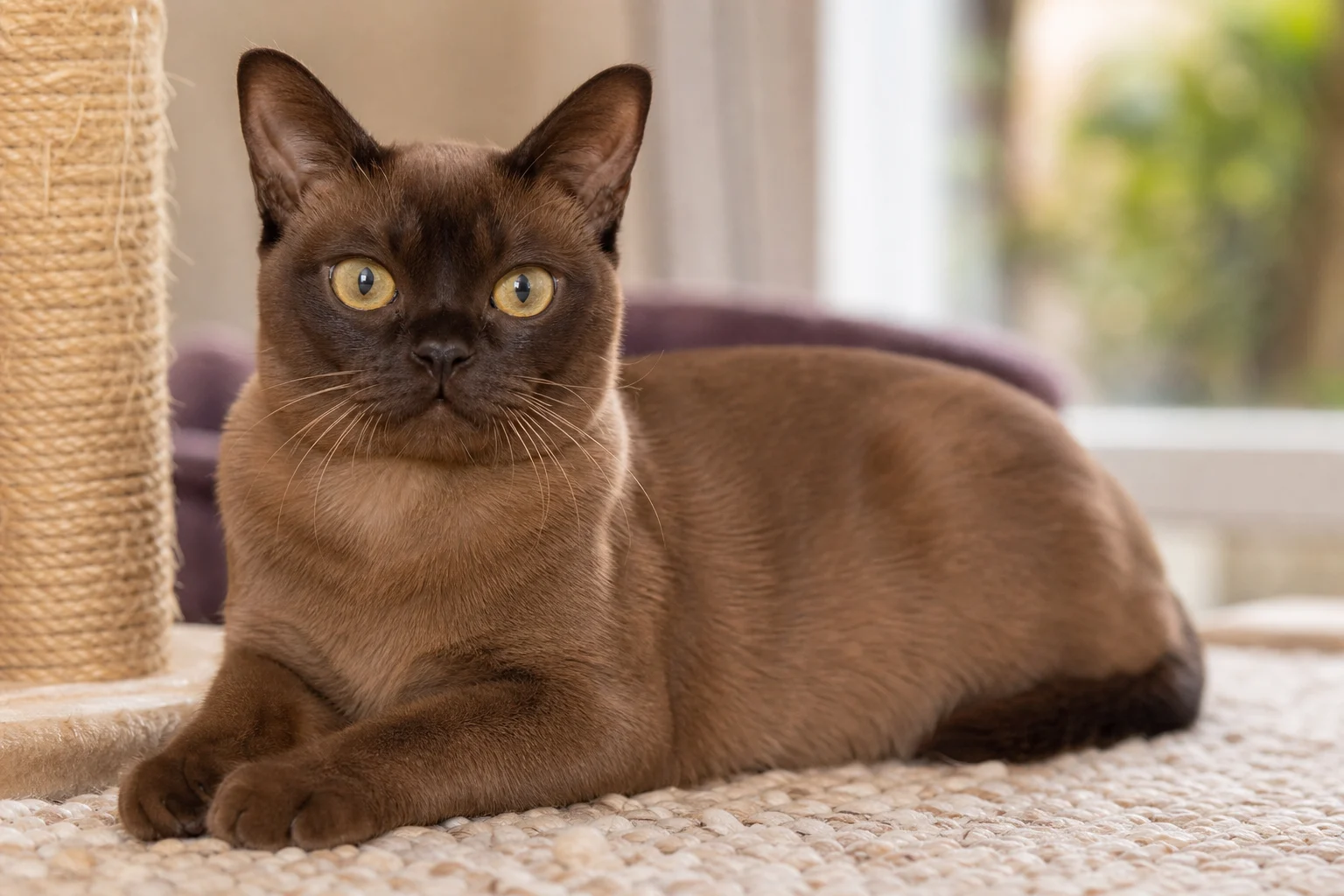
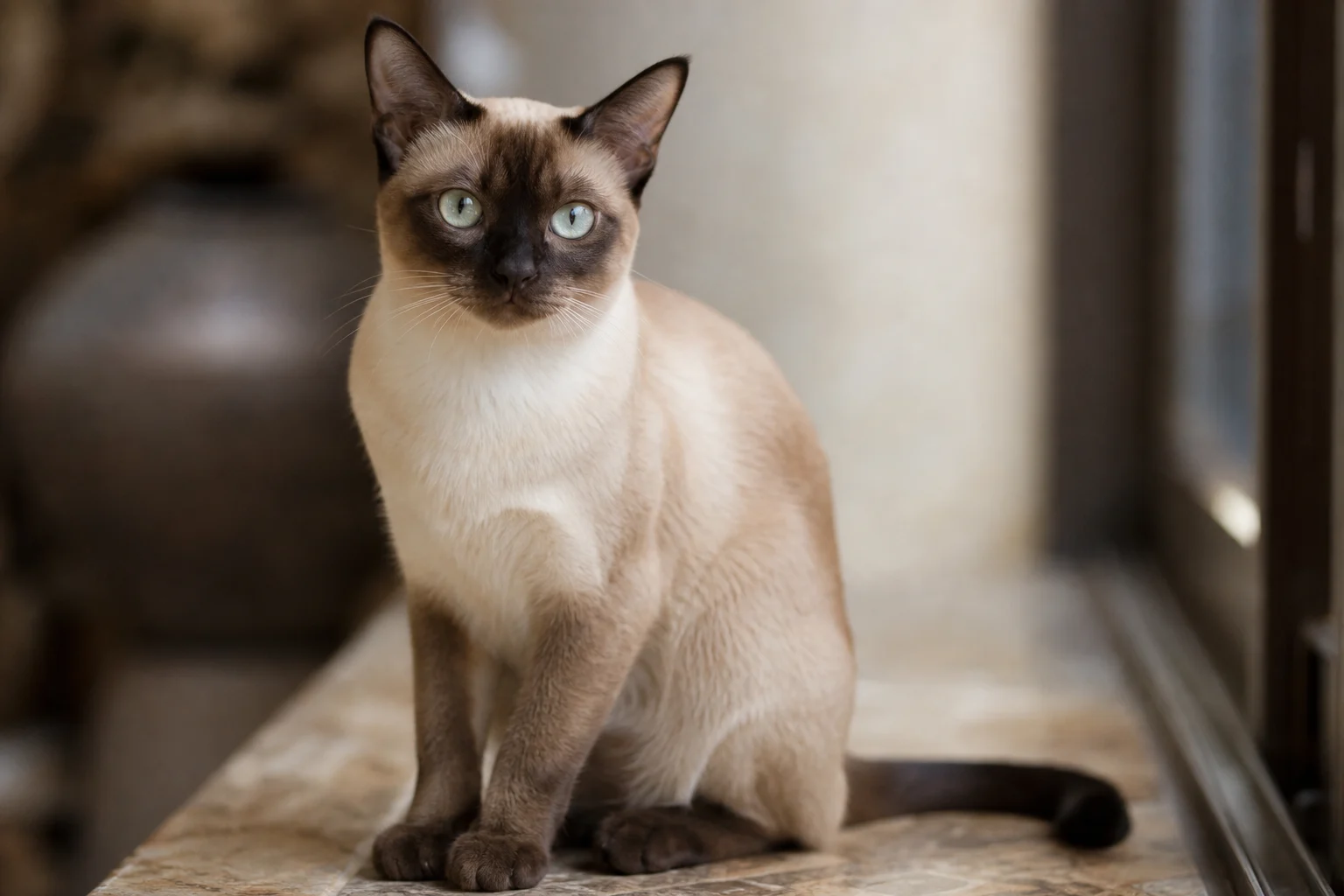
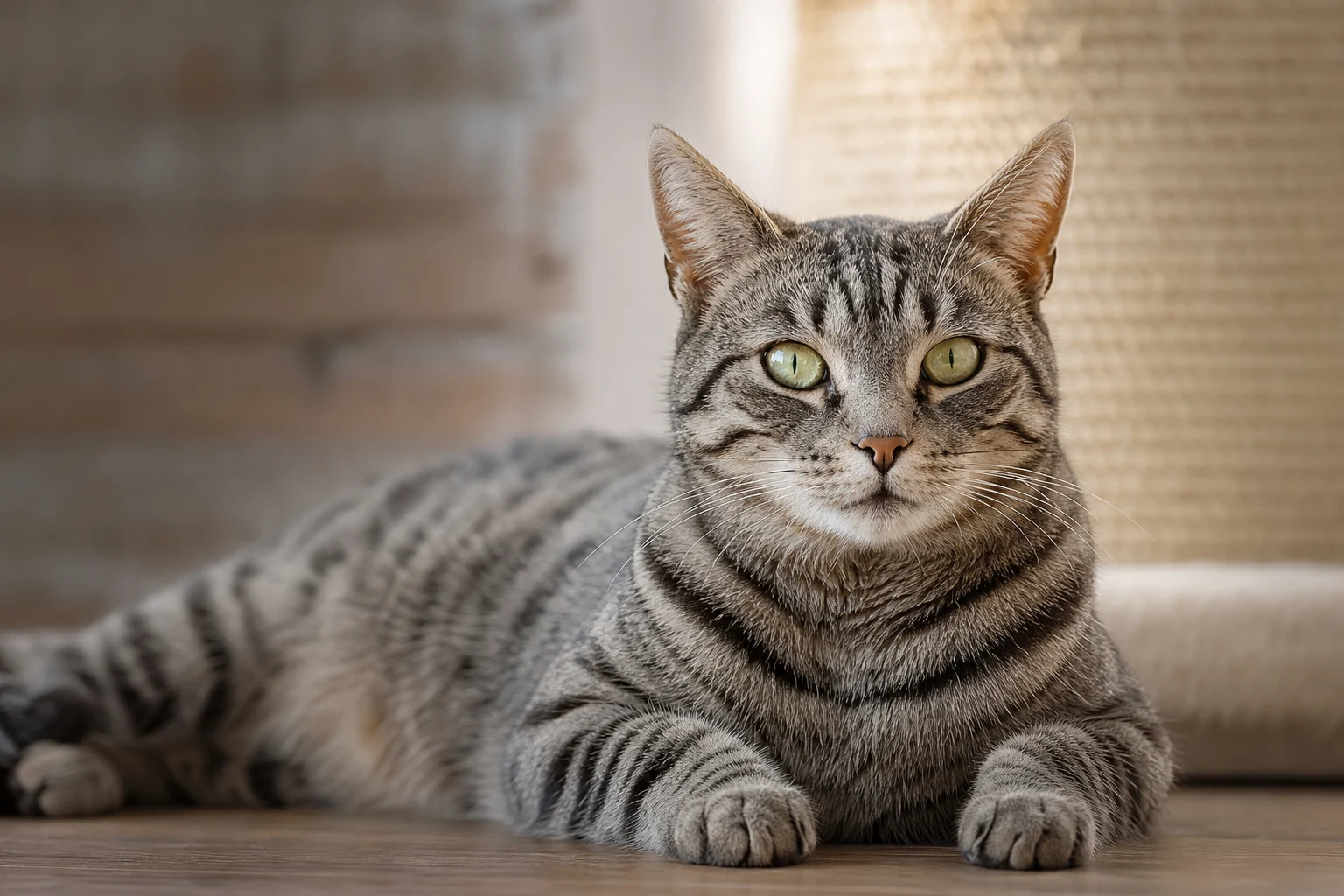
The Burmese is the sable-brown parent with identical velcro warmth; the Tonkinese a cousin in mink tones; the European Shorthair in black delivers panther looks with more independence.
Who this breed suits
Households that want a devoted, gleaming shadow and can offer warmth and company in return. The "Which cat fits me?" test confirms whether a parlor panther fits your evenings.
Not sure what a Bombay may eat? The food checker rates individual foods on a traffic-light scale, and the food guide explains what cats can eat and what is toxic.
A good fit for you if …
Frequently asked questions
Are Bombays always black?
Completely — coat, nose and paw pads. The uniform look with copper eyes is the breed definition; other colours do not exist.
How does the Bombay differ from a black house cat?
Burmese build and temperament: denser body, patent gloss and bred-in people-devotion. A black domestic shorthair is the independent alternative.
Can a Bombay stay alone?
Badly — the Burmese heritage needs company. A second social cat or present humans are part of keeping this breed.
Which health tests matter?
Hypokalaemia gene test, moderate head type and HCM checks — the Burmese-line questions.
Do Bombays get along with dogs?
Notably well — the confident, sociable nature makes them classic dog-household cats.
Why does my Bombay always sit on me?
Heat-seeking is breed folklore: the warmest spot in the room wins, and that spot is usually you.
Similar breeds
Sources: FIFe/TICA breed standard · breed association data · editorial assessment · Last updated 08/2026. On health questions this article never replaces a visit to the vet.