 AI
AIBurmese
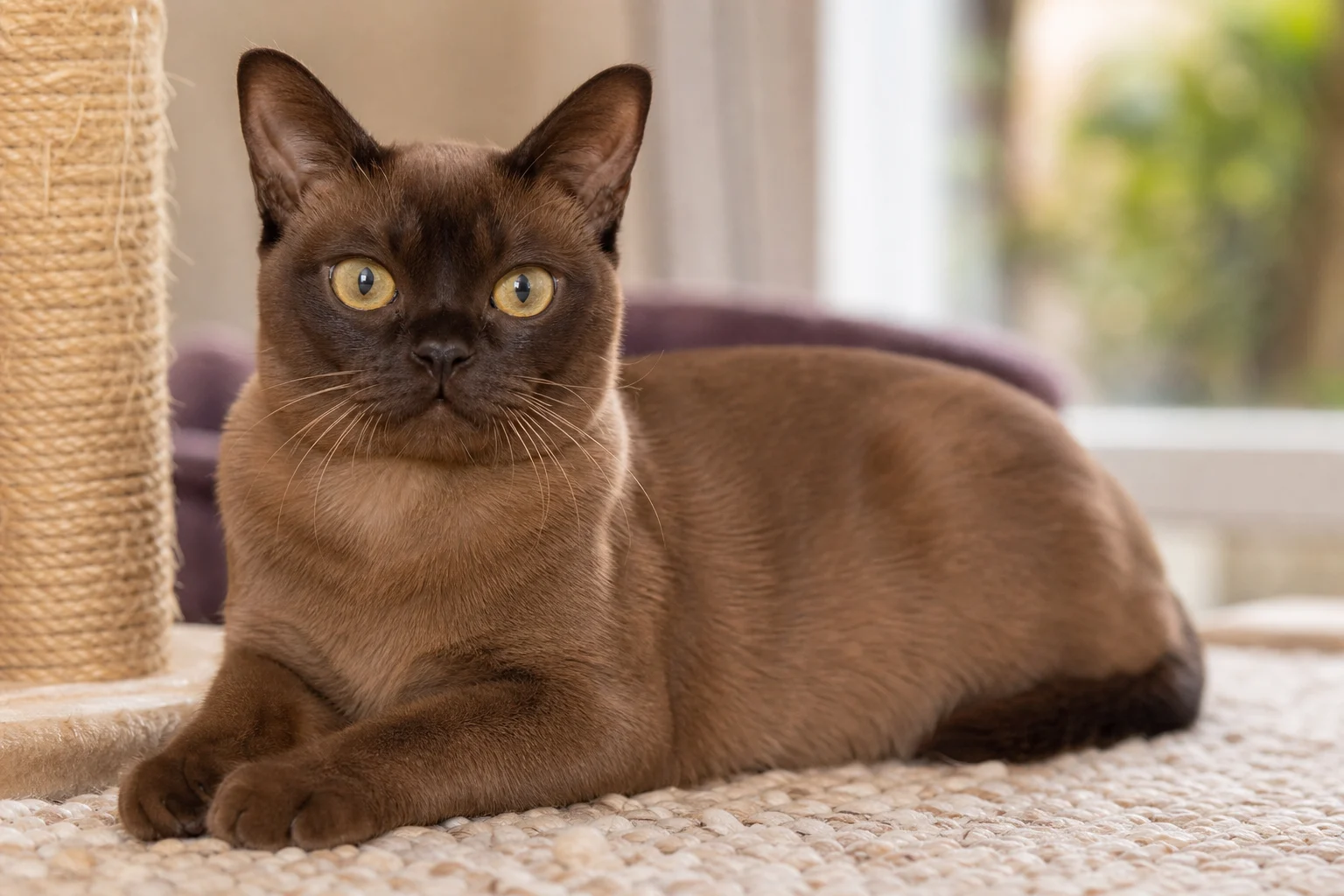
Velcro cat in satin — people-mad, playful into old age and convinced your lap is its office.
| Size | Medium |
|---|---|
| Weight | 3–6 kg |
| Life expectancy | 12–16 years |
| Origin | Myanmar / United States |
| Type | Pedigree breed |
| Grooming | very low |
| Activity needs | high |
| Beginner friendly | well suited |
Temperament & suitability
Editorial assessment based on the FIFe breed standard and breed association data.
Guideline for movement & enrichment for this breed.
Traits
Origin & history
Every Burmese traces to one cat: Wong Mau, a small brown female brought from Burma to America in 1930. Bred to Siamese, her descendants established a new breed carrying the "Burmese gene" — a point mutation that darkens the whole body to rich sable instead of restricting colour to the extremities. British and American lines drifted into two types over the decades; both share the character that made the breed famous: an almost dog-like need to be with people.
Appearance & size
Deceptively heavy: the Burmese packs three to six kilograms of dense muscle into a compact, rounded body — breeders call it "a brick wrapped in silk". The satin coat lies short and gleaming in sable brown, blue, chocolate, lilac and tortie shades; the large golden eyes complete a face that always looks slightly amazed at how wonderful you are.
Personality & temperament
The Burmese has never heard that cats are independent. It supervises from shoulders, sleeps in beds, greets visitors like a host, chats in a soft rusty voice and plays fetch into its teens. Its trust is total and its need for company absolute — this breed physically wilts when ignored. Many describe it as the ideal middle of the oriental family: Siamese devotion at two-thirds volume.
Indoor or outdoor living
An indoor cat by trust alone — the Burmese would greet a burglar and follow a stranger. A secured balcony covers fresh air. Indoors it needs less equipment than presence: your lap, your bed, your desk. For working households a second social cat is non-negotiable; the guide on keeping several cats shows the setup.
Enrichment & activity
Playful and clever, the Burmese enjoys daily fetch, teaser hunts, clicker tricks and puzzle feeders — ideally with you attached. Solo entertainment is beside the point; the game is the shared attention.
Grooming
Almost nothing: the satin coat needs a weekly polish with a rubber mitt and gleams on its own. A grooming-free breed with a grooming-intensive heart.
Feeding & health
Solid appetite on a muscular frame — portion via the food amount calculator. Breeder questions: hypokalaemia (a gene test exists), diabetes tendency in some lines — keep weight strictly lean — and, in extreme-typed lines, head-defect history; moderate type is the sound choice. European lines are generally robust.
Costs
Kittens from tested lines cost €800–1,200; running costs are ordinary. The cat cost calculator totals the honest picture.
For beginners, children and other pets
A glorious family cat: patient, playful and genuinely fond of children, sociable with cats and dog-tolerant. Beginners succeed if the company requirement is honestly met — a Burmese alone at home is the one guaranteed failure mode.
Similar breeds compared
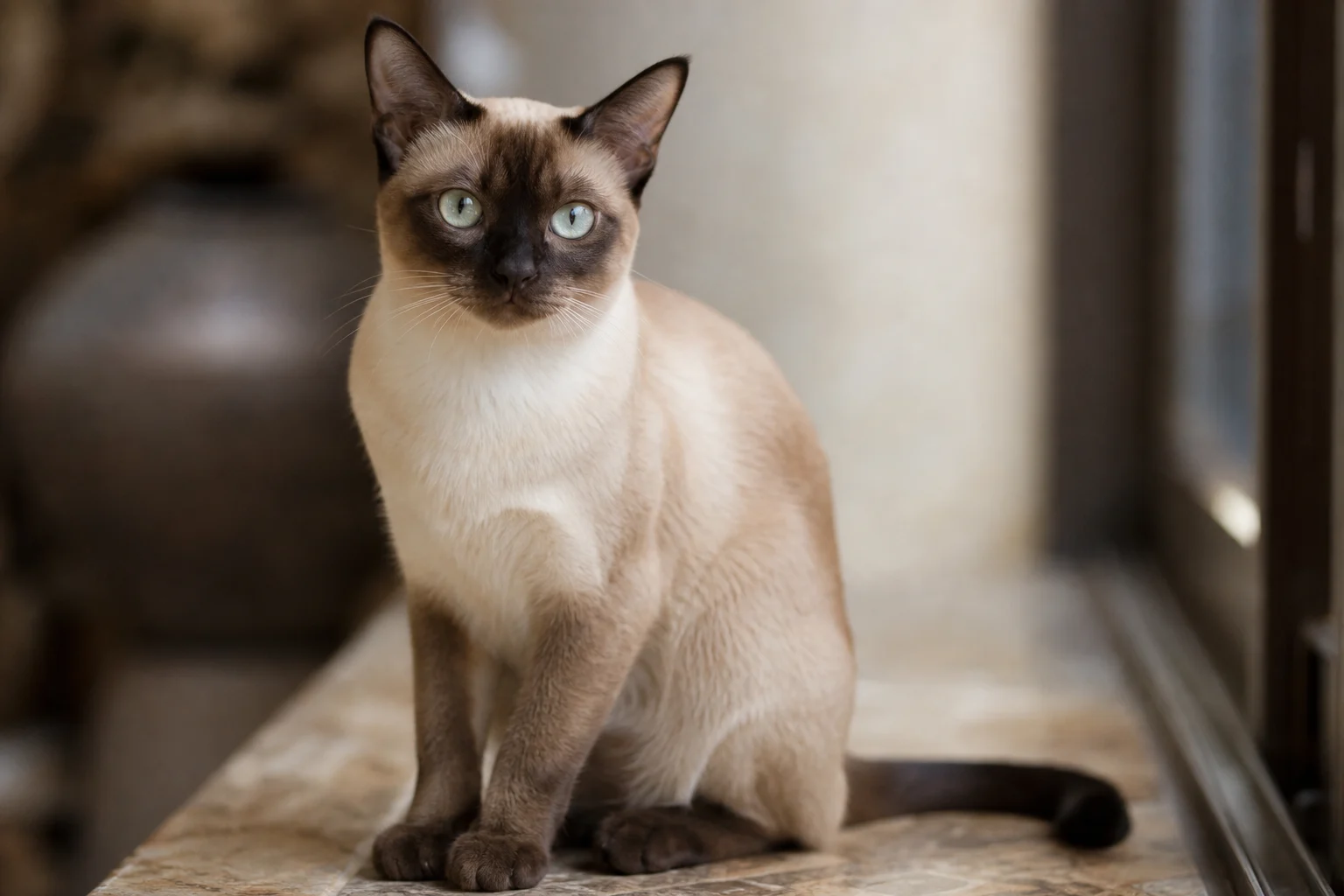
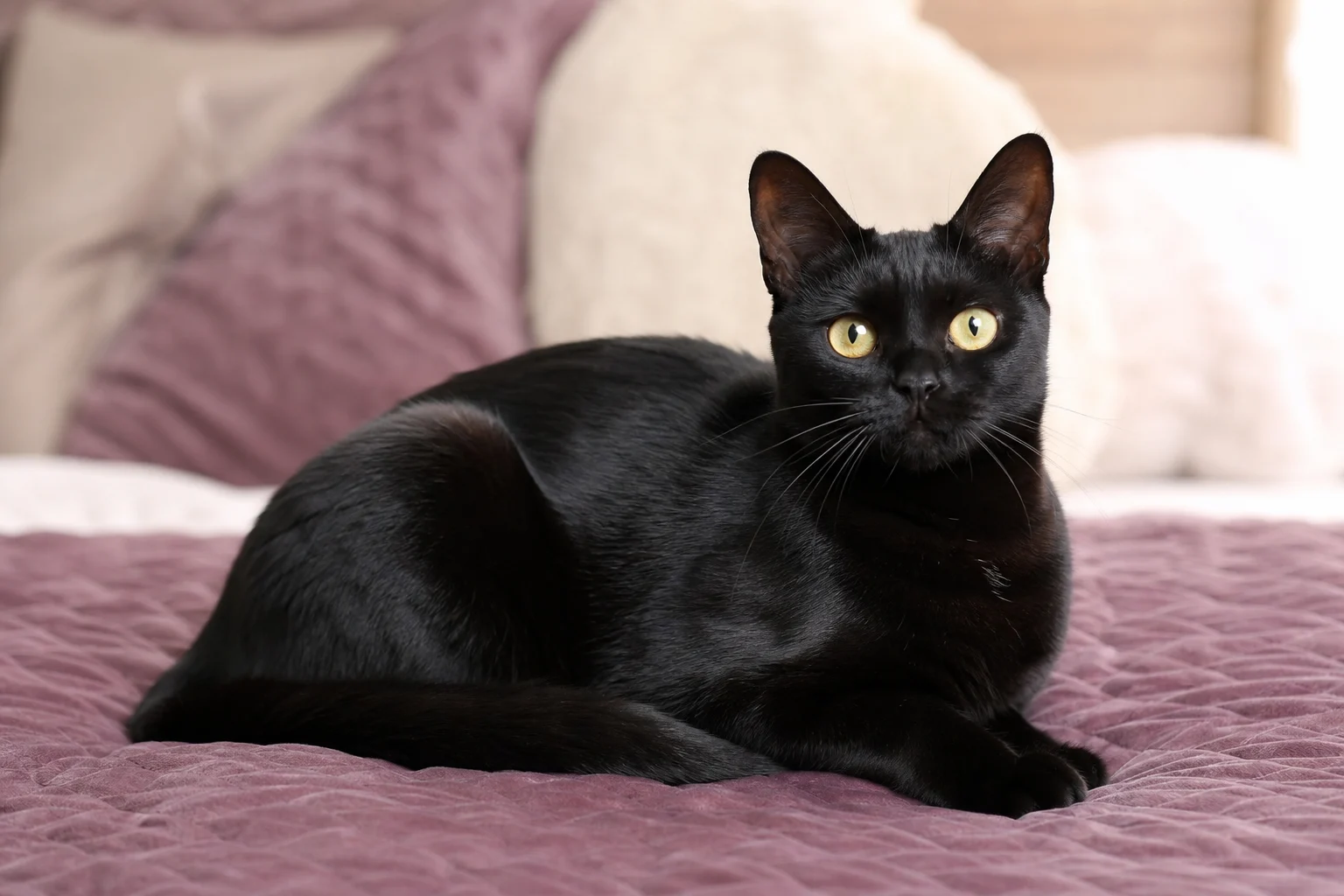
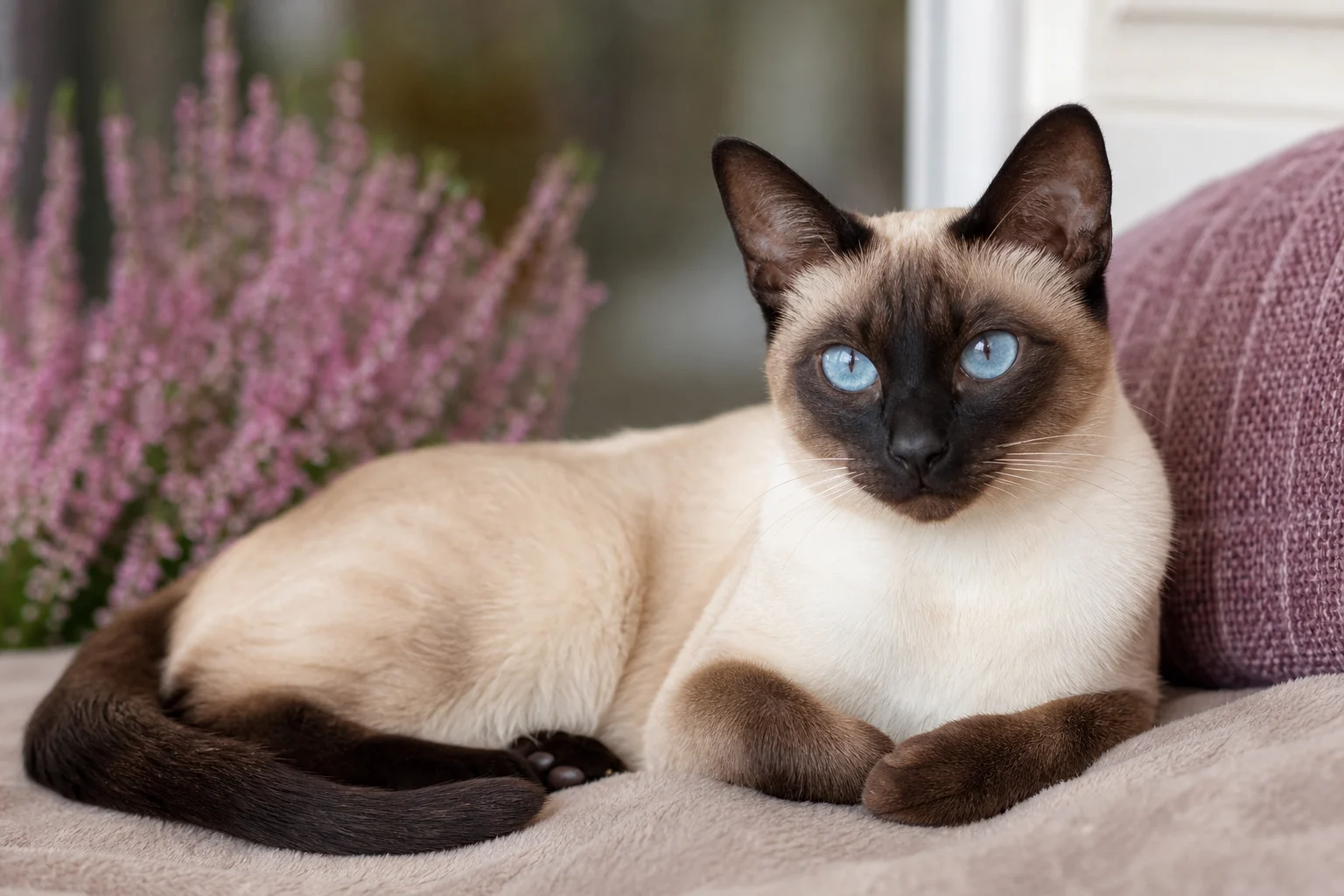
The Tonkinese is the deliberate Burmese-Siamese middle; the Bombay the black-lacquered Burmese descendant; the Siamese the louder, leggier cousin.
Who this breed suits
Households with reliable presence that want a devoted, playful shadow — families, home offices, multi-cat homes. The "Which cat fits me?" test checks whether your day offers Burmese-grade company.
Not sure what a Burmese may eat? The food checker rates individual foods on a traffic-light scale, and the food guide explains what cats can eat and what is toxic.
A good fit for you if …
Frequently asked questions
Are Burmese really that people-fixated?
Famously — shoulder rides, bed sharing and constant supervision are standard. The breed suffers genuinely when alone; company is a keeping requirement.
How loud are Burmese?
Talkative but softer than Siamese — a rusty, gentle chatter rather than operatic announcements.
Which health topics matter?
The hypokalaemia gene test, lean weight against the diabetes tendency of some lines, and choosing moderate head types. European lines are otherwise robust.
Why does my Burmese feel so heavy?
The famous 'brick in silk' build: dense muscle in a compact frame. A fit Burmese outweighs its silhouette.
Do Burmese play fetch?
Most enthusiastically and into old age — one of the breed's signature joys.
Burmese or Tonkinese?
The Tonkinese is the deliberate middle of Burmese and Siamese — slightly lighter build, aqua eyes, similar sociability. Both need company.
Similar breeds
Sources: FIFe/TICA breed standard · breed association data · editorial assessment · Last updated 08/2026. On health questions this article never replaces a visit to the vet.