 AI
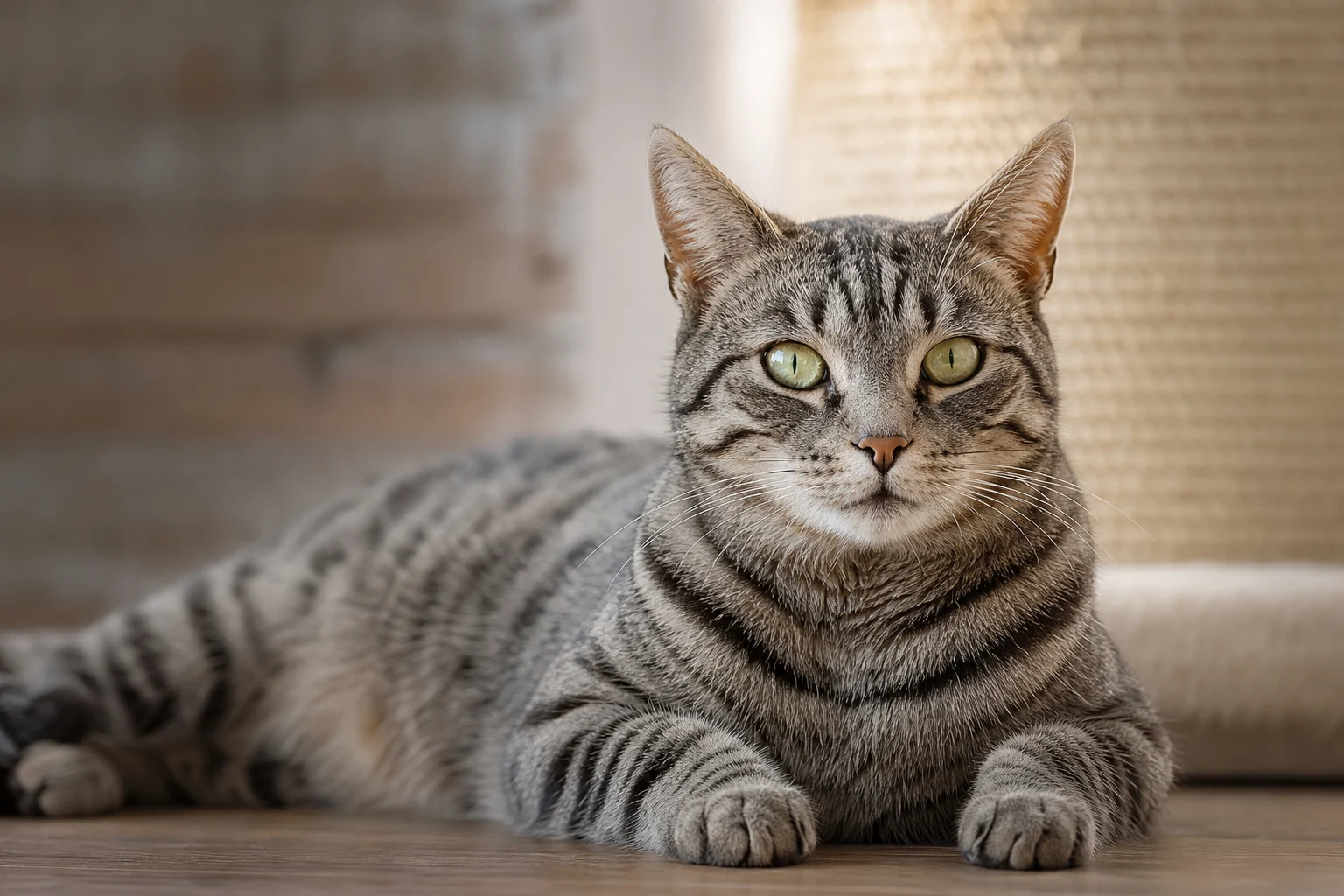
AIEuropean Shorthair
The healthy original — robust, balanced and wonderfully uncomplicated in every colour nature invented.
| Size | Medium |
|---|---|
| Weight | 3–6 kg |
| Life expectancy | 15–20 years |
| Origin | Europe |
| Type | Natural breed (Europe) |
| Grooming | low |
| Activity needs | high |
| Beginner friendly | well suited |
Temperament & suitability
Editorial assessment based on the FIFe breed standard and breed association data.
Guideline for movement & enrichment for this breed.
Traits
Origin & history
The European Shorthair is the pedigree form of Europe's ancestral house cat — the mousers that travelled with the Romans and shaped farmyards for two millennia. Scandinavian breeders standardised the type in the 20th century, and FIFe recognised it in 1982, deliberately preserving the natural build instead of exaggerating anything. The result is the rarest thing in pedigree cats: a breed whose defining feature is normality — and the health that comes with it.
Appearance & size
A medium, well-muscled cat of three to six kilograms that looks like the platonic ideal of "cat": no extremes, no exaggerations, just balanced proportions and an easy short coat. Every natural colour and pattern occurs — classic tabby, mackerel, solid, bicolour, tortoiseshell — with eye colour to match. Life expectancy is the breed's quiet superlative: fifteen to twenty years are normal.
Personality & temperament
Balanced is the keyword: playful without hyperactivity, affectionate without clinging, alert without nervousness. The ESH adapts to its household — lively in a family, calm with a senior — and keeps the full hunter's toolkit sharp. Individual characters vary more than in narrowly bred lines, which makes meeting the specific kitten more informative than reading any profile.
Indoor or outdoor living
The all-terrain cat: happy indoors with normal equipment and play, happier still with a secured garden, and — as a robust, street-smart type — the breed most often kept with classic outdoor access. Weigh the safety honestly like for any cat; the numbers are in Indoor cat or outdoor cat?
Enrichment & activity
A solid daily play routine, climbing options and the occasional food puzzle keep an ESH content. As a natural hunter it particularly loves prey-style games — and, given outdoor access, will keep the local rodents on their toes.
Grooming
Minimal: weekly brushing, a little more in moult. The functional short coat organises itself — this is the breed for people who want a cat, not a grooming hobby.
Feeding & health
No breed-typical hereditary diseases worth naming — the wide gene pool is the health insurance. Standard care applies: quality food portioned via the food amount calculator, vaccinations, dental checks. The most likely "illness" is old age, two decades from now.
Costs
Pedigreed ESH kittens cost €500–900 — and the breed's near-twin waits in every shelter: domestic shorthairs share the genetics and the virtues at an adoption fee. Either way, running costs are the baseline case of the cat cost calculator.
For beginners, children and other pets
The definitive beginner and family recommendation: robust enough for children's households, sociable with cats and dogs, forgiving of mistakes and healthy by design. If a first cat should simply work, it looks like this.
Similar breeds compared
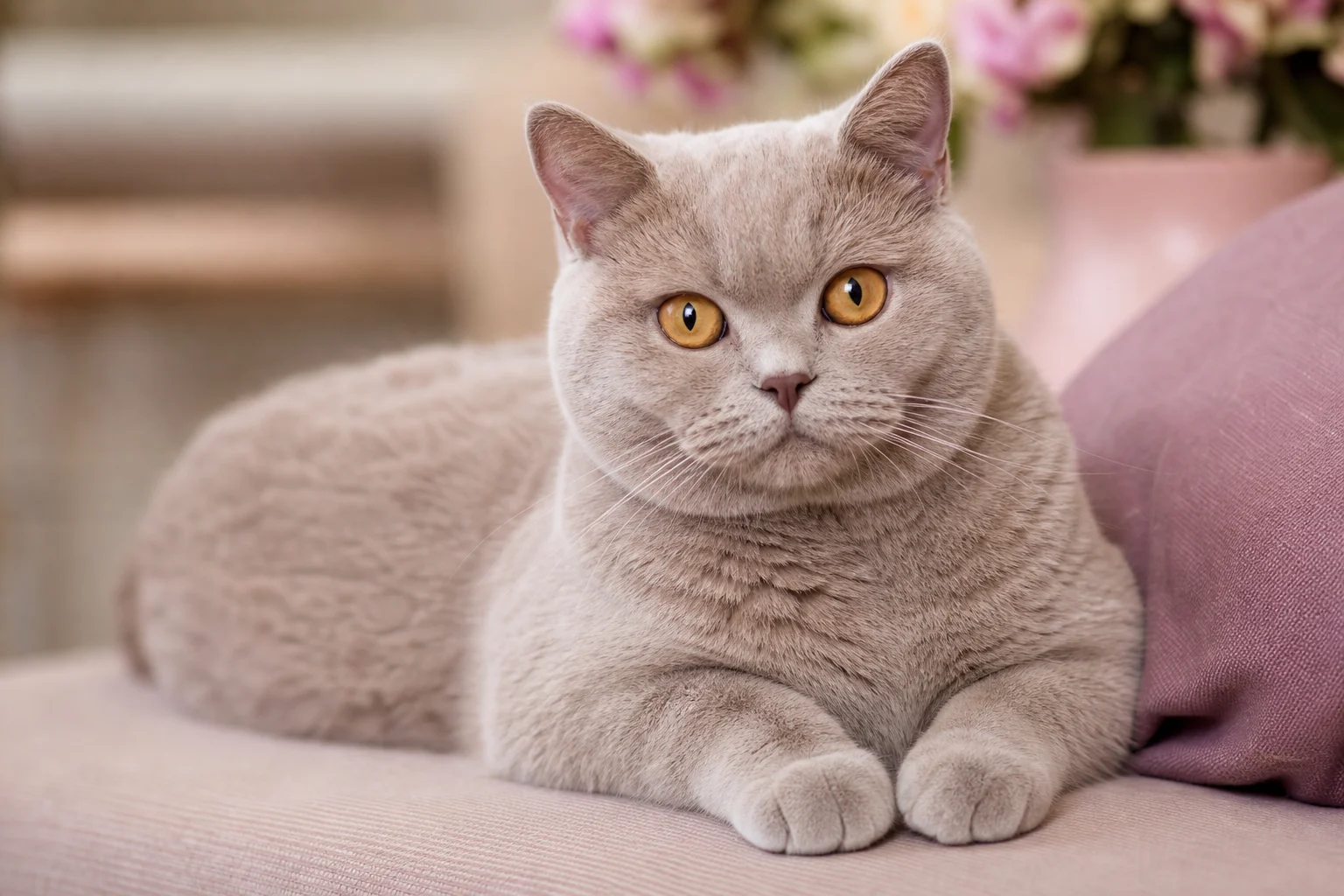
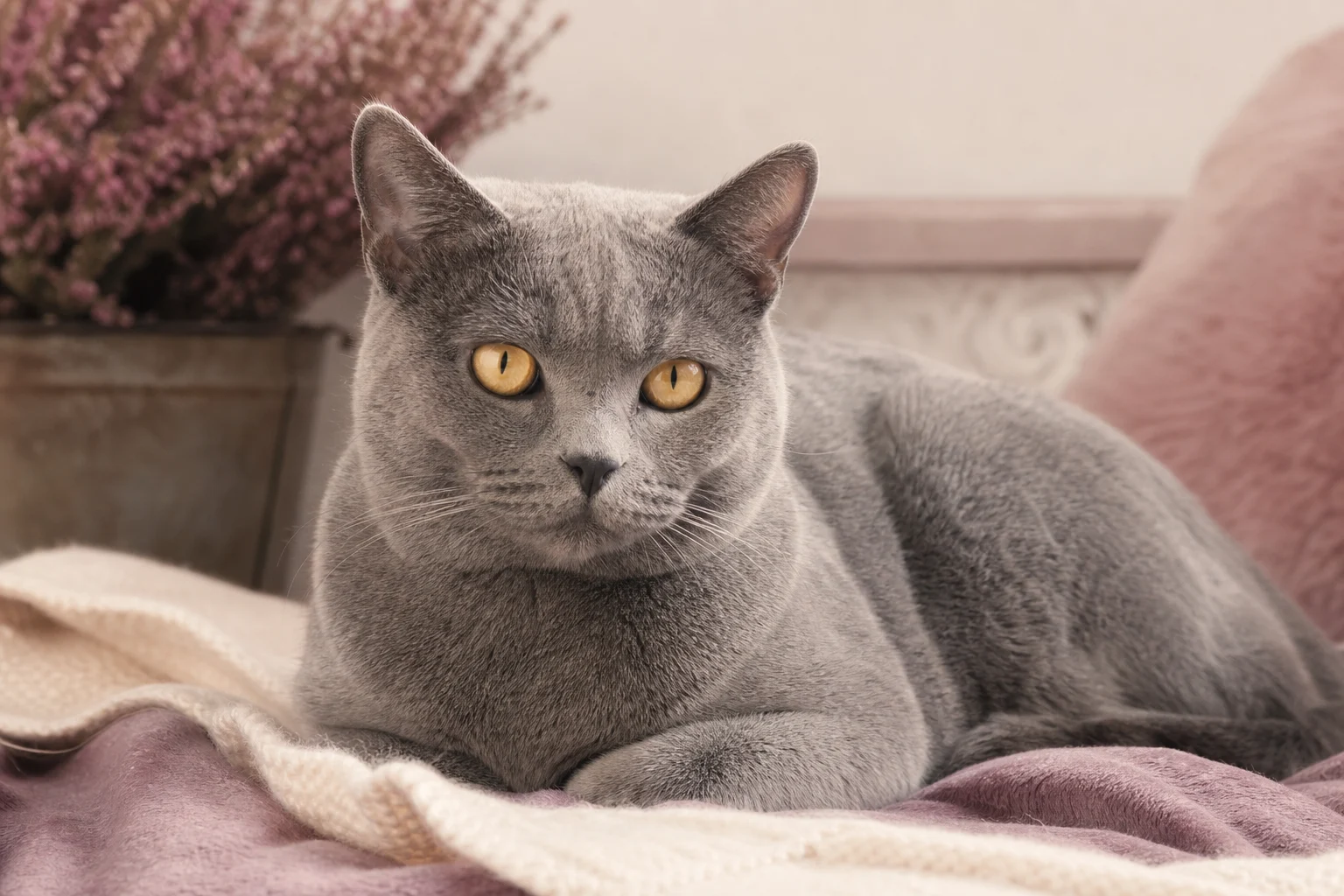
The British Shorthair adds plush and phlegm; the Chartreux offers the quiet blue specialist version; the American Shorthair is the transatlantic sibling with the same working-cat virtues.
Who this breed suits
Practically everyone — families, beginners, outdoor households, seniors. If the "Which cat fits me?" test gives you no exotic requirements, the European Shorthair (or its shelter twin) is the most sensible cat you can choose.
Not sure what a European Shorthair may eat? The food checker rates individual foods on a traffic-light scale, and the food guide explains what cats can eat and what is toxic.
A good fit for you if …
Frequently asked questions
What distinguishes the ESH from a normal house cat?
Documented ancestry and standardised type — genetically they are close relatives. The shelter house cat delivers most ESH virtues at an adoption fee.
How healthy is the breed really?
Exceptionally: the wide gene pool avoids the hereditary diseases of narrow breeding, and 15–20 years of life are normal.
Is the ESH good for beginners?
The best possible choice: robust, balanced, forgiving and low-maintenance.
Can an ESH live indoors only?
Yes, with play and climbing options — though the breed also handles secured or classic outdoor life better than most pedigree cats.
How much grooming is needed?
Weekly brushing, slightly more in moult. The functional coat cares for itself.
Are ESH characters uniform?
No — the natural breeding base preserves individual variety. Meet the specific kitten; it tells you more than any breed text.
Similar breeds
Sources: FIFe/TICA breed standard · breed association data · editorial assessment · Last updated 08/2026. On health questions this article never replaces a visit to the vet.