 AI
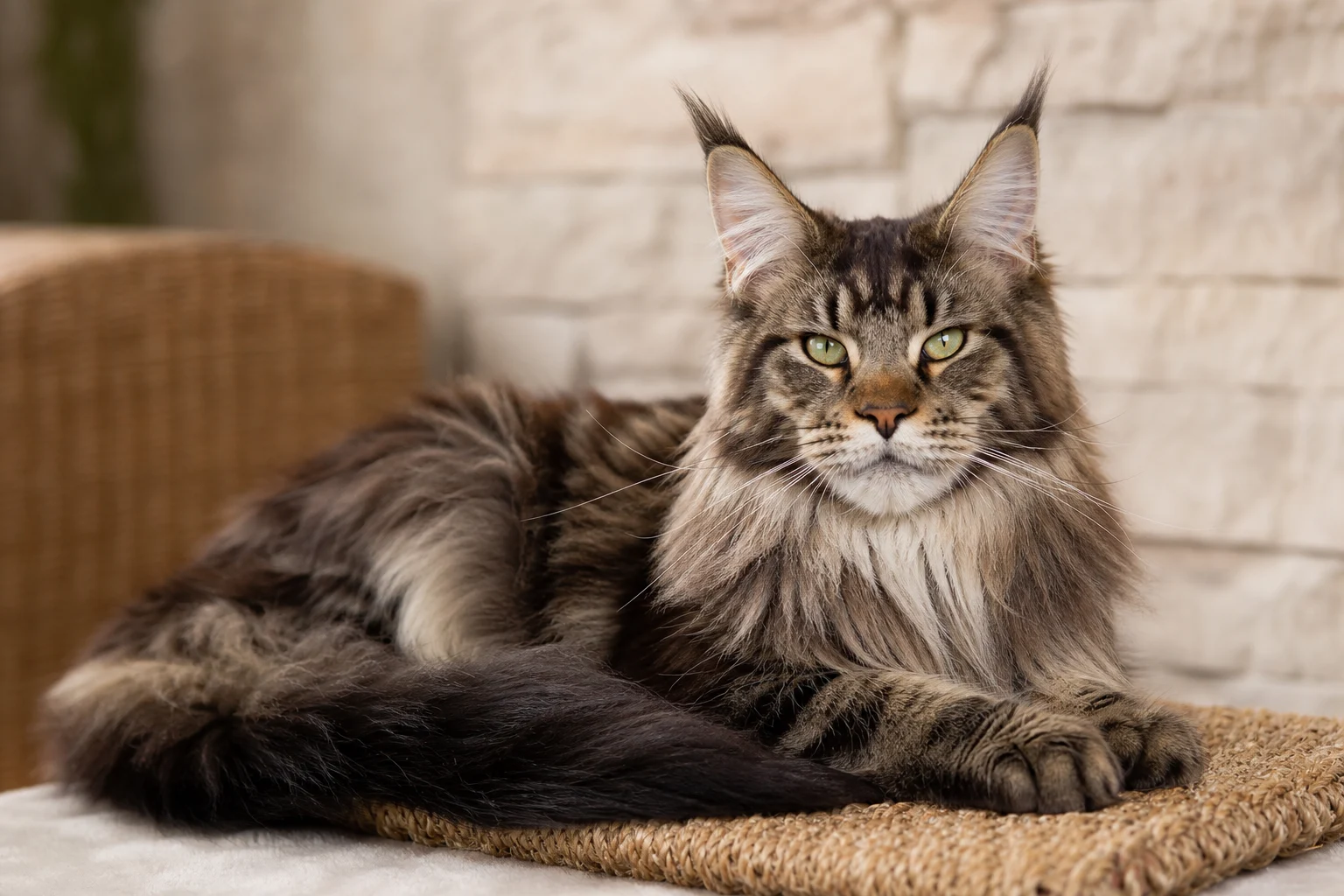
AIMaine Coon
Gentle giant with a big heart — sociable, clever and famously easy-going.
| Size | Very large |
|---|---|
| Weight | 5–9 kg |
| Life expectancy | 12–15 years |
| Origin | United States |
| Type | Natural breed (USA) |
| Grooming | high |
| Activity needs | high |
| Beginner friendly | well suited |
Temperament & suitability
Editorial assessment based on the FIFe breed standard and breed association data.
Guideline for movement & enrichment for this breed.
Traits
Origin & history
The Maine Coon is North America's oldest natural breed and the official state cat of Maine. Its ancestors were rugged farm cats that survived harsh New England winters — over generations, that climate selected for a dense, water-repellent coat, tufted paws that work like snowshoes and an imposing frame. The folklore about raccoon or lynx ancestry is biologically impossible but explains the name: "Coon" is short for raccoon. Shown at early American cat shows in the 1860s, the breed was later eclipsed by Persians, rediscovered in the 1950s and is today one of the most popular pedigree cats in the world.
Appearance & size
Everything about the Maine Coon is generous: a long, rectangular body, a broad chest, a bushy tail the length of the back and ear tufts like a lynx. Males commonly weigh six to nine kilograms, females noticeably less — and the breed matures slowly, reaching full size only at three to four years. The semi-long coat is shaggy rather than silky, with a ruff around the neck and britches on the hind legs, and comes in most classic colours from brown tabby to black, red, blue and silver.
Personality & temperament
The "gentle giant" label is deserved. Maine Coons are friendly, confident and remarkably unshakeable — commotion, visitors and children rarely rattle them. They attach closely to their people and follow them from room to room, yet they are companions rather than lap cats: nearby is good enough, being carried around is not their thing. Typical for the breed are a fondness for water, dexterous paws that open doors and fish toys out of boxes, and a repertoire of soft chirps and trills instead of loud meowing.
Indoor or outdoor living
A Maine Coon can live happily indoors if the home is built for its size: load-bearing climbing furniture, wide platforms, long runways to romp. A secured balcony or a catio suits the breed perfectly, and many Maine Coons enjoy supervised outdoor time in a cat-proof garden. If it lives indoors only, a feline companion is strongly advised — this is a social breed that dislikes being alone. More on the trade-offs in our guide Indoor cat or outdoor cat?
Enrichment & activity
Despite the calm nature, this is a clever working cat that wants employment: fetch games, puzzle feeders, clicker training and water play all land well. Plan several play sessions a day — a bored Maine Coon invents its own projects, and with paws that strong, cupboard doors are no obstacle.
Grooming
The shaggy semi-long coat is surprisingly low-maintenance for its volume, but it does need brushing two to three times a week, daily during the spring and autumn moult — otherwise mats form in the armpits and britches. Check ears and claws regularly; the sheer body weight makes overgrown claws uncomfortable faster than in small cats.
Feeding & health
A big, slow-maturing cat needs high-quality protein-rich food and controlled portions — the breed's comfortable temperament makes weight gain easy. Use the food amount calculator as a starting point. Health-wise the breed is robust, but three hereditary issues deserve attention when choosing a breeder: hypertrophic cardiomyopathy (HCM), hip dysplasia — unusual in cats, but relevant in a breed this heavy — and spinal muscular atrophy (SMA). Reputable breeders test for all three.
Costs
Kittens from health-tested lines typically cost €900–1,400. Running costs sit above average: more food, bigger litter trays and genuinely stable cat furniture. The cat cost calculator gives you a realistic monthly and lifetime picture.
For beginners, children and other pets
Few breeds fit family life better: patient with children, tolerant of respectful dogs and other cats, and forgiving of beginner mistakes. The main requirements are space, sturdy equipment and company — a single Maine Coon in an empty flat all day is the one setup that reliably goes wrong.
Similar breeds compared
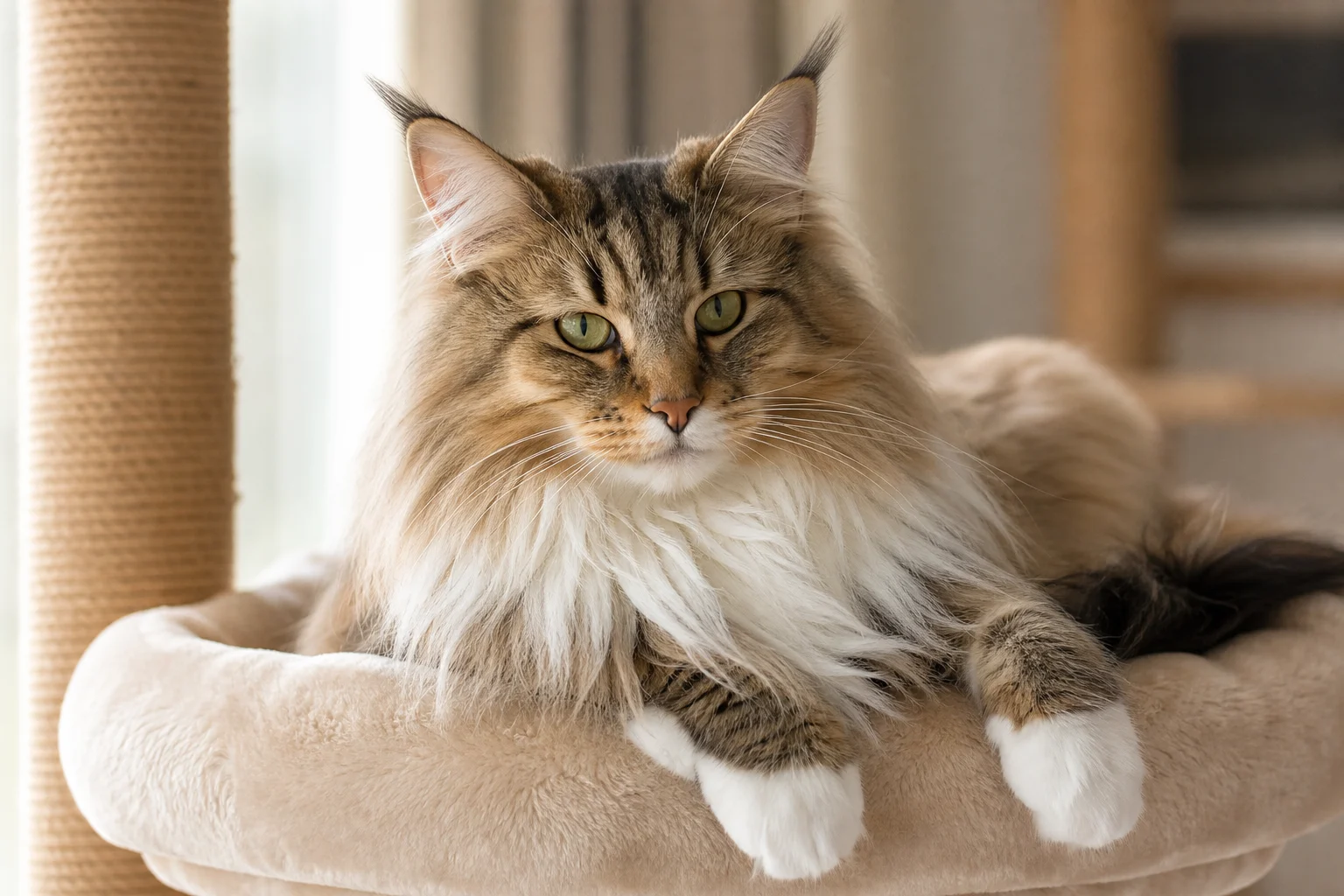
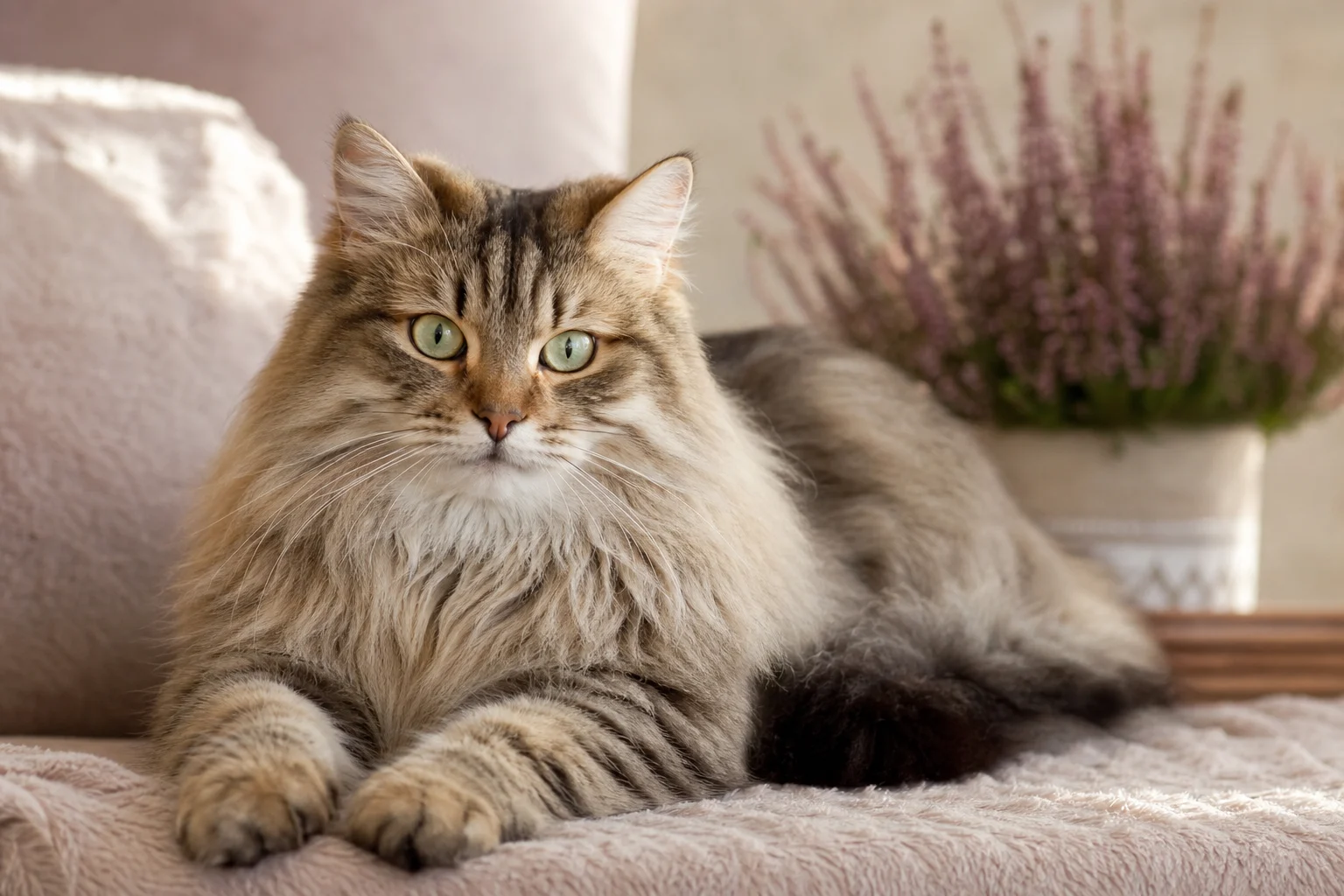
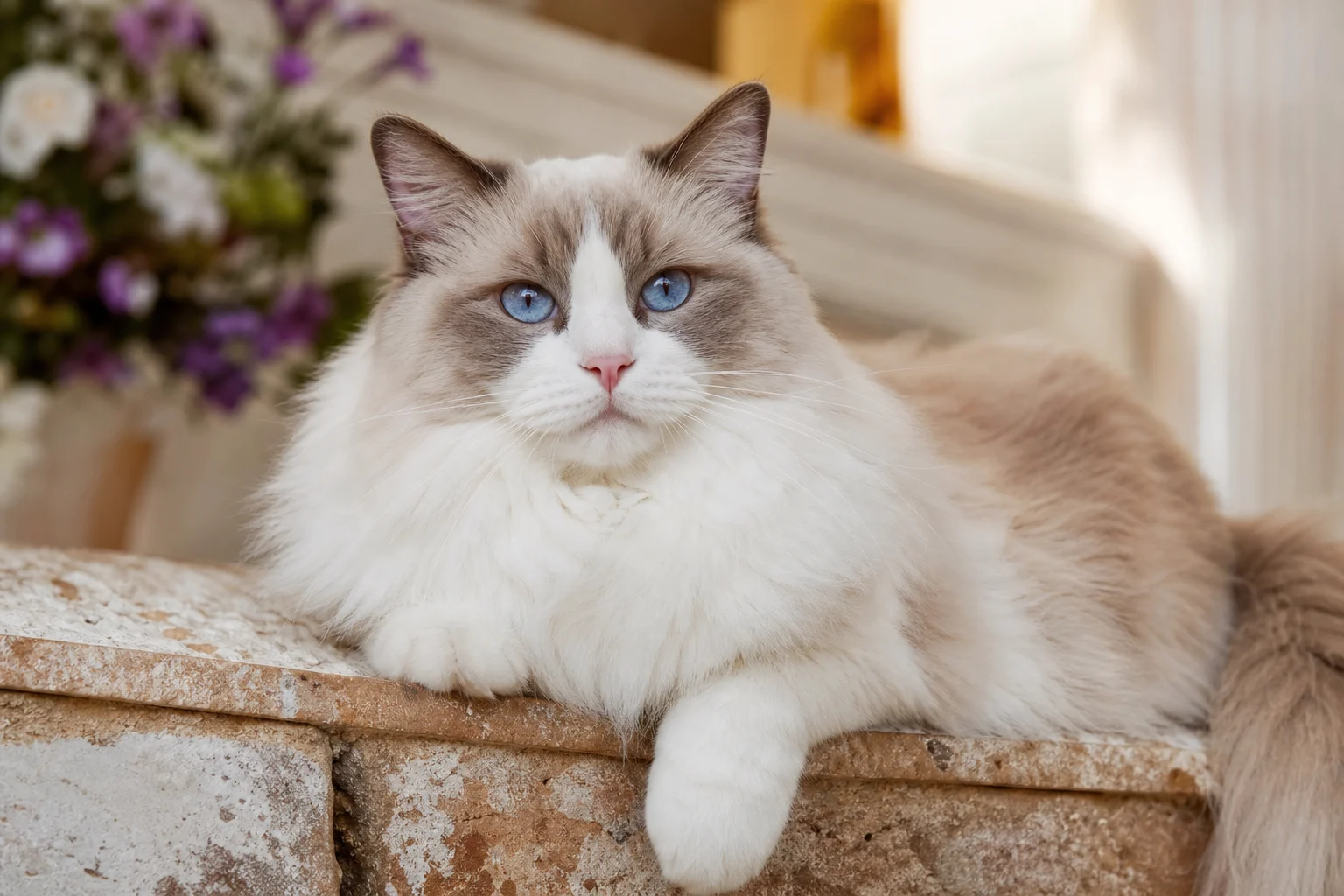
The Norwegian Forest Cat matches the rugged looks with more climbing drive and independence; the Siberian is similarly sturdy and often better tolerated by allergy sufferers; the Ragdoll shares the gentle bulk but is calmer and more of a true lap cat.
Who this breed suits
People with room to spare who want a sociable, unflappable companion that joins family life — and who can offer a second cat or plenty of presence. If that sounds like you, take the "Which cat fits me?" test and see how the Maine Coon scores against your answers.
Not sure what a Maine Coon may eat? The food checker rates individual foods on a traffic-light scale, and the food guide explains what cats can eat and what is toxic.
A good fit for you if …
Frequently asked questions
How big does a Maine Coon get?
Males commonly reach six to nine kilograms and over a metre from nose to tail tip; females stay noticeably smaller. The breed matures slowly and is fully grown only at three to four years.
Are Maine Coons good with children?
Yes — the breed is patient, sturdy and hard to rattle, which makes it one of the best family cats. Children should still learn to respect the cat's retreats.
Can a Maine Coon live in a flat?
Yes, if the flat offers stable climbing furniture, wide platforms and company — ideally a second cat. A secured balcony or catio is the perfect upgrade.
Do Maine Coons like water?
Many do — dipping paws, playing with dripping taps and investigating the shower are classic Maine Coon behaviour. It goes back to the dense, water-repellent coat.
Which health problems affect the breed?
The relevant hereditary issues are HCM (heart muscle disease), hip dysplasia and spinal muscular atrophy. Buy only from breeders who test for all three.
How much grooming does the coat need?
Brushing two to three times a week, daily during the moult. The shaggy coat mats less than its volume suggests, but armpits and britches need attention.
Similar breeds
Sources: FIFe/TICA breed standard · breed association data · editorial assessment · Last updated 08/2026. On health questions this article never replaces a visit to the vet.