 AI
AINorwegian Forest Cat
A rugged Viking climber with a warm heart — independent outdoors, affectionate at home.
| Size | Very large |
|---|---|
| Weight | 4–9 kg |
| Life expectancy | 14–16 years |
| Origin | Norway |
| Type | Natural breed (Scandinavia) |
| Grooming | medium |
| Activity needs | high |
| Beginner friendly | well suited |
Temperament & suitability
Editorial assessment based on the FIFe breed standard and breed association data.
Guideline for movement & enrichment for this breed.
Traits
Origin & history
The skogkatt — forest cat — prowls through Norse mythology: Freya's chariot was drawn by two of them, and Viking ships carried their ancestors as mousers. For centuries the breed shaped itself on Scandinavian farms, where only cats with waterproof coats and sure paws survived the winters. Organised breeding began in Norway in the 1930s and seriously after 1970; today the "Wegie" is Norway's national cat and one of Europe's most beloved natural breeds.
Appearance & size
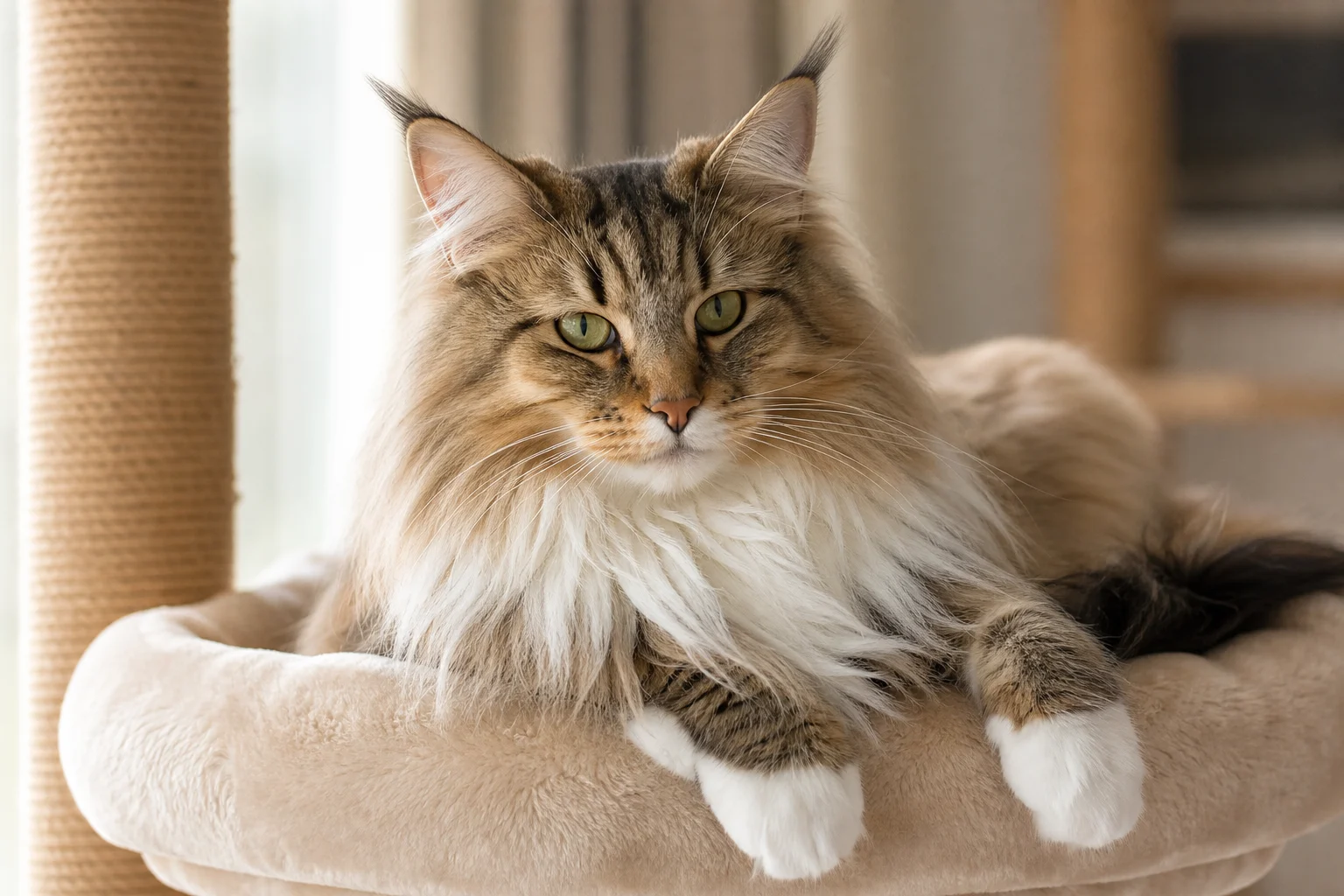
A big, powerful cat built for climbing: hind legs longer than the front, sturdy claws, a bushy tail for balance and warmth. Males reach five to nine kilograms. The double coat is the survival kit — a woolly undercoat beneath smooth, water-repellent guard hairs, with a magnificent winter ruff that sheds dramatically in spring. Almost all colours occur; brown tabby with white remains the classic. The profile is straight and triangular — the clearest visual difference to the Maine Coon's boxy muzzle.
Personality & temperament
The Norwegian pairs outdoor independence with genuine family warmth. At home it is friendly, patient and quietly present — happy to be near, choosy about laps. It thinks for itself, solves problems patiently and takes new situations with hunter's calm rather than nervousness. Its voice is quiet; its favourite statement is climbing to the highest point in the room and surveying its territory.
Indoor or outdoor living
This breed profits from outdoor access more than most — a secured garden or a generous catio is the ideal home. Indoor-only works if the flat is built upwards: ceiling-high, genuinely stable trees (this cat climbs down head-first, a breed signature), catwalks and window places. A bored Wegie in a small flat becomes unhappy quietly. Weigh the options with our guide Indoor cat or outdoor cat?
Enrichment & activity
Climbing is the currency: vertical space beats floor toys. Add hunting games, food searches and the occasional outdoor supervision, and the Norwegian is content. It appreciates company — a second cat or a cat-friendly dog fits well — but suffers less from alone-time than the clingier breeds.
Grooming
Astonishingly easy for the coat volume: the greasy, water-repellent guard hair barely mats. Weekly brushing suffices most of the year — until the spring moult, when the entire winter undercoat leaves within weeks and daily combing becomes self-defence.
Feeding & health
A robust breed with two screening topics: hypertrophic cardiomyopathy (HCM) and glycogen storage disease type IV (GSD IV), for which a gene test exists — buy from breeders who test both. The slow-maturing frame wants protein-rich food in controlled portions; the food amount calculator sets the baseline, and winter appetite is normal for the breed.
Costs
Kittens from tested lines cost €900–1,300. Factor in genuinely stable climbing furniture — the single biggest equipment item — and slightly higher food needs; the cat cost calculator totals it realistically.
For beginners, children and other pets
A patient, robust family cat that takes children's commotion in stride and generally respects dogs. Beginner-suitable if the space is right; the breed forgives handling mistakes but not a stimulus-free single-room life. With other cats it is uncomplicated — climbing rank replaces fighting rank.
Similar breeds compared
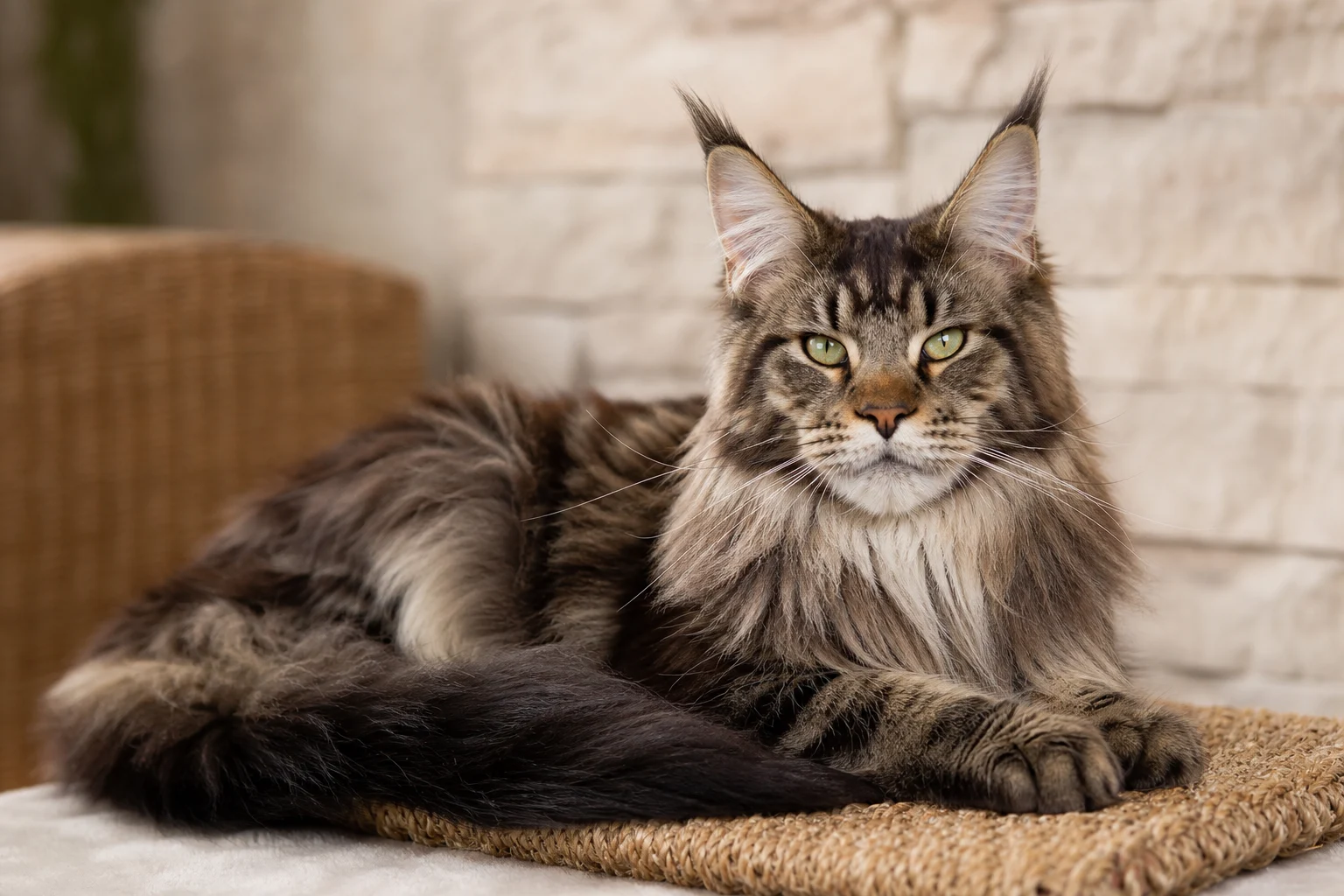
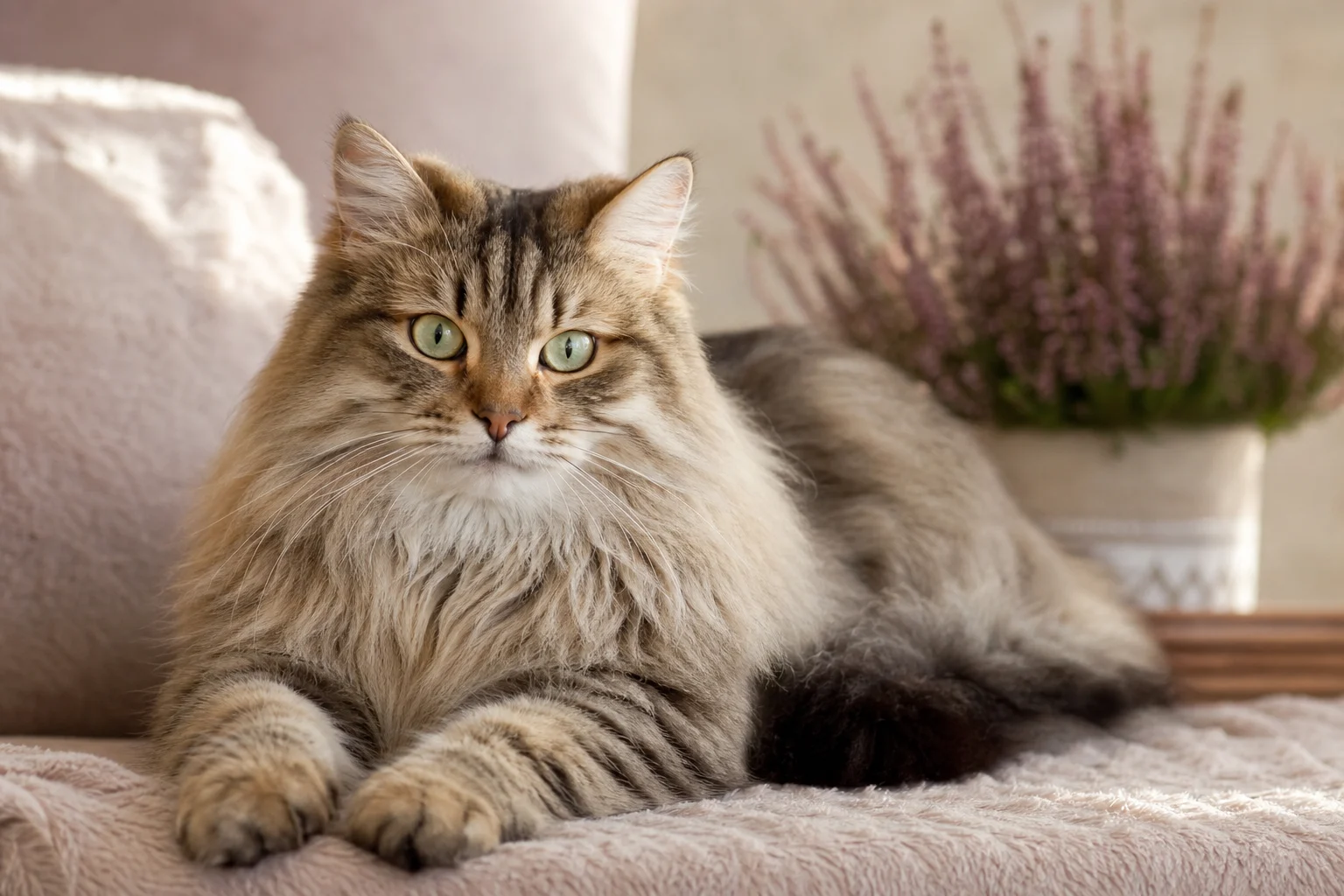
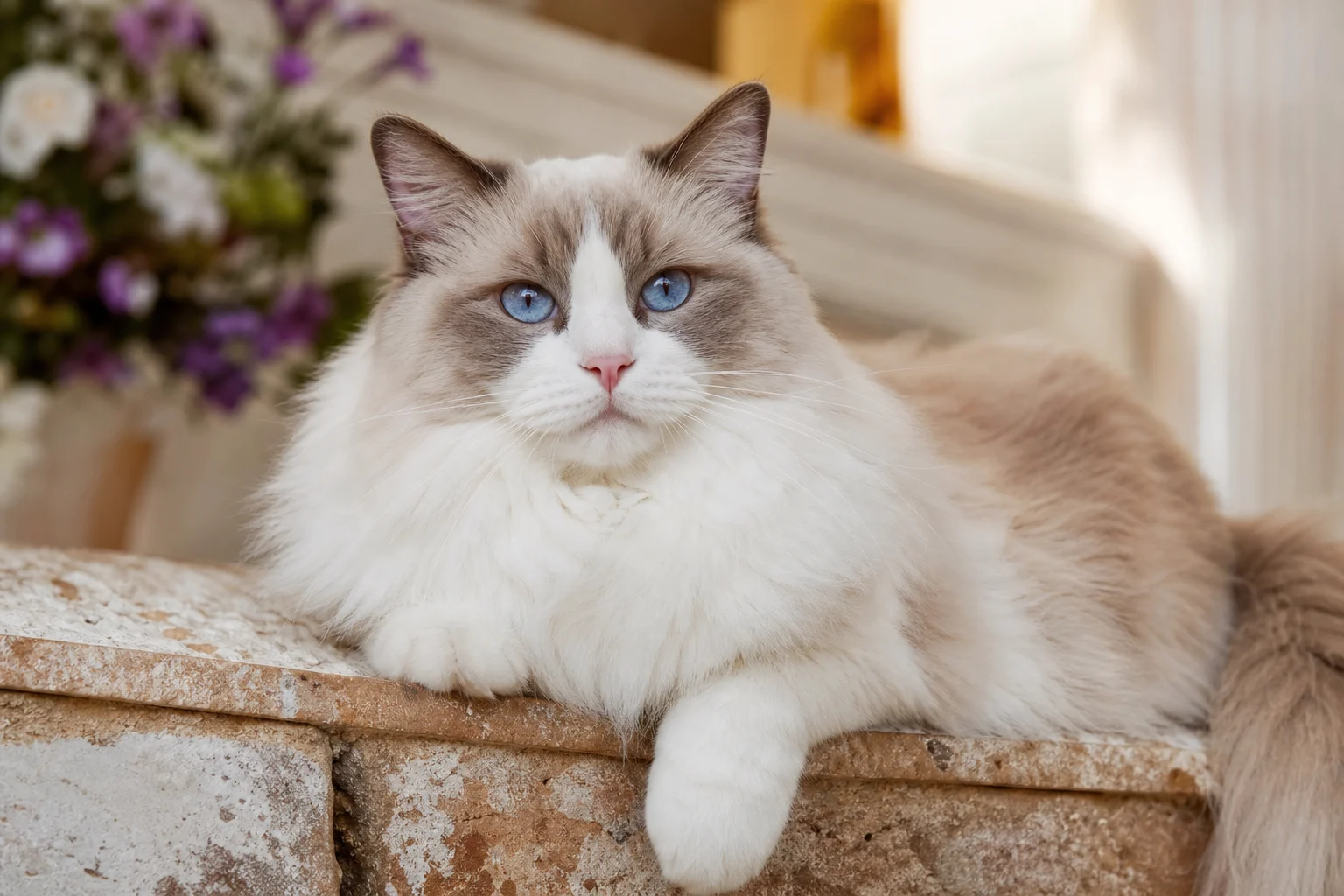
The Maine Coon is chattier and more people-focused with the same format; the Siberian is the slightly stockier, often allergy-friendlier cousin; the Ragdoll offers the size without the climbing drive for calmer homes.
Who this breed suits
Nature-minded households with vertical space or secured outdoor access who want a self-assured yet warm companion. Check the fit against your living situation with the "Which cat fits me?" test.
Not sure what a Norwegian Forest Cat may eat? The food checker rates individual foods on a traffic-light scale, and the food guide explains what cats can eat and what is toxic.
A good fit for you if …
Frequently asked questions
Norwegian Forest Cat or Maine Coon — what is the difference?
Similar size, different details: the Norwegian has a straight triangular profile, longer hind legs and more climbing drive; the Maine Coon is boxier, chattier and more people-focused.
Does the breed need outdoor access?
It benefits greatly from a secured garden or catio. Indoor-only works with ceiling-high stable climbing options — a small flat without vertical space does not do this cat justice.
How much grooming does the coat need?
Weekly brushing most of the year — the water-repellent coat barely mats. During the spring moult the winter undercoat leaves in masses; then daily combing is due.
Which health tests matter?
HCM (heart) and the gene test for GSD IV (glycogen storage disease). Reputable Norwegian breeders present both.
Are Norwegian Forest Cats good with children and dogs?
Yes — patient, robust and hard to fluster, they fit family households well and usually accept respectful dogs.
Why does my Norwegian climb down trees head-first?
A breed signature: the strong claws and hind legs allow the controlled head-first descent that most cats cannot manage. Stable, tall furniture lets it live this out safely.
Similar breeds
Sources: FIFe/TICA breed standard · breed association data · editorial assessment · Last updated 08/2026. On health questions this article never replaces a visit to the vet.