 AI
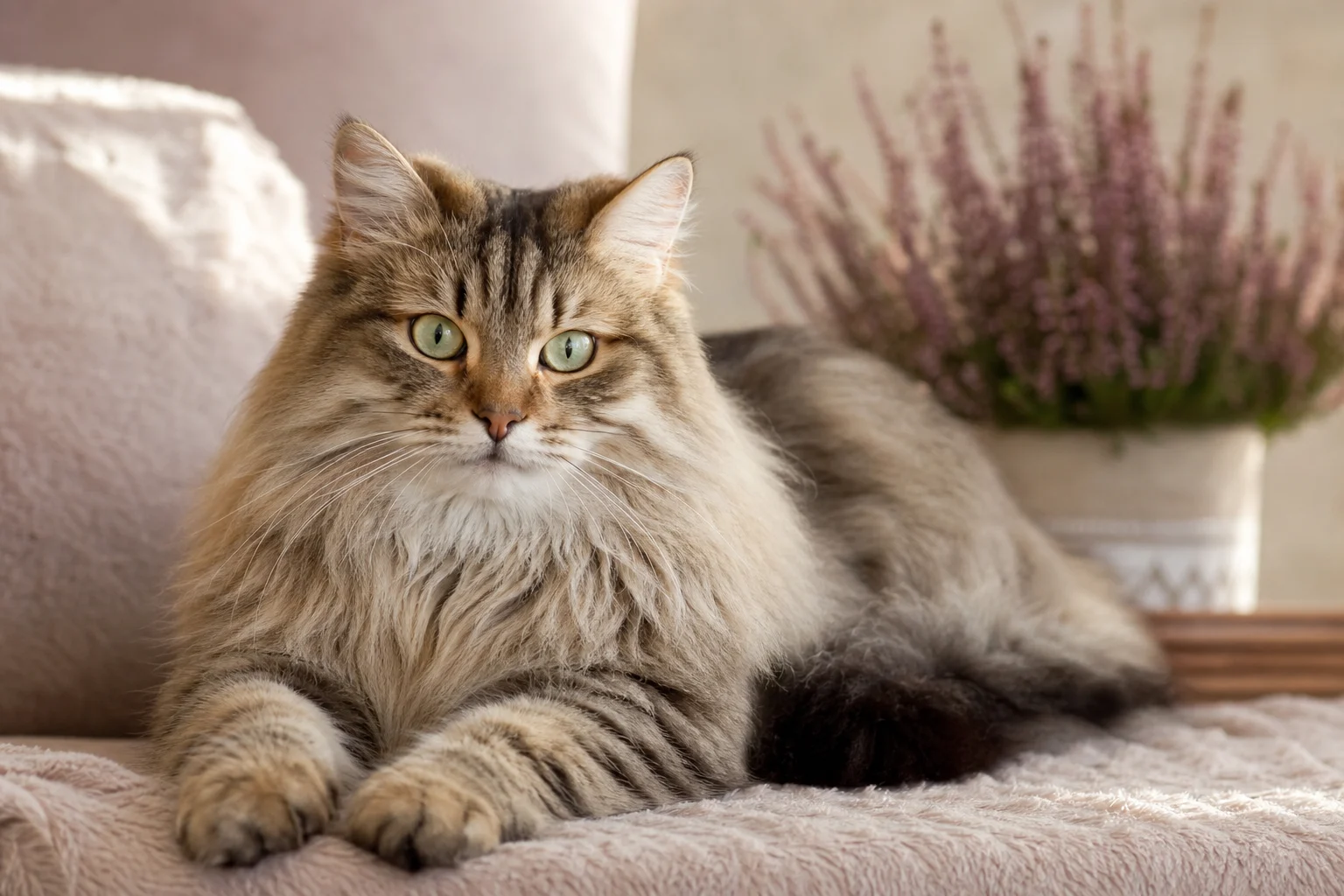
AISiberian
A sturdy, warm-hearted all-rounder — playful, people-loving and often kinder to allergy sufferers.
| Size | Large |
|---|---|
| Weight | 4–8 kg |
| Life expectancy | 12–16 years |
| Origin | Russia |
| Type | Natural breed (Russia) |
| Grooming | medium |
| Activity needs | high |
| Beginner friendly | well suited |
Temperament & suitability
Editorial assessment based on the FIFe breed standard and breed association data.
Guideline for movement & enrichment for this breed.
Traits
Origin & history
Russia's forest cat matured over centuries in villages and on farms between Moscow and Siberia, shaped by brutal winters into a compact powerhouse with a triple-layered coat. Organised breeding only began in the late 1980s when the Soviet Union permitted cat fancy; the breed reached the West in the 1990s and won hearts fast — not least because many allergy sufferers reported coping with Siberians noticeably better than with other cats.
Appearance & size
The Siberian is medium-large and unmistakably solid: a barrel chest, strong bones, a rounded, sweet-faced head — softer in expression than the Norwegian's — and four to eight kilograms of muscle that mature over up to five years. The dense triple coat with its full collar and britches comes in nearly all colours; the pointed variant with blue eyes is bred as the Neva Masquerade.
Personality & temperament
Siberians combine the robustness of a forest cat with surprising warmth: they greet at the door, join every household activity, chat in quiet chirps and are famously fond of water games. Clever and courageous, they learn fetch and tricks readily, and their even temper keeps them relaxed where nervous breeds flee. It is an active cat — but one with an off switch, equally happy hunting a wand toy or anchoring the sofa.
Indoor or outdoor living
Flexible: a flat with solid climbing options and play routine keeps a Siberian content, a secured balcony or catio makes it happy, and supervised garden time suits the weatherproof coat in any season. Like all trusting pedigree cats it should not roam unsecured. The setup basics are in Indoor cat or outdoor cat?
Enrichment & activity
Plan real daily play — this is a jumper and hunter with spring-loaded hindquarters. Water bowls to splash in, fetch games and puzzle feeders land well; so does a second cat or a friendly dog, since Siberians are decidedly social. Understimulated, they organise their own entertainment at your shelves' expense.
Grooming
The triple coat is low-maintenance outside moult: brushing once or twice a week keeps it sorted, as the guard hairs resist matting. Spring and autumn bring heavy undercoat shedding — daily combing then. Many Siberians tolerate the ritual happily if started young.
Feeding & health
A hardy breed whose main screening topic is HCM; ask breeders for current heart ultrasound results, plus PK deficiency testing in some lines. The muscular frame wants meat-first food, portioned via the food amount calculator — Siberians eat with enthusiasm and gain weight if the enthusiasm goes unmanaged.
Costs
Kittens from tested lines cost €900–1,400, allergy-tested individuals sometimes more. Running costs are ordinary for a large cat; the cat cost calculator gives the honest monthly figure.
For beginners, children and other pets
One of the best all-round family cats: patient with children, sociable with cats and dogs, robust enough for lively households and forgiving enough for committed beginners. The often-reduced allergen load makes it the first breed to test for allergy-affected homes — always with personal contact trials before deciding.
Similar breeds compared
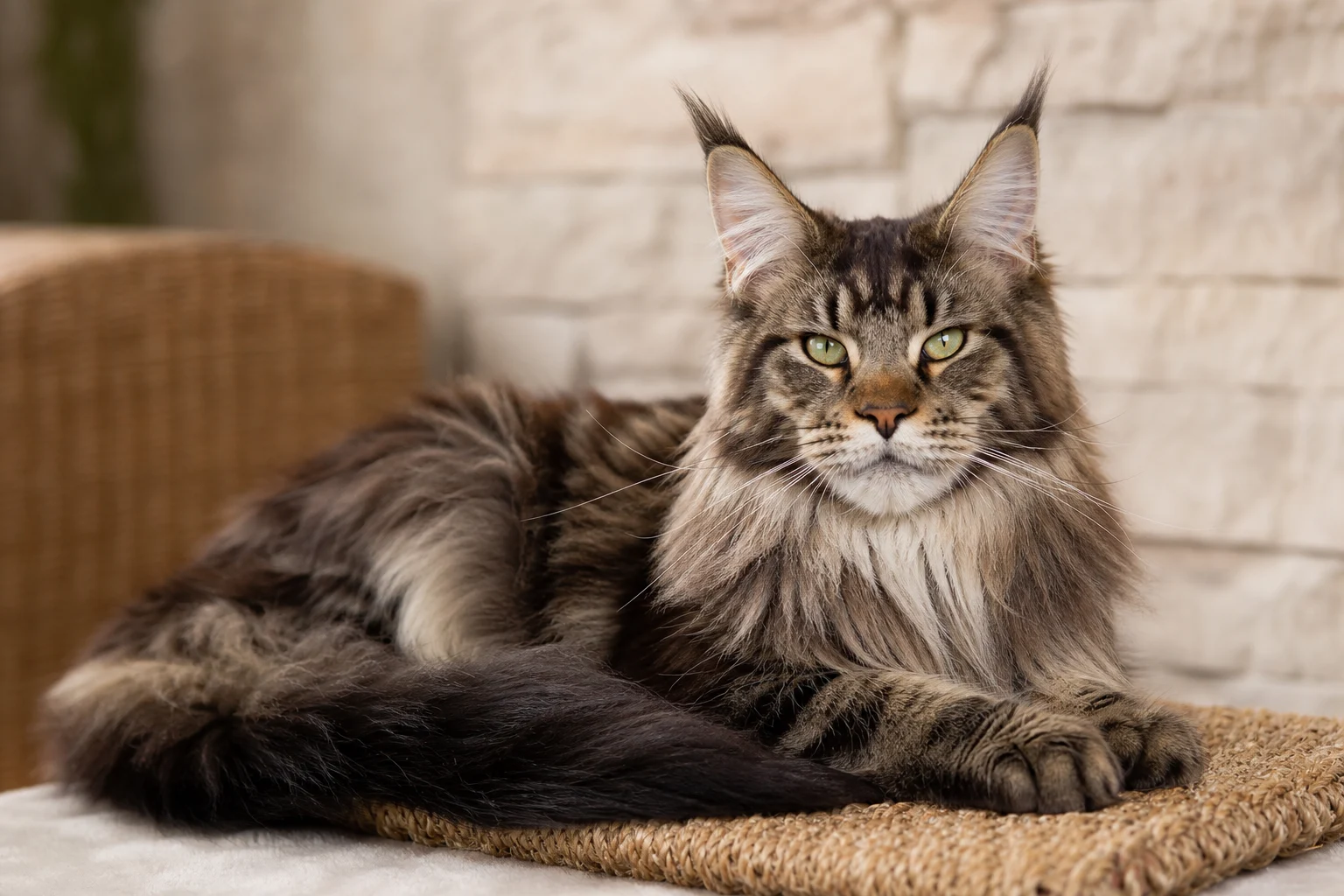
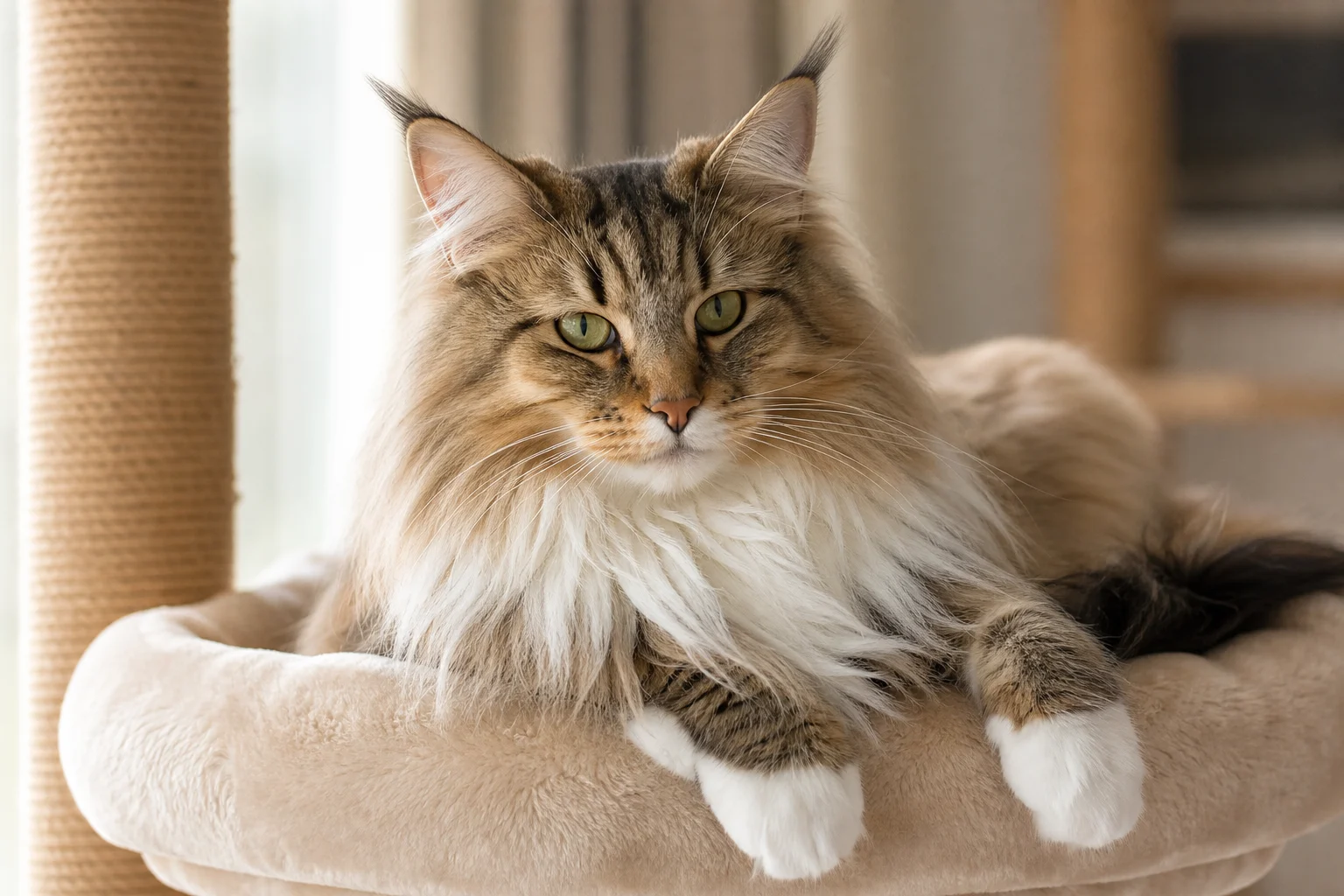
The Norwegian Forest Cat is leggier and more independent; the Maine Coon bigger and chattier; the Neva Masquerade is the same cat in point dress with blue eyes.
Who this breed suits
Families and active households that want a sturdy, affectionate all-rounder — and allergy sufferers willing to test the fit personally. See how the Siberian scores for you in the "Which cat fits me?" test.
Not sure what a Siberian may eat? The food checker rates individual foods on a traffic-light scale, and the food guide explains what cats can eat and what is toxic.
A good fit for you if …
Frequently asked questions
Are Siberians really hypoallergenic?
Cautiously put: many Siberians produce less Fel d 1 than average, and many allergy sufferers report genuinely fewer symptoms. It is individual, not guaranteed — spend several days in contact with the specific cat before deciding.
How big do Siberians get?
Four to eight kilograms of solid muscle, with males at the upper end — and full maturity only around five years.
What is the difference to the Neva Masquerade?
None in body and character: the Neva is the pointed, blue-eyed colour variant of the Siberian, bred under its own name.
Do Siberians like water?
Notoriously — splashing bowls, dripping taps and shower curiosity are standard. It comes with the water-repellent forest-cat coat.
Which health tests matter?
HCM ultrasound of the parents above all; some lines also test PK deficiency. Ask openly — good breeders expect the question.
Can Siberians stay indoors only?
Yes, with stable climbing furniture, daily play and ideally a companion. A secured balcony or catio upgrades their quality of life noticeably.
Similar breeds
Sources: FIFe/TICA breed standard · breed association data · editorial assessment · Last updated 08/2026. On health questions this article never replaces a visit to the vet.