 AI
AINeva Masquerade
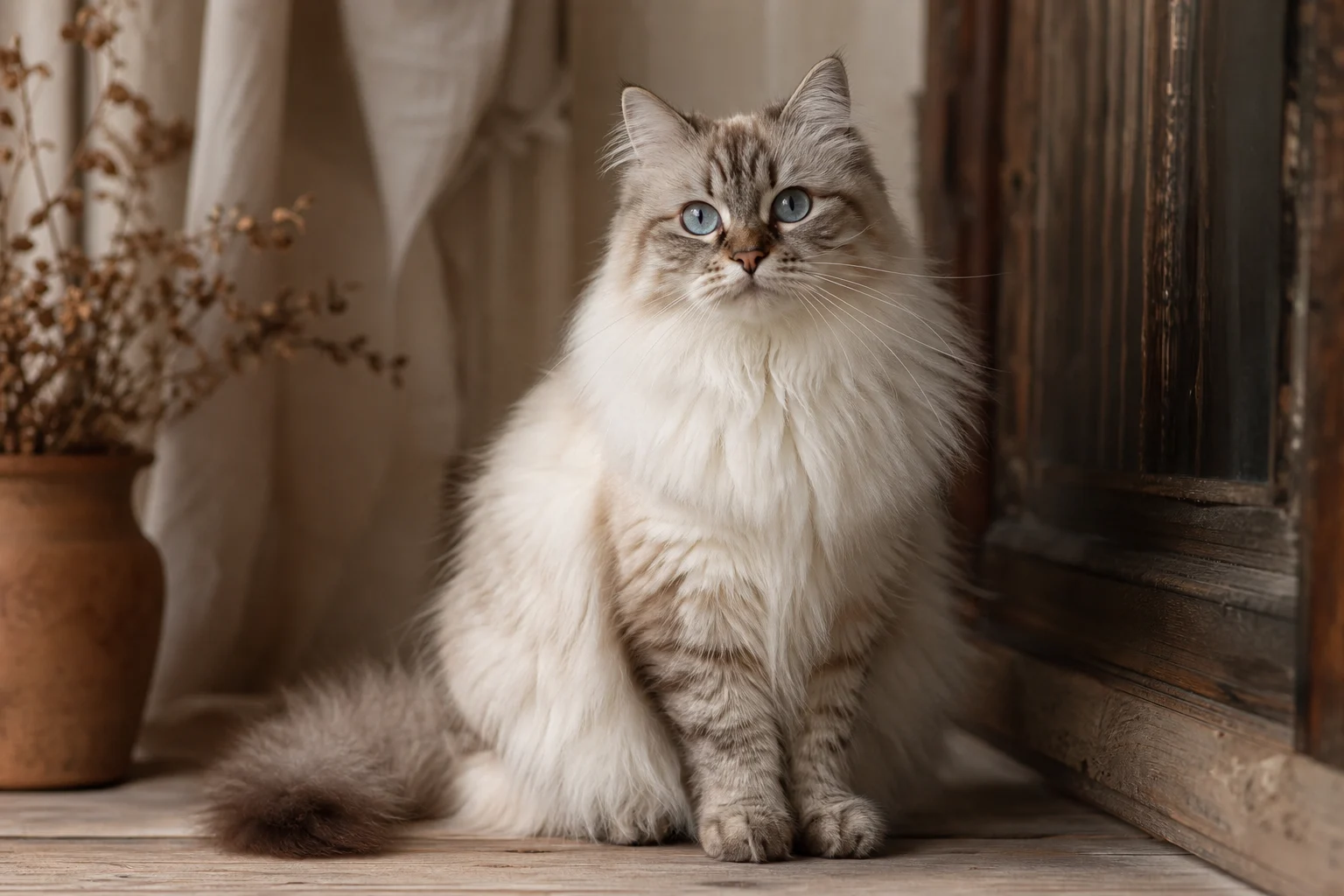
The Siberian in a masked ball gown — sturdy forest-cat virtues with points and sapphire eyes.
| Size | Large |
|---|---|
| Weight | 4–8 kg |
| Life expectancy | 12–16 years |
| Origin | Russia |
| Type | Natural breed (Russia) |
| Grooming | medium |
| Activity needs | high |
| Beginner friendly | well suited |
Temperament & suitability
Editorial assessment based on the FIFe breed standard and breed association data.
Guideline for movement & enrichment for this breed.
Traits
Origin & history
When Siberian breeding began in 1980s Leningrad, pointed kittens kept appearing — heritage of colourpoint street cats along the Neva river. Breeders named the variant after the river and the carnival masks of St. Petersburg: Neva Masquerade. Registries split on whether it is a colour class of the Siberian or a sister breed; the cat itself is a Siberian through and through, wearing point colours and blue eyes.
Appearance & size
The full Siberian build — four to eight kilograms of barrel-chested muscle under a triple weatherproof coat — dressed in seal, blue, red and cream points with white-cream body tones and always blue eyes. The mask-and-mantle contrast against the plush winter ruff makes the Neva one of the most spectacular naturals in catdom. Maturity takes up to five years.
Personality & temperament
Character is pure Siberian: warm, confident, playful with an off switch, water-curious and family-devoted without clinginess. The Neva greets, participates, chirps softly and holds its own with dogs and children alike. Some describe pointed lines as a touch more people-oriented still — echoes of distant colourpoint ancestors.
Indoor or outdoor living
Flexible like its sister: happy in a climbing-equipped flat, happier with a secured balcony or catio, weatherproof for supervised garden time in any season. As with all trusting pedigree cats, unsecured roaming is not the plan. Setup in Indoor cat or outdoor cat?
Enrichment & activity
Real daily play for a springy hunter: wand games, fetch, water bowls to investigate, puzzle feeders. A second cat or friendly dog suits this social breed; alone-time is tolerated but not the design.
Grooming
The triple coat manages itself outside moult — brushing once or twice a week suffices, as guard hairs resist matting. Spring and autumn shed the undercoat in earnest; daily combing then.
Feeding & health
A hardy natural breed; HCM screening of the parents is the standard breeder question, PK-Def testing appears in some lines. The muscular frame eats heartily — portion via the food amount calculator. Like the Siberian, many Nevas produce less Fel d 1, making the variant a frequent allergy candidate; test personal contact before deciding.
Costs
Kittens from tested lines cost €900–1,400. Running costs match a large cat; the cat cost calculator adds it up.
For beginners, children and other pets
A first-class family cat: patient with children, sociable with cats and dogs, robust and beginner-forgiving. The combination of spectacular looks, sturdy health and allergy-friendly tendency explains the variant's fast-growing popularity.
Similar breeds compared
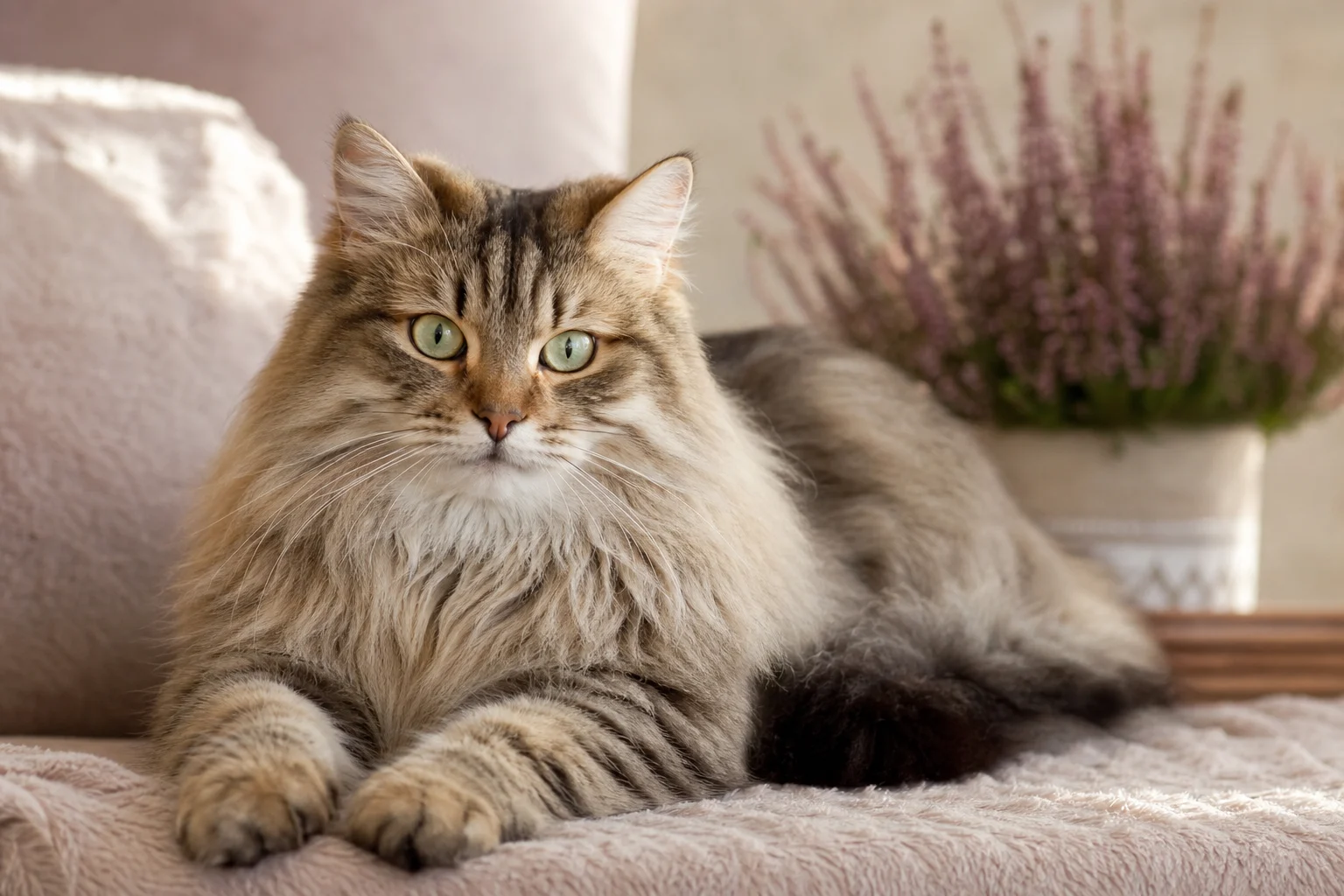
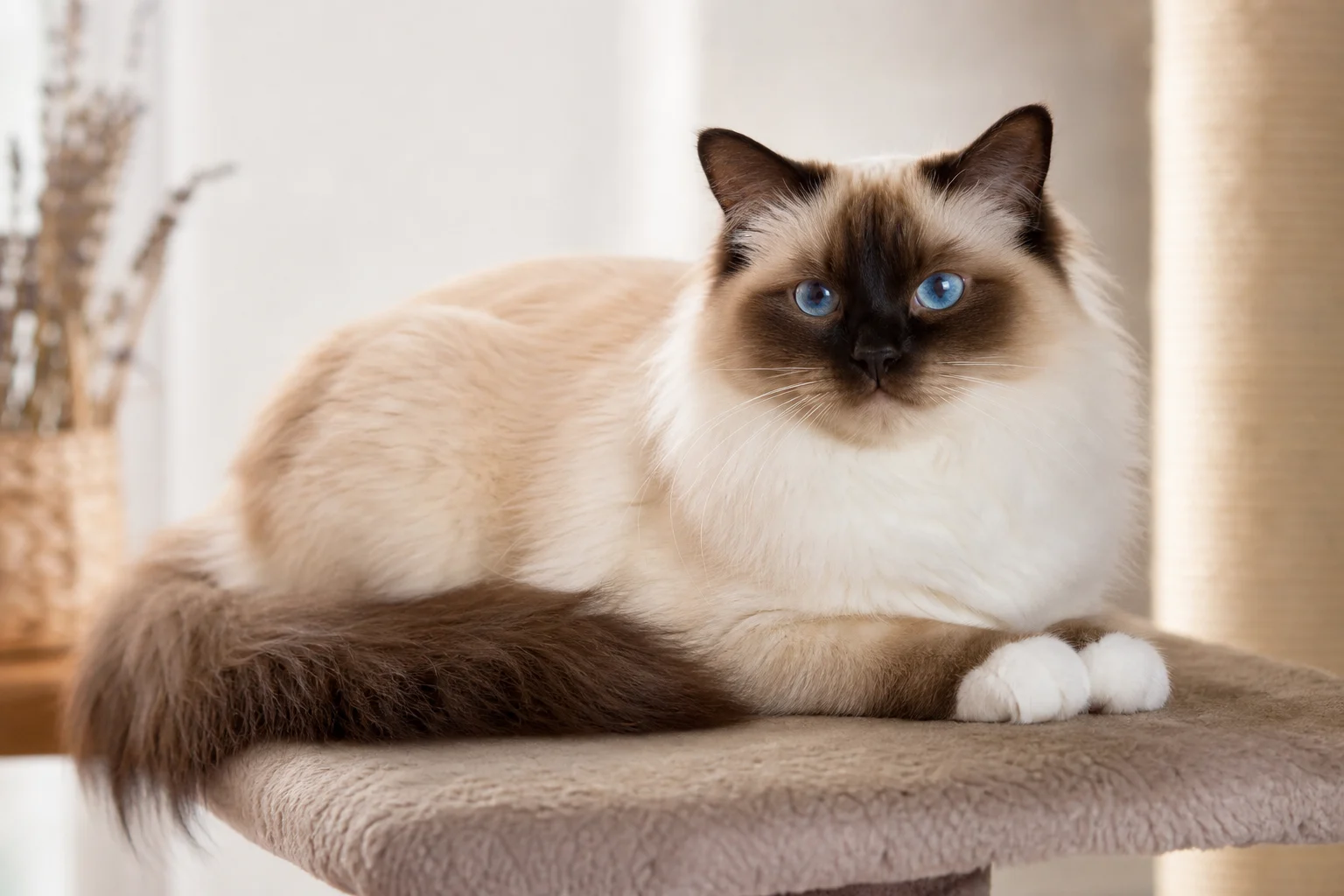
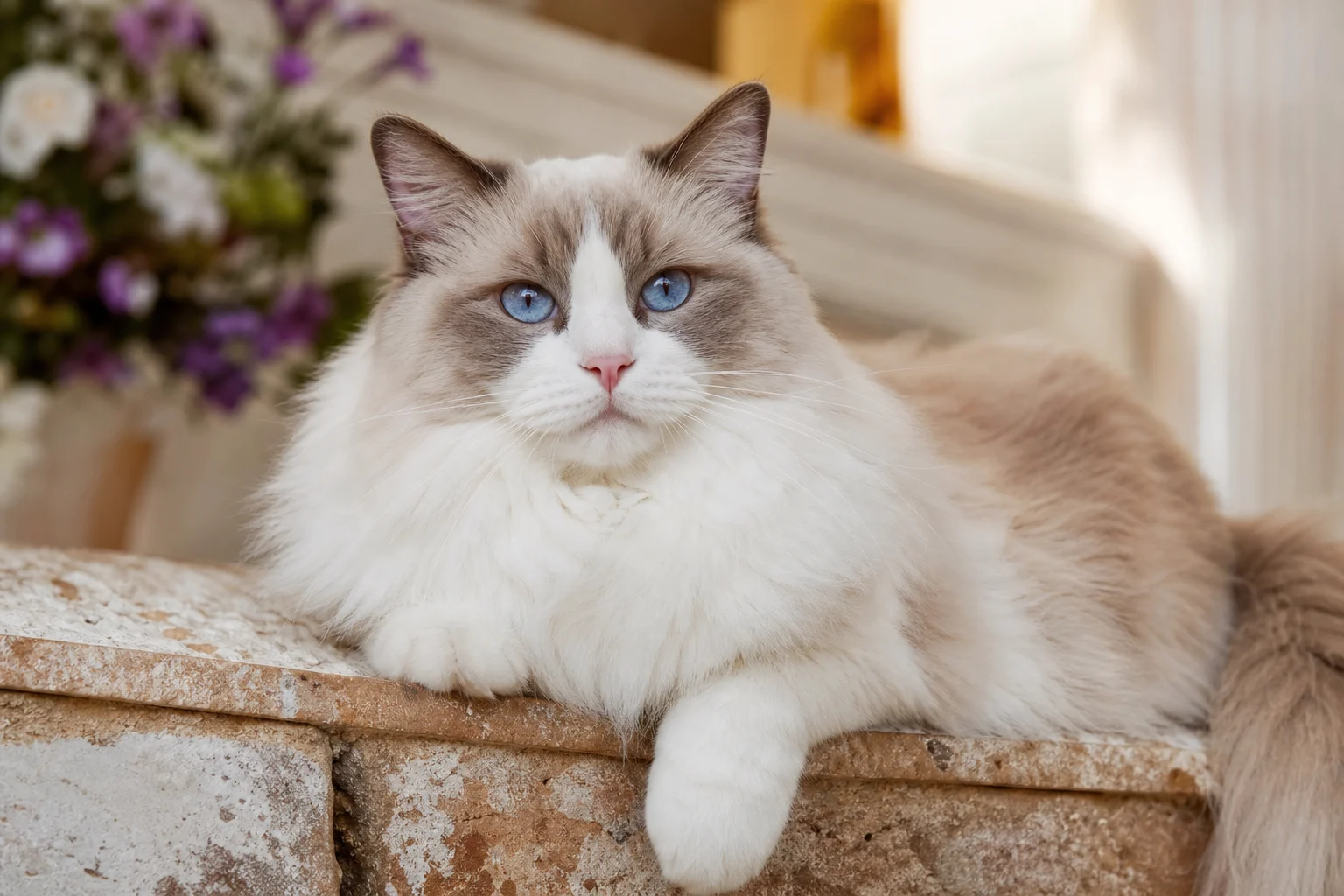
The Siberian is the same cat in full colour; the Birman offers pointed blue-eyed gentleness in a finer frame; the Ragdoll matches the pointed size with floppier devotion.
Who this breed suits
Families and active households wanting forest-cat robustness in gala dress — and allergy-affected homes willing to test the fit. The "Which cat fits me?" test shows your match.
Not sure what a Neva Masquerade may eat? The food checker rates individual foods on a traffic-light scale, and the food guide explains what cats can eat and what is toxic.
A good fit for you if …
Frequently asked questions
Is the Neva Masquerade its own breed?
Registry-dependent: some list it separately, others as the Siberian's colourpoint class. Practically it is a Siberian in point colours with blue eyes.
Are Nevas allergy-friendly like Siberians?
The same tendency applies — many produce less Fel d 1. It is individual, not guaranteed; spend days in contact before deciding.
Where does the name come from?
From the Neva river and St. Petersburg's carnival masks — a nod to the dark face mask on the light body.
Which health tests matter?
HCM ultrasounds of the parents, PK-Def in some lines — the standard Siberian questions.
How much grooming does the coat need?
Weekly brushing outside moult; daily combing when the undercoat leaves in spring and autumn.
Do Nevas get along with dogs?
Usually very well — the confident, sociable forest-cat nature handles respectful dogs easily.
Similar breeds
Sources: FIFe/TICA breed standard · breed association data · editorial assessment · Last updated 08/2026. On health questions this article never replaces a visit to the vet.