 AI
AIChartreux
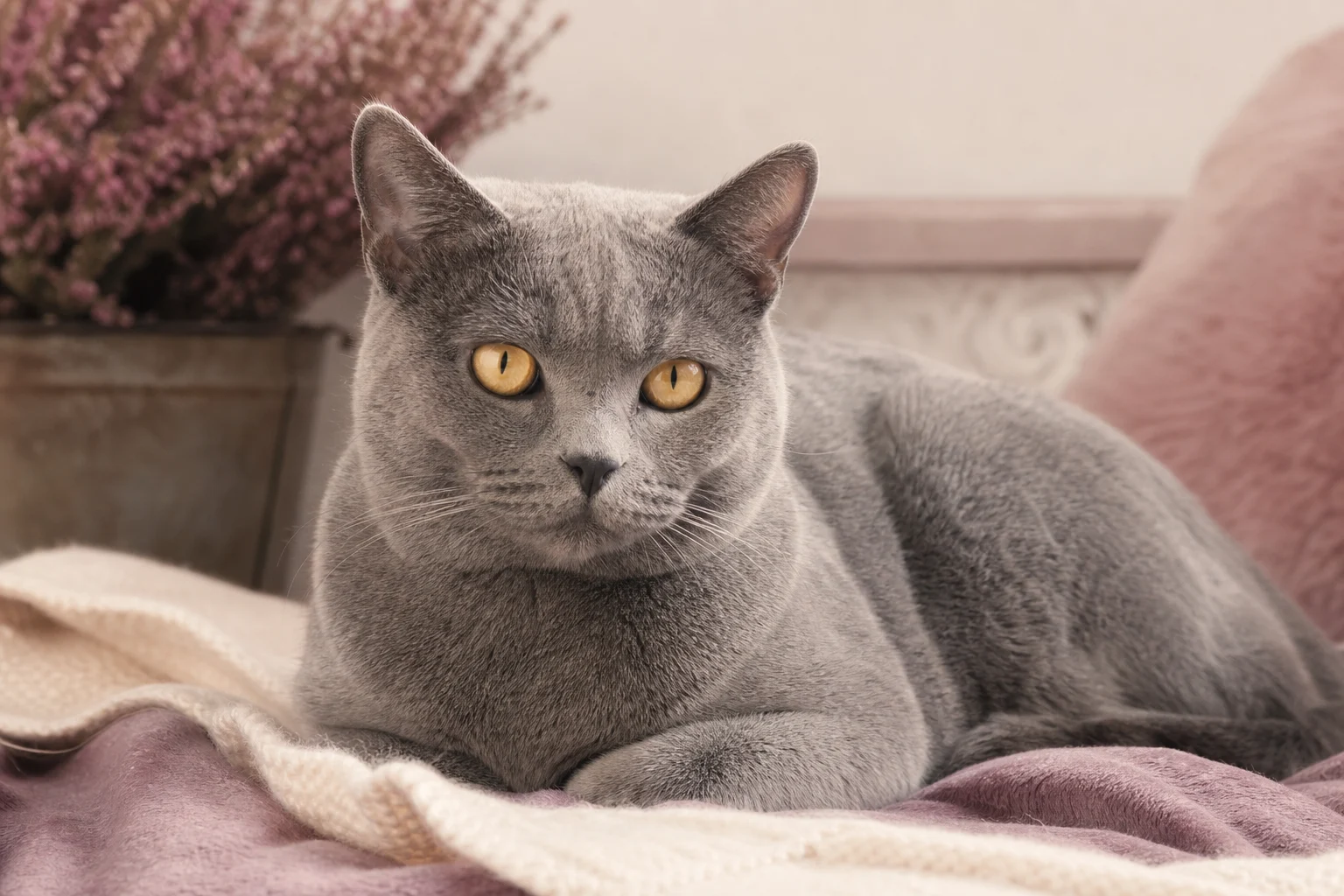
France's smiling blue — a quiet, loyal observer with a woolly coat and a dog's heart.
| Size | Large |
|---|---|
| Weight | 4–7 kg |
| Life expectancy | 12–16 years |
| Origin | France |
| Type | Natural breed (France) |
| Grooming | medium |
| Activity needs | low |
| Beginner friendly | well suited |
Temperament & suitability
Editorial assessment based on the FIFe breed standard and breed association data.
Guideline for movement & enrichment for this breed.
Traits
Origin & history
France's blue cat carries centuries of story — wool-coated mousers documented since the 1500s, romantically linked to Carthusian monasteries, systematically bred from the 1920s on the island of Belle-Île. Nearly lost after the war, the breed was rebuilt and stands today as a French national treasure; General de Gaulle shared the Élysée with one. Not to be confused with the British Shorthair in blue — the Chartreux is its own, older lineage with a distinctly different head.
Appearance & size
A robust cat of four to seven kilograms wearing the breed uniform: always solid blue-grey, always copper to gold eyes. The medium-long head with rounded muzzle produces the famous "smile"; the double coat is uniquely woolly, breaking like sheep's fleece over the muscular body. Males grow bear-like, females stay markedly finer.
Personality & temperament
The Chartreux is the quietest loyalist in the cat world. It speaks in rare, tiny chirps — some individuals stay almost mute — observes everything, attaches deeply to its people and follows them with dog-like devotion, often greeting at the door and joining every room change. It is calm without being lazy: mousing history left quick reflexes and a solid play instinct behind the composed surface. Strangers get watched politely from a distance until cleared.
Indoor or outdoor living
A flexible, uncomplicated breed: content indoors with window seats and routine, delighted by a secured balcony or garden. Its calm, observing nature makes it one of the easiest large breeds for flat life. The framework is in Indoor cat or outdoor cat?
Enrichment & activity
Moderate but real: daily hunting games wake the mouser, puzzle feeders occupy the head, and fetch works with many individuals. Without fixed play, the woolly frame pads out quickly — the breed's composure is a weight risk in disguise.
Grooming
The woolly double coat wants a weekly combing — brushing can break the wool texture, combs suit it better — and daily passes during the heavy spring moult. Otherwise the Chartreux maintains itself with dignity.
Feeding & health
A robust natural breed with few issues; ask breeders about patellar luxation and PKD screening. The main everyday topic is weight: portion via the food amount calculator and resist the pleading copper eyes.
Costs
Kittens from tested French-line breeders cost €900–1,300 — genuine Chartreux catteries are rare, waiting lists normal. Running costs are unremarkable; the cat cost calculator gives the monthly picture.
For beginners, children and other pets
A superb first cat and family companion: patient, unshockable, quietly affectionate, harmonious with respectful children, cats and calm dogs. Its silence suits flat living and noise-sensitive households perfectly — just never mistake the quiet for absence of attachment.
Similar breeds compared
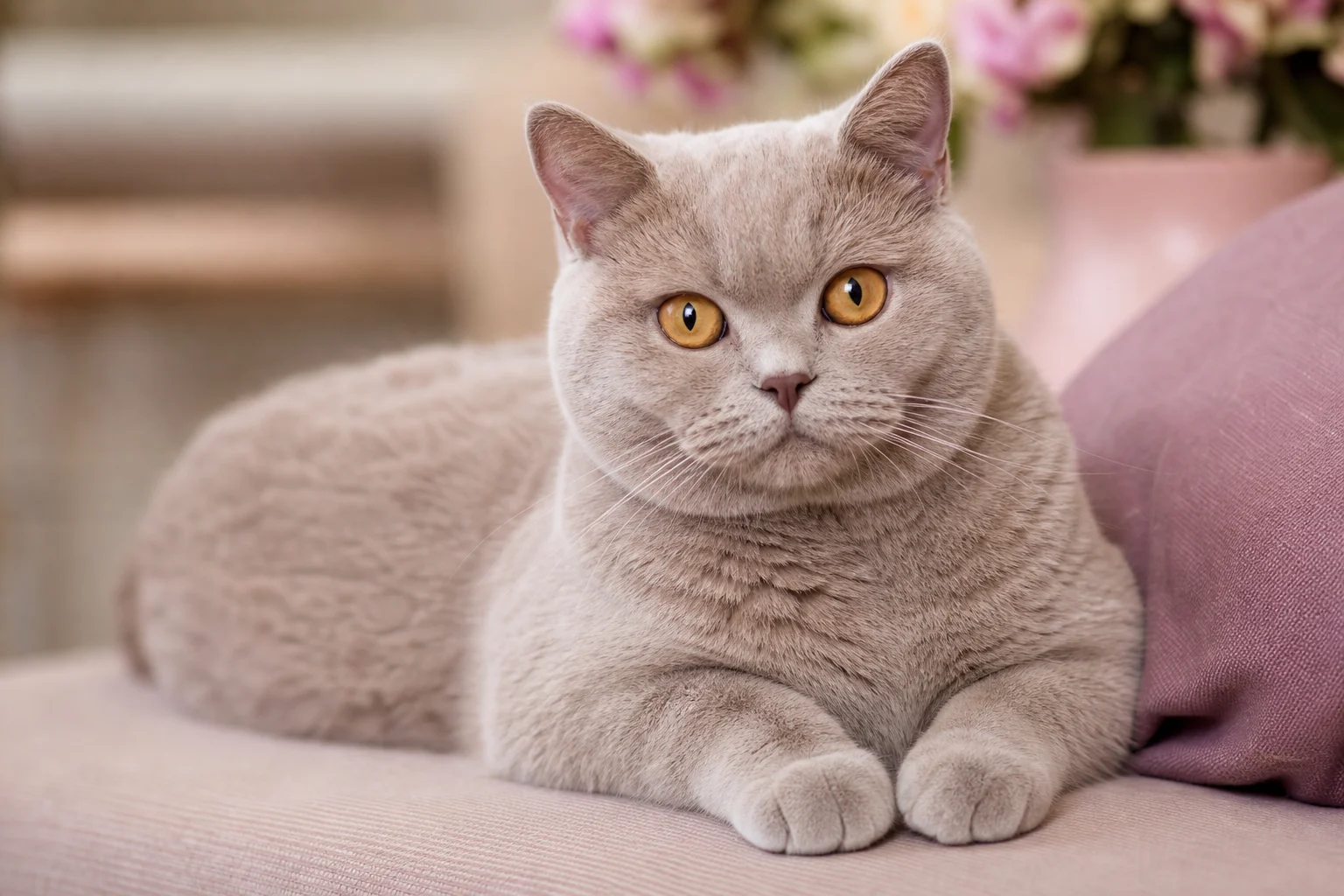
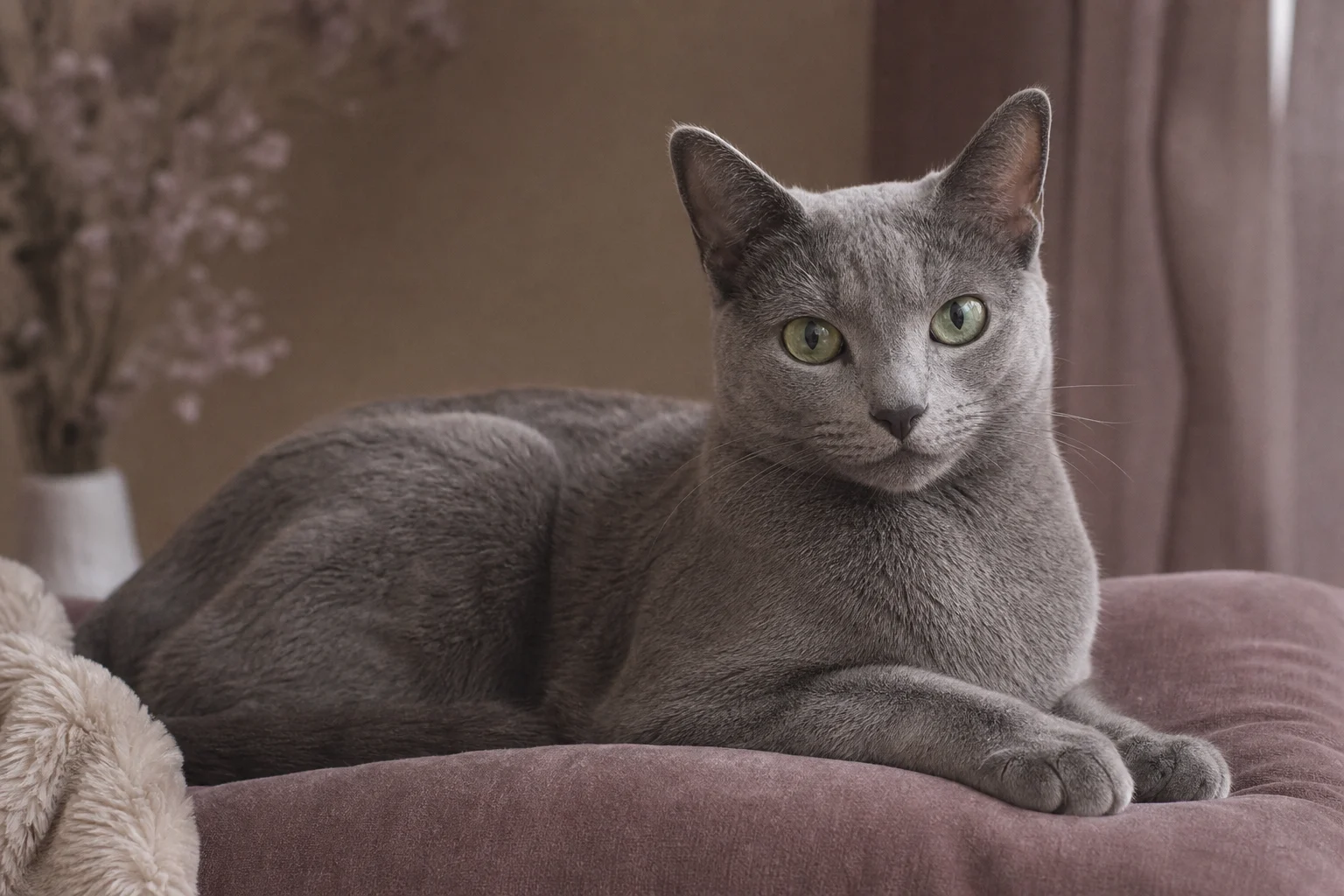
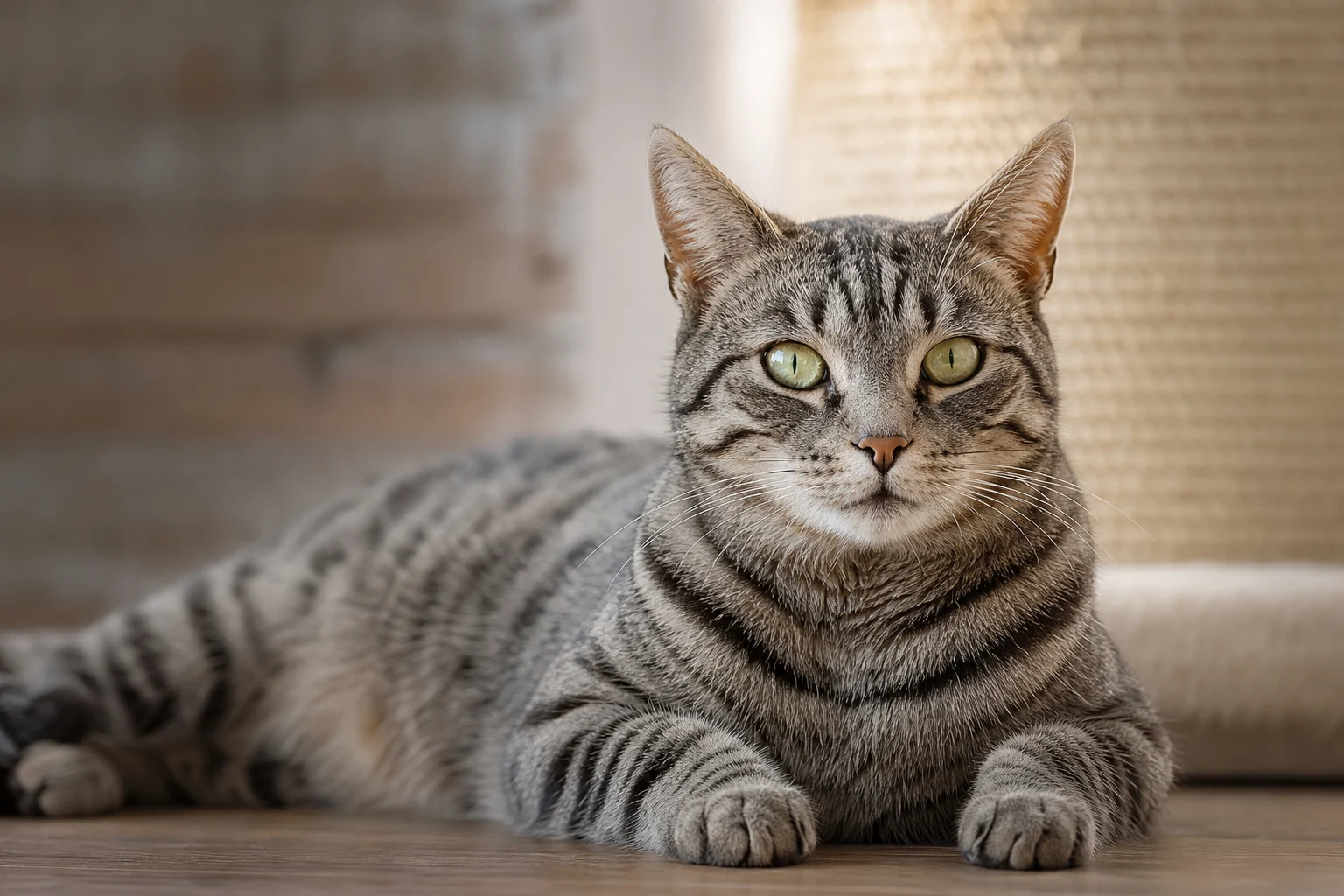
The British Shorthair in blue is plusher and rounder with a similar calm; the Russian Blue is finer, shyer and silvery; the European Shorthair offers the robust uncomplicated nature in every colour.
Who this breed suits
People who value quiet loyalty — singles, couples, families and seniors who want a devoted observer rather than a loud entertainer. See how the smiling blue scores for you in the "Which cat fits me?" test.
Not sure what a Chartreux may eat? The food checker rates individual foods on a traffic-light scale, and the food guide explains what cats can eat and what is toxic.
A good fit for you if …
Frequently asked questions
Chartreux or British Shorthair — what is the difference?
Two separate breeds: the Chartreux is always blue with copper eyes, wears a woolly (not plush) coat and carries a narrower, smiling head. The British comes in many colours and is rounder in every way.
Are Chartreux really so quiet?
Famously — many barely vocalise beyond tiny chirps. Their attachment shows in following and presence, not in voice.
How much grooming does the woolly coat need?
Weekly combing (combs beat brushes on this texture) and daily passes during the spring moult, when the undercoat leaves in sheets.
Are Chartreux good for beginners?
Yes — robust, even-tempered and forgiving, with the one discipline of portion control. An ideal first cat.
Which health checks matter?
Ask about patellar luxation and PKD screening; the breed is otherwise pleasantly sturdy. Genuine Chartreux breeders are rare — expect waiting lists.
Do Chartreux bond to one person?
Often noticeably: many pick a favourite human to shadow, while staying friendly with everyone else in the household.
Similar breeds
Sources: FIFe/TICA breed standard · breed association data · editorial assessment · Last updated 08/2026. On health questions this article never replaces a visit to the vet.