 AI
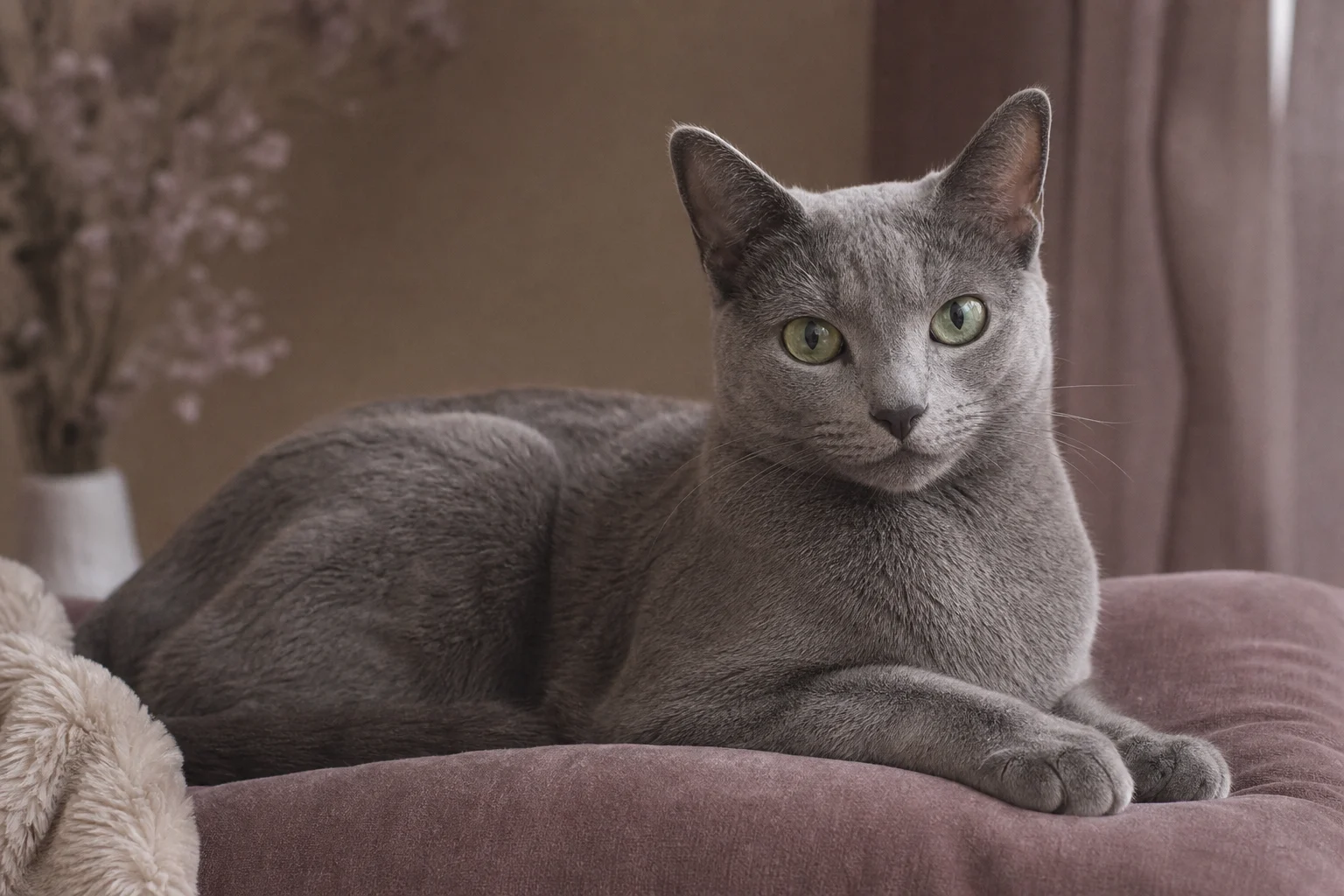
AIRussian Blue
Silver-tipped reserve and deep devotion — a gentle soul that saves its heart for its own people.
| Size | Medium |
|---|---|
| Weight | 3–5 kg |
| Life expectancy | 15–20 years |
| Origin | Russia |
| Type | Natural breed (Russia) |
| Grooming | low |
| Activity needs | medium |
| Beginner friendly | well suited |
Temperament & suitability
Editorial assessment based on the FIFe breed standard and breed association data.
Guideline for movement & enrichment for this breed.
Traits
Origin & history
Legend ships the Russian Blue from the port of Arkhangelsk with sailors to Victorian England, where it charmed shows as the "Archangel Blue" — even Tsar Nicholas II and Queen Victoria kept the breed, so the story goes. Nearly extinct after the wars, it was rebuilt with Scandinavian and British lines. The uniform blue coat with silver tipping and the emerald eyes have been the unmistakable uniform for over a century.
Appearance & size
A graceful, fine-boned cat of three to five kilograms with a double coat unique among shorthairs: dense, plush, standing off the body, each guard hair silver-tipped so the cat shimmers as it moves. The slightly upturned mouth corners produce the famous subtle "Mona Lisa smile"; the vivid green eyes complete one of catdom's most elegant designs. Life expectancy is outstanding — fifteen to twenty years are normal.
Personality & temperament
The Russian Blue runs on two settings: reserved formality with strangers, deep tenderness with its chosen people. Guests may never see the cat; the family gets a devoted, quietly playful companion that follows routines like clockwork and notices every deviation. It is sensitive — loud, chaotic households stress it — and intelligent in a watchful, deliberate way. The voice is soft and rarely used.
Indoor or outdoor living
An ideal indoor cat: quiet, routine-loving, content with window seats, a solid tree and its people. A secured balcony adds sunshine; unsecured roaming does not suit this careful, valuable breed. Predictability matters — the Russian Blue prefers a calm flat over an exciting one. Setup basics: Indoor cat or outdoor cat?
Enrichment & activity
Moderate but genuine: daily play sessions wake a surprisingly quick hunter, and many Russian Blues fetch with quiet enthusiasm. Puzzle feeders suit the thoughtful head. Respect its pace — this breed engages when it decides to, and rewards patience richly.
Grooming
The plush double coat needs surprisingly little: weekly brushing keeps the silver shimmer, and shedding is modest. A low-maintenance coat on a low-drama cat.
Feeding & health
A robust natural breed without notable hereditary diseases — the wide base and careful breeding kept it healthy. The one daily discipline is food: Russian Blues love eating and pad out quickly; portion firmly via the food amount calculator. Its lower Fel d 1 production makes it a classic candidate for allergy-affected homes — test contact personally, as always.
Costs
Kittens from good lines cost €800–1,200. Running costs are pleasantly ordinary — see the cat cost calculator — and the two-decade lifespan spreads them long.
For beginners, children and other pets
Excellent for calm households and considerate beginners: undemanding, healthy and gentle. With quiet, respectful children it warms up well; boisterous toddler chaos overwhelms it. It coexists peacefully with calm cats and gentle dogs once the careful introduction is done — rushing a Russian Blue backfires.
Similar breeds compared
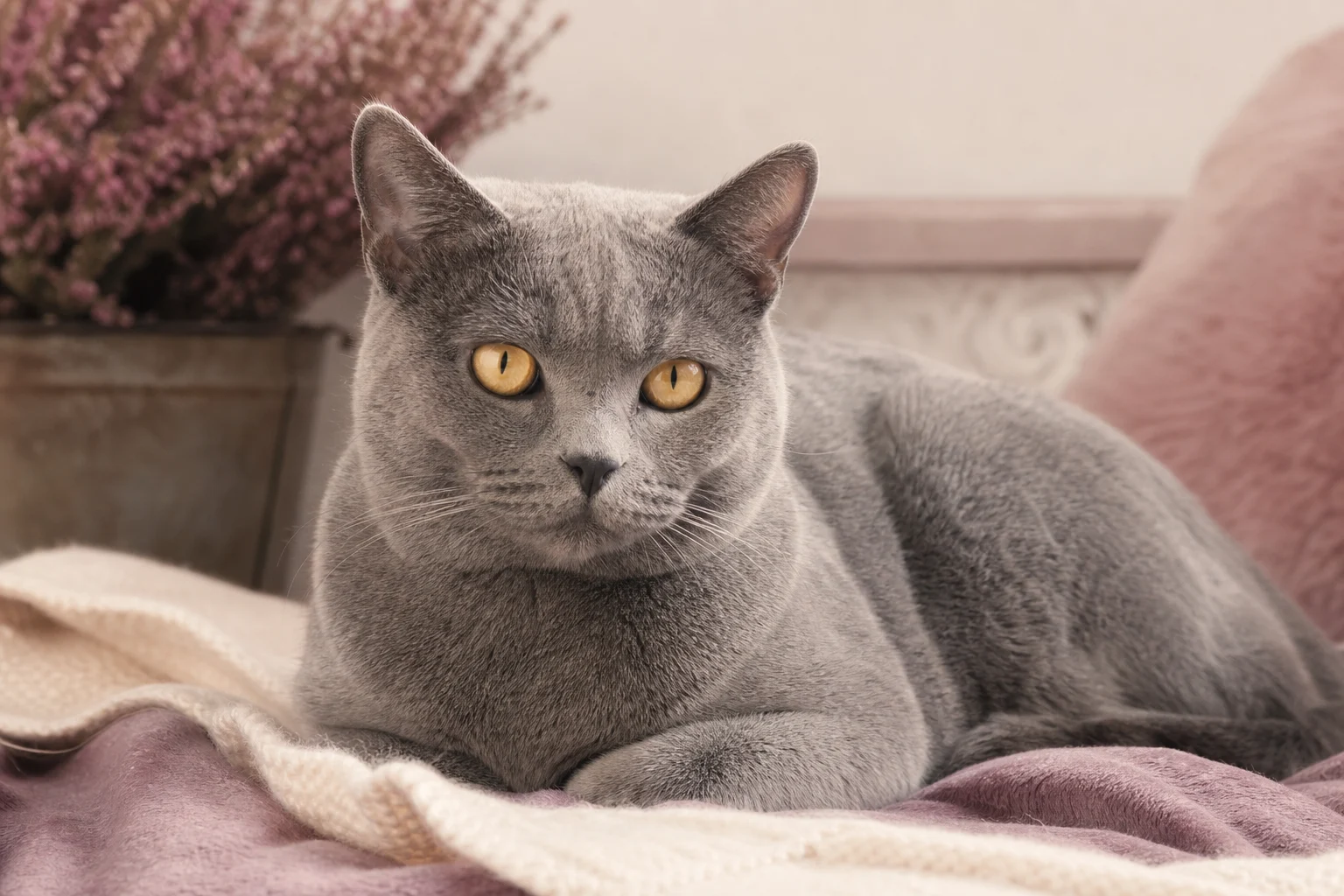
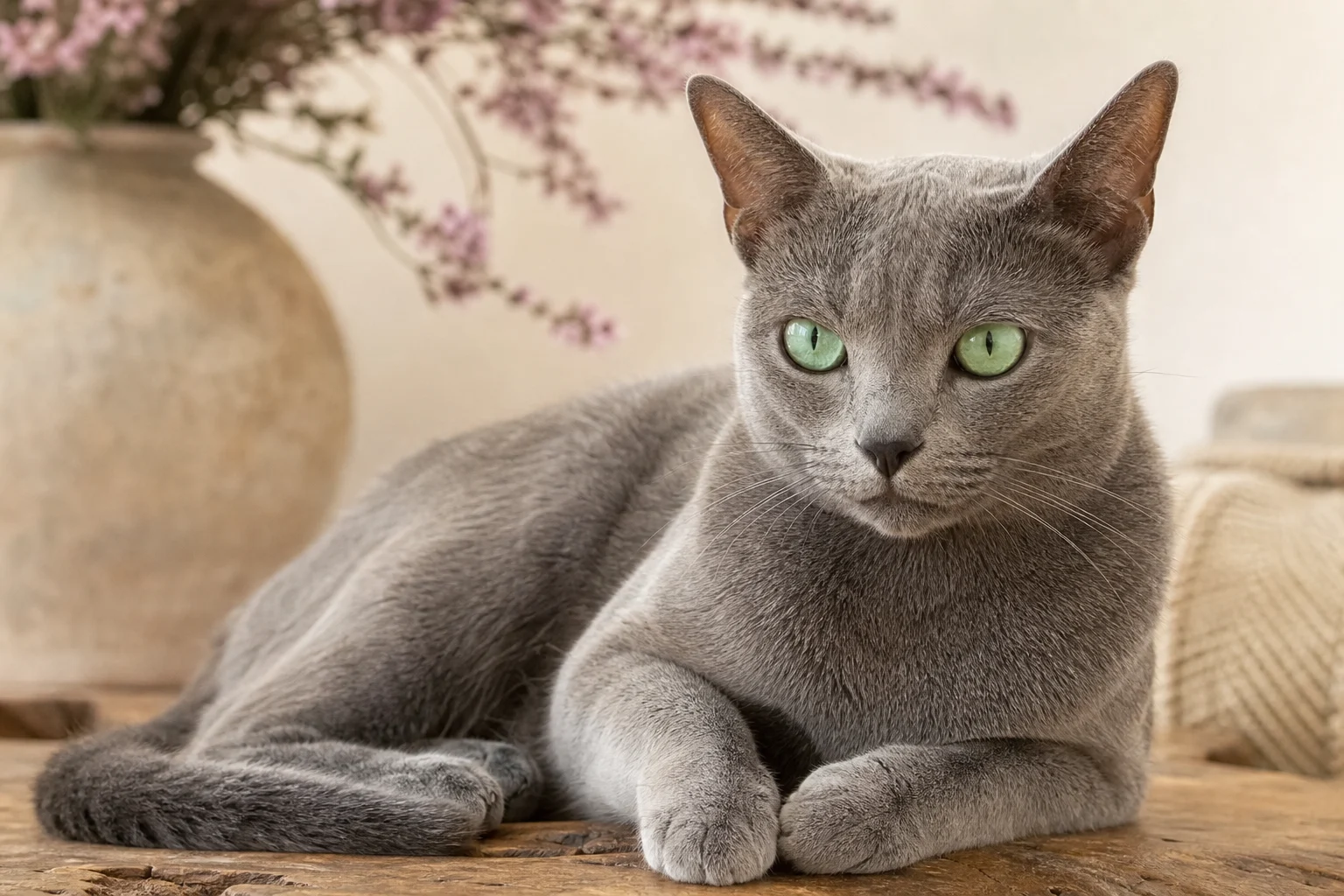
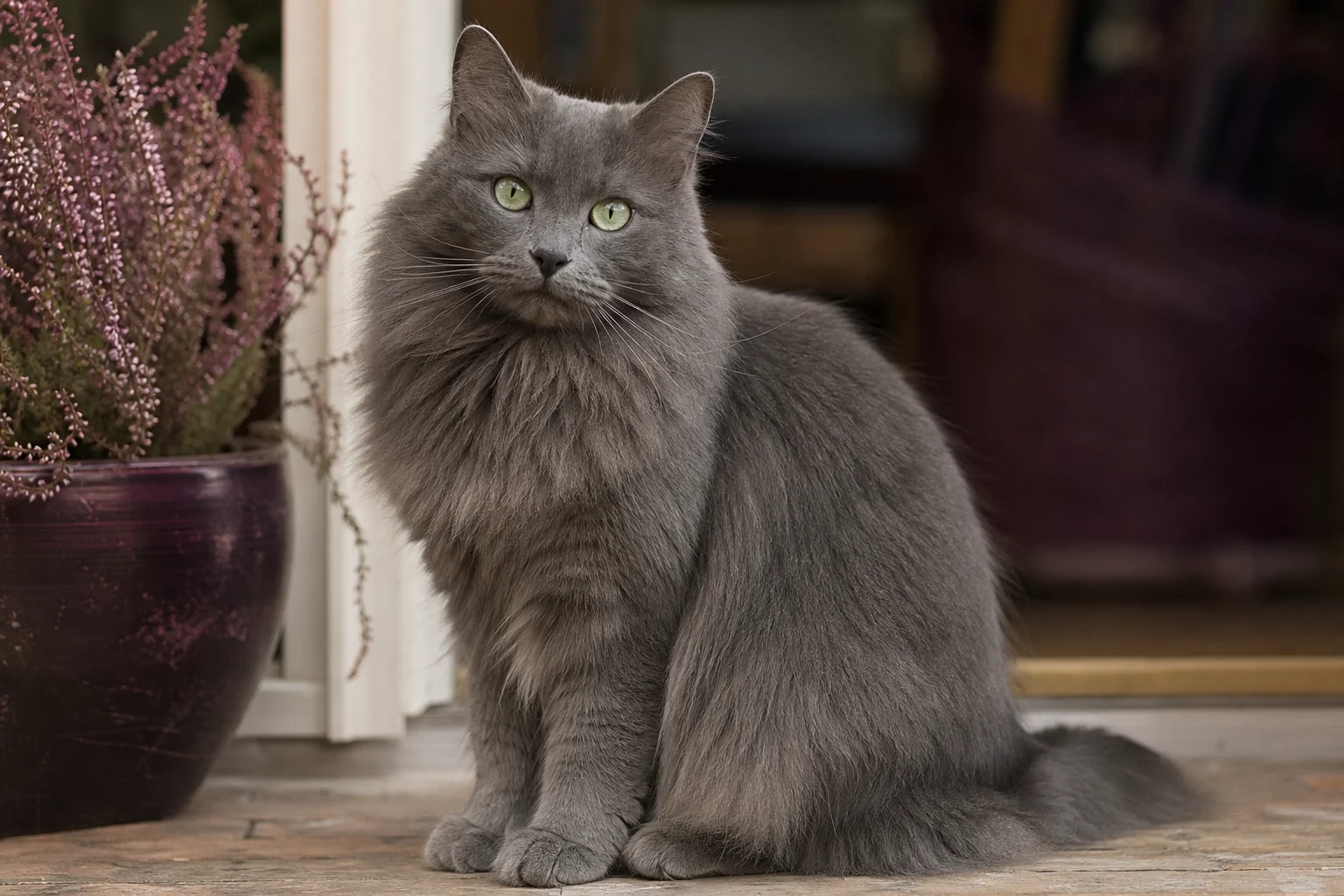
The Chartreux is the sturdier, more phlegmatic blue; the Korat the Thai silver-blue with more attachment intensity; the Nebelung is essentially this cat in semi-long dress.
Who this breed suits
Quiet, routine-friendly homes — singles, couples, seniors, calm families — that value a devoted companion who saves affection for its own. The "Which cat fits me?" test shows whether your household runs at Russian Blue calm.
Not sure what a Russian Blue may eat? The food checker rates individual foods on a traffic-light scale, and the food guide explains what cats can eat and what is toxic.
A good fit for you if …
Frequently asked questions
Are Russian Blues shy?
Reserved with strangers, not shy: guests get avoided politely, the own family gets deep, quiet devotion. The two-face is breed-typical.
Are Russian Blues hypoallergenic?
Among the friendlier breeds: many produce less Fel d 1, and the short coat sheds little. Individual testing before purchase remains essential.
How old do Russian Blues get?
Impressively old — fifteen to twenty years are normal in this healthy natural breed.
What does the coat need?
Weekly brushing for the plush double coat with its silver tipping — one of the easiest coats among pedigree cats.
Do Russian Blues get along with children and dogs?
With calm, respectful children and gentle dogs yes — after careful introductions. Chaos and rushing are what this sensitive breed cannot process.
Why does my Russian Blue seem to smile?
The slightly upturned mouth corners are a breed feature — the famous 'Mona Lisa smile' that fits the quiet character perfectly.
Similar breeds
Sources: FIFe/TICA breed standard · breed association data · editorial assessment · Last updated 08/2026. On health questions this article never replaces a visit to the vet.