 AI
AIKorat
Thailand's silver good-luck charm — heart-faced, devoted and quietly opinionated.
| Size | Small |
|---|---|
| Weight | 3–5 kg |
| Life expectancy | 12–16 years |
| Origin | Thailand |
| Type | Natural breed (Thailand) |
| Grooming | low |
| Activity needs | high |
| Beginner friendly | with some experience |
Temperament & suitability
Editorial assessment based on the FIFe breed standard and breed association data.
Guideline for movement & enrichment for this breed.
Traits
Origin & history
The Korat steps out of the same ancient Thai manuscripts as the Siamese: the Si-Sawat, silver-blue bringer of luck, traditionally gifted in pairs to brides and never sold — luck cannot be bought. Named after the Korat plateau, the breed reached the West in 1959 and remains deliberately unchanged: registries accept only the traditional type, making the Korat one of the purest living links to historic Siam.
Appearance & size
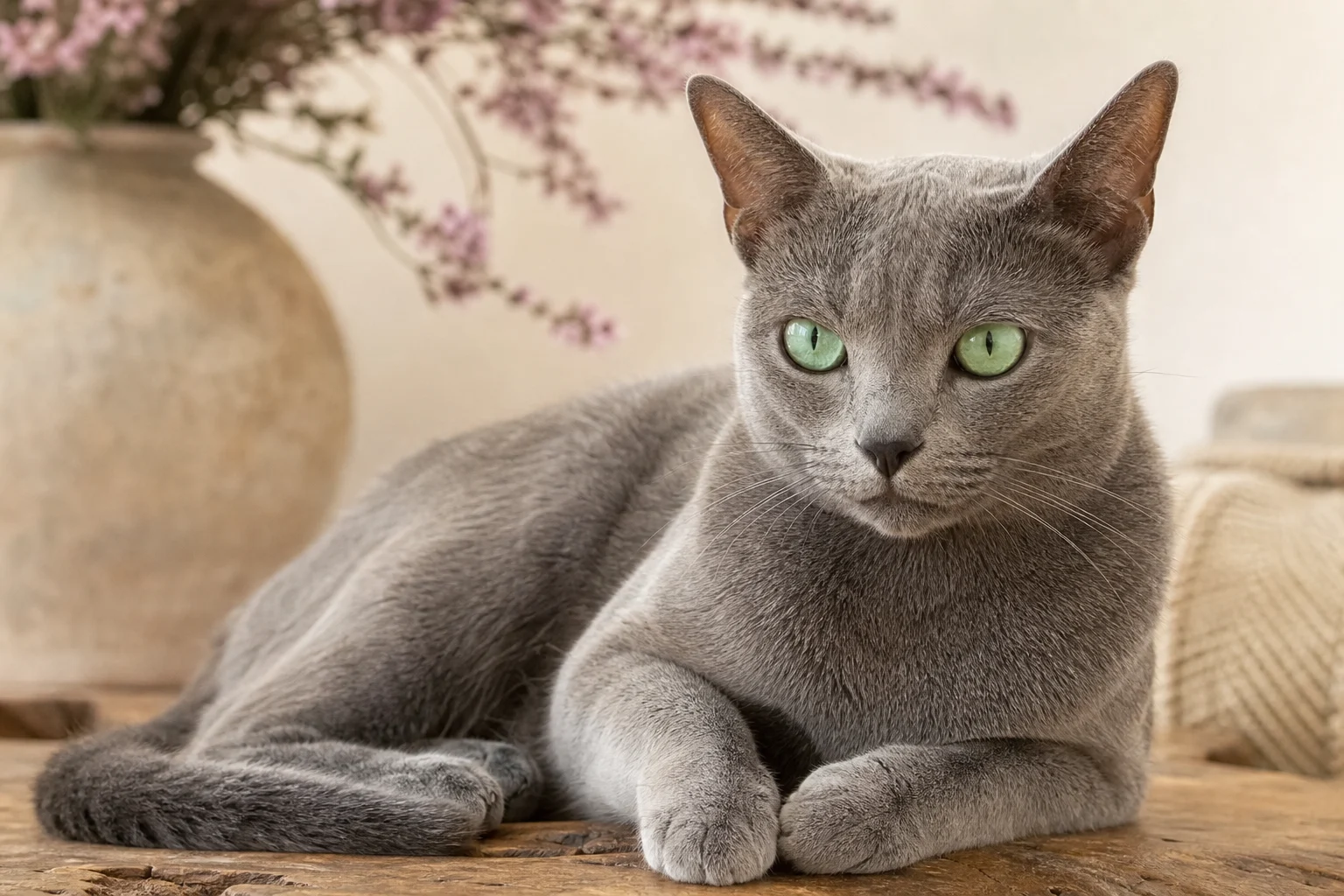
Small but substantial — three to five kilograms with surprising heft, "a cat of pleasing weight". The heart-shaped face is the hallmark, framed by large ears and dominated by enormous peridot-green eyes that reach full colour only after two to four years. The single-layer silver-blue coat tips each hair with silver, producing the halo shimmer Thai poetry compared to rain clouds over silver.
Personality & temperament
The Korat forms bonds like promises: intense, exclusive, lifelong. It shadows its chosen people, converses in soft tones, plays cleverly into age and holds firm opinions about schedule changes, expressed with polite persistence. Strangers meet reserved observation; the inner circle meets devotion with jealousy potential — a Korat wants its share of attention and notices deficits precisely. Loud chaos offends its sensitive hearing; calm homes fit best.
Indoor or outdoor living
An indoor cat for calm households; a secured balcony pleases it. Territory means routine and its people more than square metres. It shares well with gentle cats — ideally a second Korat, honouring the pair tradition — while whirlwind housemates stress it. Frame in Indoor cat or outdoor cat?
Enrichment & activity
Clever daily play in civilised doses: teaser hunts, fetch rounds, puzzle feeders solved with visible satisfaction. The Korat engages deeply with its trusted person and considers shared games relationship maintenance.
Grooming
A weekly polish keeps the silver halo; the single coat sheds remarkably little.
Feeding & health
Portion via the food amount calculator — the compact heavyweight gains easily. The breed-specific must: gene tests for gangliosidosis GM1 and GM2, available and standard at serious catteries; ask also for general heart checks. Tested lines are healthy and long-lived.
Costs
Kittens from tested lines cost €800–1,200 — the breed is rare, waiting lists apply. Running costs are small-cat modest; see the cat cost calculator.
For beginners, children and other pets
Best in calm homes with older, considerate children; toddler noise clashes with the sensitive hearing. With gentle cats it is sociable, with its own kind happiest. Committed beginners in quiet households manage well — the breed asks for presence more than experience.
Similar breeds compared
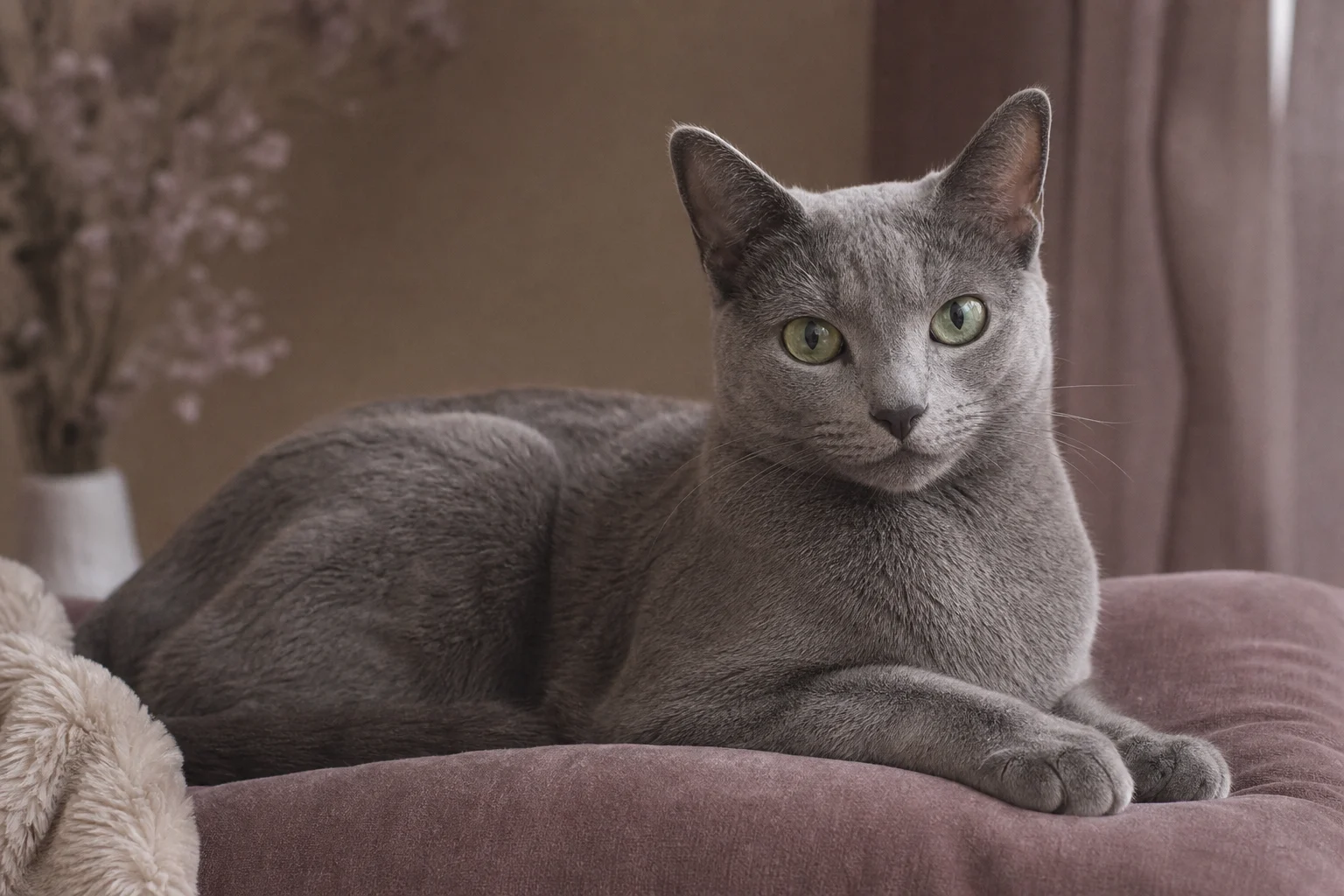
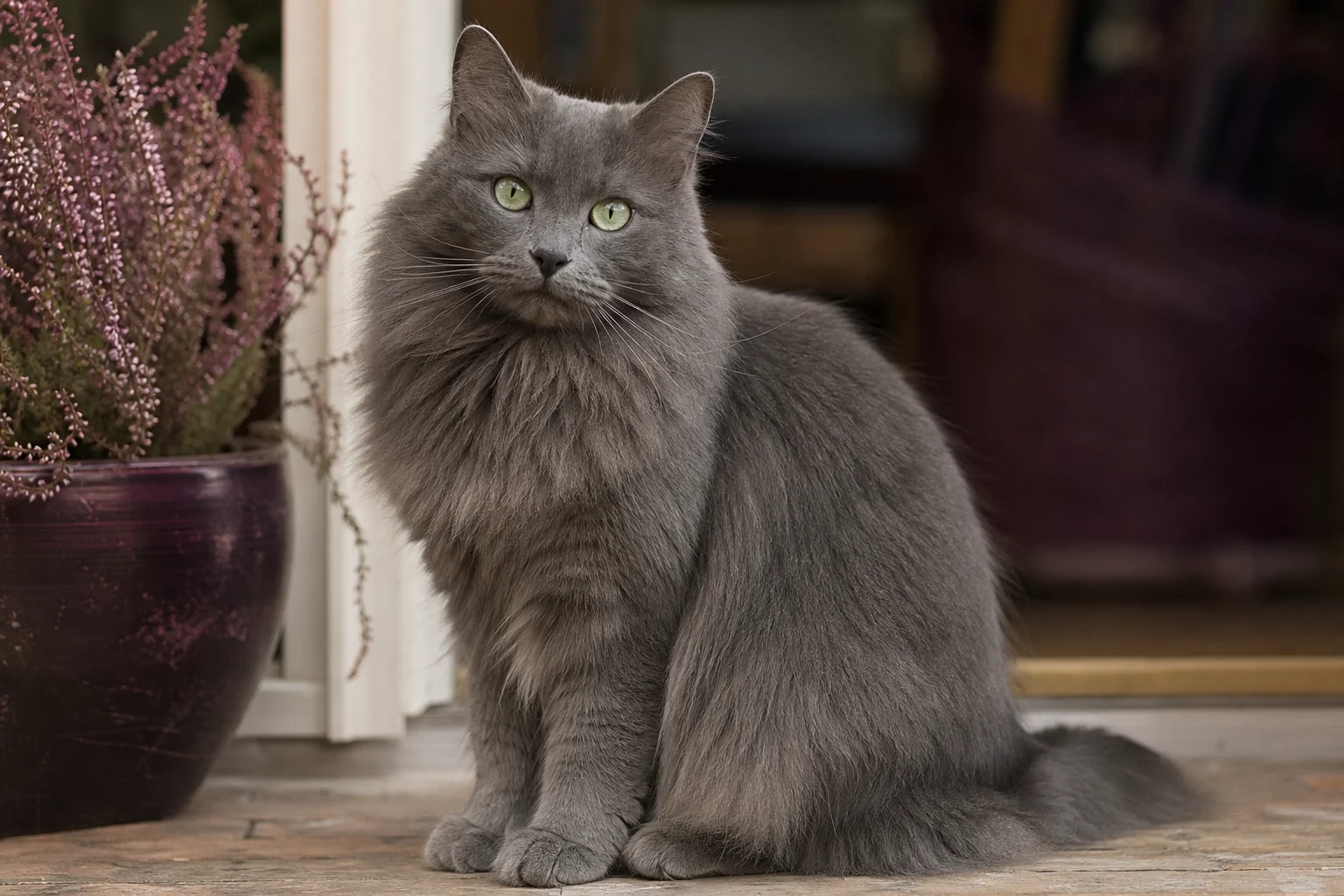
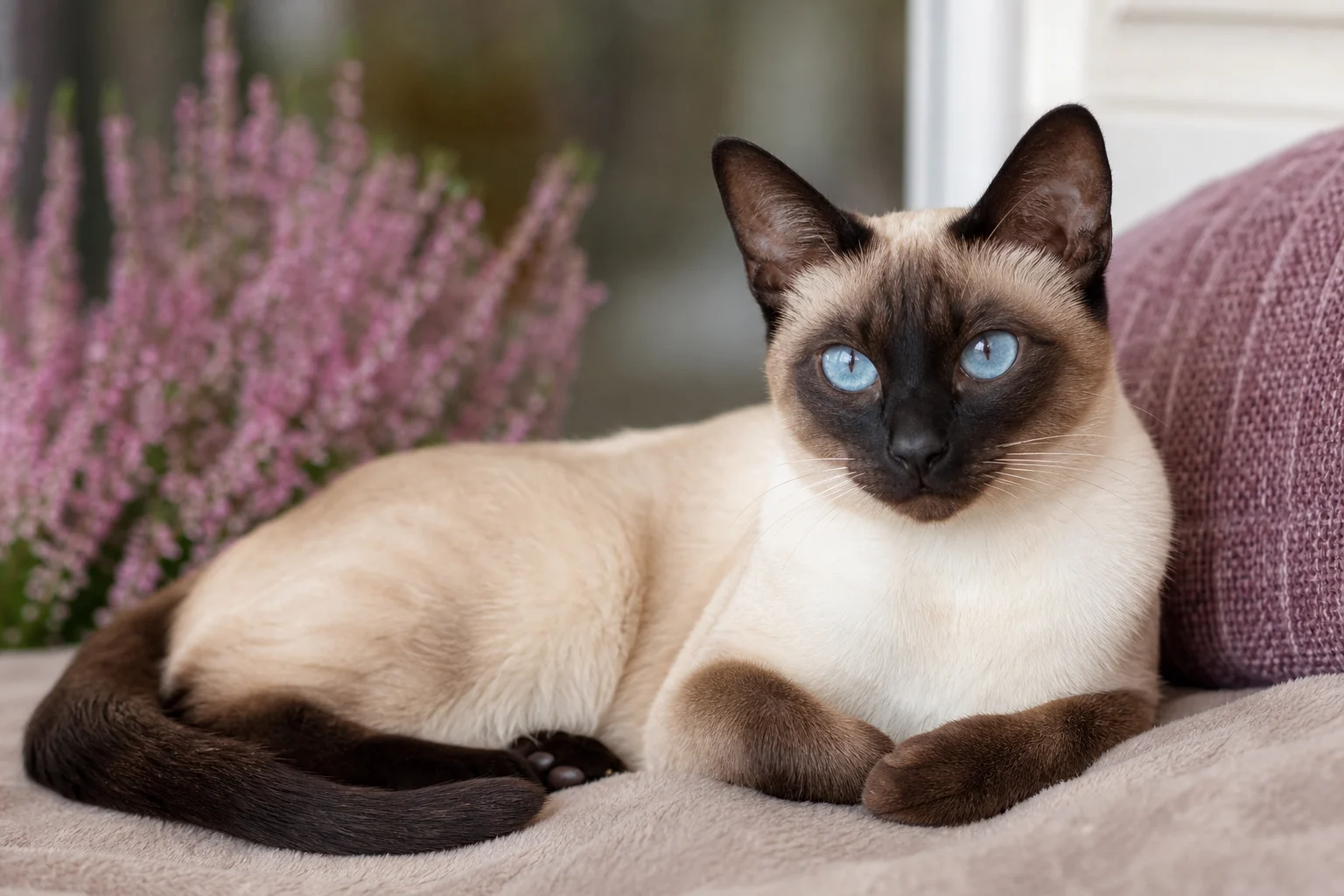
The Russian Blue is the reserved European silver-blue; the Nebelung its semi-long relative; the Thai shares homeland and devotion in pointed dress.
Who this breed suits
Quiet, present households ready for an intense, exclusive bond — ideally in the traditional pair. The "Which cat fits me?" test shows the match.
Not sure what a Korat may eat? The food checker rates individual foods on a traffic-light scale, and the food guide explains what cats can eat and what is toxic.
A good fit for you if …
Frequently asked questions
Why is the Korat a good-luck cat?
Thai tradition gifts the Si-Sawat in pairs for luck — to brides especially — and never sells it: luck cannot be bought.
When do the green eyes develop?
Slowly: kittens show amber tones, the famous peridot green completes only at two to four years.
Which health tests matter?
The gene tests for gangliosidosis GM1 and GM2 — breed-specific and standard at serious catteries.
Are Korats jealous?
Attentive to fairness: they notice attention deficits precisely and claim their share with polite persistence.
How does the Korat differ from the Russian Blue?
Warmer bond, heart-shaped face, green (not emerald) eyes and a single coat without plush — plus the Thai temperament: closer, more talkative.
Do Korats suit families with children?
With older, considerate children in calm homes, yes. Toddler volume clashes with the sensitive hearing.
Similar breeds
Sources: FIFe/TICA breed standard · breed association data · editorial assessment · Last updated 08/2026. On health questions this article never replaces a visit to the vet.