 AI
AIJapanese Bobtail
The living lucky charm — pompom tail, singing voice and centuries of temple-court charisma.
| Size | Medium |
|---|---|
| Weight | 3–5 kg |
| Life expectancy | 14–18 years |
| Origin | Japan |
| Type | Natural breed (Japan) |
| Grooming | medium |
| Activity needs | very high |
| Beginner friendly | well suited |
Temperament & suitability
Editorial assessment based on the FIFe breed standard and breed association data.
Guideline for movement & enrichment for this breed.
Traits
Origin & history
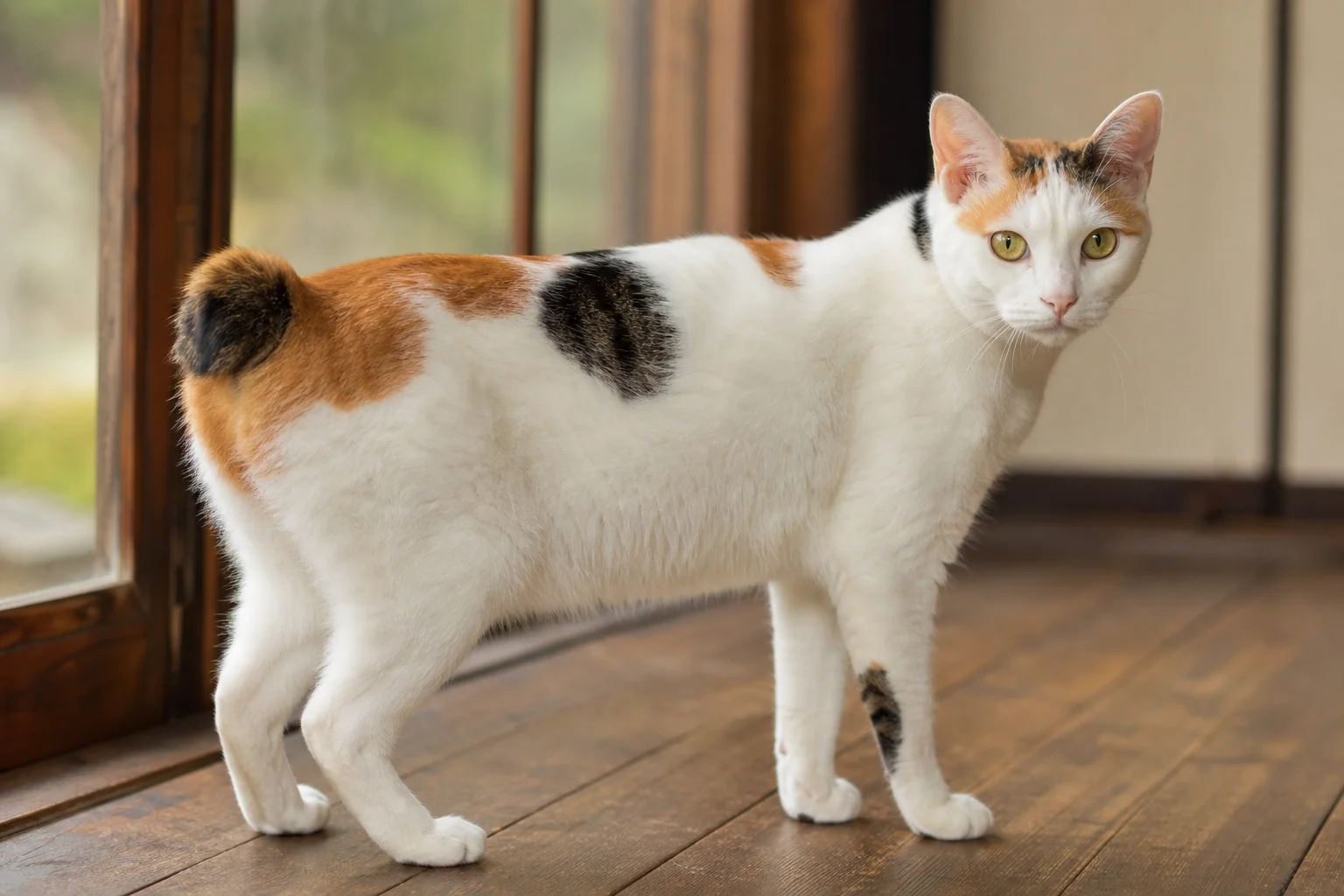
The bobbed tail arrived in Japan with temple cats over a thousand years ago and became culture: the beckoning Maneki-neko figure in every shop entrance is a Japanese Bobtail, and the tricolour "mi-ke" pattern counts as luck incarnate. For centuries the cats guarded silk stores from rodents, earning street-smart confidence. American breeders formalised the breed after 1968. Crucially, the Japanese bobtail gene is recessive and harmless — a true short tail without any of the Manx gene's spine risks.
Appearance & size
A slender, high-legged three-to-five-kilogram athlete whose signature sits behind: a three-to-eight-centimetre pompom tail, kinked and curved so uniquely that no two are alike — breeders call it a fingerprint. The head is a fine triangle with high cheekbones; coats come short or semi-long, classically in the tricolour mi-ke of white, black and red. Life expectancy is excellent: fourteen to eighteen years.
Personality & temperament
Centuries of shop and temple life bred an unshakeable extrovert: the Bobtail greets strangers, rides shoulders, learns fetch in an afternoon and comments on everything in a melodious, singing chatter unique to the breed. It is busy, clever and social — happiest with company, human or feline, and famous for carrying toys around like prey trophies. Water fascinates many individuals.
Indoor or outdoor living
Adaptable and confident: indoor life with climbing paths and play works well, a secured balcony or garden delights the agile jumper. Its friendliness deserves safety nets. Frame in Indoor cat or outdoor cat?
Enrichment & activity
Daily real sessions: fetch (a breed passion), chase games, puzzle feeders and clicker tricks. The sociable energy shares best with a second lively cat; the guide on keeping several cats helps with the setup.
Grooming
Easy in both lengths: the low-undercoat coat needs weekly brushing, the semi-long a touch more. The pompom needs no special care.
Feeding & health
A robust natural breed without breed-typical diseases — the harmless bobtail gene carries no health baggage. Portion the athlete via the food amount calculator; ask breeders for general health documentation. Longevity is the breed's quiet strength.
Costs
Kittens from good lines cost €800–1,200 — rare in Europe, with waiting lists. Running costs are ordinary; the cat cost calculator totals them.
For beginners, children and other pets
A cheerful family cat: playful with children, sociable with cats and friendly dogs, adaptable and robust. Beginners succeed well if the engagement needs are honoured. The singing voice charms — households wanting silence should know it exists.
Similar breeds compared
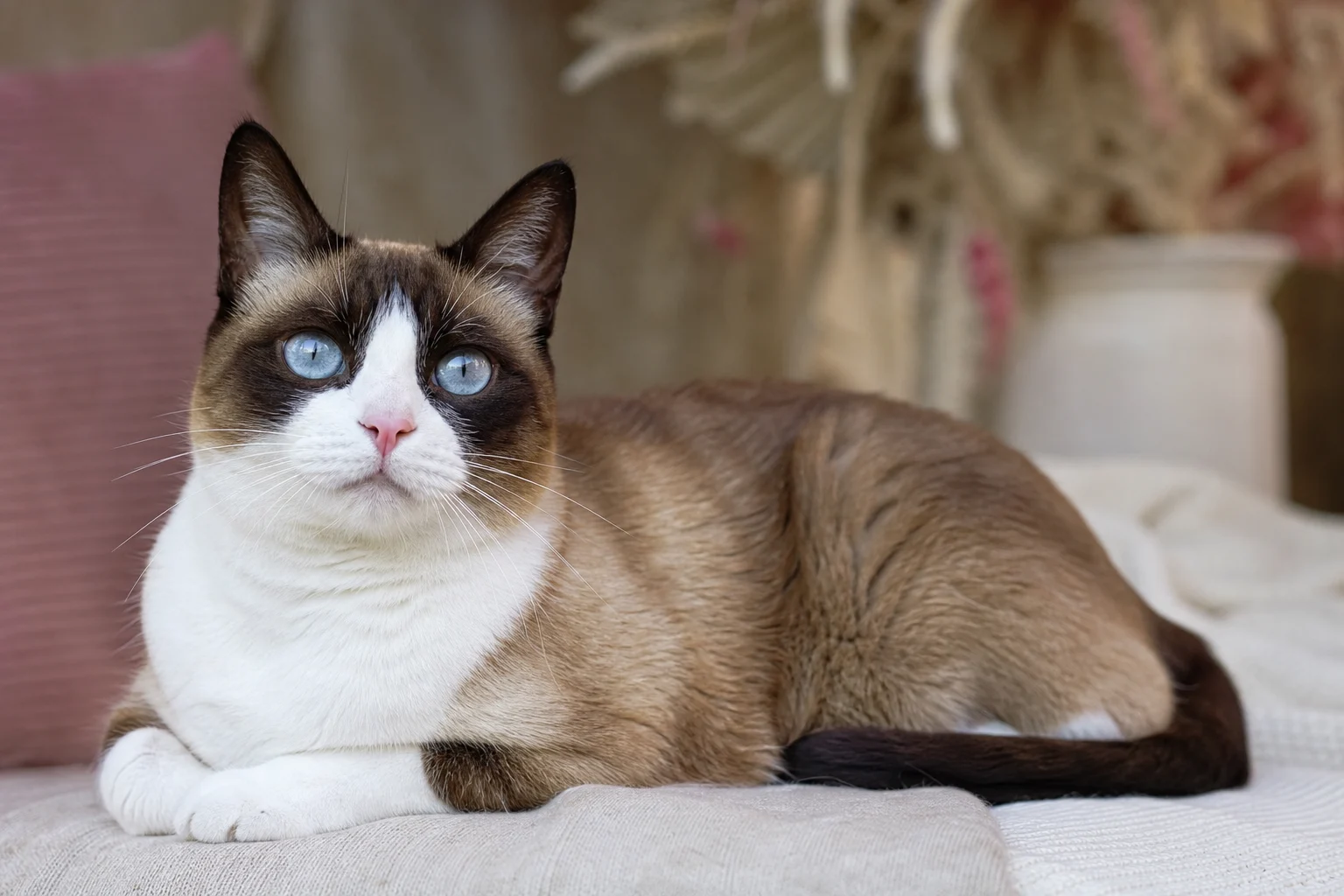
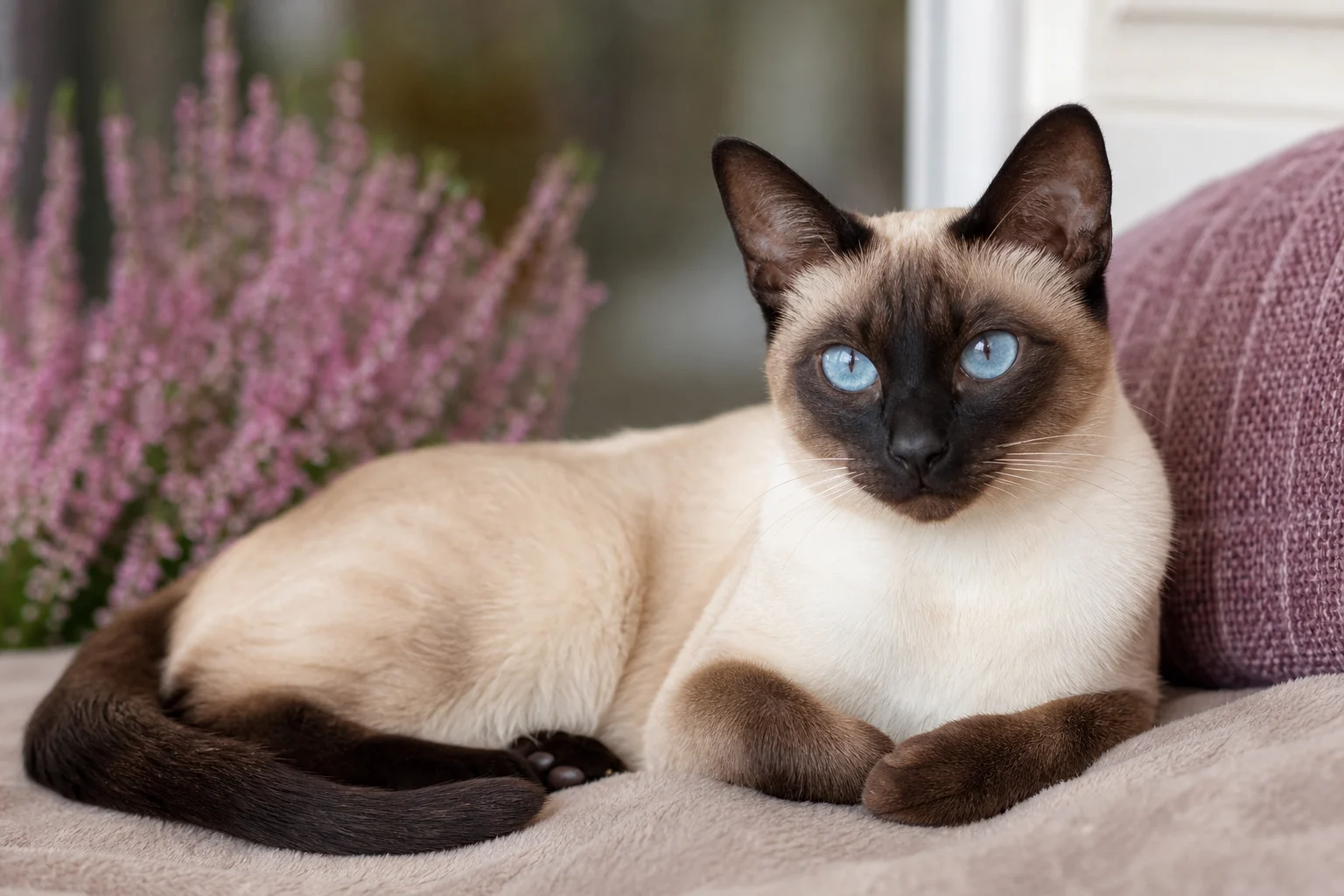
The Manx carries a different, riskier tailless gene; the Kurilian Bobtail is the sturdier Russian pompom parallel; the Siamese matches the chatty sociability with pointed drama.
Who this breed suits
Lively households that want a charismatic, singing companion with lucky-charm history. The "Which cat fits me?" test checks the energy match.
Not sure what a Japanese Bobtail may eat? The food checker rates individual foods on a traffic-light scale, and the food guide explains what cats can eat and what is toxic.
A good fit for you if …
Frequently asked questions
Is the Bobtail's short tail a health risk?
No — the Japanese bobtail gene is recessive and harmless, unrelated to the Manx gene and its spine problems. The pompom is pure ornament.
Why is every tail unique?
The kinks and curves form individually — breeders compare the pompoms to fingerprints; no two match.
What is a mi-ke cat?
The tricolour white-black-red pattern — Japan's classic lucky colouring, embodied in the Maneki-neko beckoning figure.
How vocal are Japanese Bobtails?
Distinctively: a soft, melodious singing chatter unlike any other breed. Conversational, not loud.
Are they good family cats?
Very — playful, robust, sociable with children and other pets, and confident with visitors.
How old do they get?
Fourteen to eighteen years are normal — a healthy natural breed with real longevity.
Similar breeds
Sources: FIFe/TICA breed standard · breed association data · editorial assessment · Last updated 08/2026. On health questions this article never replaces a visit to the vet.