 AI
AIManx
The tailless islander — a round, dog-loyal hunter whose defining gene demands honest breeding.
| Size | Medium |
|---|---|
| Weight | 3–6 kg |
| Life expectancy | 12–16 years |
| Origin | United Kingdom |
| Type | Natural breed (Isle of Man) |
| Grooming | medium |
| Activity needs | high |
| Beginner friendly | well suited |
Temperament & suitability
Editorial assessment based on the FIFe breed standard and breed association data.
Guideline for movement & enrichment for this breed.
Traits
Origin & history
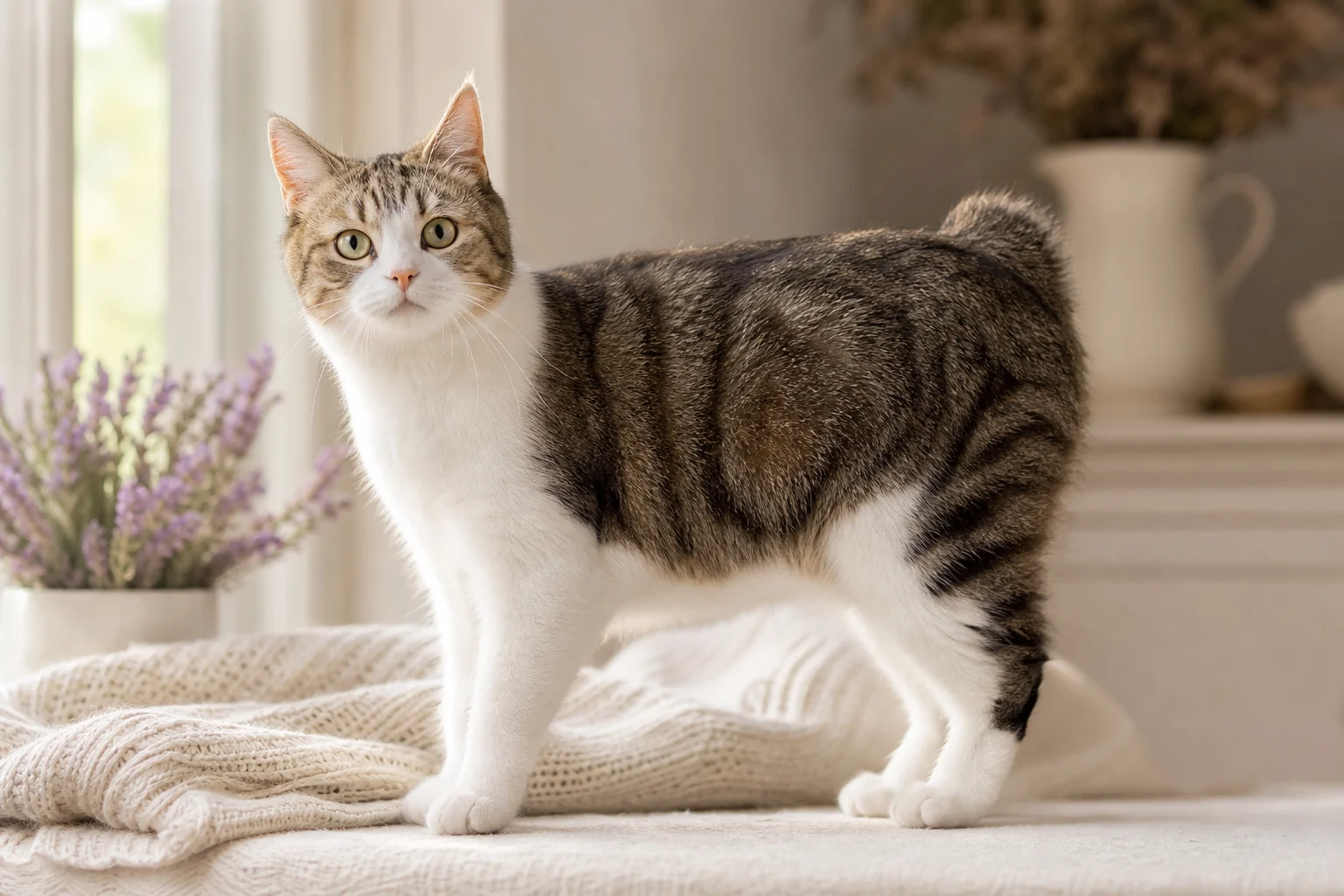
On the Isle of Man, a spontaneous mutation centuries ago shortened cats' tails — and island isolation fixed it into the population. Folklore blames a late boarding of Noah's ark; genetics names a dominant gene that shortens the spine's end. The Manx is one of the oldest recognised breeds, on show since the 1870s, and the island celebrates it on coins and emblems. The tail spectrum ranges from "rumpy" (none) through "riser" and "stumpy" to fully tailed "longy" — and responsible breeding always pairs tailless with tailed, because two copies of the gene are lethal in the womb.
Appearance & size
Round is the standard's favourite word: a round head, round eyes, a rounded back — with hind legs longer than the front, giving the rabbit-hop silhouette. Three to six kilograms of sturdy muscle wear a dense double coat in nearly all colours; the longhaired variant is bred as the Cymric. The missing tail changes balance surprisingly little — a healthy Manx jumps and climbs with the best.
Personality & temperament
Islanders are famously loyal, and the Manx delivers: it attaches dog-like to its family, follows through the house, fetches, buries toys, and many individuals guard their home with watchful interest in unfamiliar noises. The hunting heritage of a farm-and-harbour cat left quick reflexes and a love of chase games; the temperament stays even, patient and quietly conversational in a distinctive trill.
Indoor or outdoor living
Adaptable: content indoors with climbing and play, delighted by a secured garden — the robust, weatherproof mouser heritage shows. Its trusting family focus argues for safety nets like any pedigree cat. Frame in Indoor cat or outdoor cat?
Enrichment & activity
Daily hunt-style play, fetch rounds and puzzle feeders serve the quick paws and clever head. The powerful hindquarters love vertical games — a stable tree is standard equipment.
Grooming
The dense double coat asks brushing once or twice a week, more in moult. Rumpy hindquarters deserve a hygiene glance now and then — a task most Manx tolerate placidly.
Feeding & health
Portion via the food amount calculator for the muscular frame. The honest chapter: the tailless gene can shorten the spine too far — "Manx syndrome" bundles spina-bifida-like defects, bowel and bladder control problems, usually visible by six months. Serious breeders pair tailless × tailed only, never sell before six months of observed health, and show the litter's history openly. Buy exactly there, or choose a tailed "longy" carrying full health with island charm.
Costs
Kittens from responsible lines cost €700–1,100. Running costs are ordinary; the cat cost calculator totals them.
For beginners, children and other pets
A patient, playful family cat that enjoys children, respects dogs and integrates well with other cats. Beginner-suitable — the diligence belongs at the buying stage: cattery quality decides everything with this breed.
Similar breeds compared
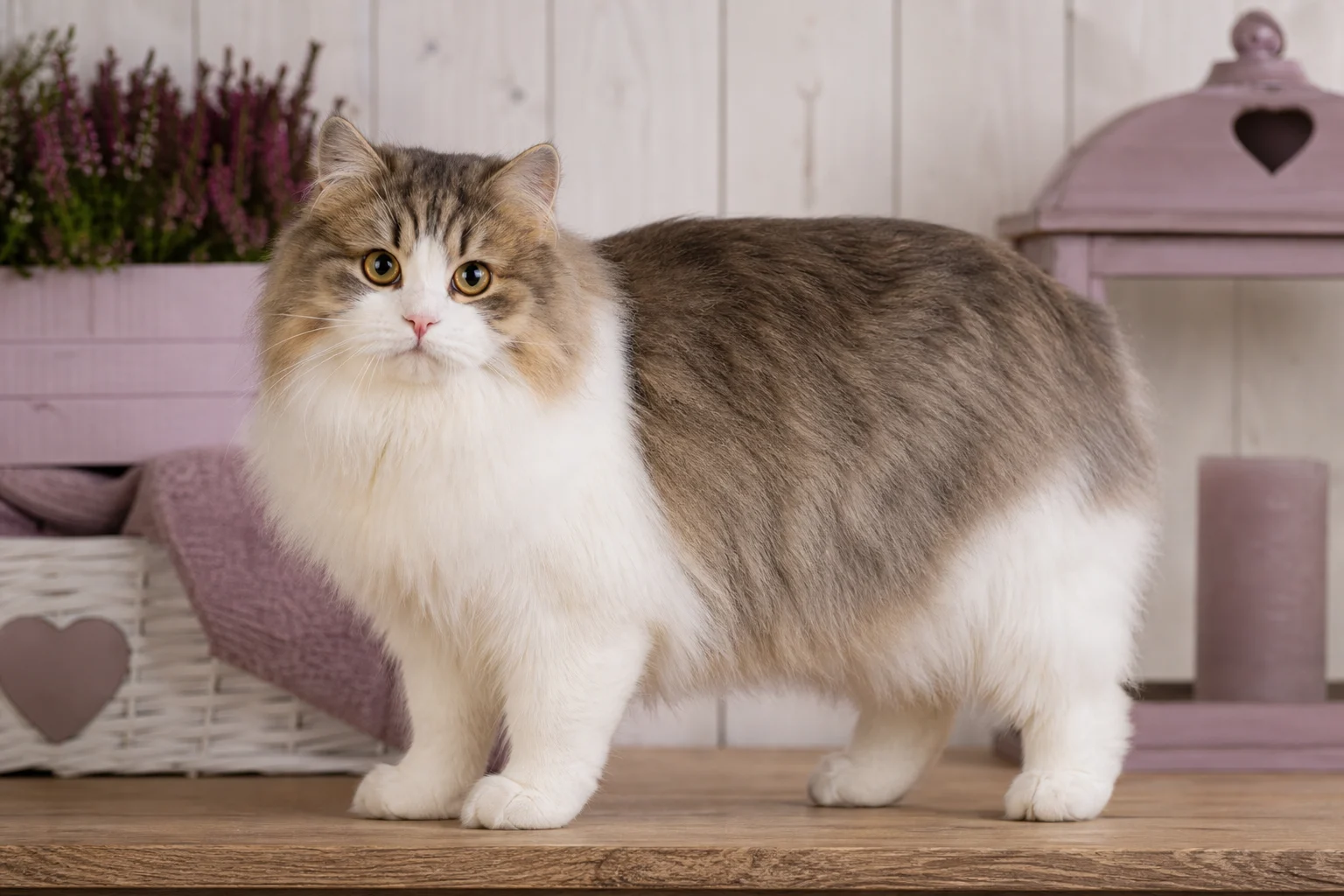
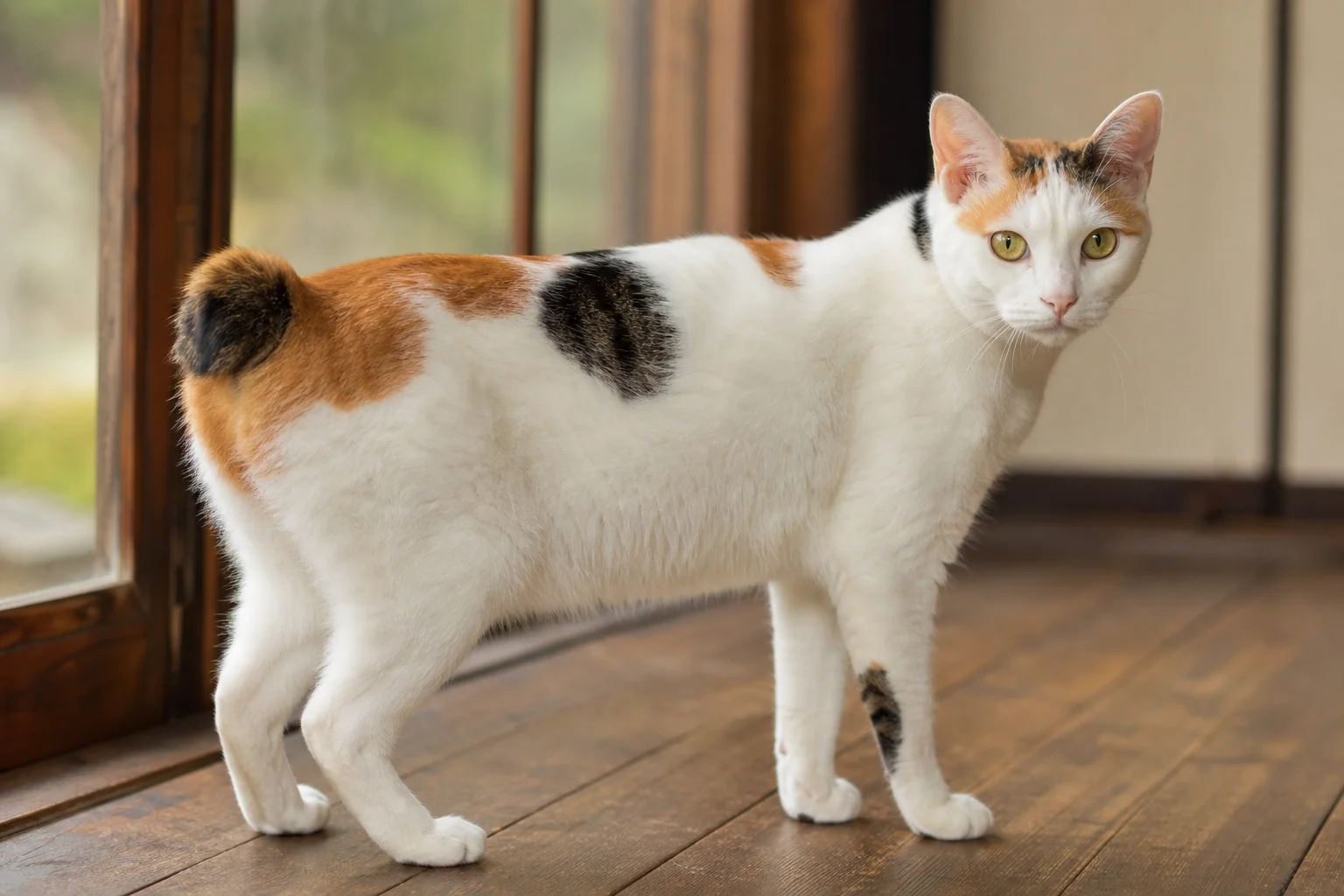
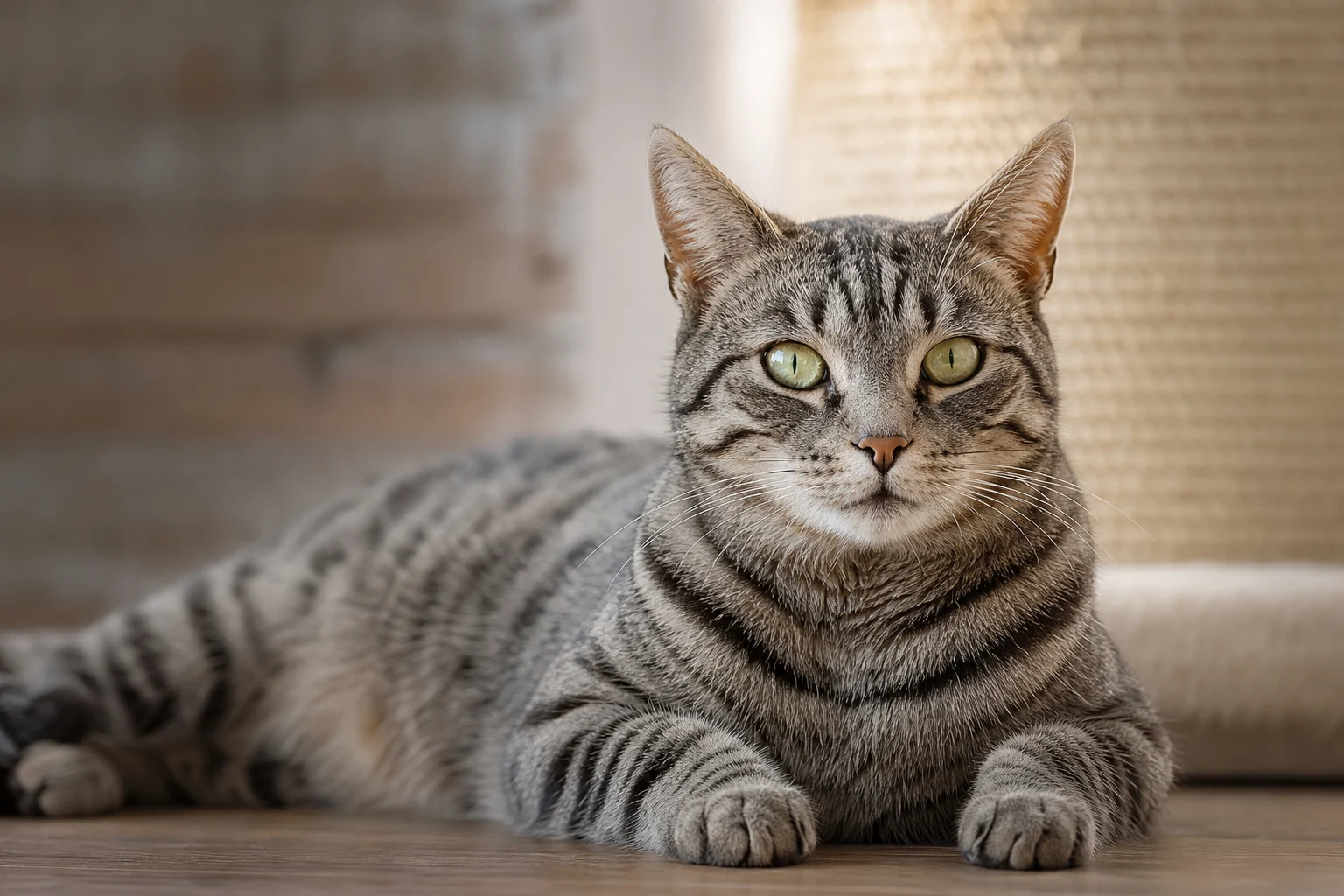
The Cymric is the longhaired Manx; the Japanese Bobtail carries a different, harmless short-tail gene; the European Shorthair offers the robust farm-cat virtues with a full tail.
Who this breed suits
Families who love the loyal islander character and choose breeders with care. The "Which cat fits me?" test checks the everyday fit.
Not sure what a Manx may eat? The food checker rates individual foods on a traffic-light scale, and the food guide explains what cats can eat and what is toxic.
A good fit for you if …
Frequently asked questions
Why are Manx cats tailless?
A dominant mutation shortens the spine's end; island isolation fixed it. Tail lengths range from rumpy (none) to longy (full).
What is Manx syndrome?
When the gene shortens the spine too far: spina-bifida-like defects with bowel and bladder problems, visible by about six months. Serious breeders pair tailless with tailed only and never sell earlier.
Are two tailless parents possible?
No — homozygous embryos die in the womb. Rumpy × rumpy matings are irresponsible and reputable catteries never do them.
Do Manx cats balance worse without a tail?
Healthy individuals barely — they jump and climb excellently. The rabbit-hop gait from long hind legs is breed-typical, not a problem sign.
What is a Cymric?
The longhaired Manx, bred under its own name — same island gene, same character, flowing coat.
Are Manx good family cats?
Notably: dog-like loyalty, patience with children and playfulness make well-bred Manx superb family companions.
Similar breeds
Sources: FIFe/TICA breed standard · breed association data · veterinary literature on Manx syndrome · editorial assessment · Last updated 08/2026. On health questions this article never replaces a visit to the vet.