 AI
AICymric
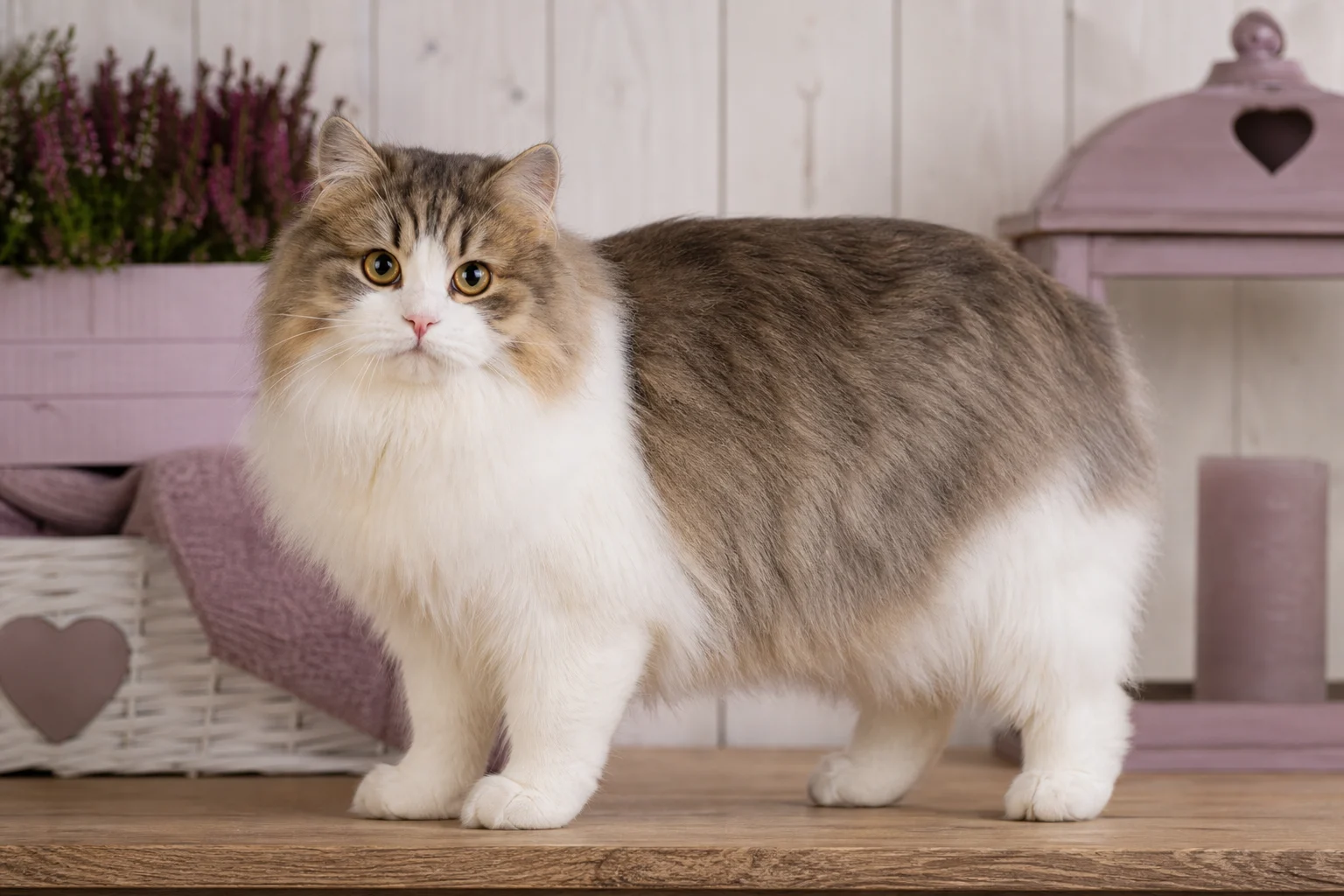
The Manx in a flowing coat — same loyal islander, same rabbit hop, same genetics homework.
| Size | Medium |
|---|---|
| Weight | 3–6 kg |
| Life expectancy | 12–16 years |
| Origin | United Kingdom / Canada |
| Type | Natural breed (Isle of Man) |
| Grooming | high |
| Activity needs | high |
| Beginner friendly | well suited |
Temperament & suitability
Editorial assessment based on the FIFe breed standard and breed association data.
Guideline for movement & enrichment for this breed.
Traits
Origin & history
Longhaired kittens always appeared in Manx litters — the Isle of Man population carried the gene quietly for centuries. Canadian breeders in the 1960s stopped treating them as rejects and founded the Cymric (from the Welsh for Wales, a nod to Celtic neighbourhood). Registries split on whether it is a breed or the Manx's longhair class; the cat is a Manx in every respect that matters — including the tail gene and its obligations.
Appearance & size
The Manx roundness under a silky double coat: three to six kilograms, round head, rabbit-hop hindquarters — with britches, ruff and a tail spectrum from rumpy to longy, all wrapped in flowing semi-long fur. All classic colours occur; the plush rear of a rumpy Cymric is breeders' beloved "bunny look".
Personality & temperament
Pure Manx software: dog-loyal family attachment, fetch enthusiasm, watchful interest in household perimeters and quiet trilling conversation. The Cymric plays powerfully — the jump from those hind legs surprises — and settles into evening laps with island calm. Children, dogs and fellow cats integrate easily.
Indoor or outdoor living
Adaptable like its shorthaired twin: content indoors with climbing and play, delighted by secured gardens — a robust, weatherproof build. Safety nets apply as for every trusting pedigree cat. Frame in Indoor cat or outdoor cat?
Enrichment & activity
Daily hunt-style sessions, fetch rounds and puzzle feeders serve the quick islander; a stable tree is standard equipment for the powerful hindquarters.
Grooming
Here the twin differs: the dense double coat wants brushing two to three times weekly, daily in moult — mats form in britches and armpits when skipped. Rumpy hindquarters deserve routine hygiene glances.
Feeding & health
Portion via the food amount calculator. The genetics homework is identical to the Manx: the tailless gene can shorten the spine too far (Manx syndrome — spina-bifida-like defects, visible by six months); responsible catteries pair tailless × tailed only and never sell before six observed months. Buy exactly there, or choose a tailed longy. Details in the Manx profile.
Costs
Kittens from responsible lines cost €700–1,200 — the longhair variant is rarer still. Running costs are ordinary plus grooming tools; the cat cost calculator totals them.
For beginners, children and other pets
A loyal, playful family cat for households that do the buying diligence and the brushing routine. With both handled, few breeds are warmer.
Similar breeds compared
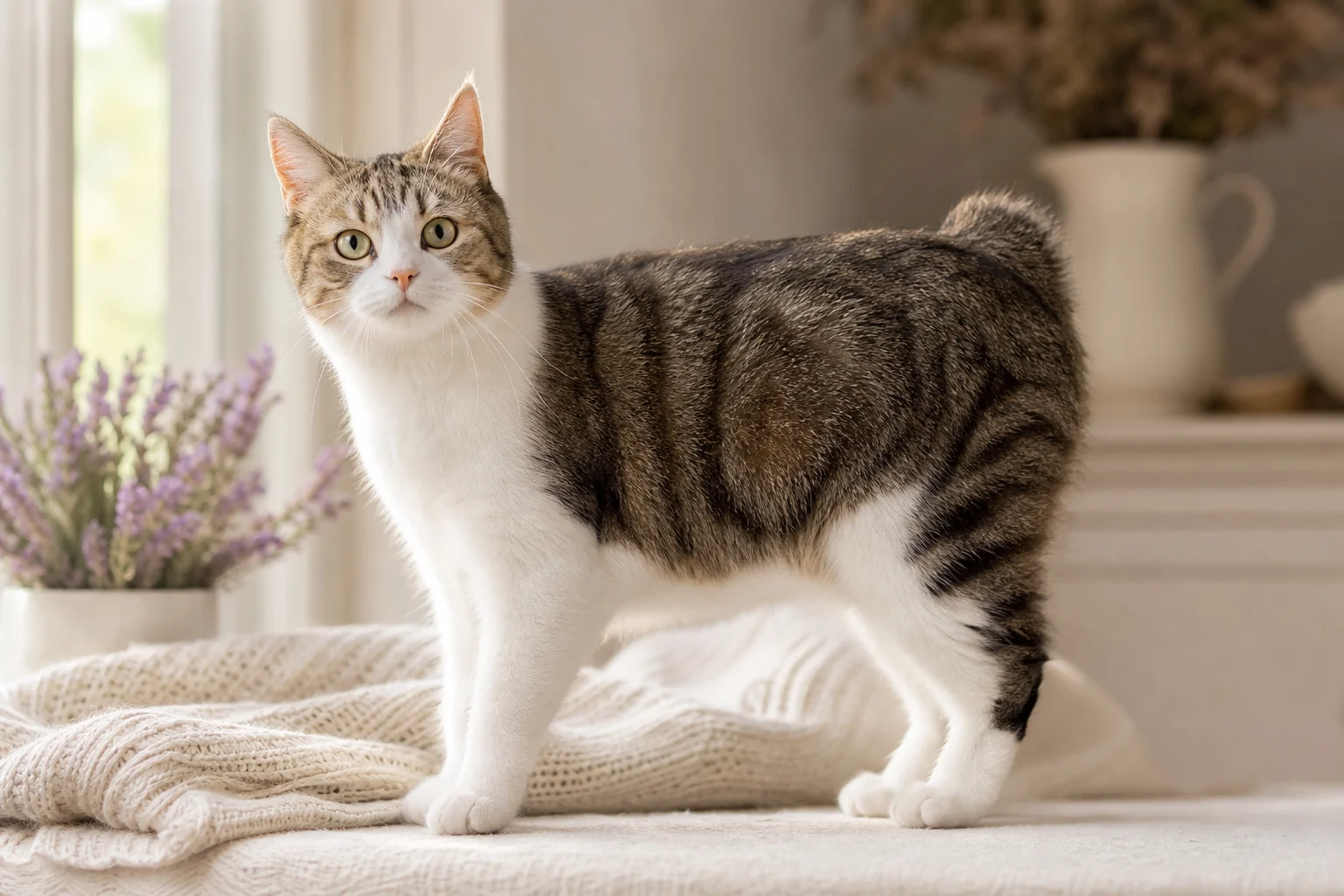
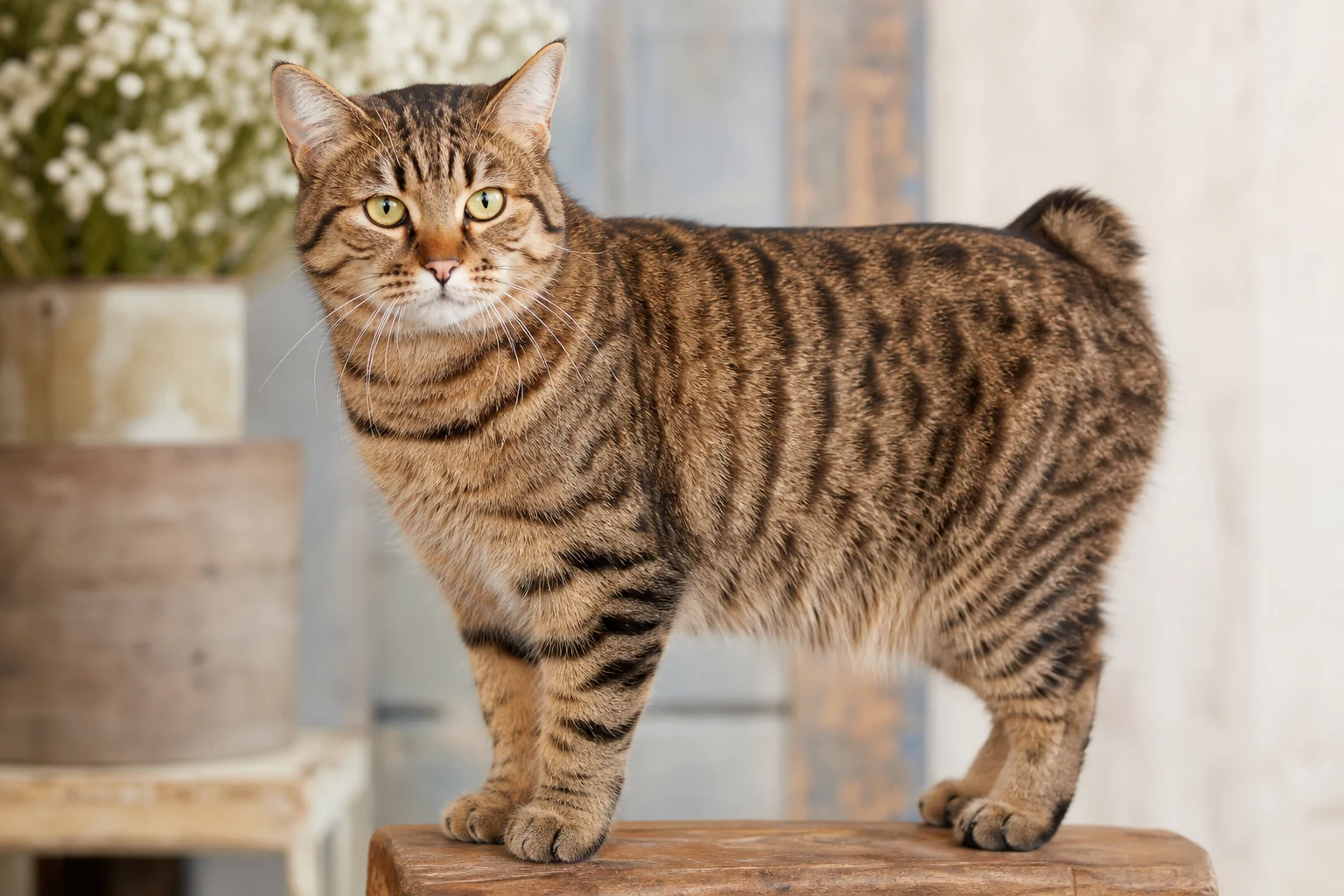
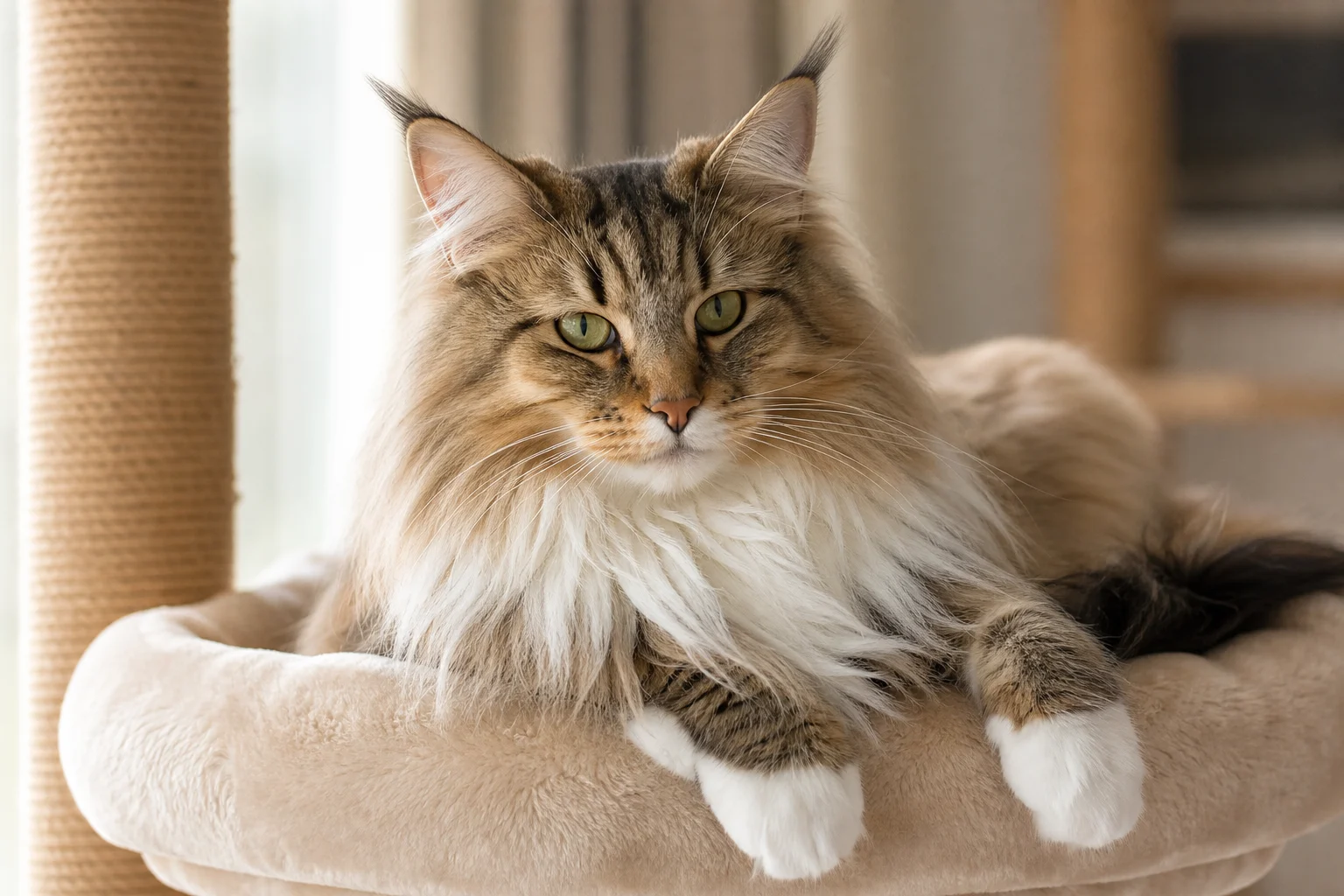
The Manx is the shorthaired original; the American Bobtail the harmless-gene rugged alternative; the Norwegian Forest Cat the full-tailed flowing-coat islander of the north.
Who this breed suits
Families who love the Manx heart and a flowing coat — and choose breeders with rigour. The "Which cat fits me?" test covers the everyday half.
Not sure what a Cymric may eat? The food checker rates individual foods on a traffic-light scale, and the food guide explains what cats can eat and what is toxic.
A good fit for you if …
Frequently asked questions
Is the Cymric its own breed?
Registry-dependent — some list it separately, others as the Manx longhair class. Practically it is a Manx in flowing coat, tail gene included.
What does the tail gene require?
The Manx homework: tailless × tailed pairings only, no sale before six observed months, and open litter history — Manx syndrome is the risk being managed.
How much grooming does the coat need?
Brushing two to three times weekly, daily in moult — the double coat mats in britches and armpits when skipped.
Where does the name Cymric come from?
From the Welsh word for Wales — a Celtic nod by the Canadian founders, not an actual Welsh origin.
Are Cymrics good family cats?
Notably: dog-loyal, playful and patient — well-bred Cymrics are superb family companions.
What is the harmless-gene alternative?
The American Bobtail: rugged bob-tailed warmth without the Manx gene's spine risks.
Similar breeds
Sources: FIFe/TICA breed standard · breed association data · veterinary literature on Manx syndrome · editorial assessment · Last updated 08/2026. On health questions this article never replaces a visit to the vet.