 AI
AIAmerican Bobtail
A rugged trail companion with a wild bob — adaptable, dog-easy and famously travel-proof.
| Size | Large |
|---|---|
| Weight | 4–8 kg |
| Life expectancy | 13–18 years |
| Origin | United States |
| Type | Natural breed (USA) |
| Grooming | medium |
| Activity needs | high |
| Beginner friendly | well suited |
Temperament & suitability
Editorial assessment based on the FIFe breed standard and breed association data.
Guideline for movement & enrichment for this breed.
Traits
Origin & history
An Arizona motel parking lot, late 1960s: a vacationing couple picked up Yodie, a short-tailed brown tabby stray, whose kittens inherited the bob — a spontaneous dominant mutation unrelated to the Manx gene. Breeders built a sturdy, wild-looking breed on his descendants and other naturally bobbed American strays; TICA recognised it in 1989. Truckers famously adopted the breed as cab companions, which says everything about its temperament.
Appearance & size
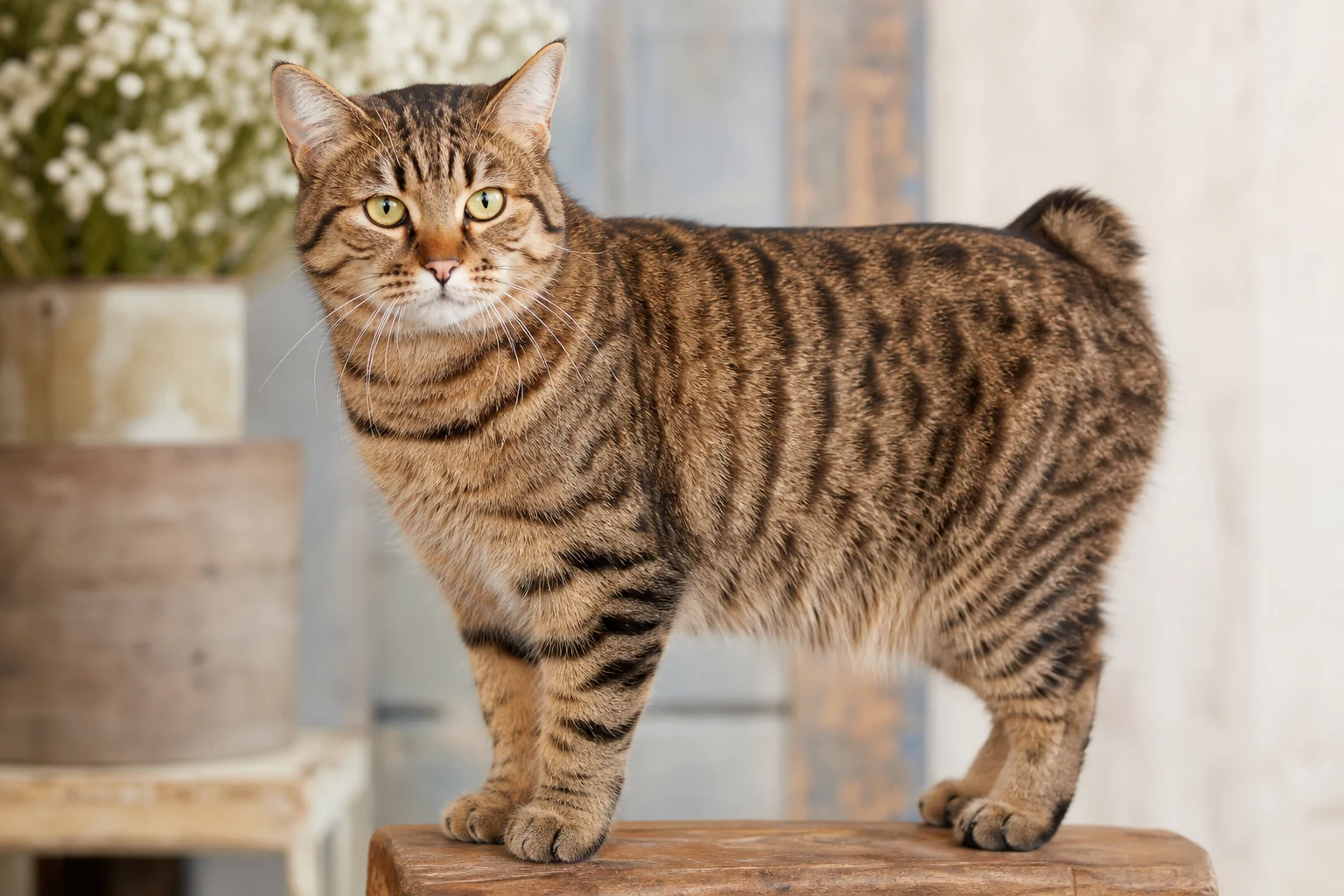
Four to eight kilograms of slow-maturing sturdiness with a wild hunter look: a broad modified wedge head, brawny body, and a flexible bobbed tail of three to ten centimetres — visibly expressive and never absent, unlike the rumpy Manx. Coats come in shaggy shorthair and semi-long across nearly all colours and patterns, with the wild-tabby look as breed signature.
Personality & temperament
The Bobtail is the calm centre of the bobbed family: deeply people-oriented, patient, playful in solid doses and unusually adaptable — new places, car rides, leash walks and hotel rooms leave it unimpressed, which built its reputation as a travel and RV cat. It greets guests, entertains children, respects dogs and communicates in chirps and trills. Escape artistry is the one talent to watch: clever paws open doors.
Indoor or outdoor living
Flexible: content indoors with climbing and daily play, delighted by secured gardens and leash adventures. The confident calm belongs behind safety nets like any trusting breed. Frame in Indoor cat or outdoor cat?
Enrichment & activity
Daily hunt-style sessions, fetch rounds, puzzle feeders and — the breed speciality — shared outings on the leash. Energy is solid mid-range with a working off switch.
Grooming
Weekly brushing for shorthairs, twice for the shaggy semi-long; the weatherproof double coat mats rarely.
Feeding & health
A robust natural-based breed; the harmless bobtail gene carries no spine baggage, though fully tailless kittens (occasional) should not be bred forward — ask the cattery how it handles them. HCM checks are the standard question. Portion the slow-maturing frame via the food amount calculator.
Costs
Kittens from documented lines cost €900–1,400 — rare in Europe, with waiting lists. Running costs match a large cat; the cat cost calculator totals them.
For beginners, children and other pets
A first-class family cat: patient with children, genuinely dog-easy, cat-sociable and beginner-forgiving. Households that travel or move benefit doubly from the unshakeable adaptability.
Similar breeds compared
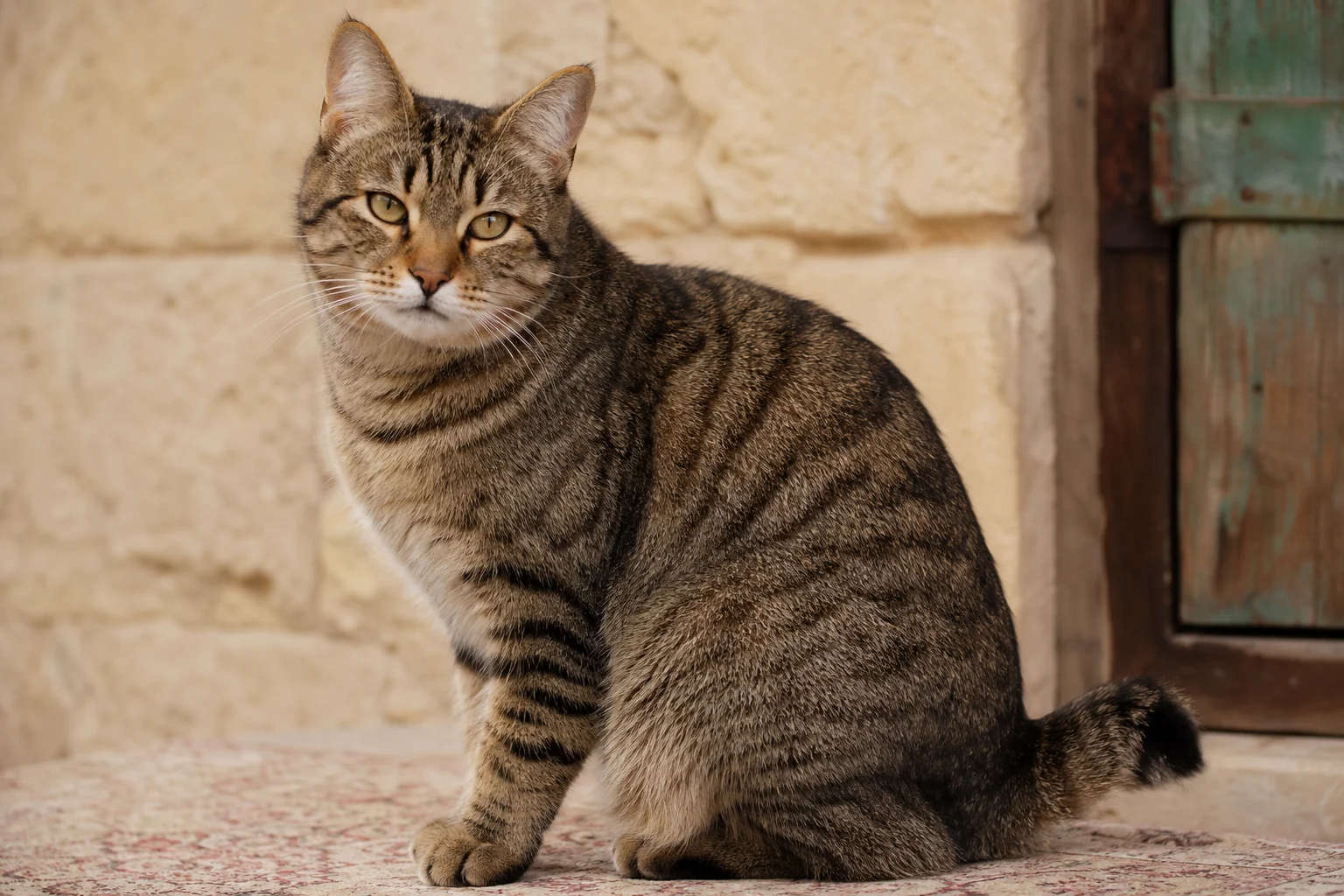
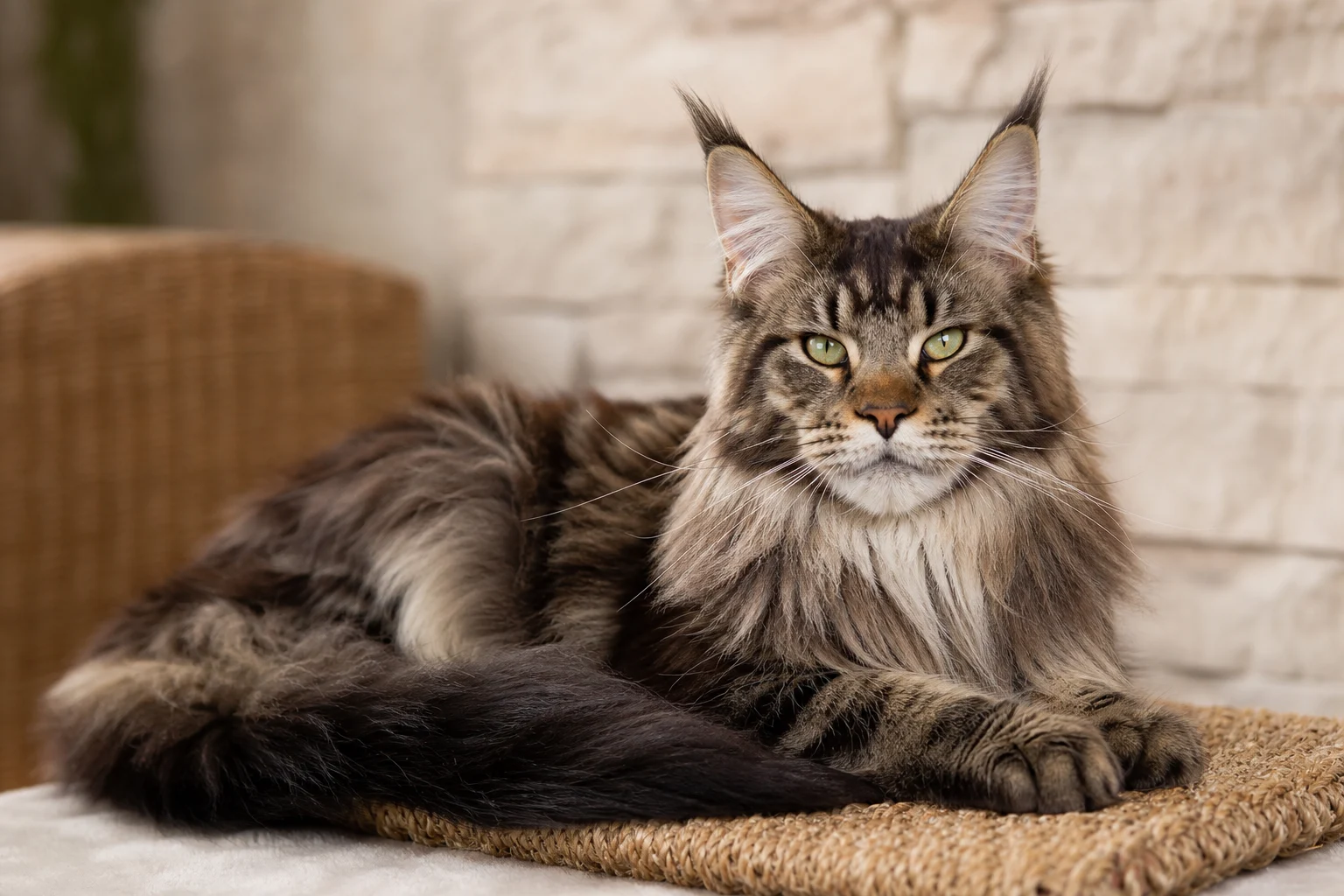
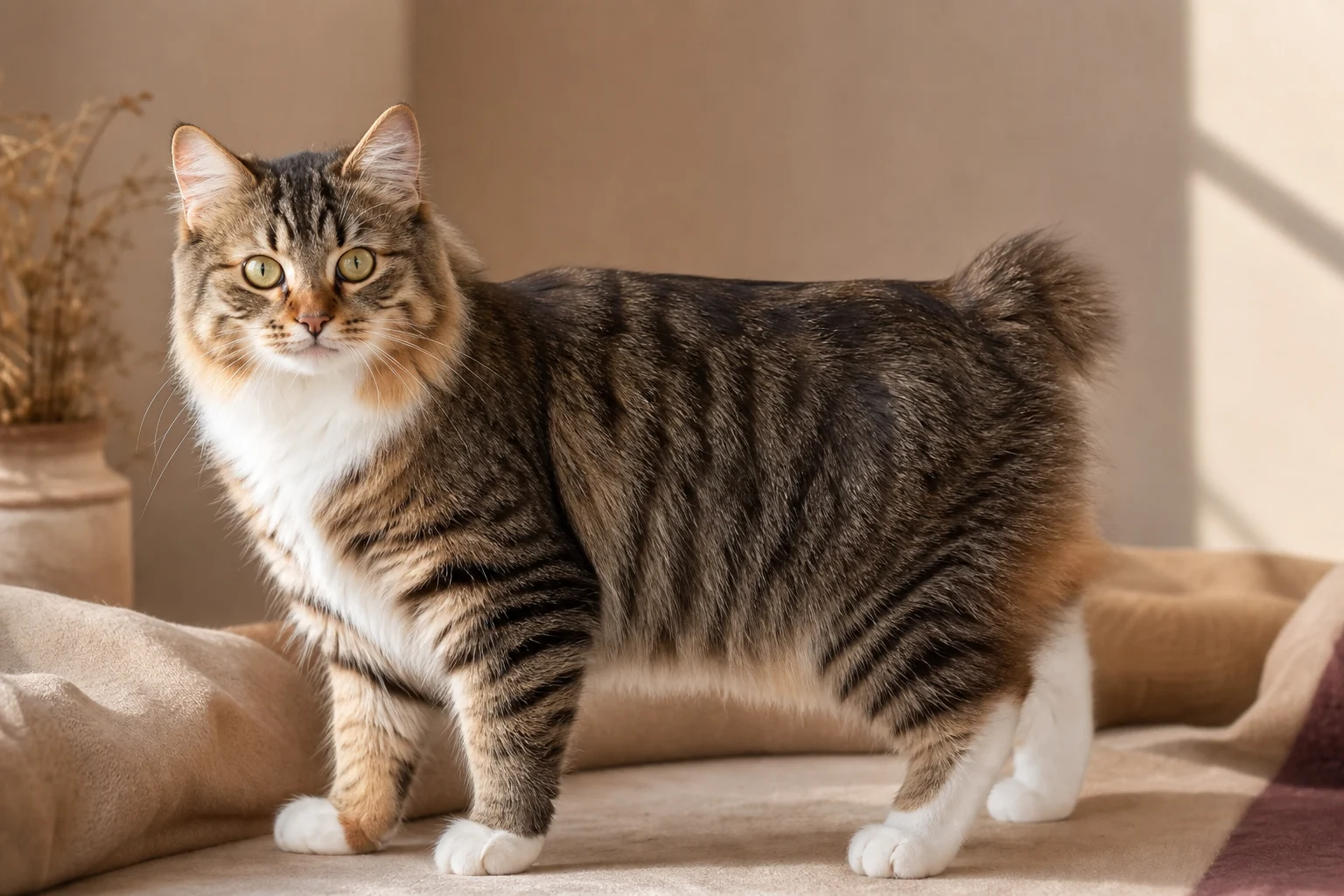
The Pixie-Bob is the parallel bobbed project with heavier bobcat styling; the Kurilian Bobtail the Russian island counterpart; the Maine Coon scales the friendly wild look to giant.
Who this breed suits
Active families and mobile households that want a rugged, easy companion for everything from sofa to road trip. The "Which cat fits me?" test confirms the broad fit.
Not sure what a American Bobtail may eat? The food checker rates individual foods on a traffic-light scale, and the food guide explains what cats can eat and what is toxic.
A good fit for you if …
Frequently asked questions
Is the American Bobtail related to the Manx?
No — its bob comes from a different, harmless dominant mutation. The expressive short tail is always present, never fully absent like the rumpy Manx.
Why is the breed called a travel cat?
Truckers made it famous as a cab companion: car rides, new places and leash walks genuinely leave it relaxed.
How big do American Bobtails get?
Four to eight sturdy kilograms, mature only around three years.
Which health questions matter?
HCM checks and the cattery's handling of occasional fully tailless kittens, which should not be bred forward.
Are they good with dogs and children?
Notably — patience with children and dog-ease are breed hallmarks.
Shorthair or semi-long?
Both exist, both shaggy and weatherproof; the semi-long needs one extra brushing per week.
Similar breeds
Sources: FIFe/TICA breed standard · breed association data · editorial assessment · Last updated 08/2026. On health questions this article never replaces a visit to the vet.