 AI
AIKurilian Bobtail
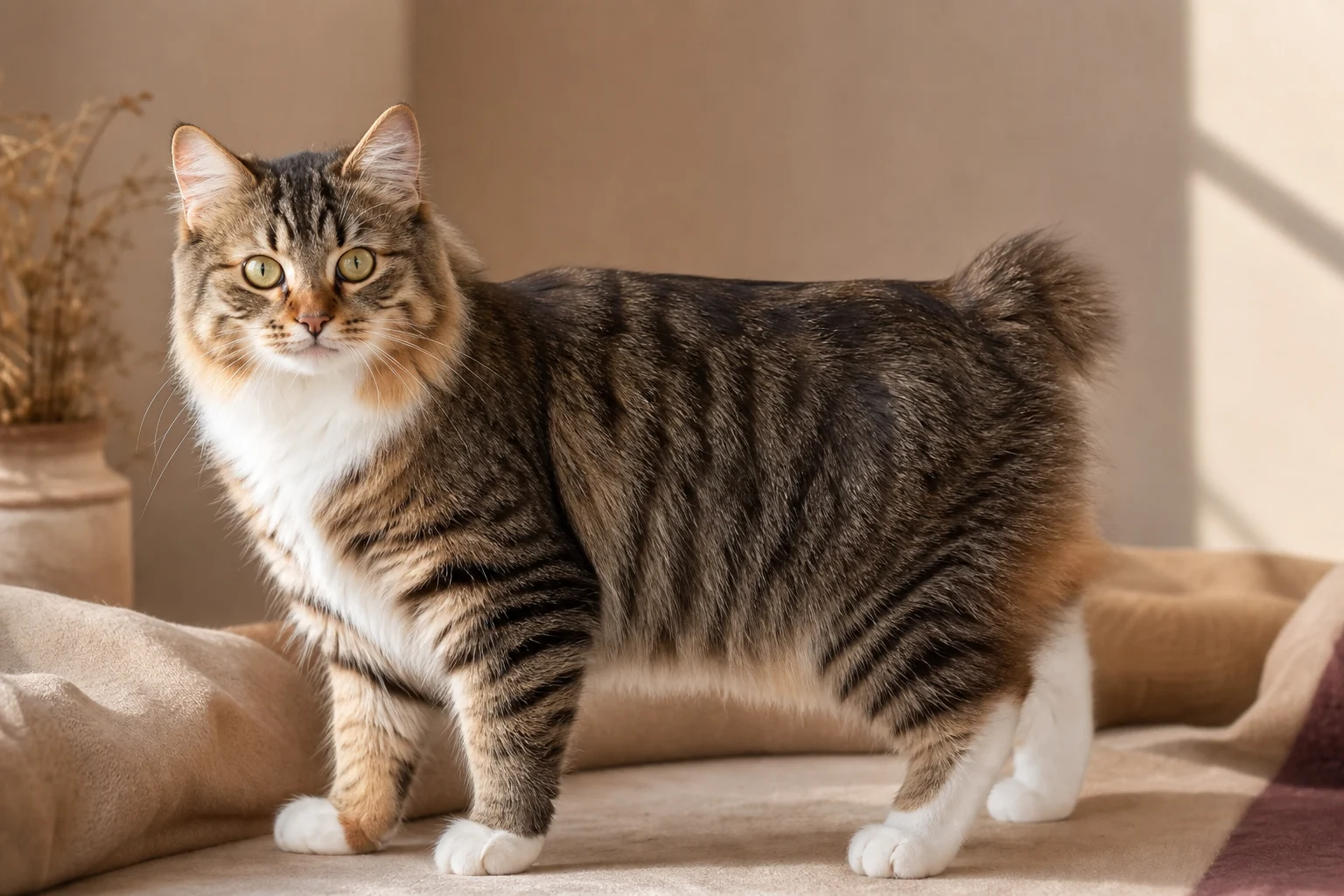
A pompom-tailed island fisher — bear-built, clever and dog-loyal, straight off the Kuril volcanoes.
| Size | Large |
|---|---|
| Weight | 4–7 kg |
| Life expectancy | 14–18 years |
| Origin | Russia / Kuril Islands |
| Type | Natural breed (Kuril Islands) |
| Grooming | medium |
| Activity needs | high |
| Beginner friendly | well suited |
Temperament & suitability
Editorial assessment based on the FIFe breed standard and breed association data.
Guideline for movement & enrichment for this breed.
Traits
Origin & history
On the volcanic Kuril Islands between Kamchatka and Japan, an isolated cat population fixed a natural bobtail mutation over centuries — island cats that fished streams, hunted in snow and greeted the garrisons' soldiers, who carried them to the Russian mainland in the 20th century. Recognised by FIFe in 2004, the Kurilian remains Russia's beloved rugged rarity. Its bob gene is its own — dominant, harmless and unrelated to the Manx line.
Appearance & size
Four to seven kilograms of compact bear build: a broad chest, powerful hindquarters raised above the shoulders, and the signature two-to-eight-centimetre pompom — kinked and curled so individually that Russian fanciers register tail "types" like snowflakes. Coats come short or semi-long, wild-toned in tabby, red, silver and tortie; the whole cat reads as a small, amiable lynx.
Personality & temperament
Island life bred a social pragmatist: the Kurilian bonds dog-like to its family, follows projects through the home, learns rules and routines fast and greets guests with confident interest. It is even-tempered, brave and remarkably gentle in play; the famed fishing heritage survives as genuine water fascination. Its voice is quiet trills; its presence is warm and constant.
Indoor or outdoor living
Flexible and weatherproof: happy indoors with climbing and play, in its element with a secured garden or catio in any season. The trusting sociability belongs behind safety nets. Frame in Indoor cat or outdoor cat?
Enrichment & activity
Daily solid sessions: hunt games, fetch, water play at basins and puzzle feeders. The clever, dexterous paws enjoy learning; a feline companion or friendly dog shares the sociable energy well.
Grooming
Easy for the substance: the weatherproof coat mats little — weekly brushing for shorthairs, twice for semi-longs, more in moult.
Feeding & health
A robust natural breed without notable hereditary diseases; general heart checks remain the standard breeder question. Portion the muscular frame via the food amount calculator. Longevity is island heritage: fourteen to eighteen years are normal.
Costs
Kittens from documented lines cost €800–1,300 — few breeders outside Russia and Finland, waiting lists apply. Running costs are ordinary; the cat cost calculator totals them.
For beginners, children and other pets
A superb family cat: patient with children, genuinely dog-friendly, cat-sociable and beginner-forgiving. The combination of health, warmth and rugged charm makes it one of the best-kept secrets in the catalogue.
Similar breeds compared
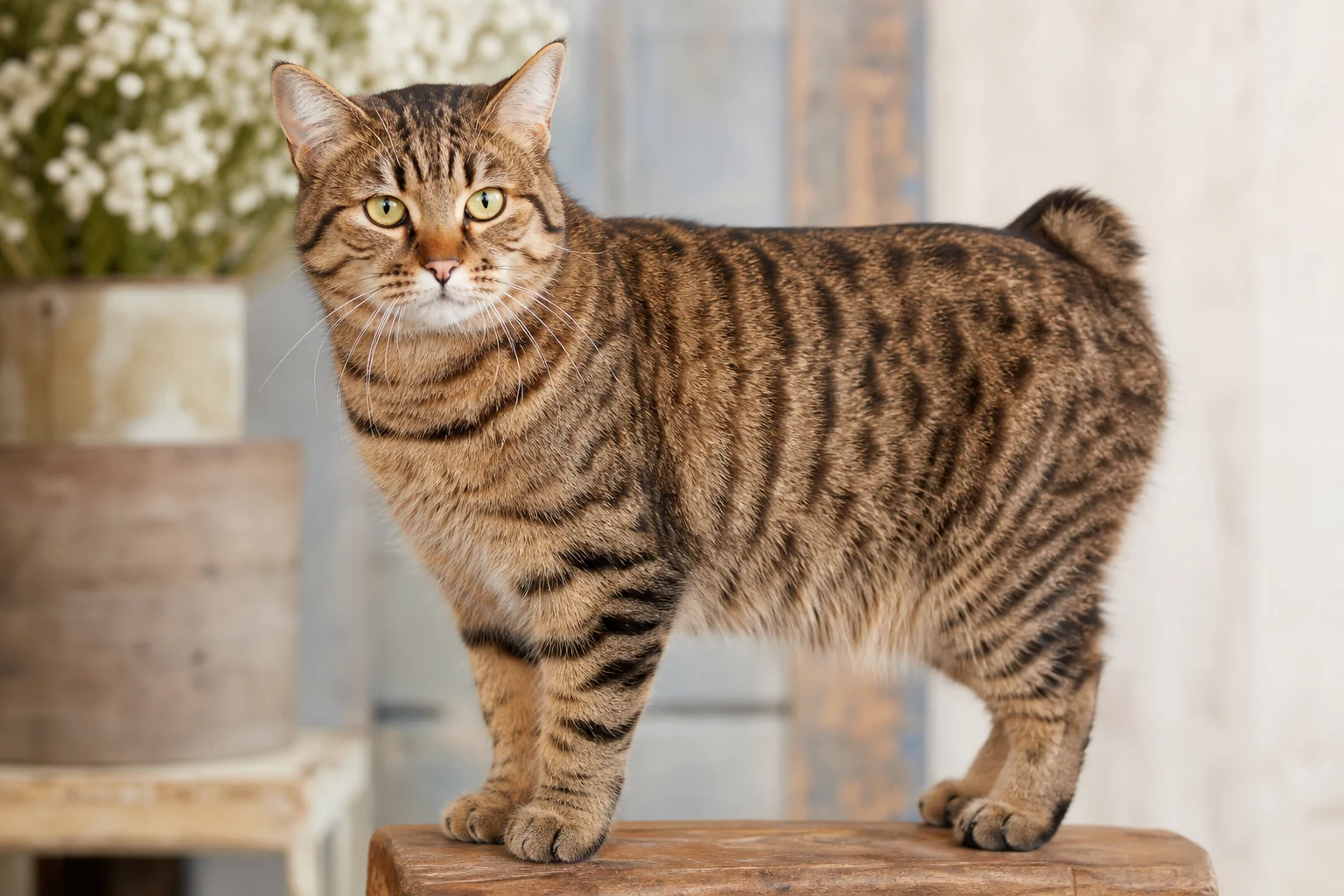
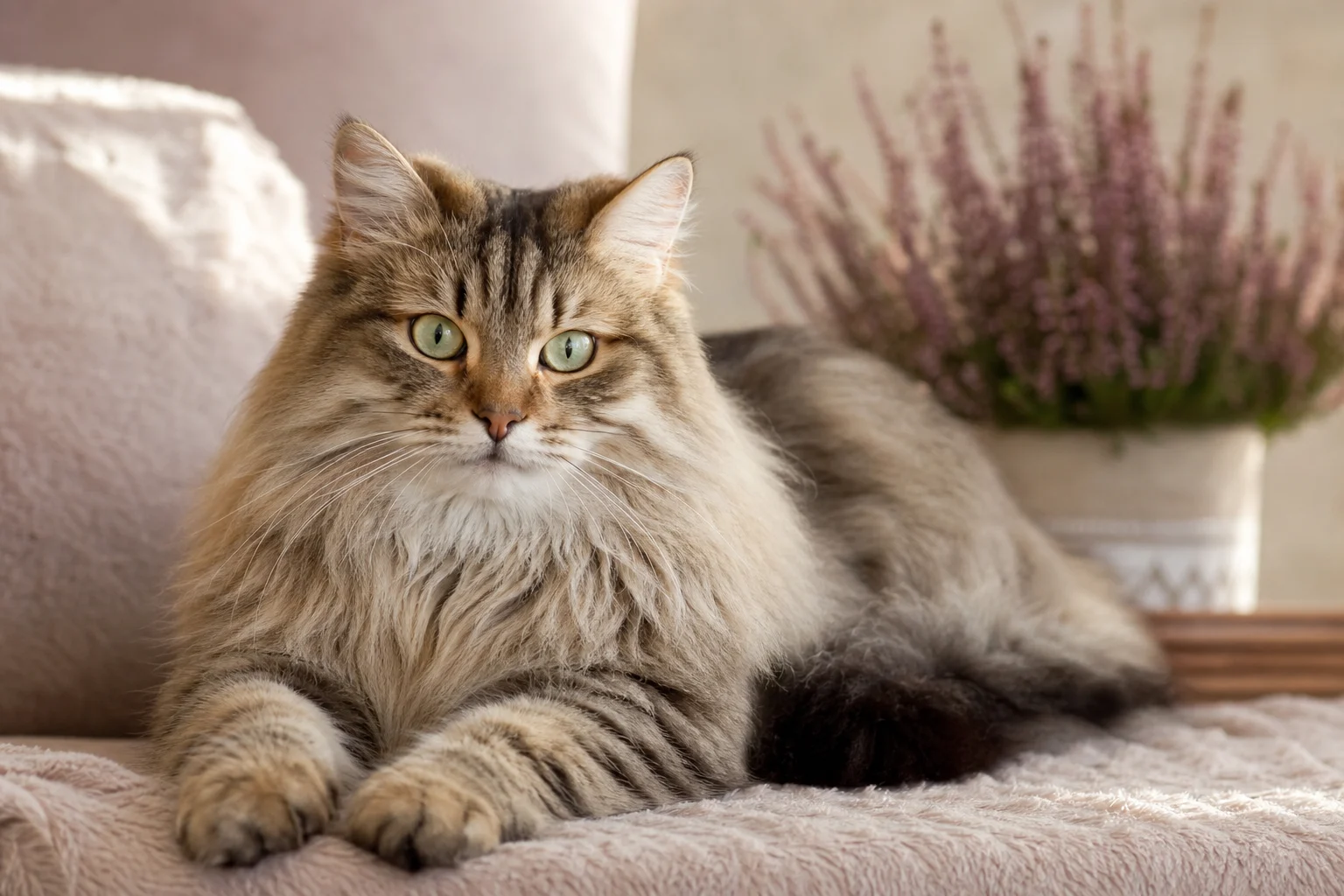
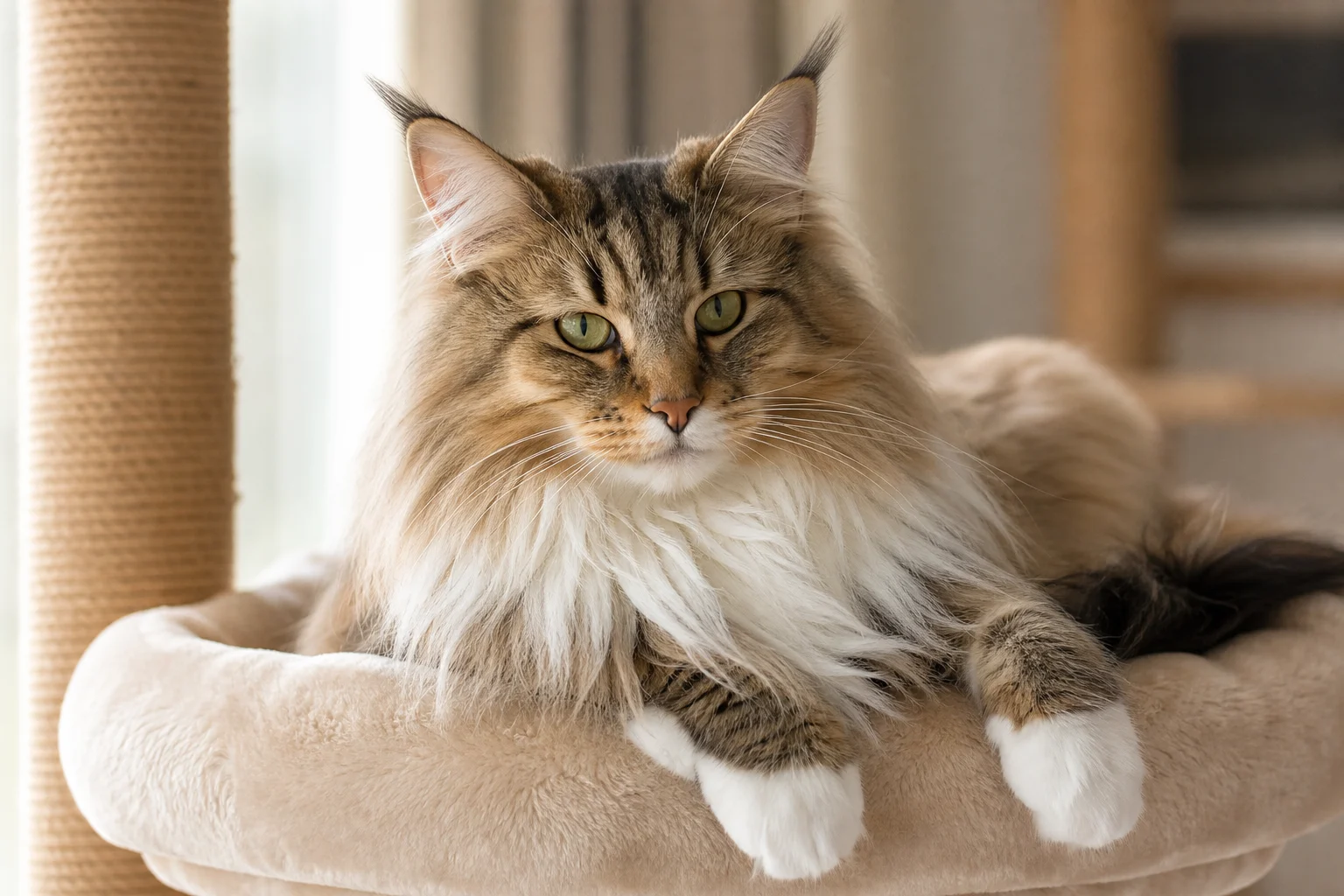
The American Bobtail is the transpacific parallel; the Siberian the mainland Russian cousin with full tail; the Norwegian Forest Cat matches the rugged island virtues at Nordic scale.
Who this breed suits
Families and nature-minded households that want a healthy, dog-loyal rarity with a pompom. The "Which cat fits me?" test confirms the fit.
Not sure what a Kurilian Bobtail may eat? The food checker rates individual foods on a traffic-light scale, and the food guide explains what cats can eat and what is toxic.
A good fit for you if …
Frequently asked questions
Is the Kurilian bob gene healthy?
Yes — a dominant, harmless island mutation unrelated to the Manx gene. Every pompom is individually kinked.
Do Kurilians really fish?
The island ancestors did, and the water fascination survives — basins, taps and bath supervision are breed standard.
How does it differ from the Japanese Bobtail?
The Kurilian is the bear: bigger, sturdier, semi-wild-toned; the Japanese Bobtail finer and more talkative. The genes differ too.
Which health questions matter?
General heart checks — the natural base spared the breed typical hereditary diseases. 14–18 years are normal.
Are Kurilians good with dogs?
Notably — the confident, social island temperament makes them classic dog-household cats.
How rare is the breed?
Outside Russia and Finland, genuinely rare — plan a patient breeder search.
Similar breeds
Sources: FIFe/TICA breed standard · breed association data · editorial assessment · Last updated 08/2026. On health questions this article never replaces a visit to the vet.