 AI
AIArabian Mau
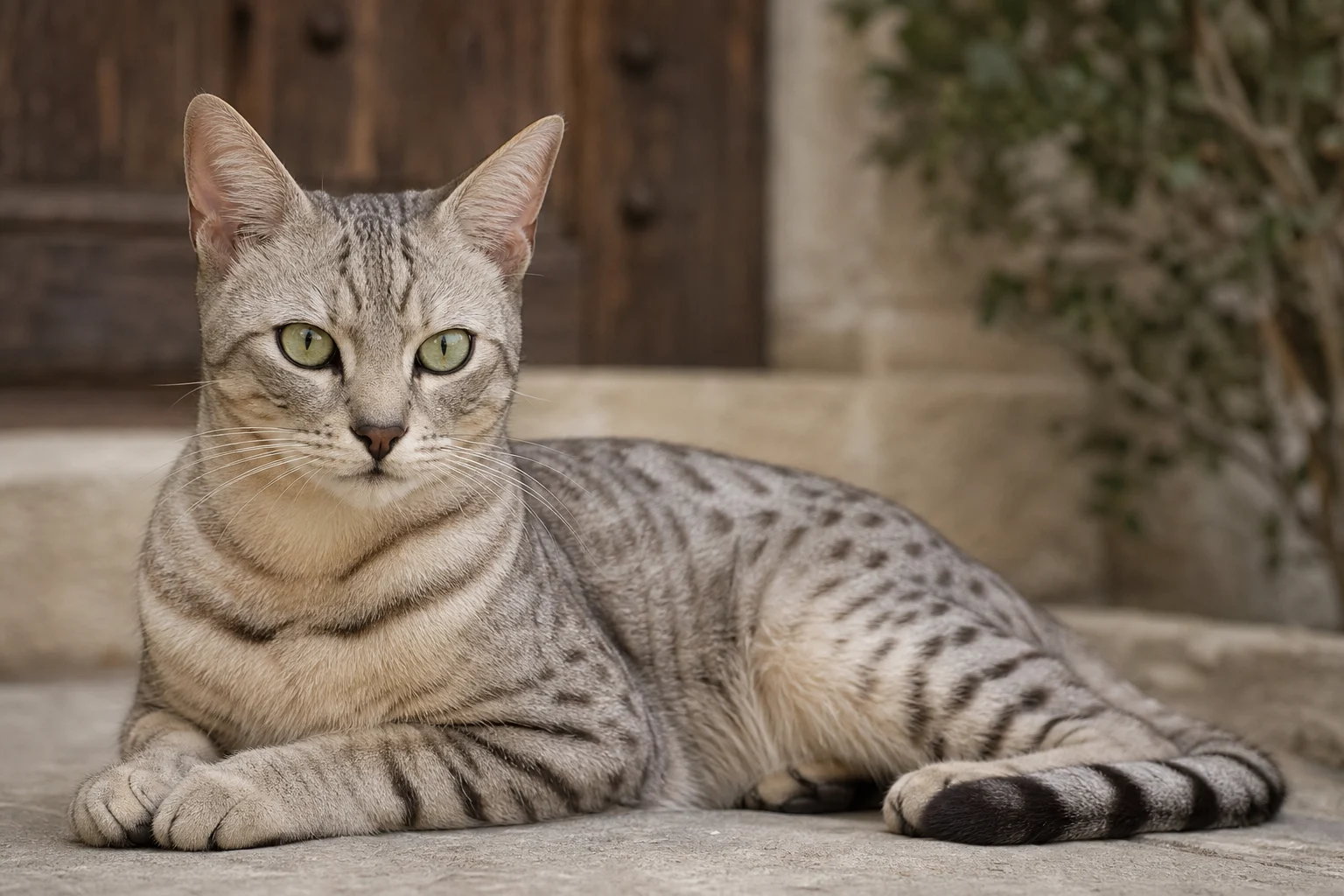
The desert original of the Gulf — heat-built, robust and openly affectionate, straight off the streets of Arabia.
| Size | Medium |
|---|---|
| Weight | 4–7 kg |
| Life expectancy | 12–15 years |
| Origin | Arabian Peninsula |
| Type | Natural breed |
| Grooming | low |
| Activity needs | high |
| Beginner friendly | well suited |
Temperament & suitability
Editorial assessment based on the FIFe breed standard and breed association data.
Guideline for movement & enrichment for this breed.
Traits
Origin & history
The desert cats of the Arabian Peninsula lived alongside people for over a thousand years — heat-adapted street and courtyard hunters from Riyadh to Dubai. Petra Müller of the Middle East Cat Society standardised the landrace from Emirati street cats; WCF recognised the Arabian Mau in 2008 as the region's first native breed. It remains what it always was: the everyday cat of the Gulf, now with papers.
Appearance & size
Four to seven kilograms of heat engineering: a lean, muscular body on long legs, strikingly large ears that radiate warmth away, and a short, close coat without undercoat — desert nights are cold, desert days brutal, and this build handles both. Colours span the street palette: tabby, red, black, white and combinations, with oval eyes matching the coat.
Personality & temperament
Street heritage with open arms: the Arabian Mau approaches people confidently, talks expressively — souk cats negotiate — plays with hunter dedication and bonds loyally to its household. It is robust, unshockable and adaptable, integrating with children, cats and sensible dogs in courtyard fashion. The hunting drive is real; toy mice live dangerously.
Indoor or outdoor living
Flexible: content indoors with climbing and hunt games, in its element with secured outdoor access — heat bothers it less than any European breed, cold drafts more. Frame in Indoor cat or outdoor cat?
Enrichment & activity
Daily hunt-style sessions and puzzle feeders honour the desert hunter; energy is solid mid-high with pragmatic off-duty calm.
Grooming
Minimal: a weekly polish — the undercoat-free desert coat cares for itself.
Feeding & health
Landrace-sound: a thousand years of street selection left no room for hereditary weakness; general checks are the standard ask. Portion via the food amount calculator — street appetites are enthusiastic, and neutered Maus gain readily.
Costs
Kittens cost €600–1,000 via Gulf-region and few European catteries; many Arabian Maus also reach Europe as rescued street adoptions with vet workups. Running costs are baseline; the cat cost calculator totals them.
For beginners, children and other pets
A robust, warm family choice: patient with children, animal-compatible and beginner-forgiving — desert pragmatism makes an easy housemate. Warm homes suit the build; cold drafty flats do not.
Similar breeds compared
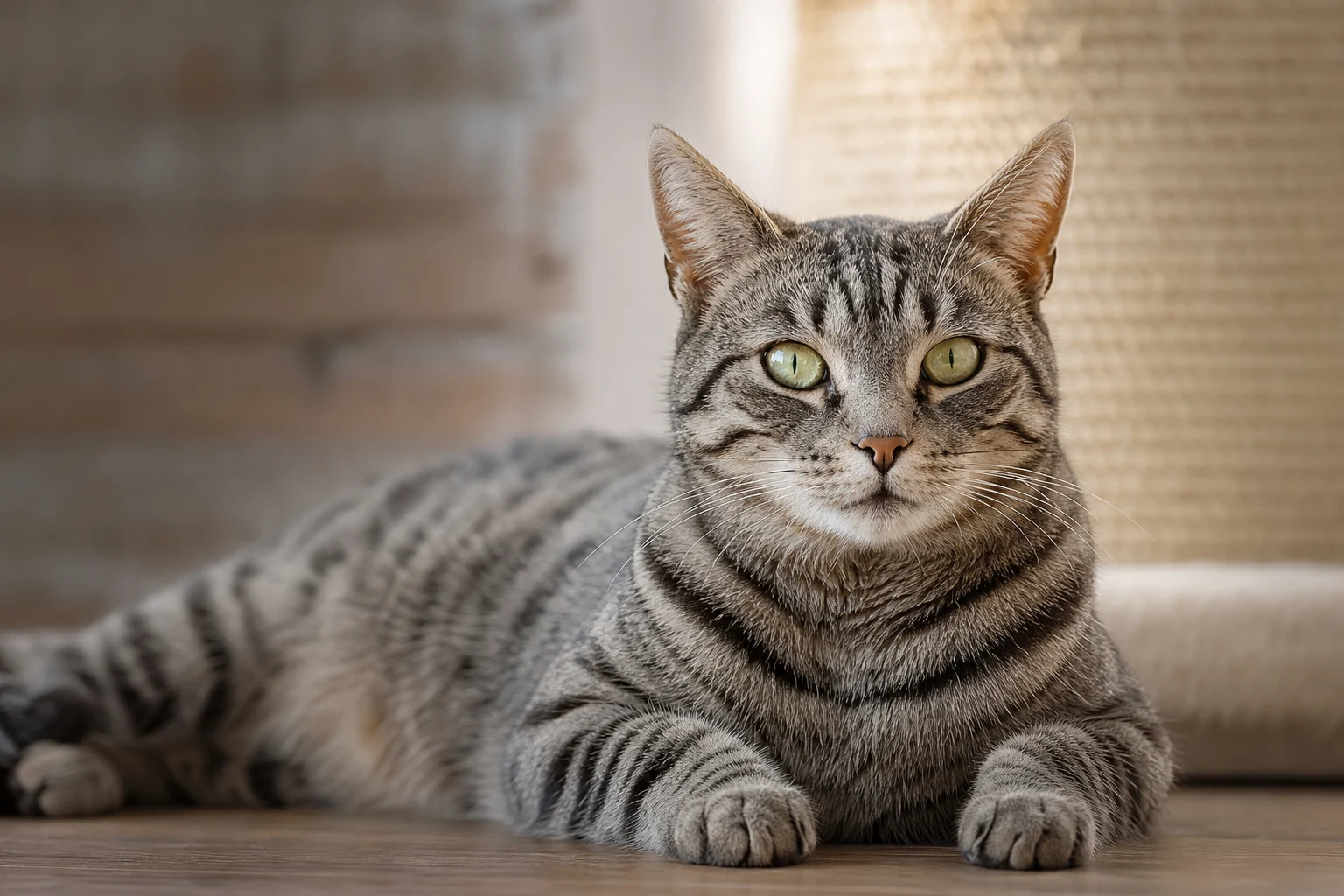
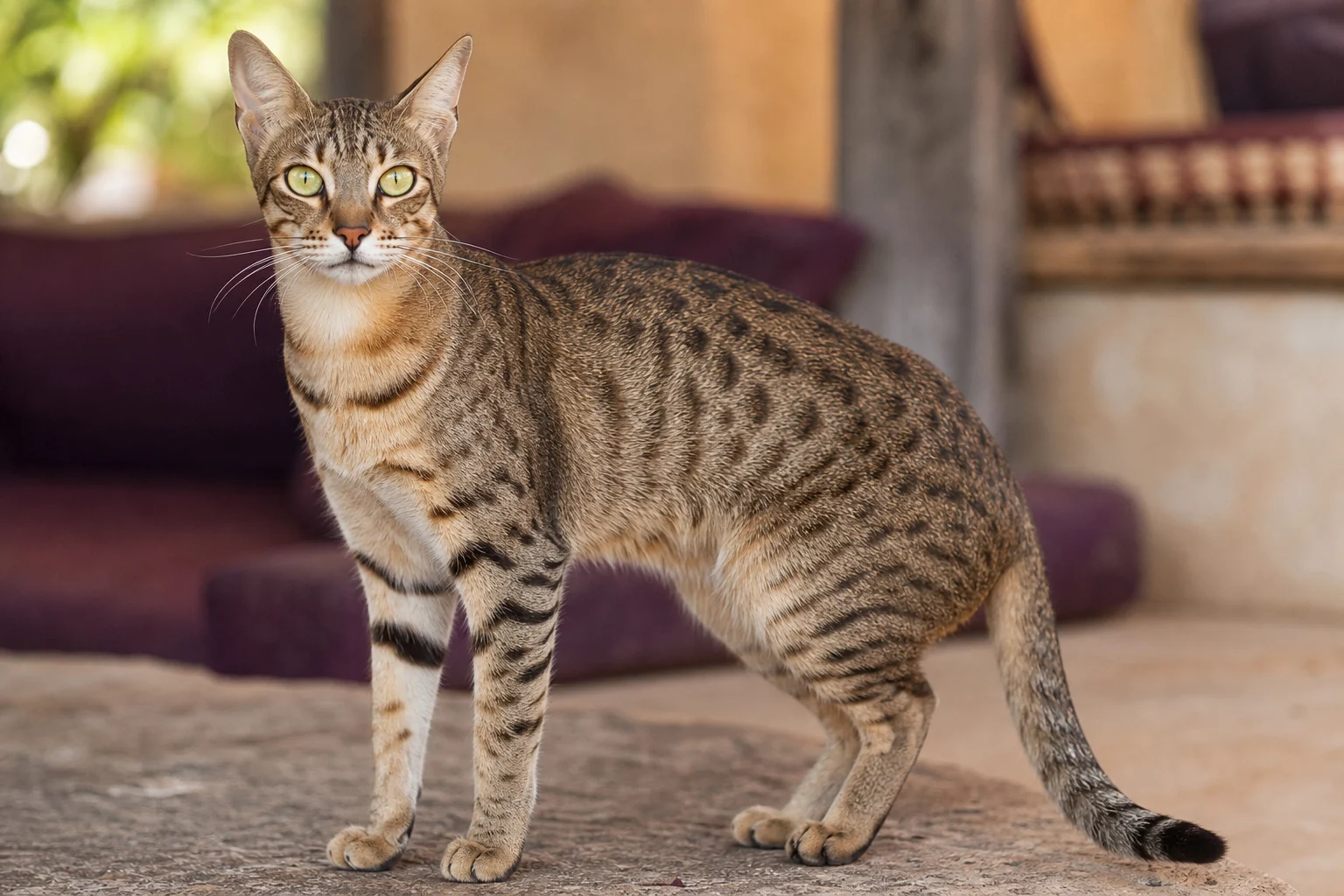
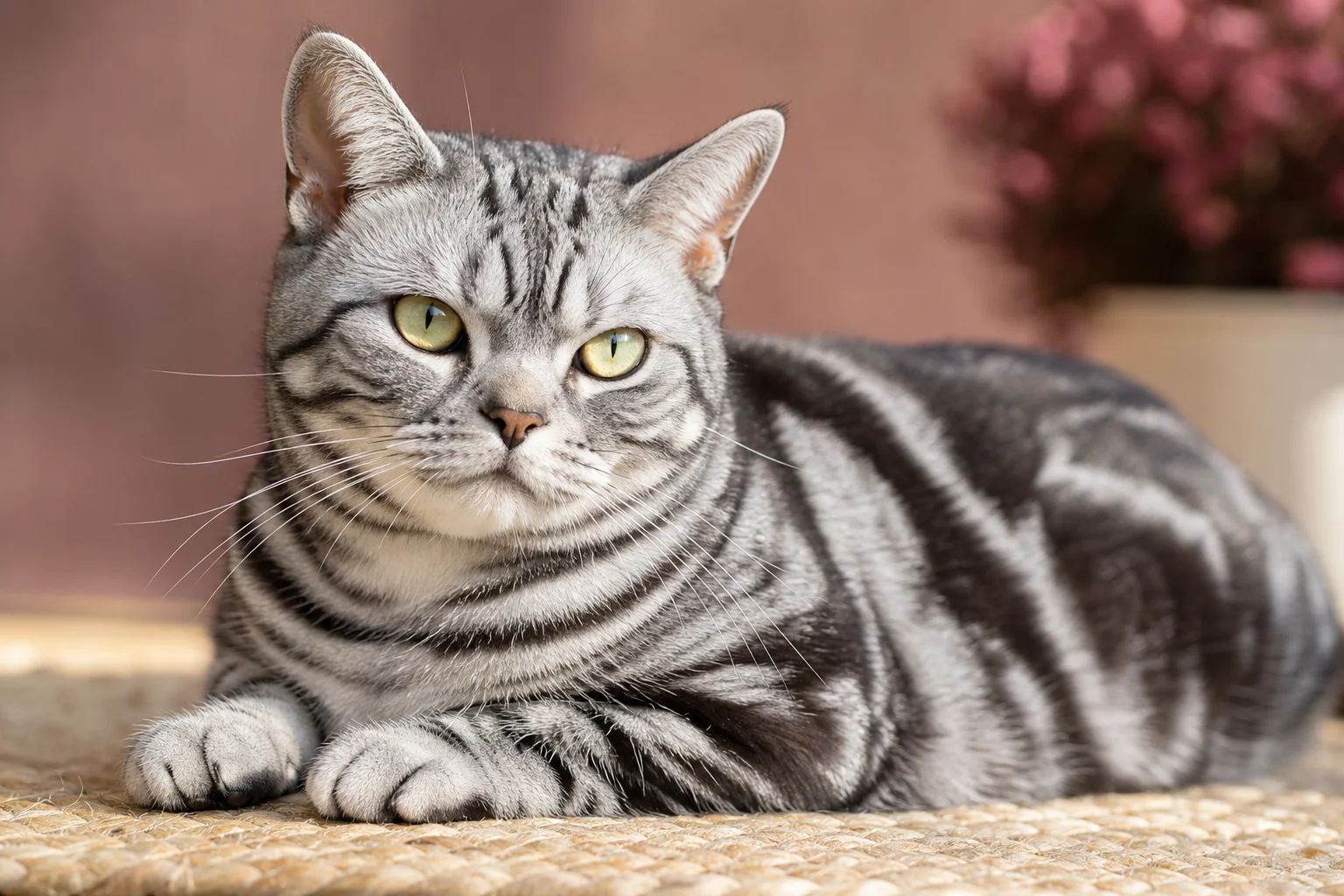
The European Shorthair is the continental landrace parallel; the Egyptian Mau the spotted African relative with more reserve; the Anatolian the plateau cousin of the north.
Who this breed suits
Families and first-timers who want a robust, openly affectionate original — and warm homes generally. The "Which cat fits me?" test confirms the fit; with this final profile, all 80 breeds of our database stand complete.
Not sure what a Arabian Mau may eat? The food checker rates individual foods on a traffic-light scale, and the food guide explains what cats can eat and what is toxic.
A good fit for you if …
Frequently asked questions
What is the Arabian Mau?
The standardised desert landrace of the Arabian Peninsula — over a thousand years of Gulf street heritage, recognised by WCF in 2008 as the region's first breed.
Why the big ears?
Heat engineering: large ears radiate warmth away, and the undercoat-free choat handles desert days and nights alike.
How healthy is the breed?
Landrace-sound — a millennium of street selection tolerates no hereditary weakness. General checks suffice.
Are Arabian Maus affectionate?
Openly — souk-cat confidence approaches people directly, and household bonds run loyal and warm.
Do they tolerate cold?
Poorly — no undercoat means drafty, cold homes genuinely bother them. Warm flats only.
How do I get one in Europe?
Via few catteries or as a vetted street adoption from Gulf rescue organisations — both routes are established.
Similar breeds
Sources: FIFe/TICA breed standard · breed association data · editorial assessment · Last updated 08/2026. On health questions this article never replaces a visit to the vet.