 AI
AIEgyptian Mau
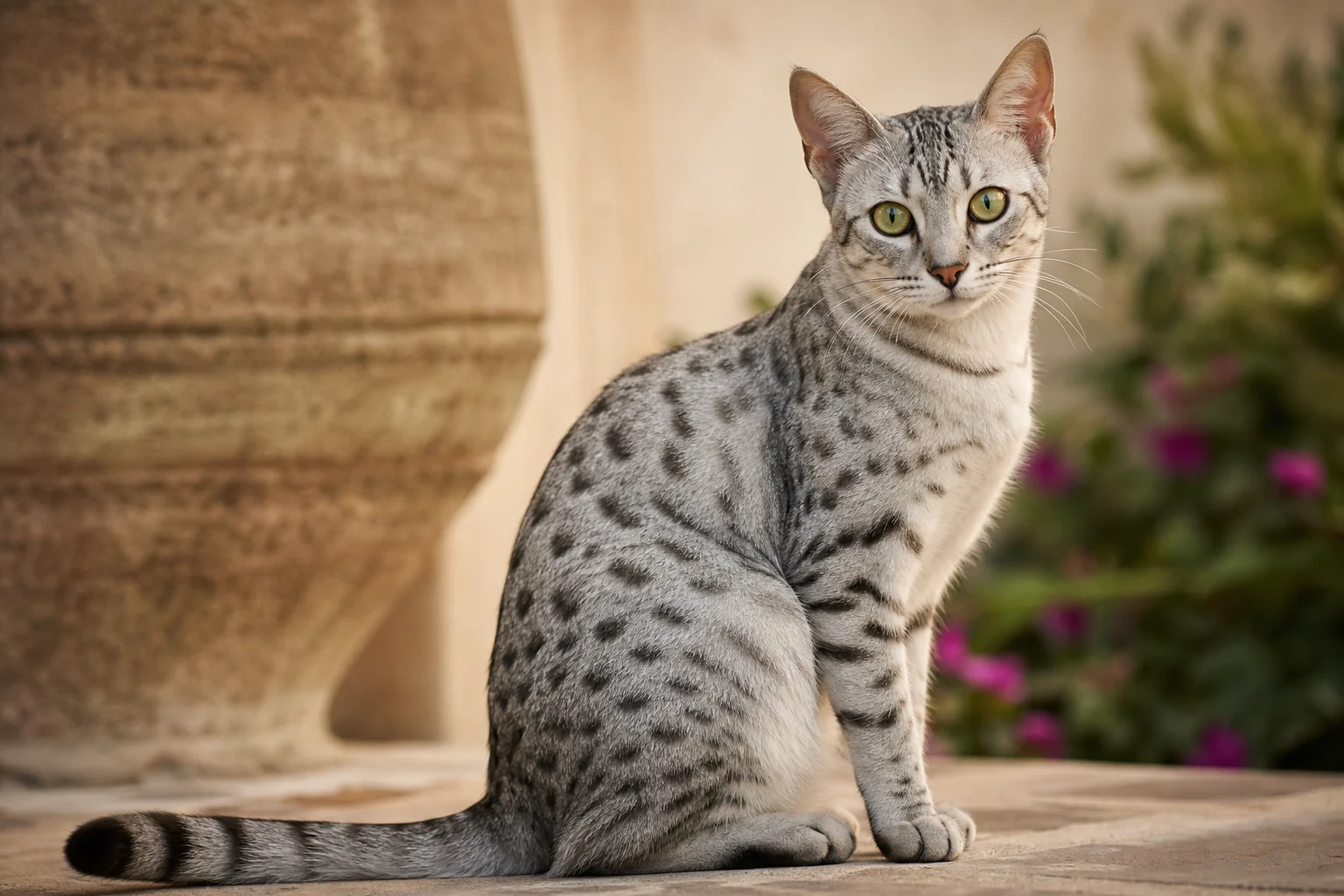
The sprinter of the cat world — naturally spotted, gooseberry-eyed and devoted to its chosen few.
| Size | Medium |
|---|---|
| Weight | 3–5 kg |
| Life expectancy | 12–15 years |
| Origin | Egypt |
| Type | Natural breed (Egypt) |
| Grooming | low |
| Activity needs | very high |
| Beginner friendly | with some experience |
Temperament & suitability
Editorial assessment based on the FIFe breed standard and breed association data.
Guideline for movement & enrichment for this breed.
Traits
Origin & history
The Mau claims the oldest résumé in catdom: spotted cats identical to today's breed pose in Egyptian tomb paintings three thousand years old, and "mau" is simply the ancient Egyptian word for cat. The modern breed line began in the 1950s when exiled Russian princess Nathalie Troubetskoy brought Cairo street Maus to Italy and on to New York. Uniquely, the spots are natural — no other breed contributed them — and street Maus in Egypt still wear the pattern today.
Appearance & size
A three-to-five-kilogram athlete with a signature detail kit: randomly scattered dark spots on silver, bronze or smoke ground, a "mascara" line along the cheeks, an M on the forehead — and gooseberry-green eyes found nowhere else. A loose belly flap lets the hind legs extend like a cheetah's: clocked at up to 48 km/h, the Mau is the fastest domestic cat.
Personality & temperament
The Mau loves fiercely but selectively: its inner circle gets devotion, chirping conversation and a personal shadow; strangers get watched from a distance until further notice. It is proud, sensitive and slightly reserved — a cat that gives trust as a prize, not a greeting. With that trust comes a playful, loyal, musically talkative companion that dances on hind legs when excited and follows household routines with religious precision.
Indoor or outdoor living
Indoors with a secured balcony or catio: the sprinter appreciates run-and-climb space, and its watchful temperament settles best in predictable territory. Sudden noise and chaotic households stress the sensitive side; calm structure brings out the confident one. Setup in Indoor cat or outdoor cat?
Enrichment & activity
Speed needs outlets: chase games, fetch, feather pursuits and climbing paths daily — a cat wheel finds no better athlete. The clever head enjoys clicker sessions with its trusted person; strangers offering the same get polite refusal.
Grooming
A weekly rubber-mitt polish keeps the spotted satin gleaming; shedding stays modest. Effortless — the effort goes into trust-building instead.
Feeding & health
An efficient athlete's metabolism: quality protein via the food amount calculator. Breeder questions: PK deficiency (gene test) and leukodystrophy history in some lines, plus general HCM checks. The natural base keeps tested lines robust.
Costs
Kittens from tested lines cost €900–1,400 — Maus are rare in Europe, waiting lists normal. Running costs stay ordinary; see the cat cost calculator.
For beginners, children and other pets
Best in calm, cat-experienced homes: the sensitivity rewards routine and gentle handling. Older, considerate children earn a playful friend; toddler noise overwhelms. With familiar cats it is sociable; whirlwind newcomers need slow introductions.
Similar breeds compared
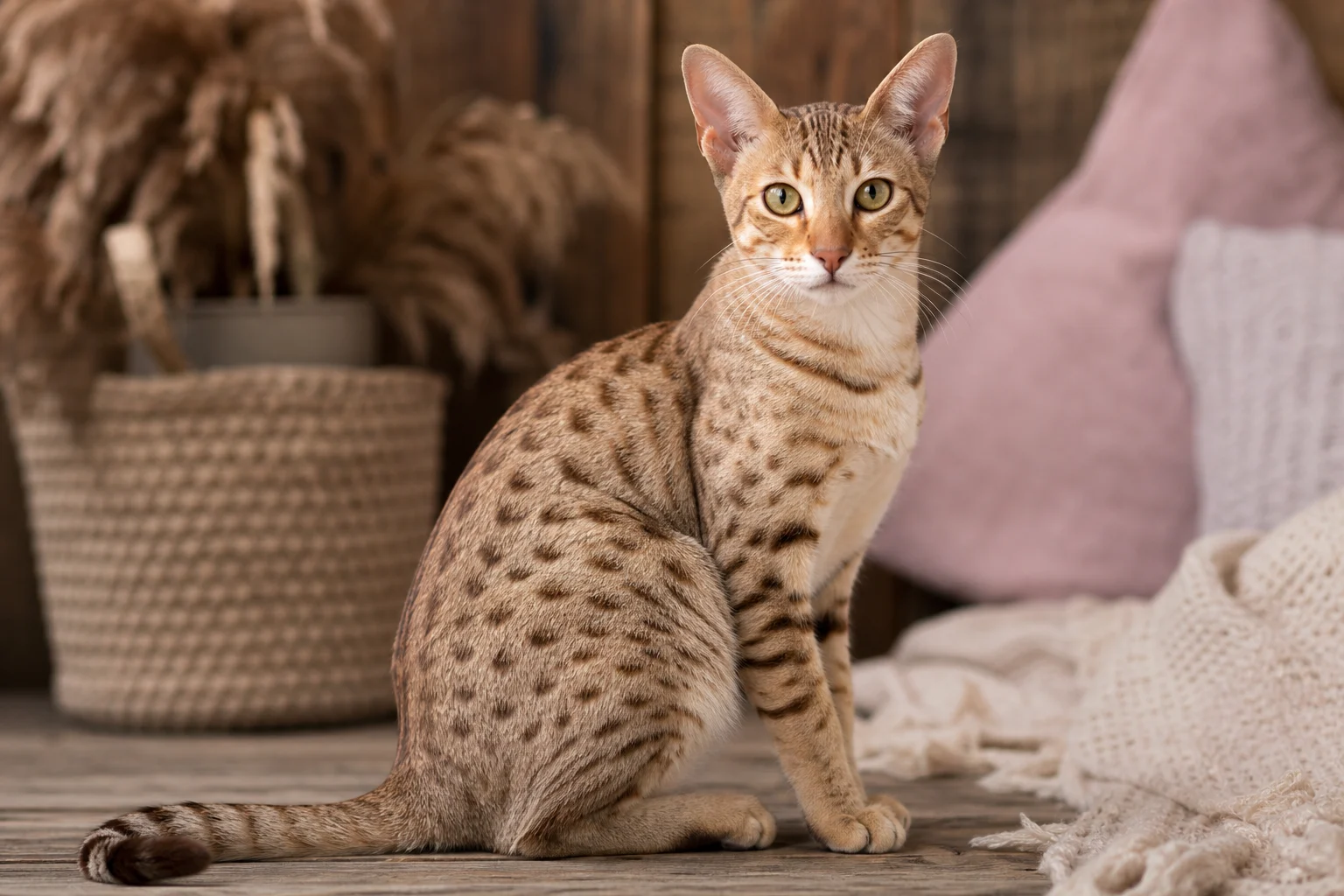
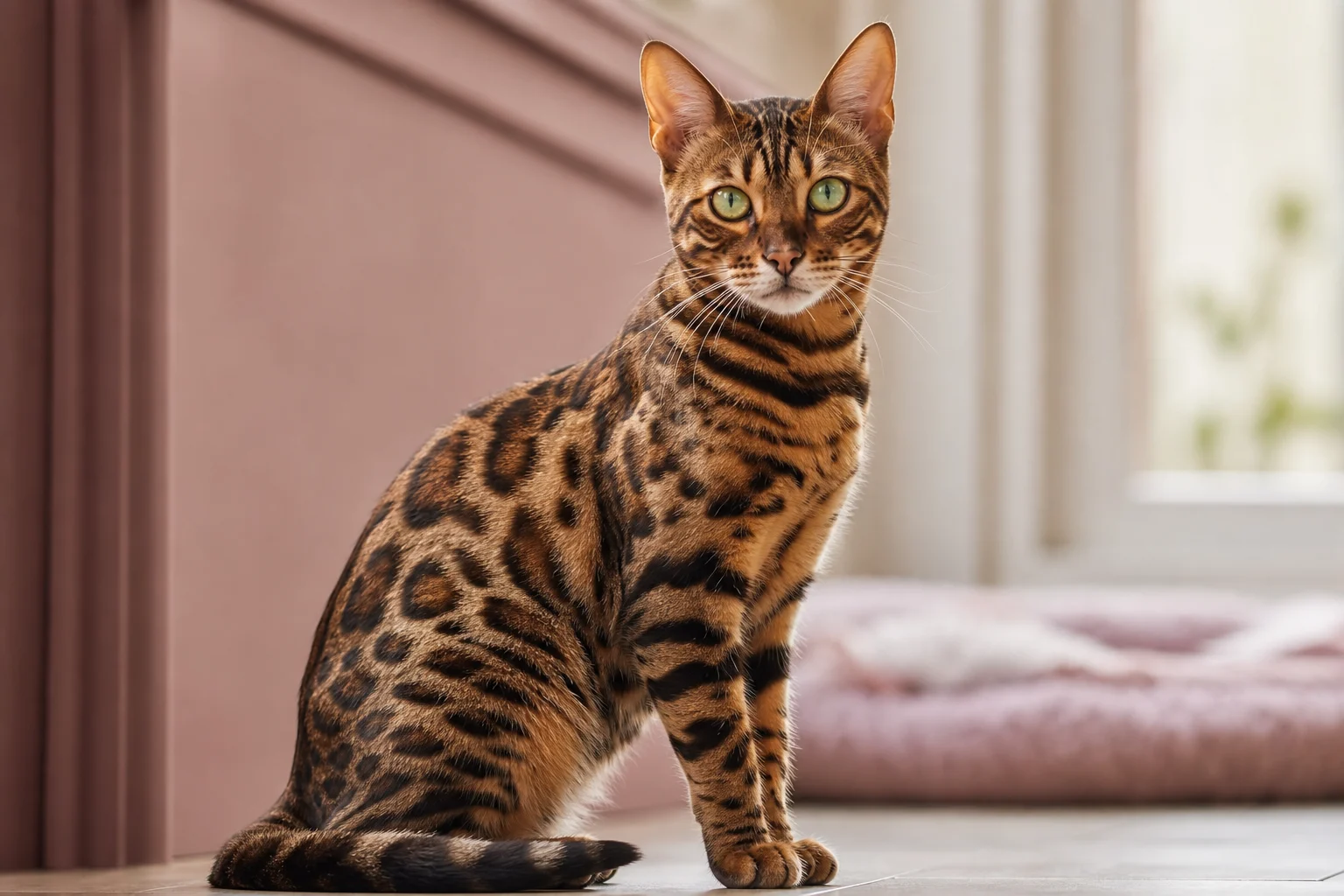
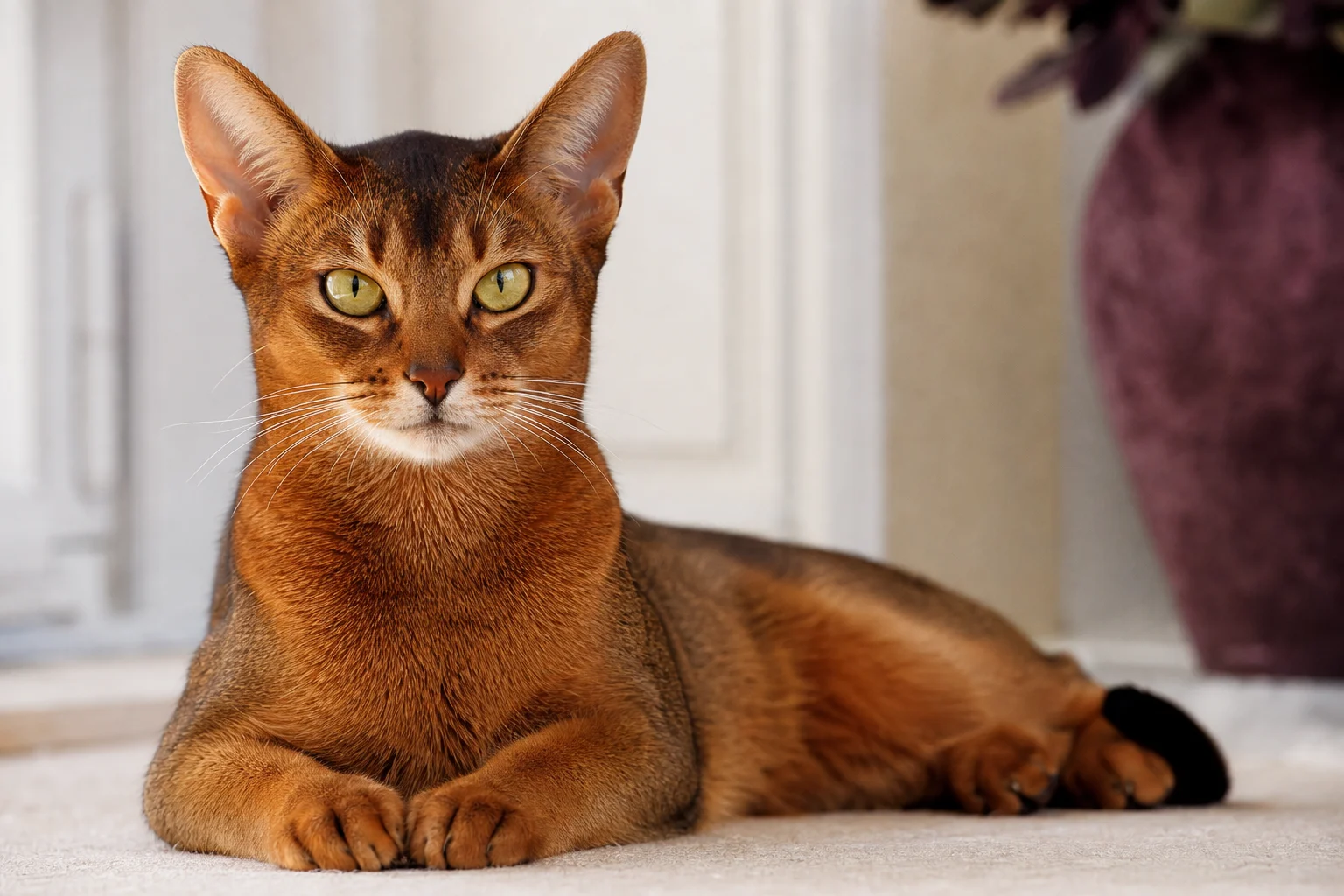
The Ocicat offers spots with extrovert dog-like ease; the Bengal bigger wildness and bigger demands; the Abyssinian matches the energy with less reserve.
Who this breed suits
Calm, structured households ready to earn a proud sprinter's trust. The "Which cat fits me?" test shows whether the Mau's selective heart fits your home.
Not sure what a Egyptian Mau may eat? The food checker rates individual foods on a traffic-light scale, and the food guide explains what cats can eat and what is toxic.
A good fit for you if …
Frequently asked questions
Are the Mau's spots really natural?
Yes — unique among spotted breeds, no outcross created them. Egyptian street cats carry the same pattern after three millennia.
How fast is an Egyptian Mau?
Up to 48 km/h — the fastest domestic cat, thanks to a cheetah-like belly flap extending its stride.
Are Maus shy?
Reserved with strangers, devoted to their circle. The two-tier heart is breed character, not a flaw to fix.
Which health tests matter?
PK deficiency gene test, leukodystrophy line history and HCM checks.
What eye colour do Maus have?
Gooseberry green — a light, unique shade that is a breed hallmark from adolescence on.
Do Maus get along with children and other cats?
With considerate older children and familiar cats, well. Chaos and rushed introductions clash with the sensitive side.
Similar breeds
Sources: FIFe/TICA breed standard · breed association data · editorial assessment · Last updated 08/2026. On health questions this article never replaces a visit to the vet.