 AI
AIOcicat
Wild spots, zero wild blood — a spotted athlete with a dog's sociability and a family heart.
| Size | Medium |
|---|---|
| Weight | 4–6 kg |
| Life expectancy | 12–18 years |
| Origin | United States |
| Type | Pedigree breed (USA) |
| Grooming | low |
| Activity needs | very high |
| Beginner friendly | well suited |
Temperament & suitability
Editorial assessment based on the FIFe breed standard and breed association data.
Guideline for movement & enrichment for this breed.
Traits
Origin & history
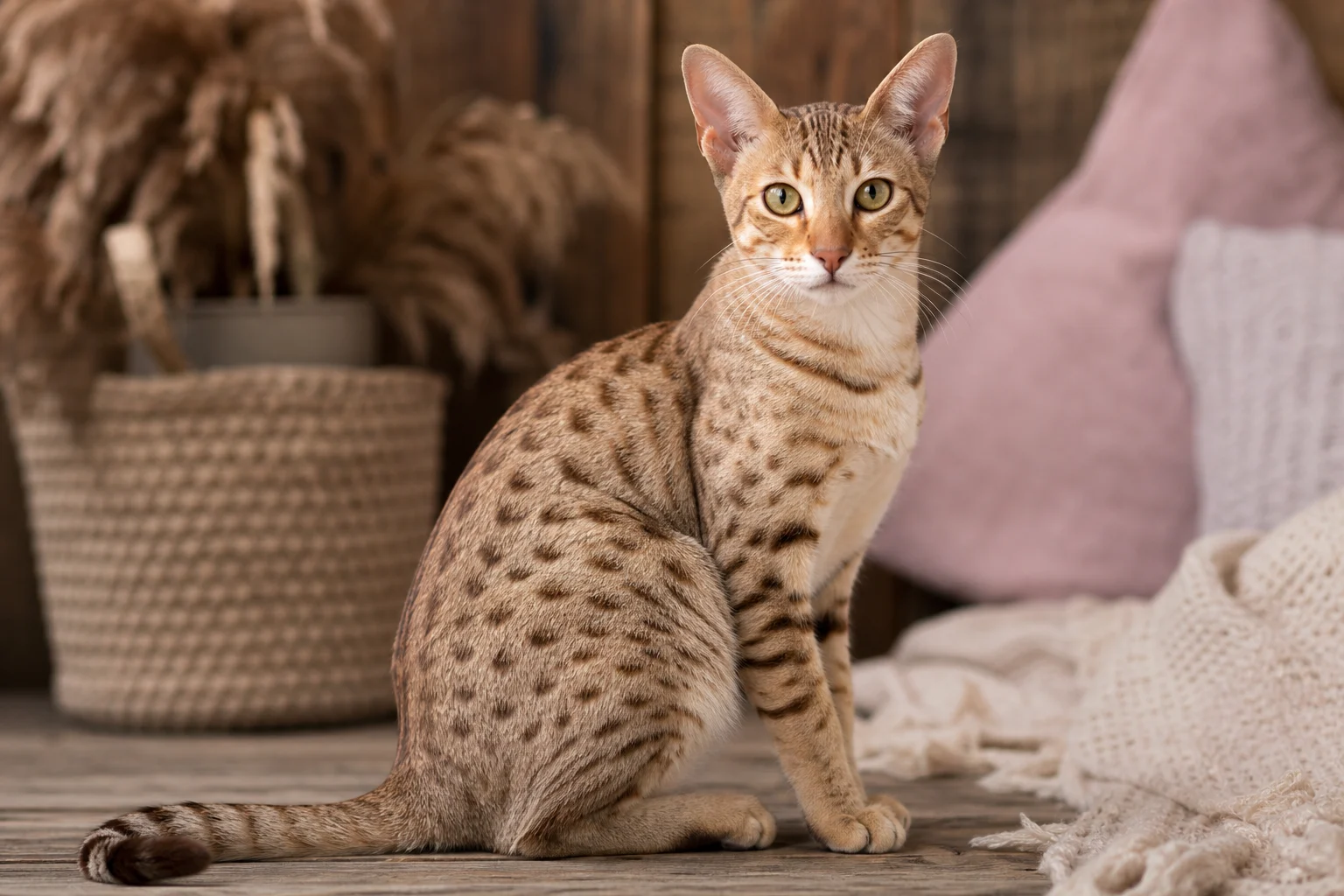
The Ocicat is a happy accident from 1964: Michigan breeder Virginia Daly crossed Siamese and Abyssinian aiming for pointed Abys — and a golden, spotted kitten named Tonga fell out instead. Her daughter noted he looked like an ocelot, the name stuck, and with American Shorthair added for substance, a breed grew that delivers the jungle look with strictly domestic genetics. No wildcat has ever contributed a gene — the wild is pure costume.
Appearance & size
A powerful, athletic cat of four to six kilograms — muscular without bulk, graceful without fragility. The short, satin coat carries thumbprint spots in a bullseye arrangement over twelve recognised colours from tawny and chocolate to blue and silver variants; every hair is ticked, making the spots shimmer in motion. Large almond eyes complete the wild impression.
Personality & temperament
Beneath the leopard shirt lives the most dog-like of cats: the Ocicat greets visitors, walks on a leash, plays fetch, learns commands and follows its people with sociable devotion. From the Siamese side comes chattiness and people-focus, from the Aby side energy and wit, from the American Shorthair a stabilising calm. It is confident everywhere — new places, new people, new animals rarely faze an Oci.
Indoor or outdoor living
Indoors with vertical space and a secured balcony or catio serves the athlete well; the trusting sociability rules out unsecured roaming. The breed adapts to most homes as long as engagement and company are real — an Ocicat wants to be where its people are, and a feline or canine companion carries the alone-hours. Basics in Indoor cat or outdoor cat?
Enrichment & activity
Daily play sessions, clicker tricks, fetch and puzzle feeders — the Oci absorbs training like few breeds and enjoys leash adventures. Its energy sits a notch below Bengal levels: substantial but manageable, with a genuine off switch for sofa evenings.
Grooming
A weekly polish with a rubber mitt keeps the satin spots gleaming; shedding is modest. The coat is the easiest thing about this breed.
Feeding & health
A robust breed with heritage-based screening: PK deficiency and PRA gene tests (Aby side), plus HCM checks — good breeders document all three. Feed the athletic frame via the food amount calculator; Ocis eat with enthusiasm.
Costs
Kittens from tested lines cost €900–1,300; the breed is rarer in Europe, so expect waiting lists. Running costs are ordinary — see the cat cost calculator.
For beginners, children and other pets
A superb family cat: playful with children, genuinely dog-friendly and sociable with other cats. Committed beginners succeed if daily engagement is honest — the Oci is uncomplicated in everything except its need for participation.
Similar breeds compared
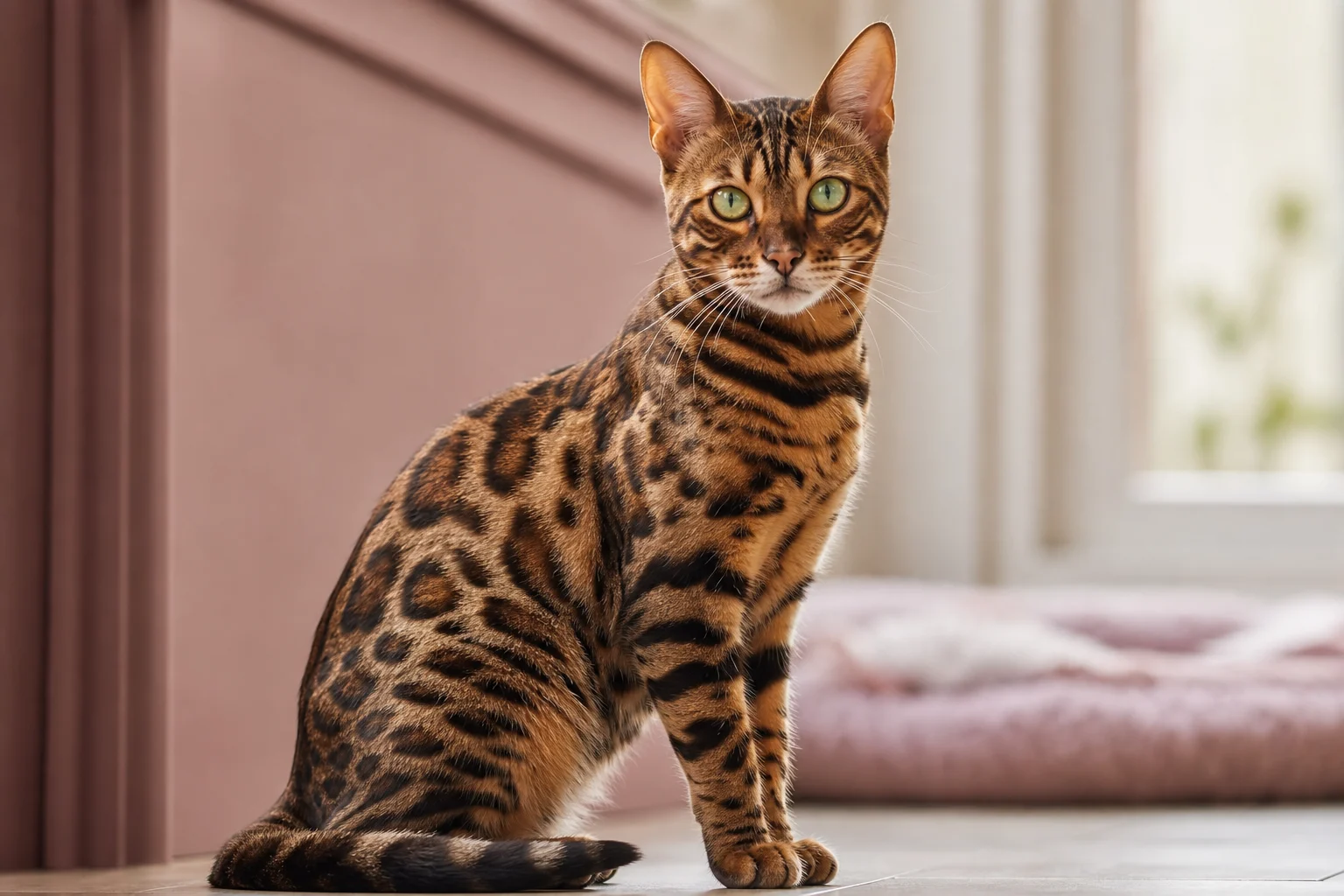
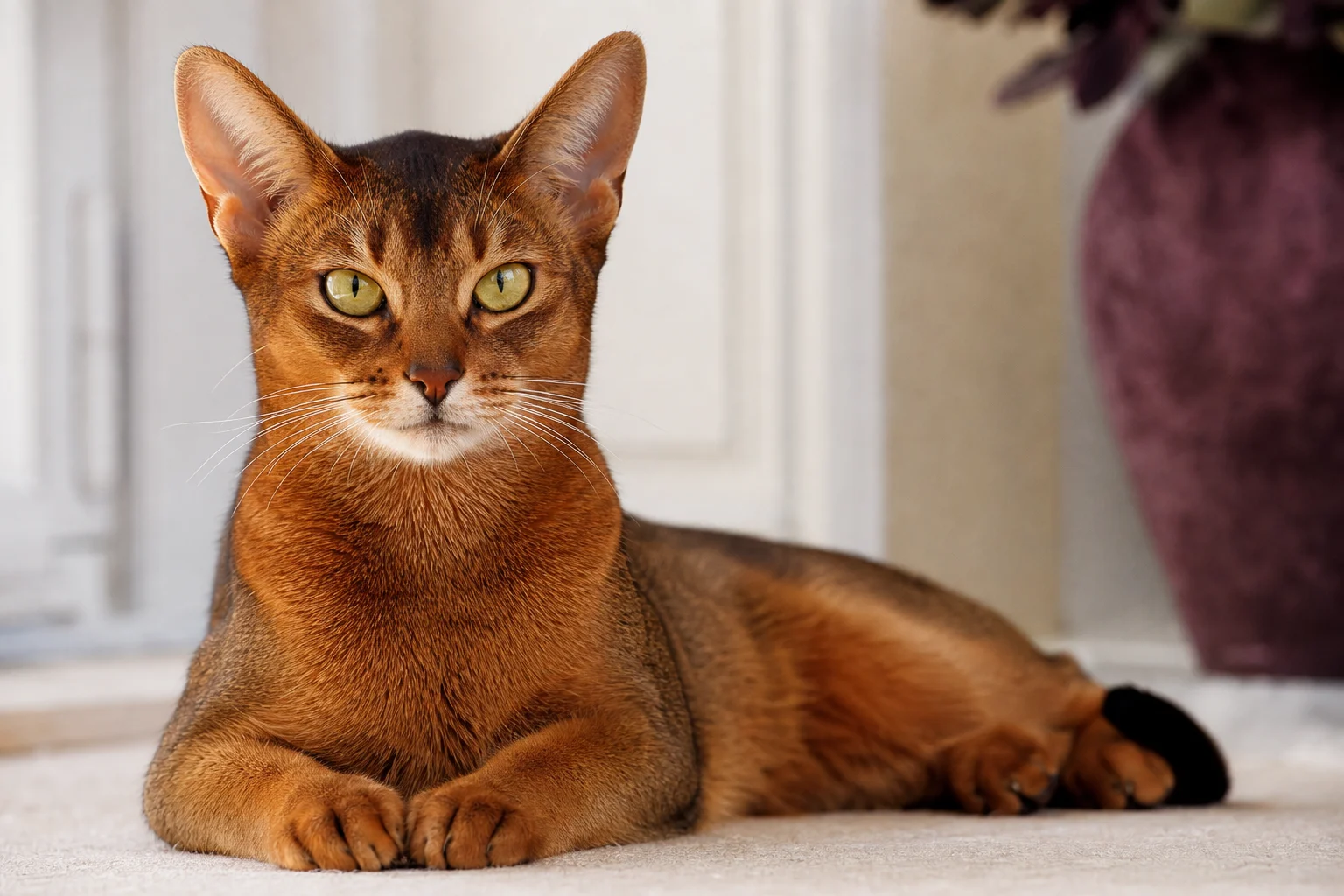
The Bengal delivers wilder looks with higher demands; the Abyssinian is the lighter, busier relative; the Egyptian Mau offers natural spots with more reserve.
Who this breed suits
Active families and dog-friendly households that want jungle looks with golden-retriever manners. Check your match in the "Which cat fits me?" test.
Not sure what a Ocicat may eat? The food checker rates individual foods on a traffic-light scale, and the food guide explains what cats can eat and what is toxic.
A good fit for you if …
Frequently asked questions
Does the Ocicat contain wildcat blood?
None — the breed comes purely from Siamese, Abyssinian and American Shorthair. The ocelot look is costume, not ancestry.
Are Ocicats dog-like?
Notably: fetch, leash walking, greeting visitors and learning commands are breed standard. Dog households integrate an Oci easily.
How much energy does an Ocicat have?
Plenty but manageable — a notch below Bengal levels, with real sofa evenings after real play sessions.
Which health tests matter?
PK deficiency, PRA and HCM checks — the heritage questions from the founding breeds.
Are Ocicats loud?
Talkative in soft Siamese-adjacent tones, but far from Siamese volume.
How rare is the breed in Europe?
Rarer than its qualities deserve — expect breeder waiting lists and plan ahead.
Similar breeds
Sources: FIFe/TICA breed standard · breed association data · editorial assessment · Last updated 08/2026. On health questions this article never replaces a visit to the vet.