 AI
AISokoke
Kenya's wood-grained forest rarity — athletic, clever and quietly devoted on its own terms.
| Size | Medium |
|---|---|
| Weight | 3–5 kg |
| Life expectancy | 12–15 years |
| Origin | Kenya |
| Type | Natural breed (Kenya) |
| Grooming | low |
| Activity needs | very high |
| Beginner friendly | with some experience |
Temperament & suitability
Editorial assessment based on the FIFe breed standard and breed association data.
Guideline for movement & enrichment for this breed.
Traits
Origin & history
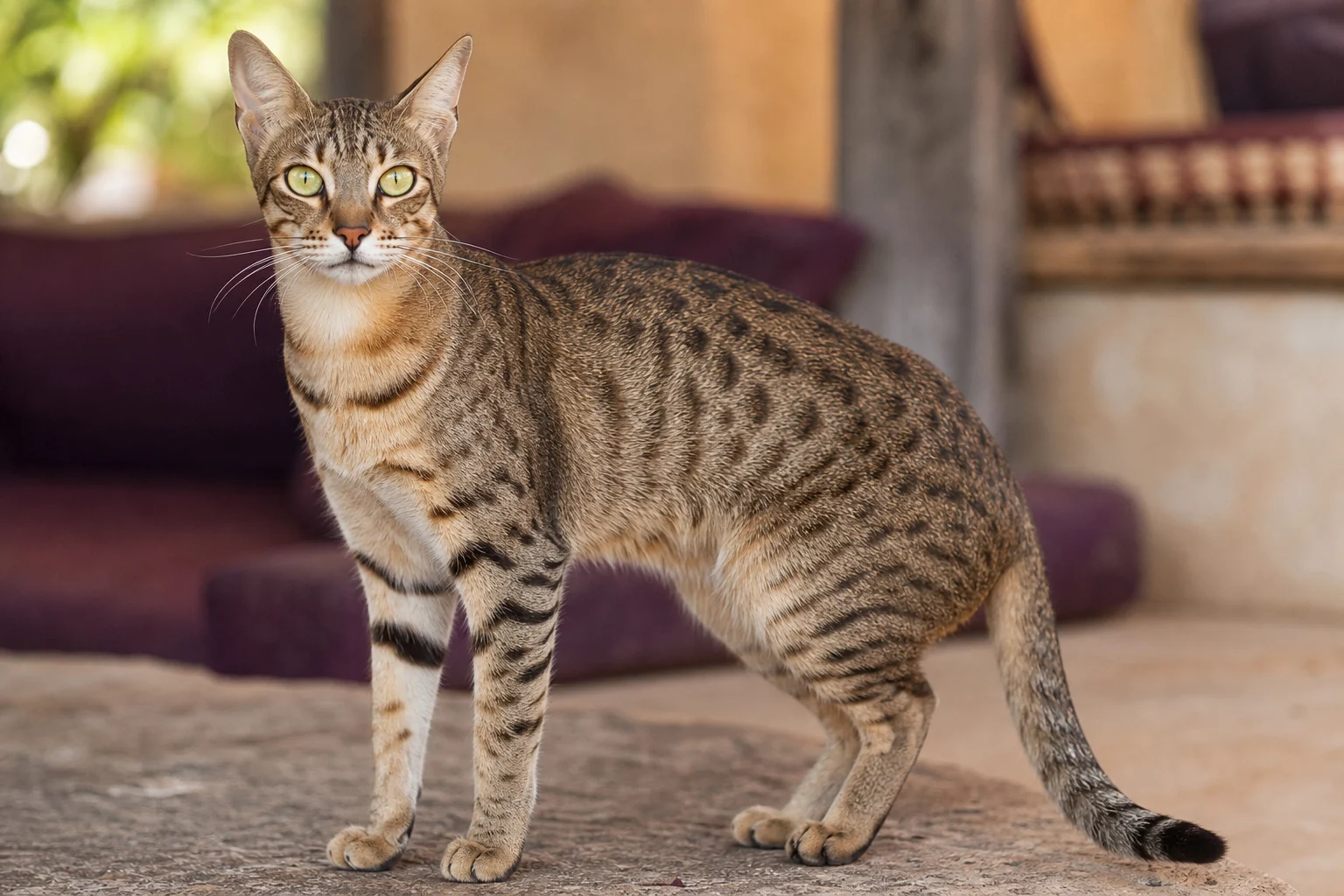
In the Arabuko-Sokoke coastal forest of Kenya lives a distinctive cat population the Giriama people call Khadzonzo — "looks like tree bark" — for its wood-grained blotched tabby. Horse breeder Jeni Slater began formal breeding from forest-line cats in 1978; Danish fanciers carried the line to Europe, and FIFe recognised the Sokoke in 1993. Genetically it belongs to the Indian-Ocean coastal group — a true natural landrace, one of the rarest recognised breeds in the world.
Appearance & size
A lithe three-to-five-kilogram athlete on long legs with a tiptoe gait — the hind legs angle so the Sokoke seems to walk on its toes. The short, glossy coat needs no undercoat in coastal heat and shows the signature: marbled brown blotched tabby with ticked pattern hairs, wood grain made fur. Amber to light-green eyes complete the forest camouflage.
Personality & temperament
The Sokoke bonds firmly but writes its own contract: devoted to its family, chirpingly conversational and genuinely interactive, yet with a forest cat's independent streak — affection happens at its initiative, and its excellent climbing and observation habits fill the hours between. It is clever, quick and water-tolerant, and its family loyalty extends notably to dogs it knows.
Indoor or outdoor living
Indoors with serious vertical territory, ideally plus a secured balcony or catio: this is a climber and observer that lives in three dimensions. Warmth matters — the undercoat-free tropical build dislikes cold drafts. Frame in Indoor cat or outdoor cat?
Enrichment & activity
Daily athletic sessions: climbing courses, chase games, fetch, puzzle feeders. Energy runs high; the independent streak means it also self-employs — given the infrastructure to do so.
Grooming
Minimal: a weekly polish for the glossy, undercoat-free coat.
Feeding & health
A robust landrace without known breed-specific diseases; general checks and the cattery's gene-pool management are the standard questions — the tiny world population makes diversity handling important. Portion the athlete via the food amount calculator and keep the home draft-free.
Costs
Kittens cost €1,000–1,500 where available — one of the rarest breeds worldwide, with searches spanning countries. Running costs are ordinary; the cat cost calculator totals them.
For beginners, children and other pets
Good with respectful children and known dogs; the independent streak suits households that appreciate a partner rather than a velcro companion. Engaged beginners manage — the hard part is finding one, not keeping one.
Similar breeds compared
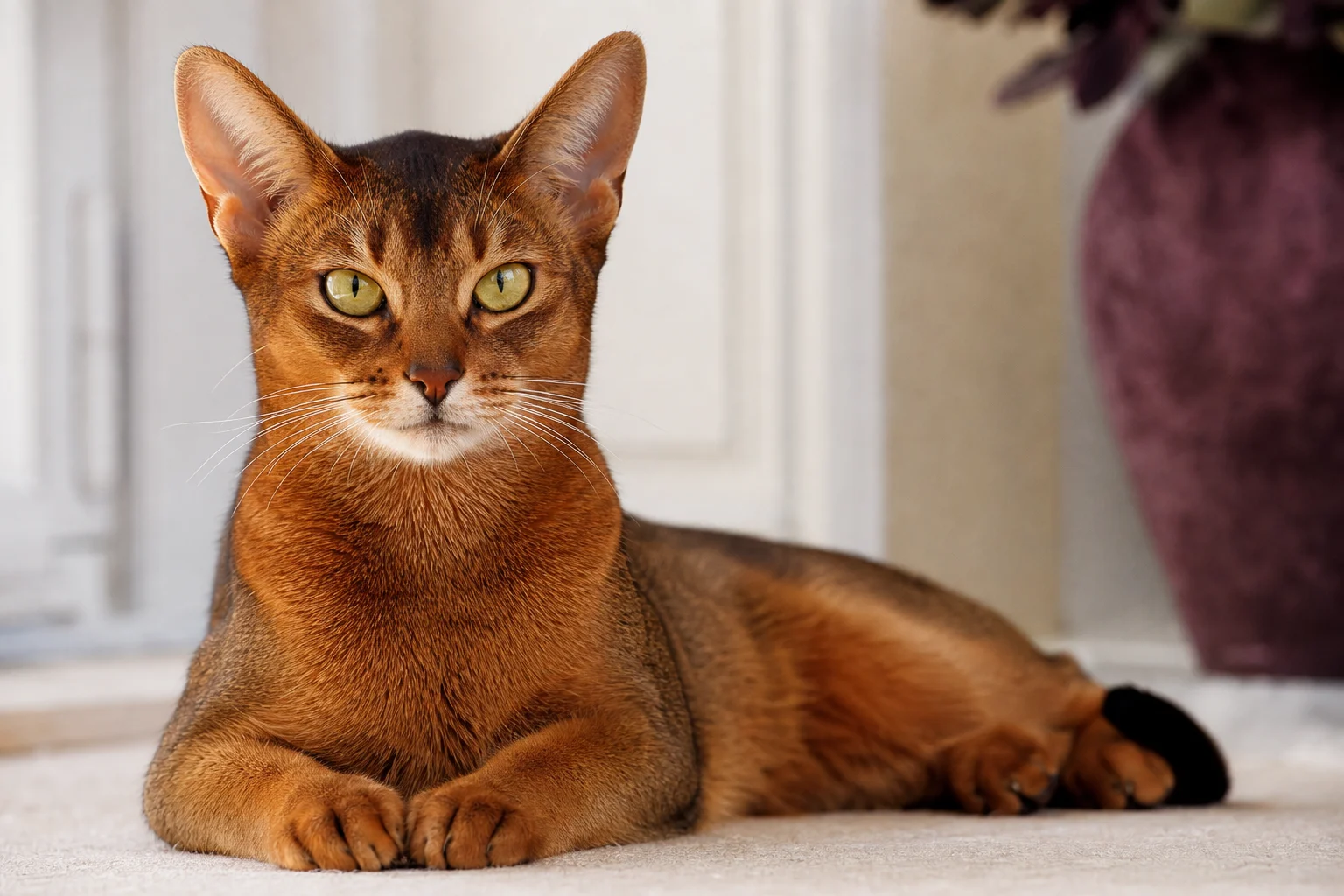
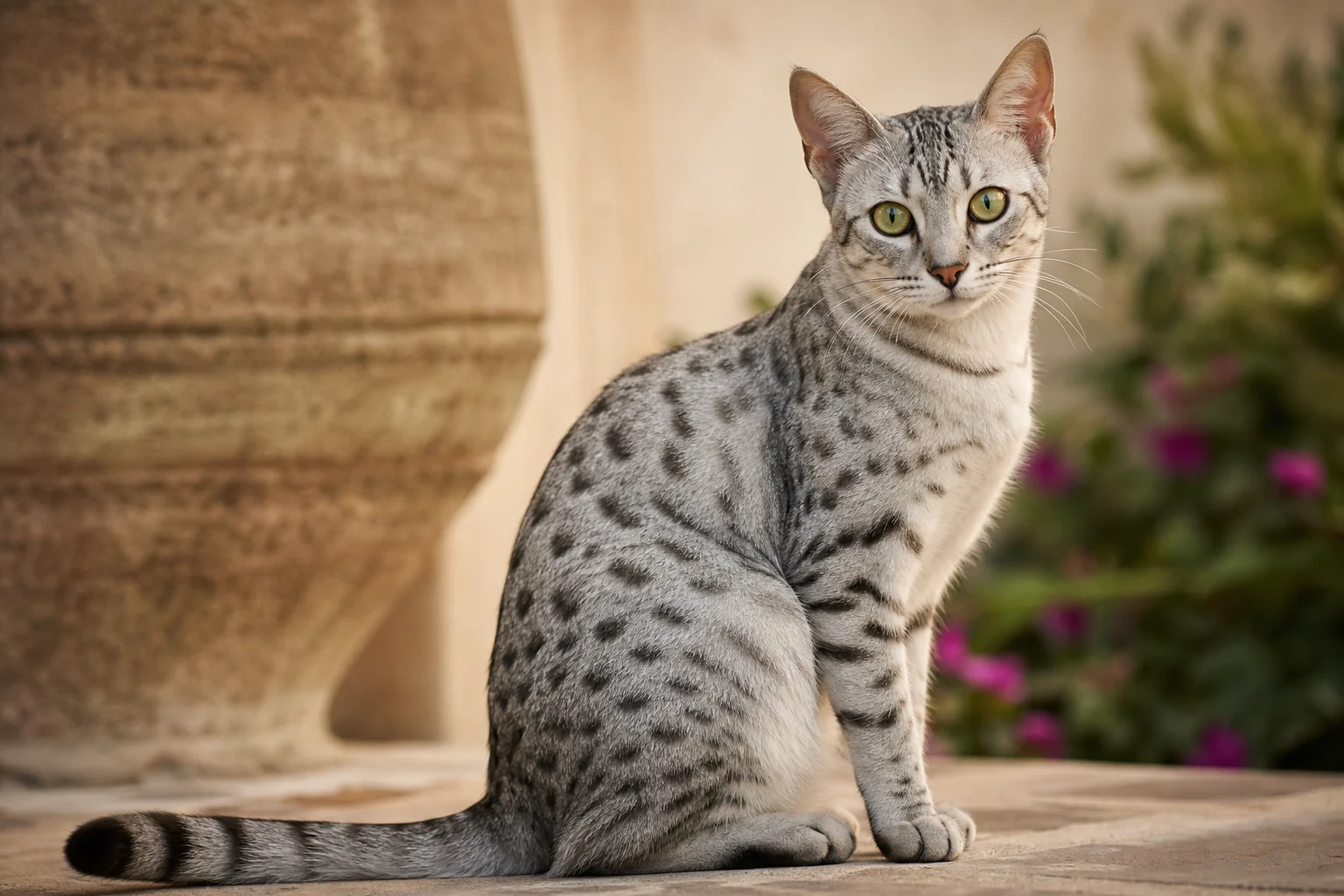
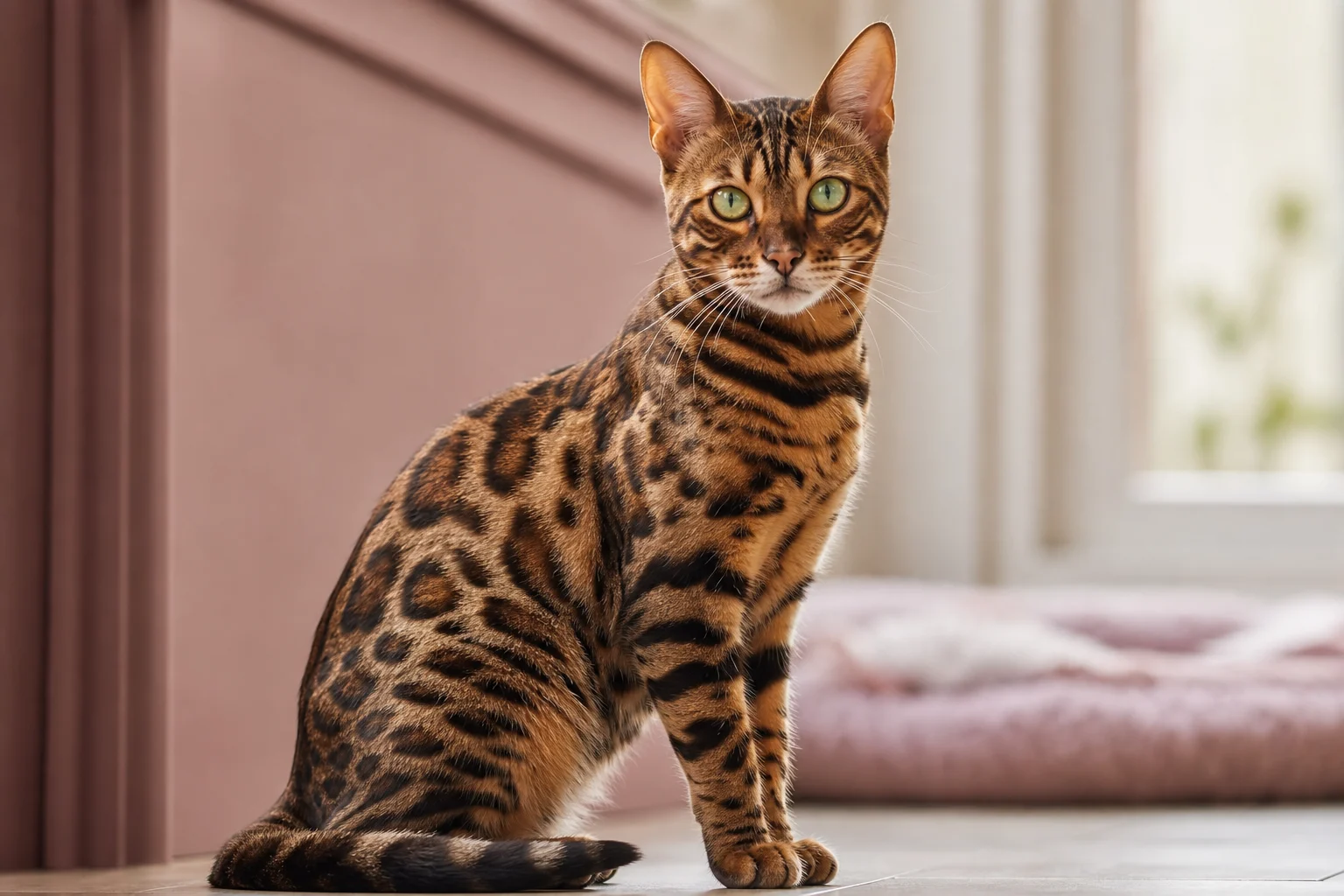
The Abyssinian shares the lithe African-heritage energy with more people-focus; the Egyptian Mau the natural-breed reserve; the Bengal the marbled look with hybrid intensity.
Who this breed suits
Warm, climbing-equipped households that value independent devotion and true rarity. The "Which cat fits me?" test checks the match.
Not sure what a Sokoke may eat? The food checker rates individual foods on a traffic-light scale, and the food guide explains what cats can eat and what is toxic.
A good fit for you if …
Frequently asked questions
What does Khadzonzo mean?
'Looks like tree bark' in the Giriama language — for the wood-grained blotched tabby that camouflages the cat in Kenya's coastal forest.
Is the Sokoke a wildcat hybrid?
No — a true natural landrace of the Kenyan coast, genetically part of the Indian-Ocean coastal cat group.
How rare is the breed?
Among the rarest recognised breeds worldwide — searches routinely cross borders.
Which health questions matter?
General checks plus the cattery's gene-pool management — the tiny population makes diversity handling decisive.
Why the tiptoe gait?
The angled hind legs create the breed's distinctive toe-walking impression — normal and healthy.
Do Sokokes tolerate cold?
Poorly — no undercoat means drafts and cold rooms genuinely bother them. Warm homes only.
Similar breeds
Sources: FIFe/TICA breed standard · breed association data · editorial assessment · Last updated 08/2026. On health questions this article never replaces a visit to the vet.