 AI
AIUkrainian Levkoy
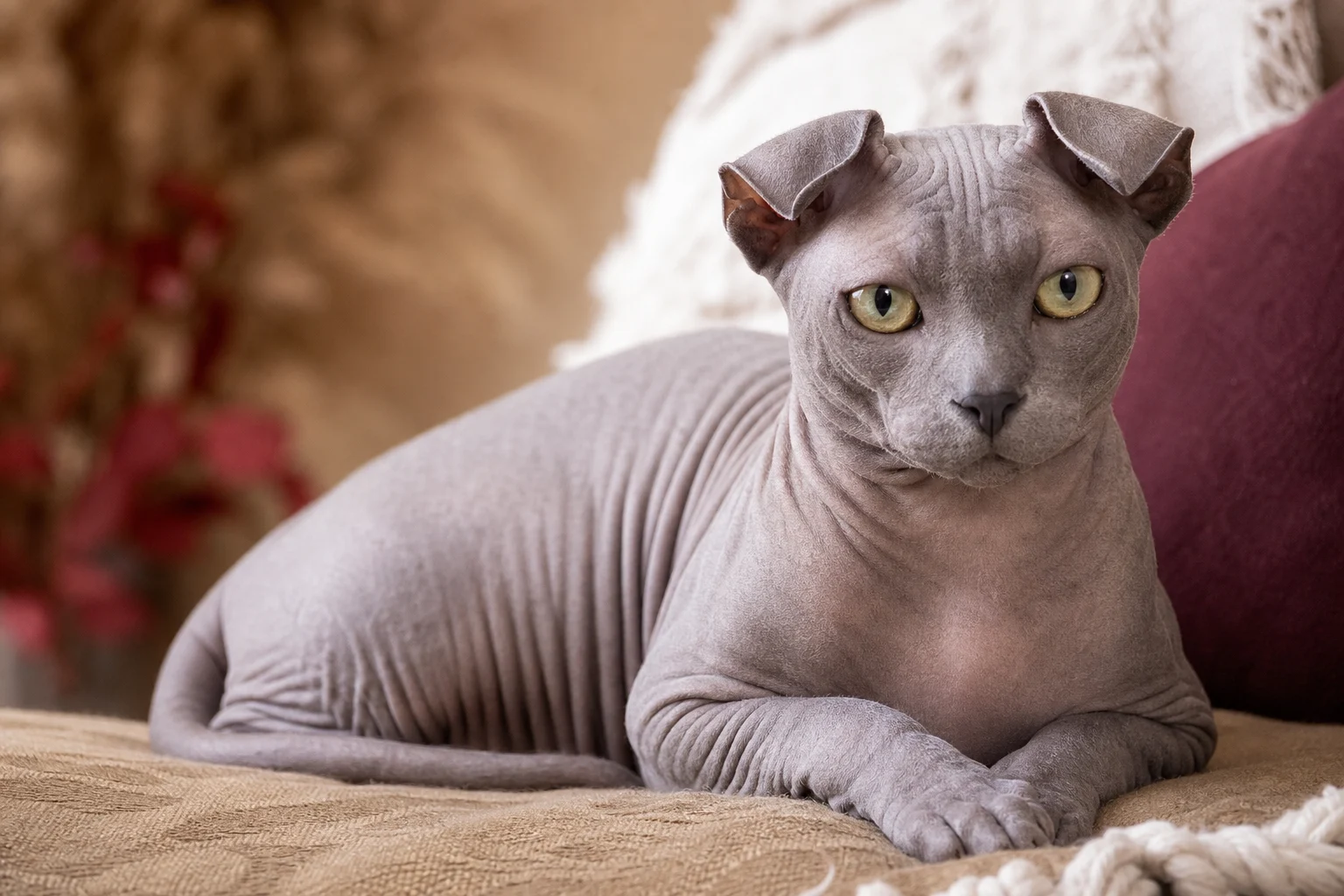
Folded ears on naked skin — a devoted Ukrainian design breed that doubles two contentious genes.
| Size | Medium |
|---|---|
| Weight | 3–5 kg |
| Life expectancy | 12–15 years |
| Origin | Ukraine |
| Type | Pedigree breed (Ukraine) |
| Grooming | low |
| Activity needs | high |
| Beginner friendly | with some experience |
Temperament & suitability
Editorial assessment based on the FIFe breed standard and breed association data.
Guideline for movement & enrichment for this breed.
Traits
Origin & history
Kyiv felinologist Elena Biriukova combined Donskoy hairlessness with Scottish Fold ears from 2000 onward and named the result after the levkoy flower, whose bent petals the folded ears echo. Ukrainian and Russian registries accept the breed; FIFe, TICA and most Western bodies do not — and here the honest frame matters: the Levkoy deliberately stacks two genes that are each individually contested, the dominant Don hairless gene and the Fold cartilage gene. We profile the breed because people search for it, with the genetics stated plainly.
Appearance & size
A three-to-five-kilogram cat of soft, wrinkled skin — bald to flocked — under a long, angular "dog-face" head with large, forward-folded ears; the stepped profile is unique in catdom. Skin pigment shows all colours. The silhouette is striking by design: an elegant alien with velvet warmth.
Personality & temperament
Temperament is the breed's unambiguous asset: Levkoys are gentle, deeply people-bound and dog-like devoted — they follow, greet, converse softly and seek skin contact under every available blanket. Playful and clever, they integrate warmly with children, cats and friendly dogs. Alone-time hurts them accordingly.
Indoor or outdoor living
Strictly indoors with full warmth infrastructure: naked skin plus fold genetics leave no outdoor case. Heated sleeping spots, draft-free rooms, summer sun protection — and reliable company or a second cat. Frame in Indoor cat or outdoor cat?
Enrichment & activity
Daily gentle play, puzzle feeders and shared routines; watch movement honestly — the Fold heritage makes joint monitoring a duty, and reluctance to jump belongs at the vet.
Grooming
The hairless routine: regular gentle wipe-downs or baths, ear cleaning (folded ears wax fast and need extra care), claw and skin checks, sun awareness.
Feeding & health
The honest chapter: the Levkoy inherits both risk packages — possible ectodermal-dysplasia effects from the dominant Don gene and osteochondrodysplasia risk from the Fold gene, which is why Western registries refuse recognition and German harmful-breeding criteria apply. If you already share life with one: strict lean weight via the food amount calculator, joint vigilance, dental checks and warmth. If you are considering a purchase: straight-eared, whisker-intact individuals from outcross pairings carry the smaller burden — and the Sphynx or Peterbald deliver the naked devotion without the fold.
Costs
Kittens cost €800–1,400 via mostly Eastern European catteries — plus the honest vet reserve for joint and skin care. The cat cost calculator is the base line only.
For beginners, children and other pets
Character-wise family-gentle throughout. The responsible framing mirrors Fold and Munchkin: existing Levkoys deserve informed, warm, weight-disciplined homes — financing new fold-eared breeding deserves reconsideration, and straight-eared littermates are the kinder choice.
Similar breeds compared
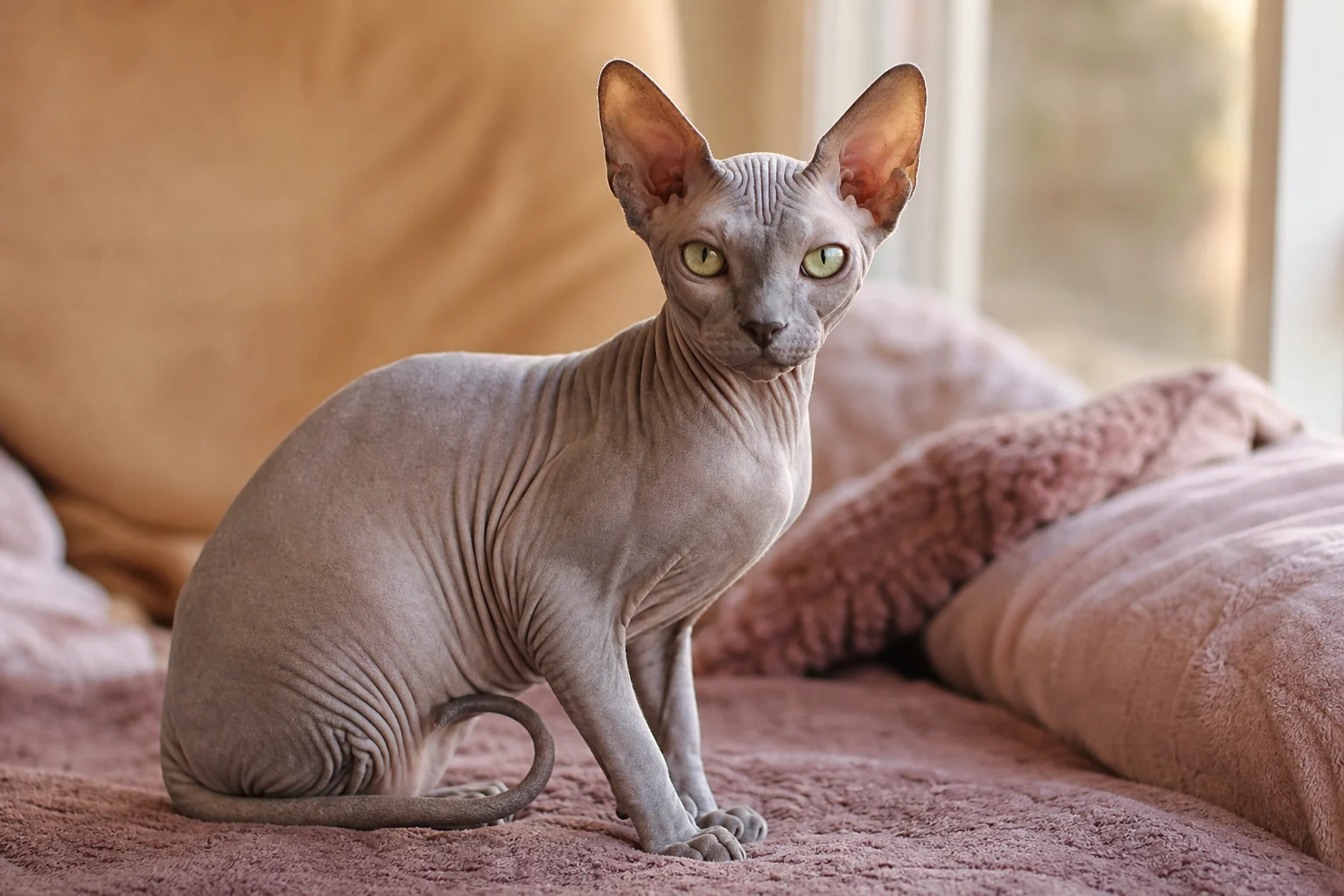
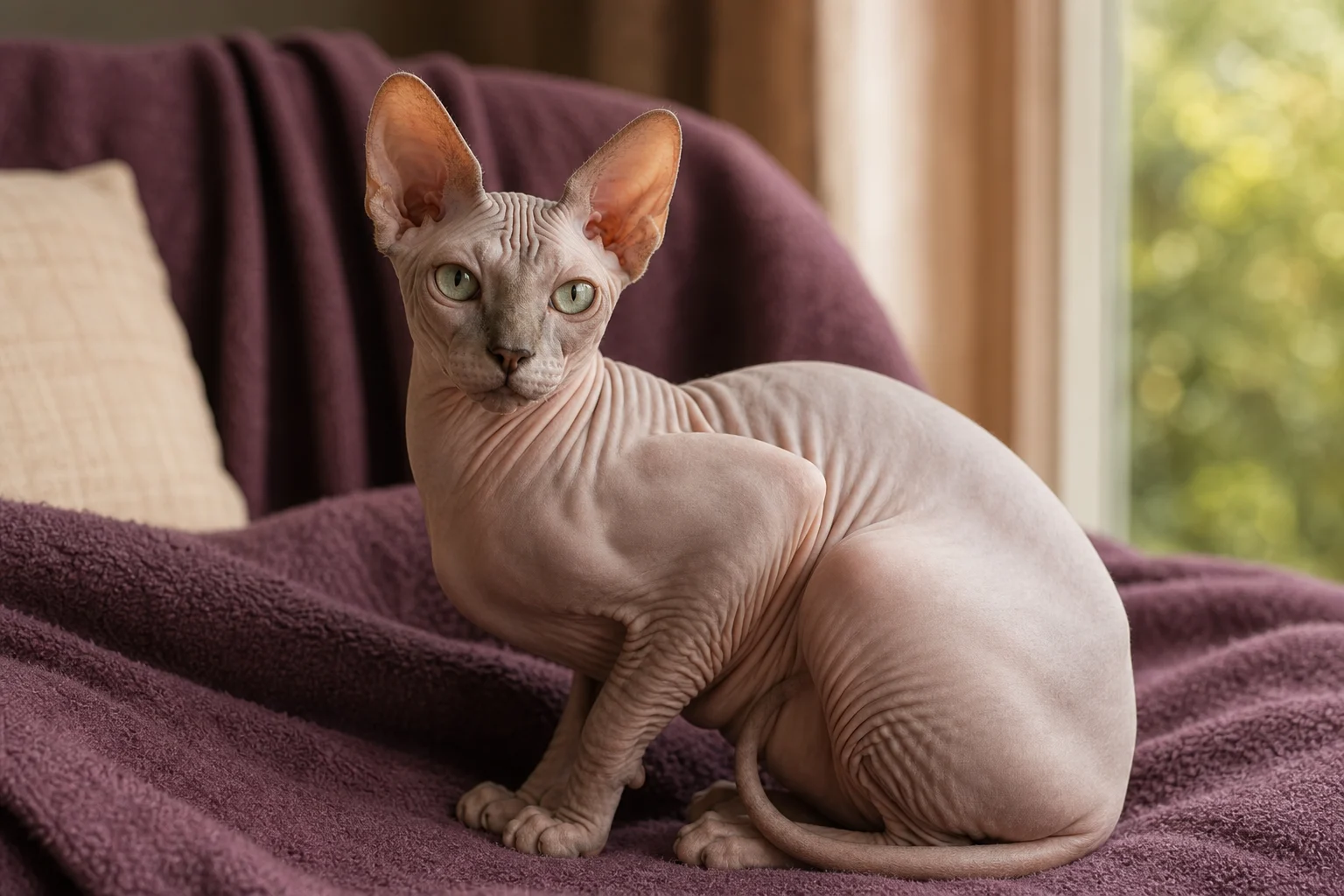
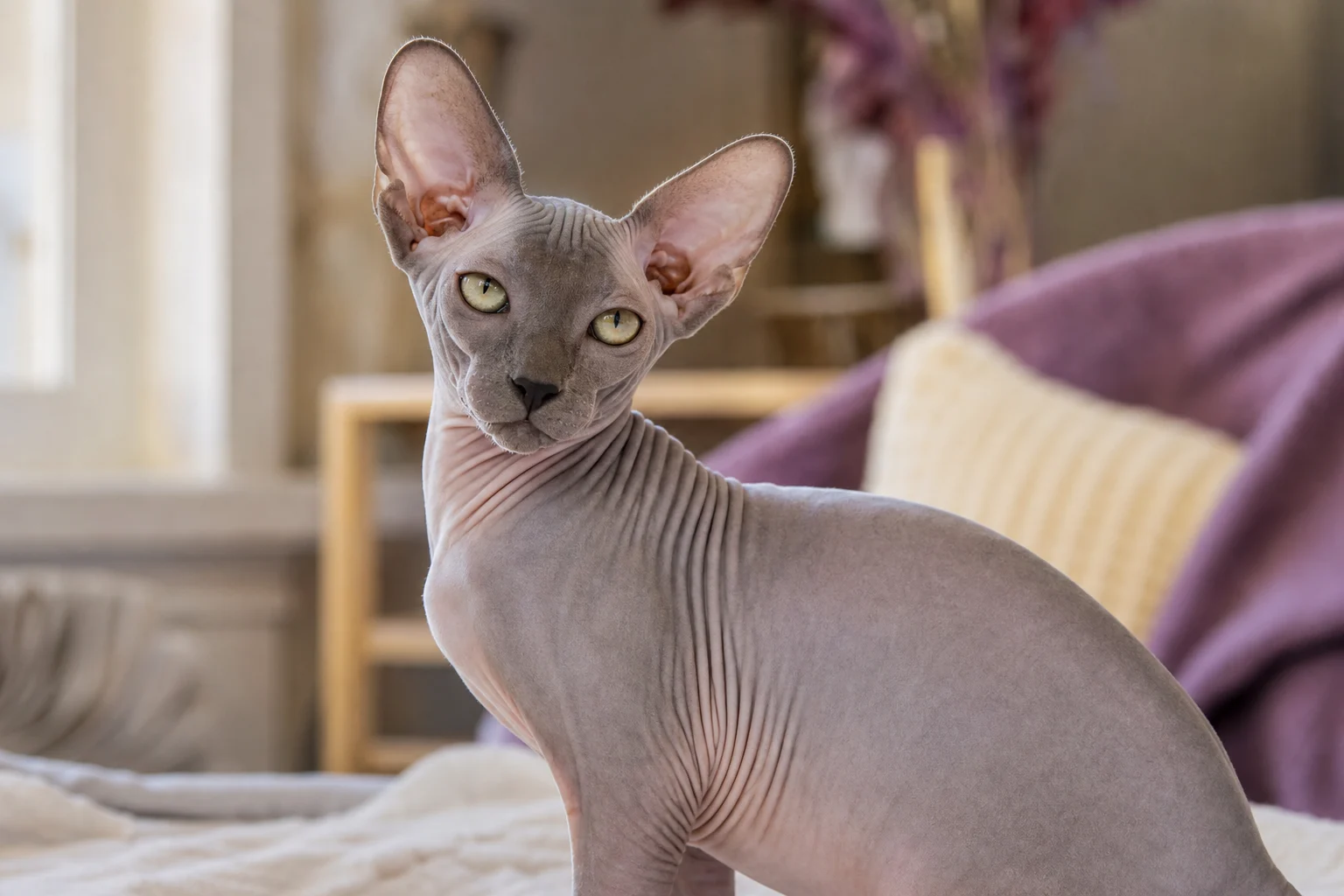
The Donskoy is the hairless parent with one gene fewer; the Sphynx the recessive-gene alternative; the Scottish Fold the ear-gene parallel in fur.
Who this breed suits
Honestly: informed homes for existing Levkoys — with warmth, vigilance and love. For new purchases, the "Which cat fits me?" test gladly surfaces the sounder naked alternatives.
Not sure what a Ukrainian Levkoy may eat? The food checker rates individual foods on a traffic-light scale, and the food guide explains what cats can eat and what is toxic.
A good fit for you if …
Frequently asked questions
Why is the Levkoy controversial?
It deliberately combines two contested genes: dominant Don hairlessness (dysplasia association) and the Fold cartilage gene (joint disease risk). Western registries refuse recognition for exactly this.
What should owners of a Levkoy watch?
Joints (reluctance, stiffness → vet), skin and ear routine, strict lean weight and warmth. Informed care makes the difference.
Are there lower-risk variants?
Straight-eared, whisker-intact individuals from outcross pairings carry only the hairless package — the kinder choice within the breed.
What are the sound alternatives?
Sphynx (recessive hairless gene) or Peterbald for the naked devotion without the fold.
How devoted are Levkoys really?
Notably — dog-like following, blanket-sharing and soft conversation are standard. Temperament is the breed's best argument.
Is keeping one legal in Germany?
Keeping yes; breeding with fold-eared or extreme individuals collides with harmful-breeding criteria. Existing cats need homes, not judgement.
Similar breeds
Sources: FIFe/TICA breed standard · breed association data · veterinary literature on OCD and dominant hairlessness · editorial assessment · Last updated 08/2026. On health questions this article never replaces a visit to the vet.