 AI
AISphynx
Naked skin, maximum heart — a warm, mischievous cuddle magnet that demands presence and skin care.
| Size | Medium |
|---|---|
| Weight | 3–5 kg |
| Life expectancy | 12–15 years |
| Origin | Canada |
| Type | Pedigree breed (Canada) |
| Grooming | low |
| Activity needs | high |
| Beginner friendly | with some experience |
Temperament & suitability
Editorial assessment based on the FIFe breed standard and breed association data.
Guideline for movement & enrichment for this breed.
Traits
Origin & history
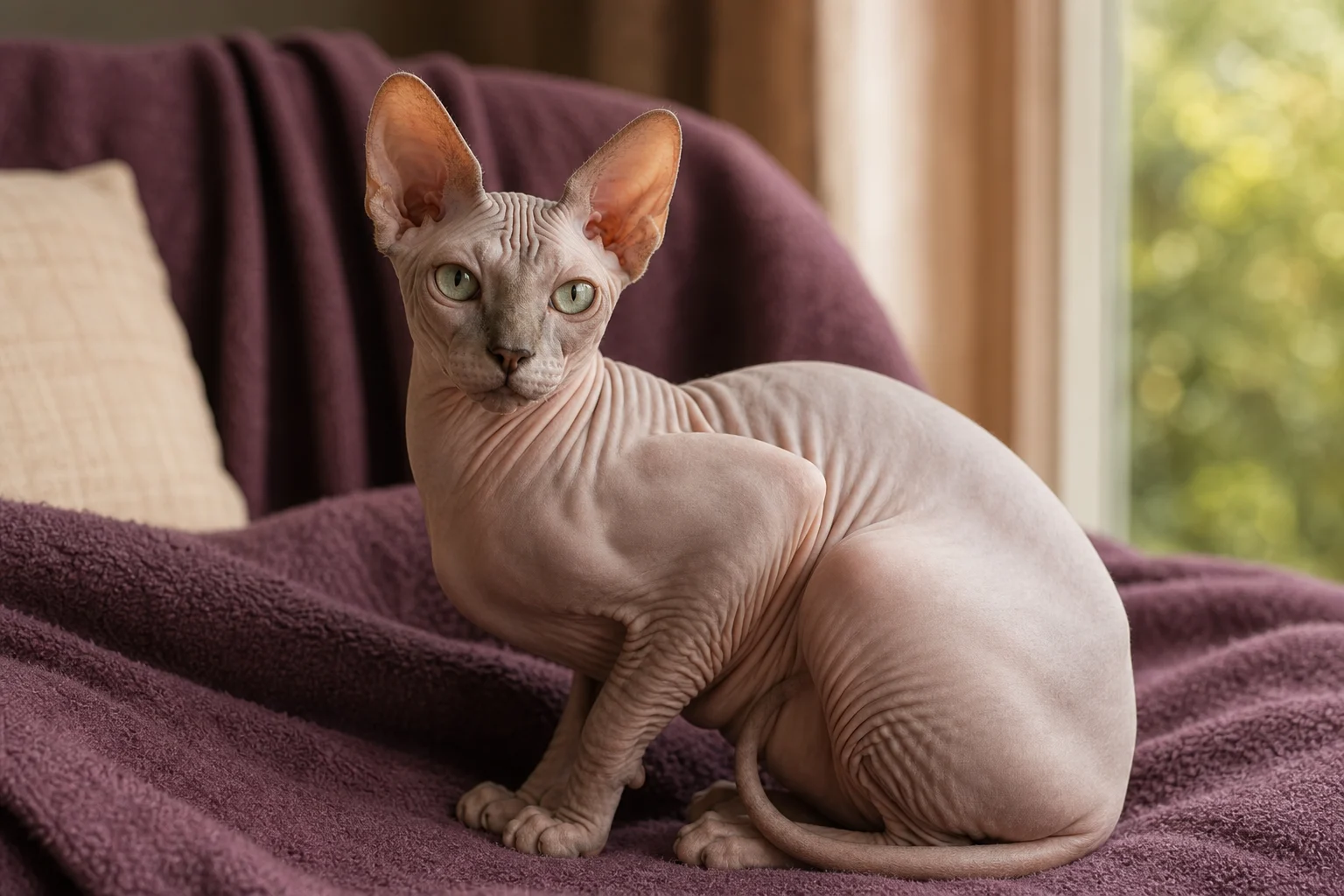
The modern Sphynx began in 1966 in Toronto, where a black house cat delivered a hairless kitten named Prune — a natural mutation that breeders stabilised through the 1970s and 80s with careful outcrossing to Devon Rex and shorthairs. The result is not actually bald: fine peach-fuzz down covers the warm, suede-like skin. In Germany the hairlessness is debated under animal-welfare law, chiefly around missing whiskers; responsible breeding selects for intact vibrissae, and buyers should insist on them.
Appearance & size
A medium, surprisingly heavy cat of three to five kilograms — dense muscle under wrinkled skin, a pot-bellied elegance, huge ears and lemon-shaped eyes. Skin pigment shows every colour and pattern a coat would: solid, pointed, bicolour, tortie. The body runs hot to the touch; a Sphynx is a living hot-water bottle and knows it.
Personality & temperament
Among the most people-devoted cats bred anywhere: the Sphynx greets, follows, comments, performs clownish stunts for laughs and sleeps under your blanket, skin on skin. Strangers get charmed within minutes — shyness is not in the repertoire. The intelligence is high, the energy substantial, the need for warmth and company absolute. This breed is a full-contact relationship, not a roommate.
Indoor or outdoor living
Strictly indoors: no coat means sunburn in summer, dangerous chilling the rest of the year. A secured, shaded balcony in warm weather is the outdoor maximum. Indoors the priorities are warm sleeping places — heated pads, sunny windows, your bed — draught-free rooms and reliable company; a second cat as a heater and playmate is close to ideal. See Indoor cat or outdoor cat? for the framework.
Enrichment & activity
Playful and clever, the Sphynx wants daily sessions of hunting games, climbing, fetch and puzzle toys — and above all involvement in whatever you are doing. Alone-time is this breed's genuine hardship; working households need a second animal and warm, safe retreat spots.
Grooming
Hairless is not care-free — the coat's absent oil absorption moves the work to the skin: wipe or bathe gently every one to two weeks against the sebum film, clean the large ears regularly (they wax quickly), keep claws and claw beds tidy. Budget genuine weekly care time; skipped skin care shows within days.
Feeding & health
The naked skin radiates heat, and the metabolism compensates: Sphynx cats eat noticeably more than their size suggests — portion generously but controlled via the food amount calculator. The critical screening topic is HCM, unusually frequent in the breed; buy exclusively from breeders with current cardiac ultrasounds and echo the parents annually. Skin sensitivities and sun protection round out the health picture.
Costs
Kittens from cardiac-screened lines cost €1,200–1,800. Add higher food intake, heated sleeping spots and consistent vet monitoring — the cat cost calculator makes the total honest.
For beginners, children and other pets
Character-wise a dream for families — gentle, robust in play, dog-friendly and cat-social. The care duties and the HCM vigilance make it a breed for committed owners rather than casual first-timers. Children love the warm skin; teach them that the cat has no fur to insulate rough handling.
Similar breeds compared
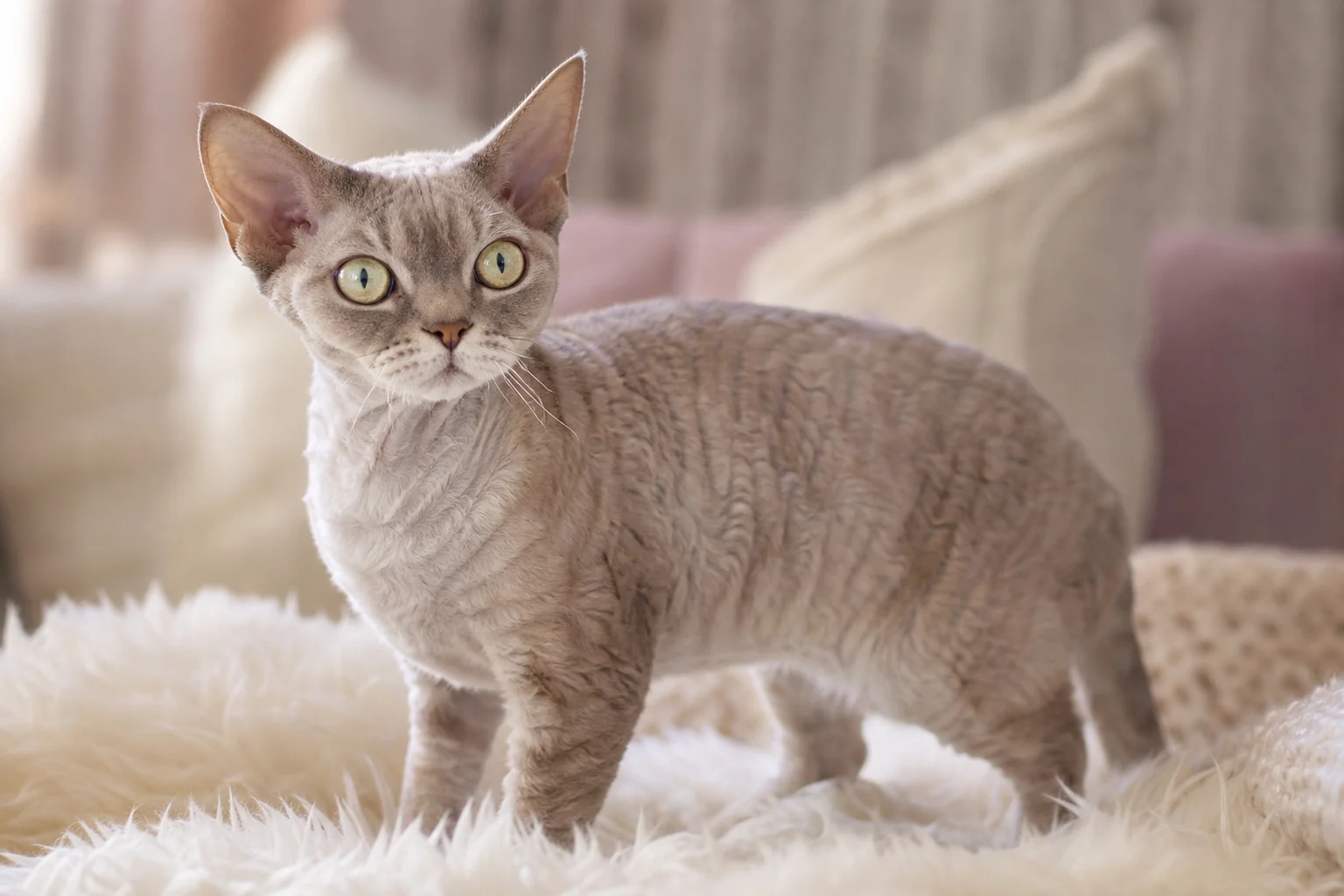
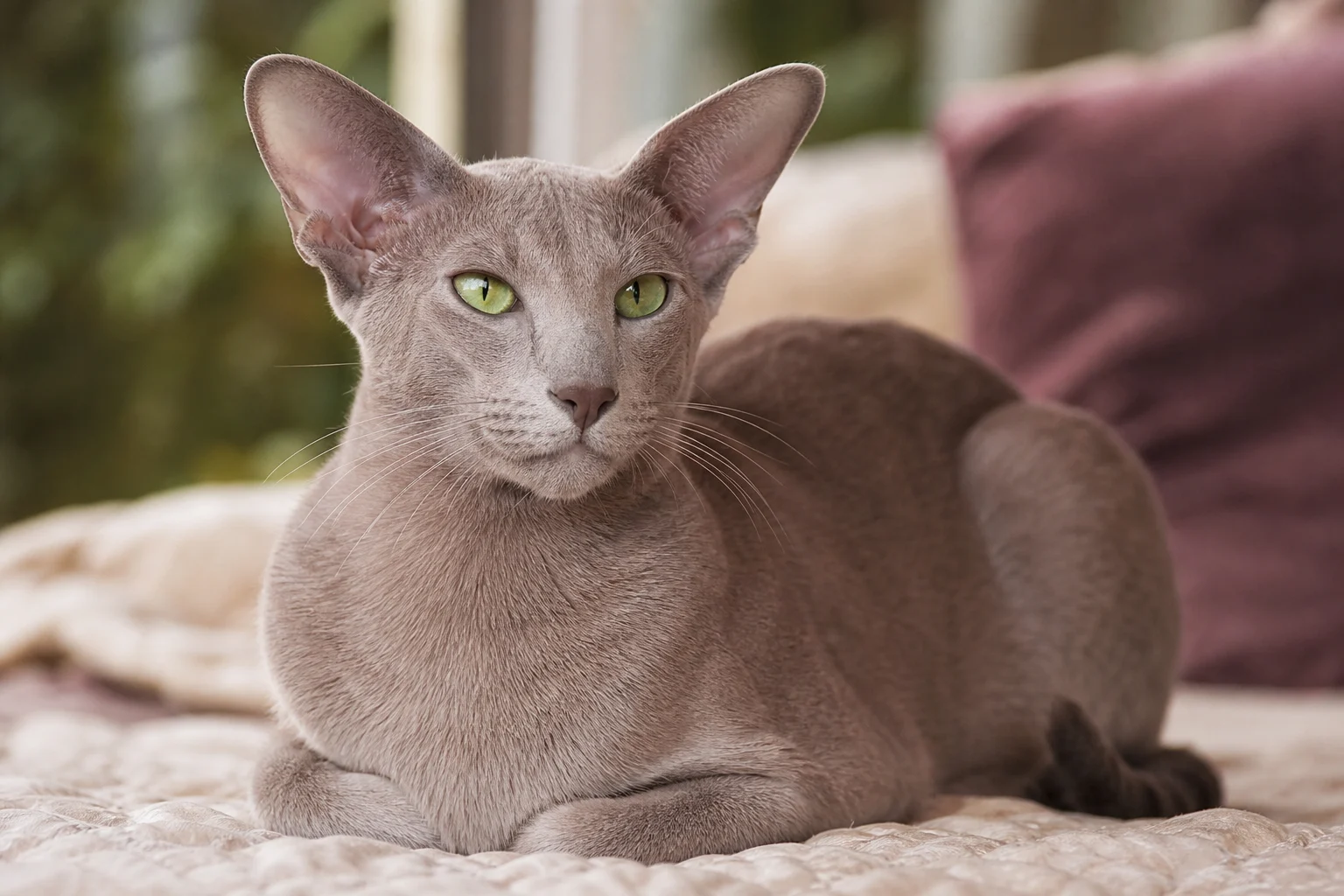
The Devon Rex offers a similar pixie soul with a light curly coat and less skin care; the Peterbald is the slimmer, oriental-line hairless; the Oriental Shorthair delivers comparable devotion with normal fur.
Who this breed suits
Warm households — literally and figuratively — where someone is present, skin care is embraced and a shadow under the blanket sounds like joy, not intrusion. Test your match in the "Which cat fits me?" test, and take the allergy note seriously: less hair is not none — spend time with a Sphynx before deciding.
Not sure what a Sphynx may eat? The food checker rates individual foods on a traffic-light scale, and the food guide explains what cats can eat and what is toxic.
A good fit for you if …
Frequently asked questions
Is the Sphynx completely naked?
No — fine down covers the warm, suede-like skin, and responsible lines keep intact whiskers. Truly bald patches and missing vibrissae are welfare problems, not features.
How much care does the skin need?
A gentle wipe-down or bath every one to two weeks against the sebum film, plus regular ear cleaning — the large ears wax quickly. It is a real, recurring commitment.
Are Sphynx cats hypoallergenic?
Only conditionally: Fel d 1 lives in saliva and skin, not fur, so reactions vary. Some allergy sufferers cope well, others do not — test personal contact over several days first.
Why do Sphynx cats eat so much?
The naked skin radiates body heat, and the metabolism burns extra to compensate. Expect above-average portions for the size.
Which health topic is critical?
HCM — heart muscle disease is unusually frequent in the breed. Buy only from breeders with current cardiac ultrasounds and continue annual echoes.
Can a Sphynx go outside?
Only onto a secured, shaded balcony in warm weather. Sunburn and chilling make free roaming impossible for a naked cat.
Similar breeds
Sources: FIFe/TICA breed standard · breed association data · editorial assessment · Last updated 08/2026. On health questions this article never replaces a visit to the vet.