 AI
AIDevon Rex
An elf in astrakhan curls — impish, warm-skinned and glued to its favourite human's shoulder.
| Size | Small |
|---|---|
| Weight | 2–4 kg |
| Life expectancy | 12–16 years |
| Origin | United Kingdom |
| Type | Pedigree breed (England) |
| Grooming | low |
| Activity needs | very high |
| Beginner friendly | with some experience |
Temperament & suitability
Editorial assessment based on the FIFe breed standard and breed association data.
Guideline for movement & enrichment for this breed.
Traits
Origin & history
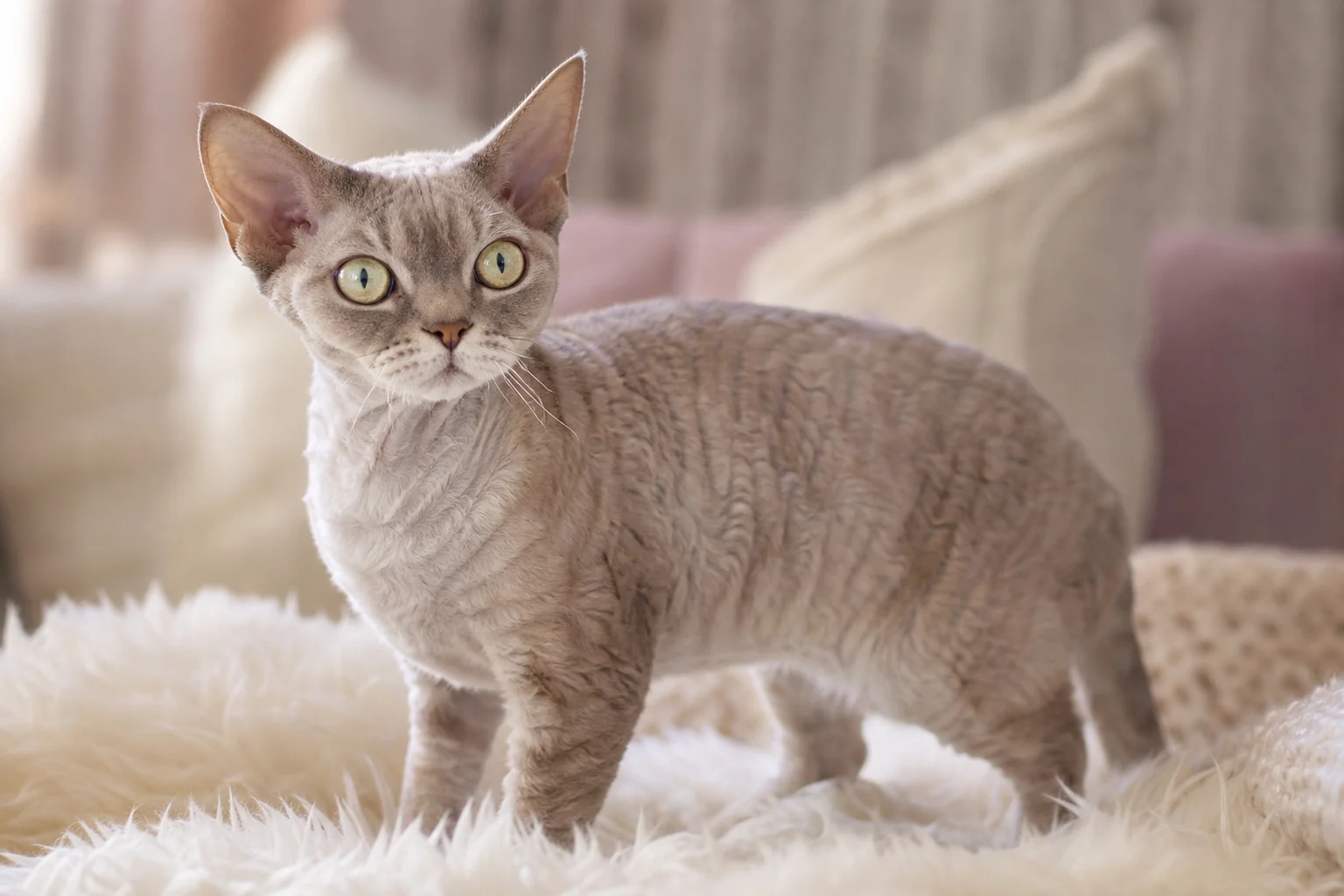
Devon, England, 1960: a curly-coated stray fathered a kitten named Kirlee whose ripple-wave fur turned out to be a new mutation — incompatible with the earlier Cornish Rex gene, hence a breed of its own. Six decades of careful breeding built today's Devon Rex: the huge ears, the elfin face and the soft, broken curls that gave it the "pixie cat" nickname.
Appearance & size
A small, featherweight cat of two to four kilograms that looks assembled from spare elf parts: oversized low-set ears, big impish eyes, high cheekbones and a slender, hard-muscled body under a short, soft, loosely curled coat in every colour and pattern. The whiskers are curly and brittle — a breed trait to know, not a defect to fix.
Personality & temperament
The Devon is a monkey in cat form and a heater in monkey form. It rides shoulders, burrows under blankets, inspects every plate (food theft is a breed sport), learns fetch and tricks with glee and follows its favourite human like a warm, chirping shadow. The voice is quiet; the presence is total. Loneliness is the one thing this breed genuinely cannot do.
Indoor or outdoor living
An indoor cat: the thin coat insulates poorly and the trusting nature invites trouble outside. A secured, sunny balcony delights it in warm months. Indoors, warmth is the currency — heated beds, sunny windows, your duvet — plus climbing options for the surprisingly athletic jumps. Company is mandatory: a second cat or reliably present people; the guide Indoor cat or outdoor cat? frames the setup.
Enrichment & activity
High play drive in a handy format: daily hunting games, clicker sessions (the Devon learns eagerly), puzzle feeders and climbing paths. Its kitten mode persists for life — plan engagement accordingly and secure the kitchen counters, because everything edible is considered shared property.
Grooming
Gentle and minimal: the delicate curls want a soft hand — a weekly smoothing with a damp chamois beats brushing, which can break the fine hair. Ears wax quickly and need regular cleaning; some individuals also need occasional skin-fold wiping like their Sphynx cousins.
Feeding & health
A quick metabolism under thin fur means hearty appetite — portion via the food amount calculator and guard your dinner. Screening topics: HCM (the breed's serious issue — insist on current cardiac ultrasounds), patellar luxation and the gene test for hereditary myopathy (spasticity). Good breeders document all three.
Costs
Kittens from tested lines cost €1,000–1,500. Add warm sleeping infrastructure and steady vet care; the cat cost calculator sums it honestly.
For beginners, children and other pets
A joyful family cat for gentle households: playful with children, sociable with cats and dog-friendly. Beginners manage if they take the company requirement seriously. The reduced shedding makes it a frequent allergy candidate — as always, test personal contact first; hypoallergenic is a tendency, not a promise.
Similar breeds compared
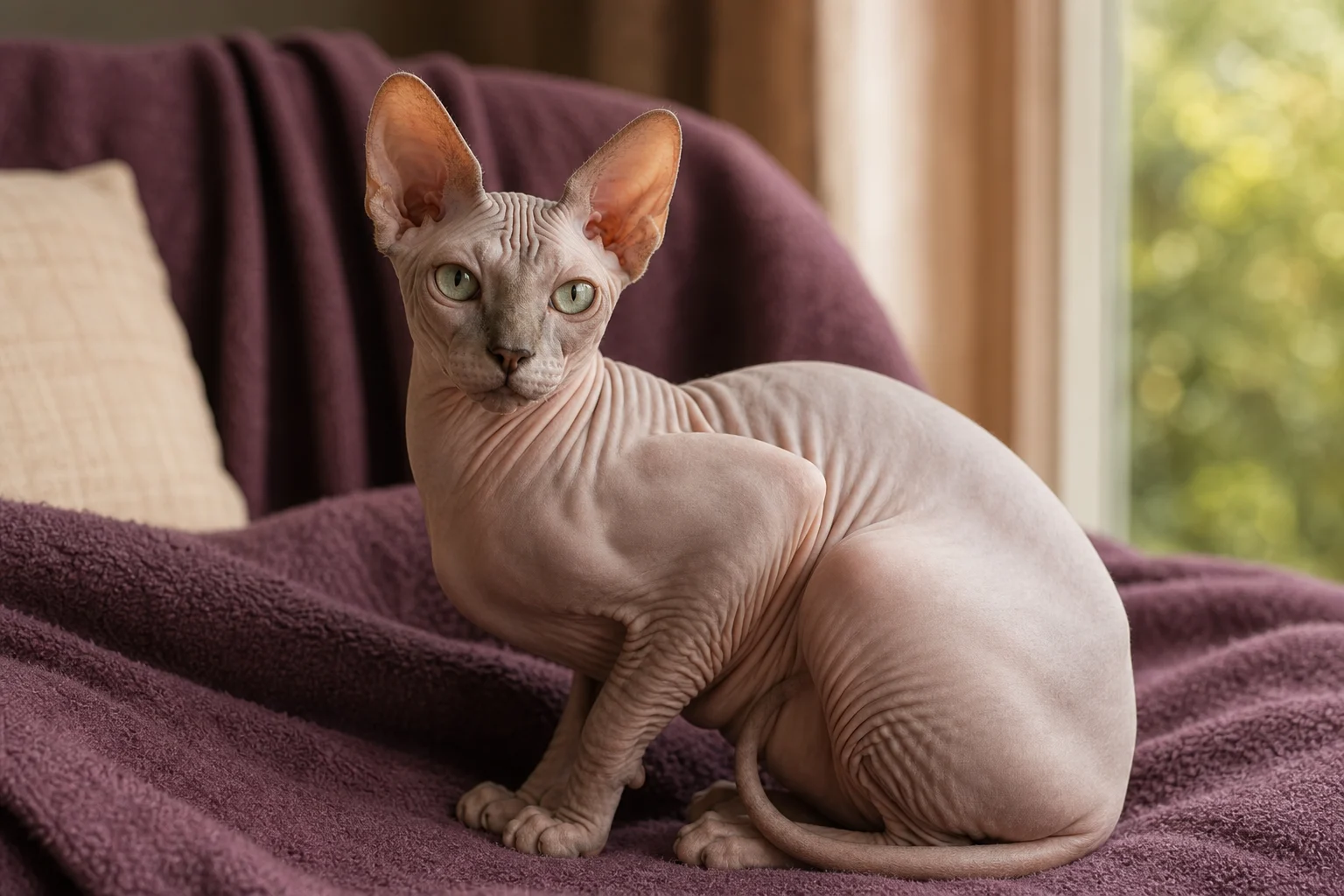
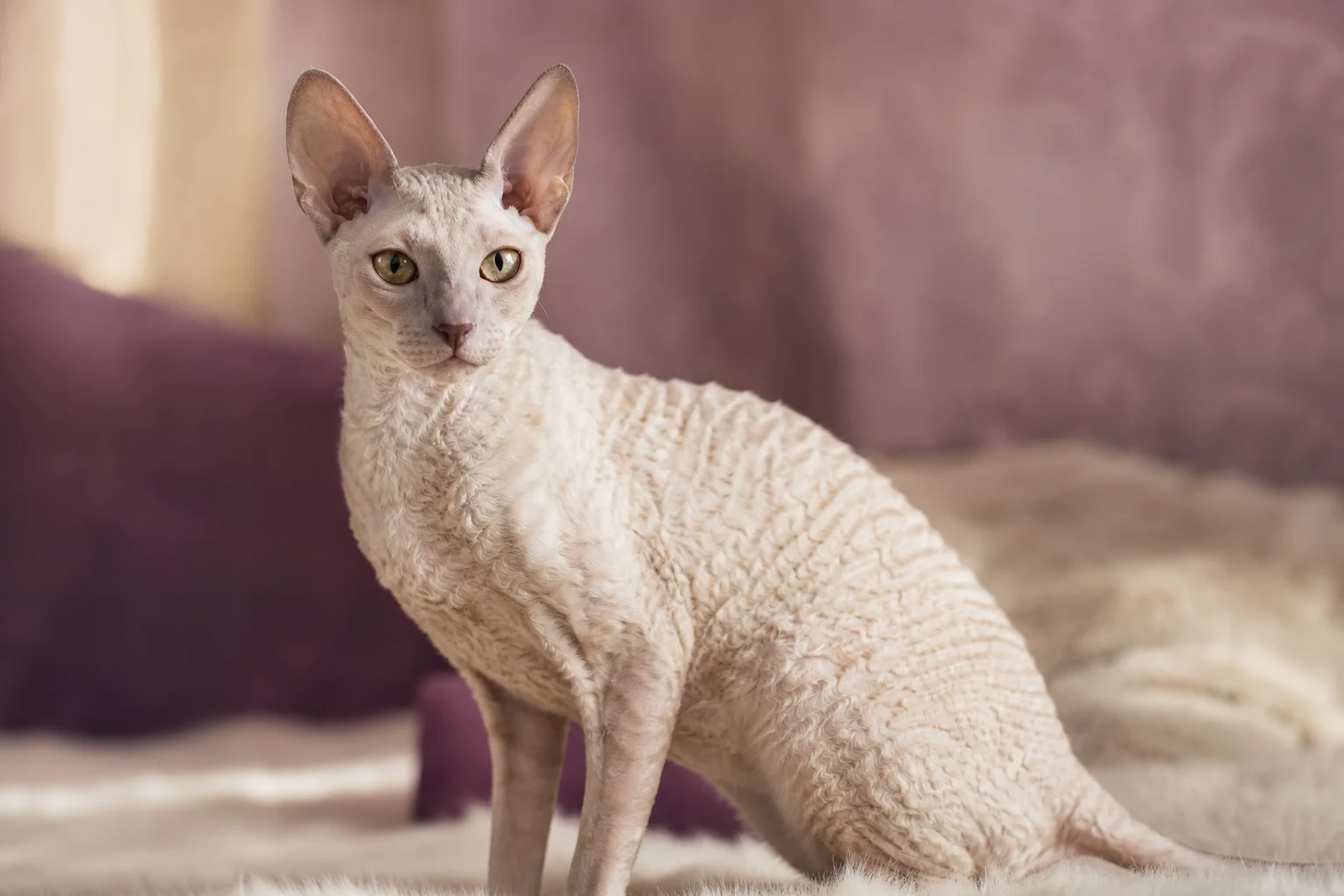
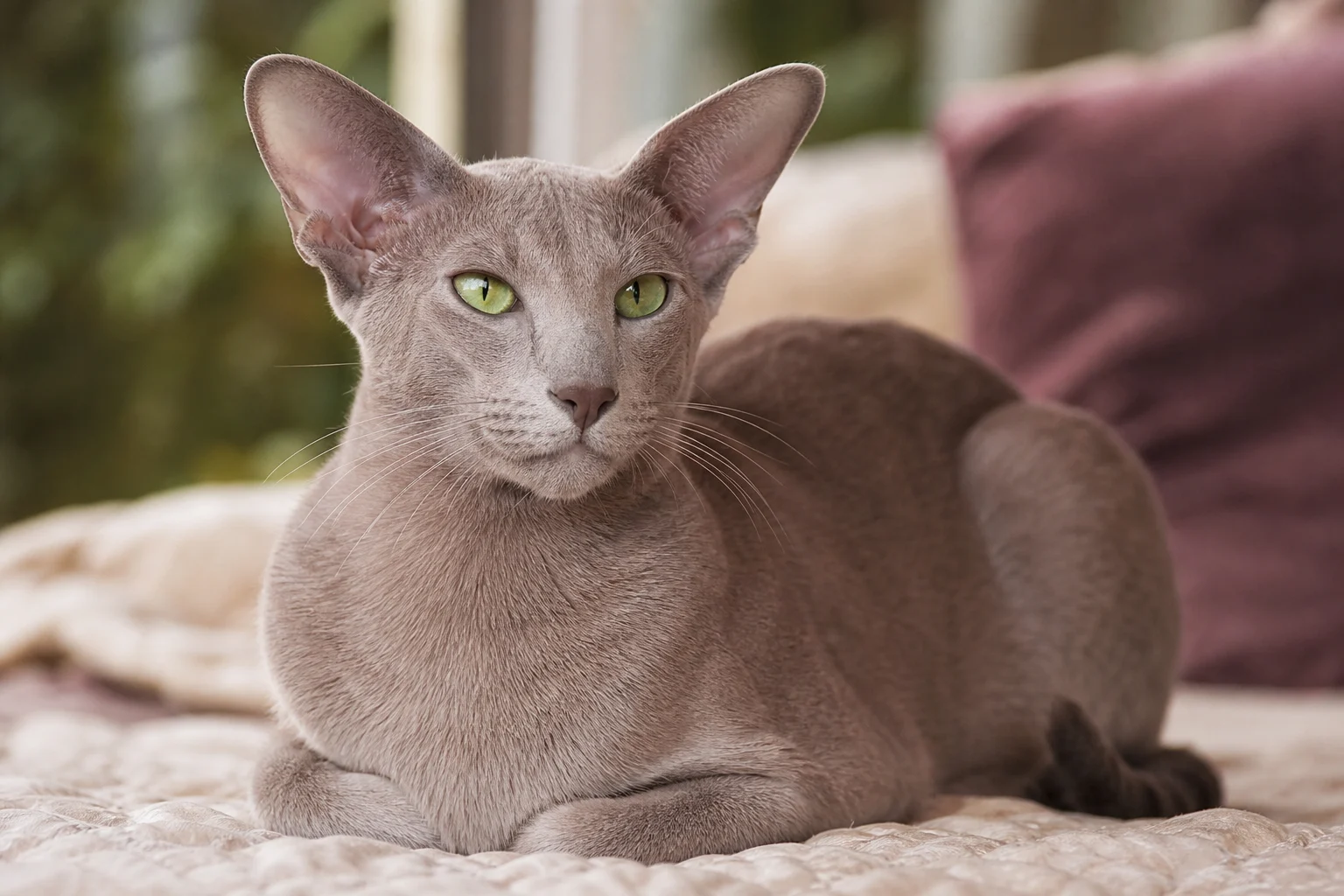
The Cornish Rex wears tighter waves on longer legs with similar mischief; the Sphynx takes the warmth-seeking devotion further without any coat; the Singapura matches the small-format liveliness with a normal coat.
Who this breed suits
Present, playful households that want a devoted imp on their shoulder and can offer warmth and company around the clock. The "Which cat fits me?" test shows whether your home runs at Devon temperature.
Not sure what a Devon Rex may eat? The food checker rates individual foods on a traffic-light scale, and the food guide explains what cats can eat and what is toxic.
A good fit for you if …
Frequently asked questions
Are Devon Rex hypoallergenic?
Tendentially friendlier: the thin, low-shedding coat spreads fewer allergens, but Fel d 1 is still produced. Test several days of personal contact before deciding.
Why are the whiskers curly and short?
The rex mutation curls all hair including vibrissae, which break easily. It is a breed trait — choose breeders who avoid extreme thinning.
How much warmth does a Devon need?
A lot: thin fur insulates poorly. Heated beds, sunny windows and blanket access are standard equipment, and winter flats should not run cold.
Which health tests matter?
HCM ultrasounds above all, plus patella checks and the myopathy gene test. Reputable breeders present all three.
Can a Devon Rex stay alone?
Badly — the breed is extremely people-bound. A second cat or present humans are part of responsible keeping.
How do I groom the curls?
Gently: a damp chamois smoothing weekly instead of hard brushing, plus regular ear cleaning — the big ears wax fast.
Similar breeds
Sources: FIFe/TICA breed standard · breed association data · editorial assessment · Last updated 08/2026. On health questions this article never replaces a visit to the vet.