 AI
AICornish Rex
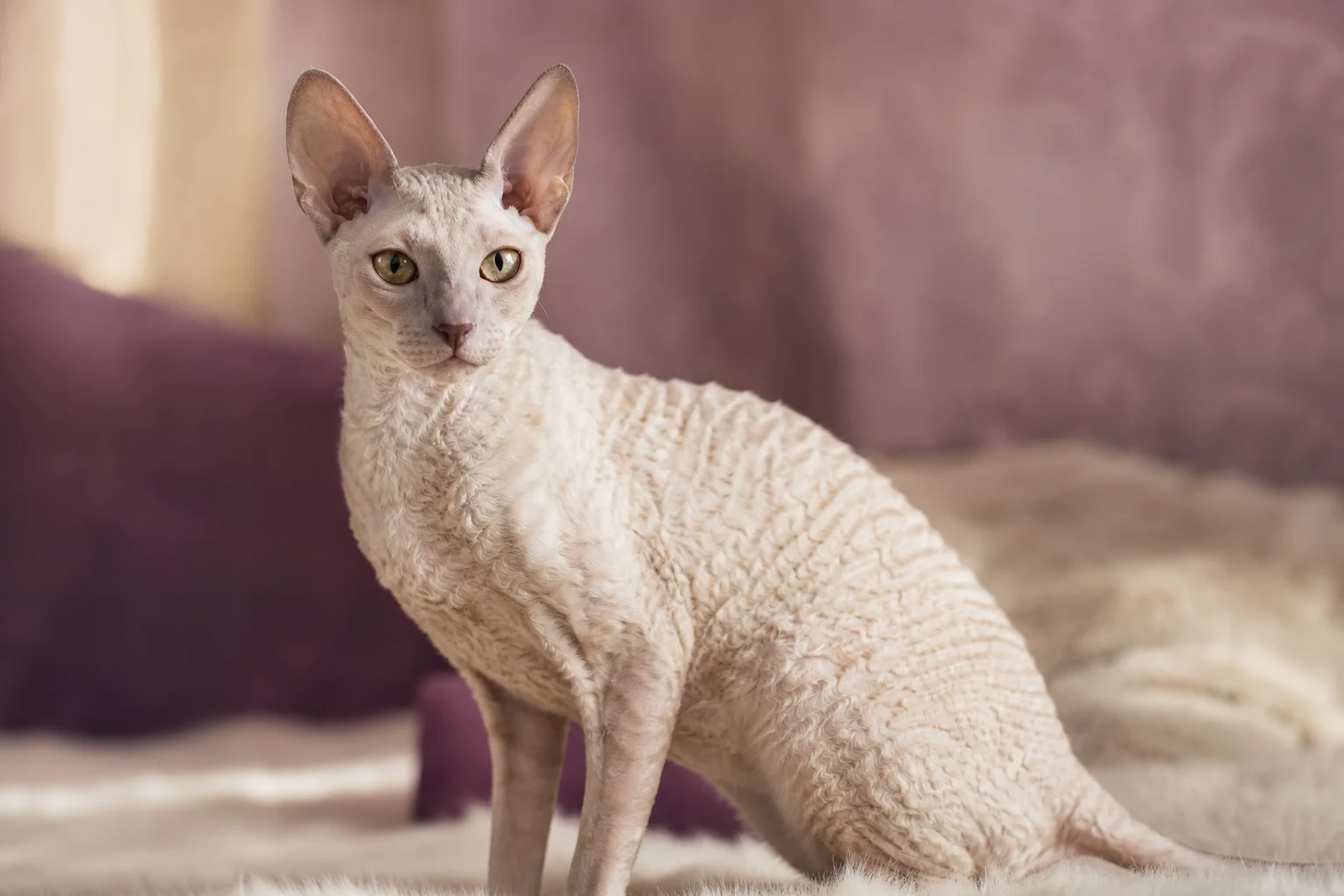
A greyhound in crushed velvet — marcel waves, warm skin and acrobatics that defy physics.
| Size | Small |
|---|---|
| Weight | 2–4 kg |
| Life expectancy | 12–16 years |
| Origin | United Kingdom |
| Type | Pedigree breed (England) |
| Grooming | low |
| Activity needs | very high |
| Beginner friendly | with some experience |
Temperament & suitability
Editorial assessment based on the FIFe breed standard and breed association data.
Guideline for movement & enrichment for this breed.
Traits
Origin & history
Cornwall, 1950: on a farm in Bodmin Moor, a barn cat delivered Kallibunker, a curly-coated kitten whose mutation proved new — the Cornish rex gene removes guard hairs entirely, leaving only the soft, waved undercoat. A decade before the Devon mutation appeared nearby, breeders built the first rex breed from him, adding Siamese and Burmese blood that shows in today's type and temperament.
Appearance & size
A two-to-four-kilogram whippet of a cat: arched back, tucked waist, long legs, huge ears on an egg-shaped head — and the coat that defines it all, lying in tight marcel waves like crushed velvet, warmer and softer than any straight fur. Every colour and pattern occurs. The build is not fragile: under the waves works dense racing muscle.
Personality & temperament
The Cornish runs on joy. It sprints, leaps, corners like a race car and stays kitten-mad for life; fetch is standard, acrobatics are showpieces, and the clever paws open whatever the household forgot to lock. Between sprints it seeks skin warmth relentlessly — under blankets, on laps, against necks. People are its project: a Corni participates, comments softly and takes closed doors as personal insults.
Indoor or outdoor living
Strictly indoors-plus-secured-balcony: the guard-hairless coat neither insulates nor repels rain, and sunburn threatens light colours. Indoors it needs warmth — heated beds, sunny sills, your duvet — and racing space with climbing paths. Company is essential; a second lively cat keeps the joy running through working hours. Frame in Indoor cat or outdoor cat?
Enrichment & activity
High energy wants daily outlets: chase games, fetch marathons, clicker tricks, puzzle feeders, cat wheels. The Cornish learns fast and forgets never — invest in routines you can sustain for fifteen years.
Grooming
Gentle and minimal: the waves want a soft hand — smoothing with a damp chamois beats brushes, which can thin the delicate coat. Ears wax quickly and need regular cleaning; some individuals need occasional oily-skin wipes like their Devon cousins.
Feeding & health
The rapid metabolism under thin fur eats heartily — portion via the food amount calculator and mind the theft talent. Screening topics: HCM ultrasounds above all, plus patellar luxation checks. The breed is otherwise robust and long-lived within tested lines.
Costs
Kittens from tested lines cost €900–1,400. Add warm sleeping infrastructure; the cat cost calculator handles the rest.
For beginners, children and other pets
A merry family companion: robust in play, patient with children, sociable with cats and dog-friendly. Beginners manage well if warmth and company are guaranteed. Reduced shedding makes it an allergy candidate — test contact personally; the tendency is real, the guarantee is not.
Similar breeds compared
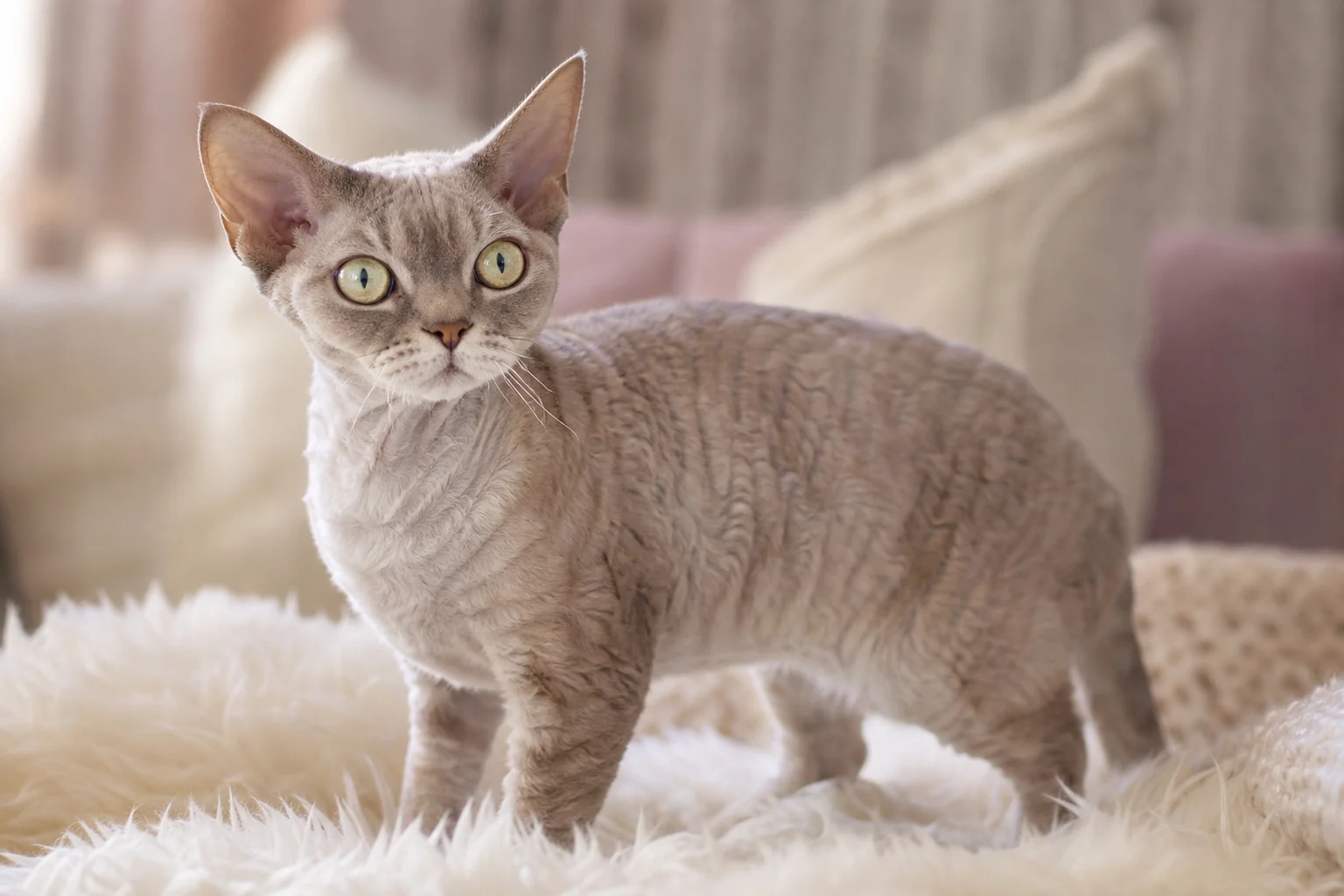
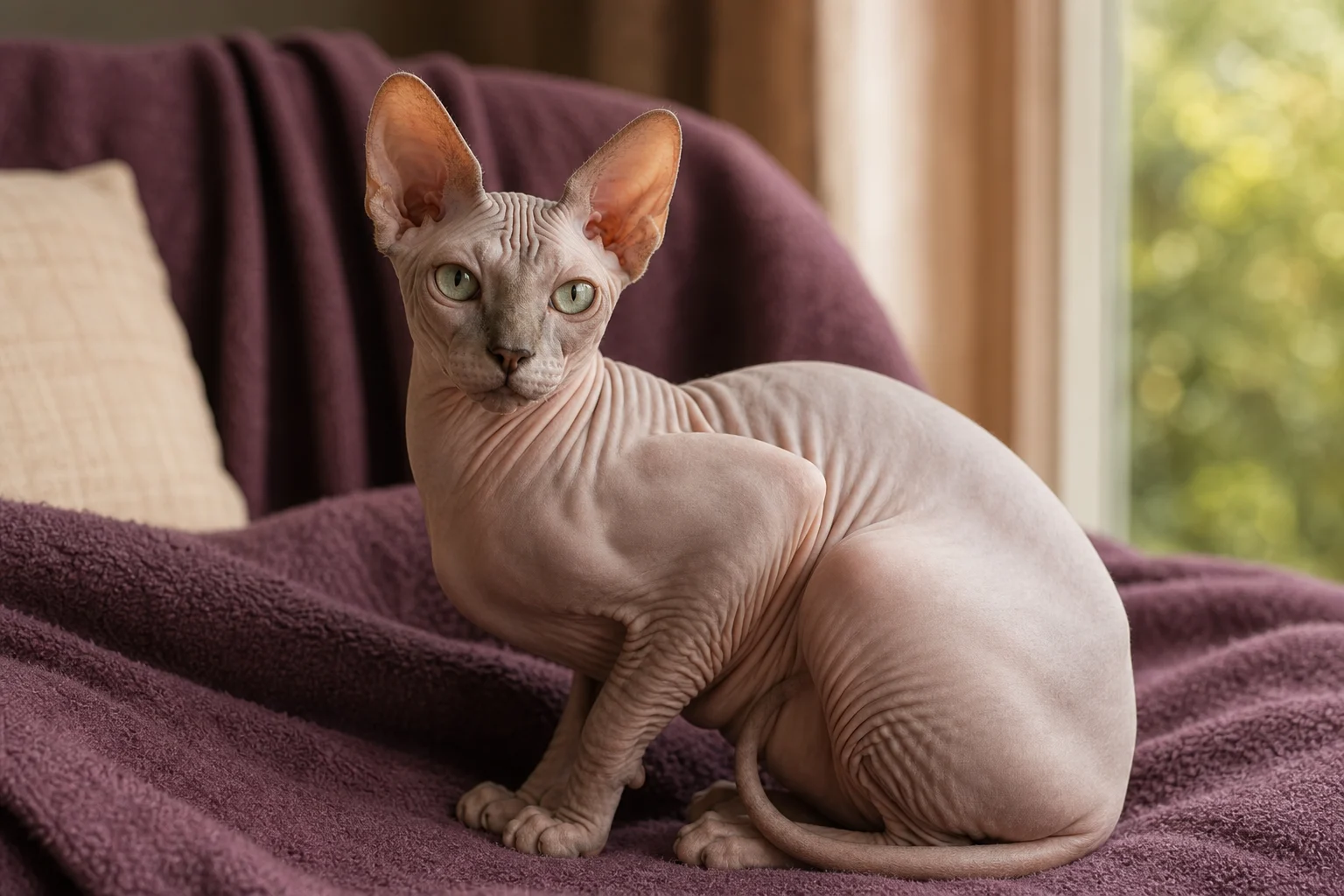
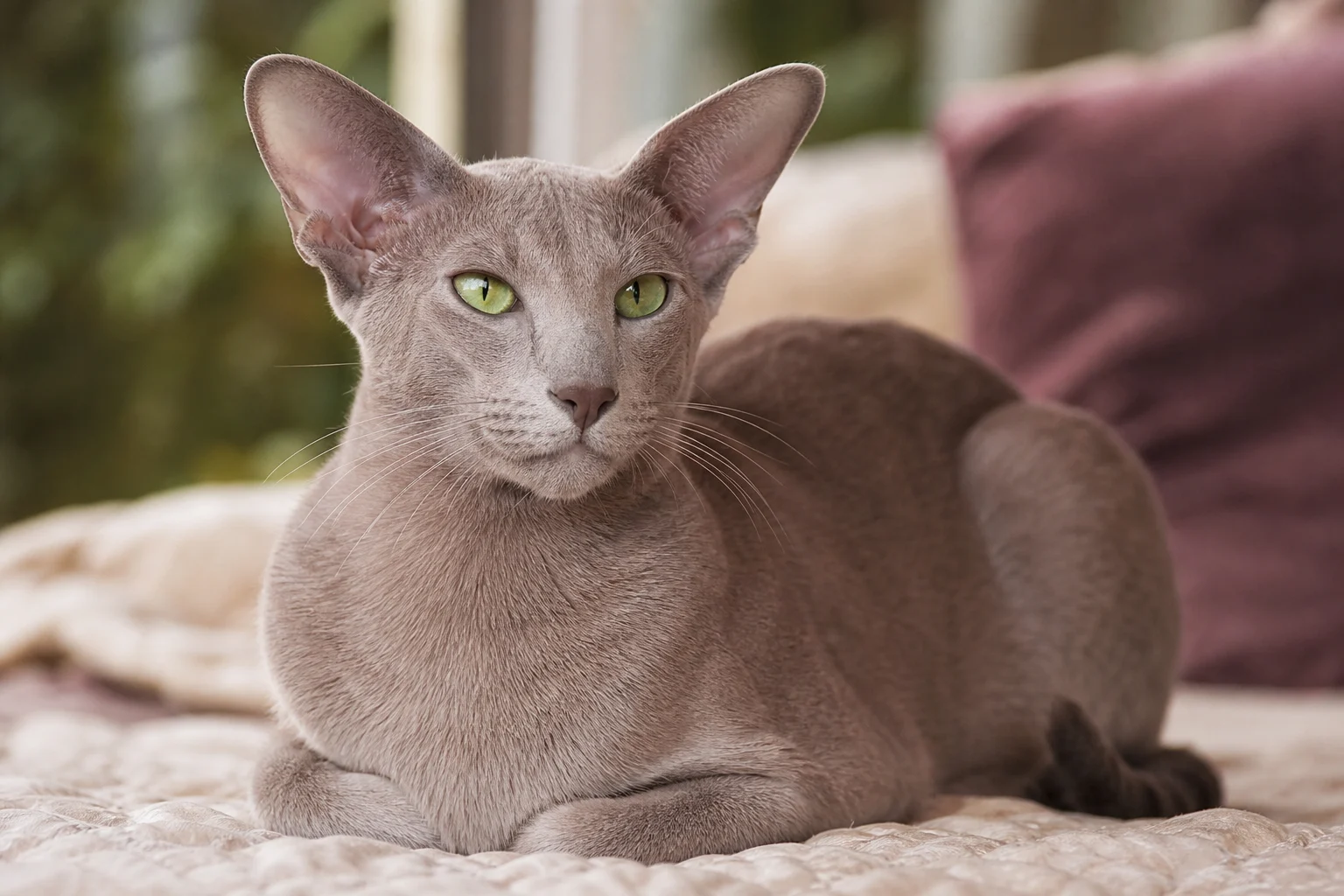
The Devon Rex wears looser curls on a puckish elf frame; the Sphynx drops the coat entirely for maximum skin contact; the Oriental Shorthair matches the greyhound elegance with straight fur and more voice.
Who this breed suits
Playful, warm households that want an acrobatic velvet companion glued to their evenings. The "Which cat fits me?" test shows whether your home runs at Cornish speed.
Not sure what a Cornish Rex may eat? The food checker rates individual foods on a traffic-light scale, and the food guide explains what cats can eat and what is toxic.
A good fit for you if …
Frequently asked questions
What makes the Cornish coat special?
The rex mutation removes all guard hairs, leaving only waved undercoat — crushed velvet to the touch, warmer than normal fur, but poorly insulating outdoors.
Cornish or Devon Rex?
Different mutations, different looks: the Cornish wears tight marcel waves on a greyhound frame; the Devon looser curls on an elf build. Both are people-glued live wires.
Are Cornish Rex hypoallergenic?
Tendentially friendlier through minimal shedding, but Fel d 1 remains — test days of personal contact before deciding.
How much warmth does the breed need?
Plenty: thin waves insulate badly. Heated beds, sunny sills and blanket access are standard equipment.
Which health tests matter?
HCM ultrasounds and patella checks — then the breed is robust and long-lived.
How active are Cornish Rex?
Racing-level: sprints, leaps and lifelong kitten mode. Daily outlets are keeping requirements, not extras.
Similar breeds
Sources: FIFe/TICA breed standard · breed association data · editorial assessment · Last updated 08/2026. On health questions this article never replaces a visit to the vet.