 AI
AISingapura
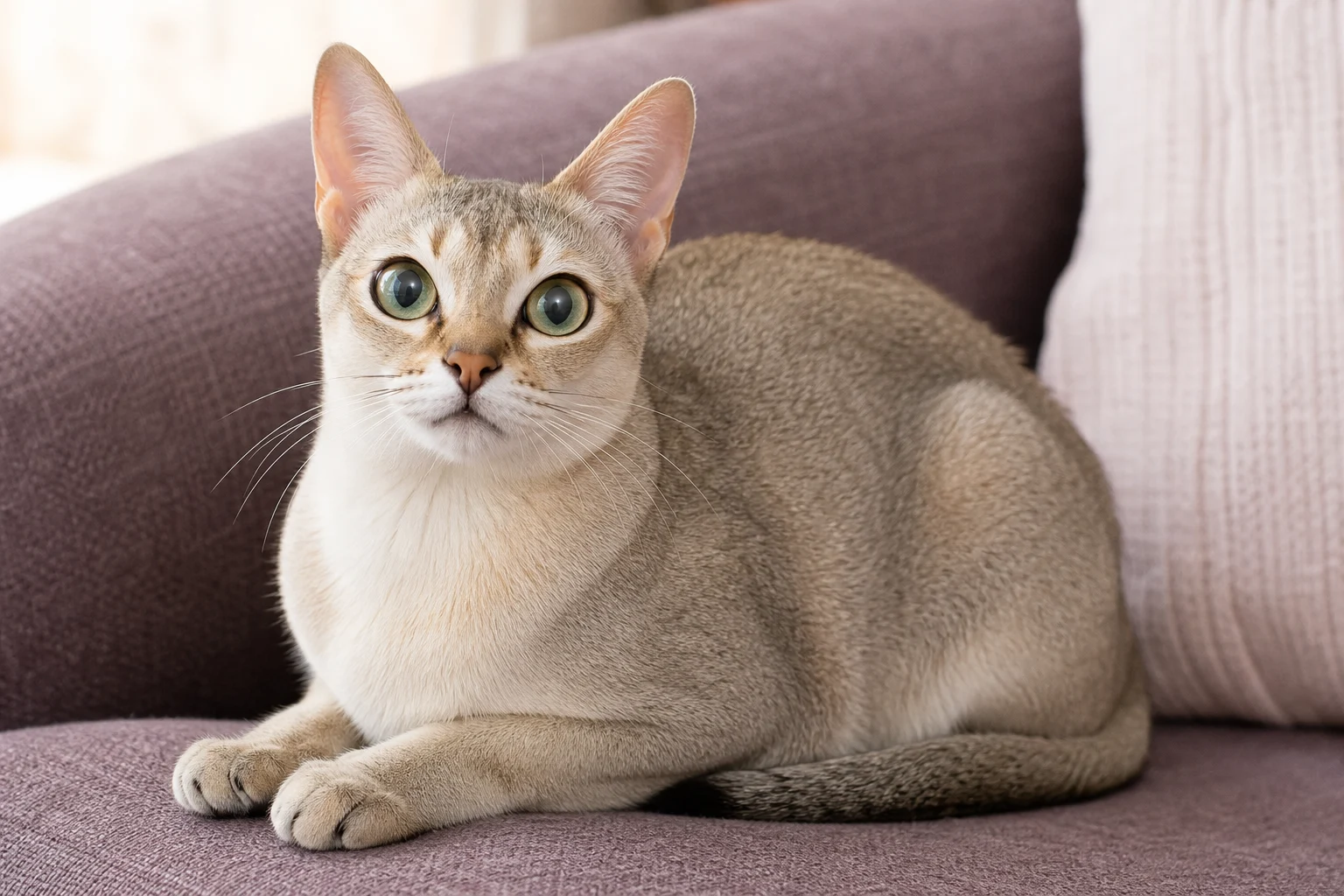
The smallest cat breed with the biggest opinion of your lap — sepia-toned, saucer-eyed and busy.
| Size | Small |
|---|---|
| Weight | 2–4 kg |
| Life expectancy | 12–16 years |
| Origin | Singapore |
| Type | Natural breed (Singapore) |
| Grooming | low |
| Activity needs | very high |
| Beginner friendly | with some experience |
Temperament & suitability
Editorial assessment based on the FIFe breed standard and breed association data.
Guideline for movement & enrichment for this breed.
Traits
Origin & history
Singapore's street and drain cats — small, sepia-ticked, saucer-eyed — became a breed when American breeders took founding animals home in the 1970s; the island state later embraced the "Kucinta" as a national mascot with harbour statues. Debate about how much American Burmese-Aby influence joined the street base never hurt the little cat's career: the Singapura holds the record as the smallest recognised breed.
Appearance & size
Two to four kilograms of concentrated cat: a compact, surprisingly muscular body, enormous almond eyes in hazel to green, oversized ears — and a single permitted coat, sepia agouti: warm ivory ground with brown ticking, producing an antique-gold shimmer. The whole cat looks permanently astonished, which suits its curiosity perfectly.
Personality & temperament
Small format, full program: the Pura is curious, quick and everywhere — shoulder perch, drawer inspection, keyboard supervision — while staying gentler and quieter than the oriental live wires. It chirps softly, adores warm laps between missions and attaches closely to its people; "pesky people cat" is the affectionate breeder term. Sudden loud chaos unsettles it; warm routine makes it blossom.
Indoor or outdoor living
An indoor breed: tiny, trusting and heat-loving — the tropical heritage shows in its radar for warm spots. A secured, draught-free balcony pleases it in summer. Space needs are modest; climbing paths, window seats and company matter more. A second gentle cat suits it well; frame in Indoor cat or outdoor cat?
Enrichment & activity
Busy but fine-grained: daily play sessions with feather teasers, ball chases and puzzle feeders scaled to small paws. The clever head enjoys learning; the small body tires faster than oriental engines — several short sessions beat marathons.
Grooming
Nearly none: the fine ticked coat wants a weekly silk polish and sheds minimally.
Feeding & health
Small cat, quality intake: portion via the food amount calculator — obesity dwarfs a Pura fast. Breeder questions: PK deficiency (gene test) and awareness of uterine inertia in breeding females (a buyer's indirect quality check on the cattery). The small gene pool makes serious breeder selection extra important.
Costs
Kittens from tested lines cost €900–1,400 — the rare breed commands waiting lists. Running costs are small-cat friendly; see the cat cost calculator.
For beginners, children and other pets
A charming companion for gentle households: considerate children find a playful friend, calm cats a sociable partner. Boisterous dogs and toddler storms overwhelm the small frame — size-aware handling is the one house rule. Committed beginners manage well.
Similar breeds compared
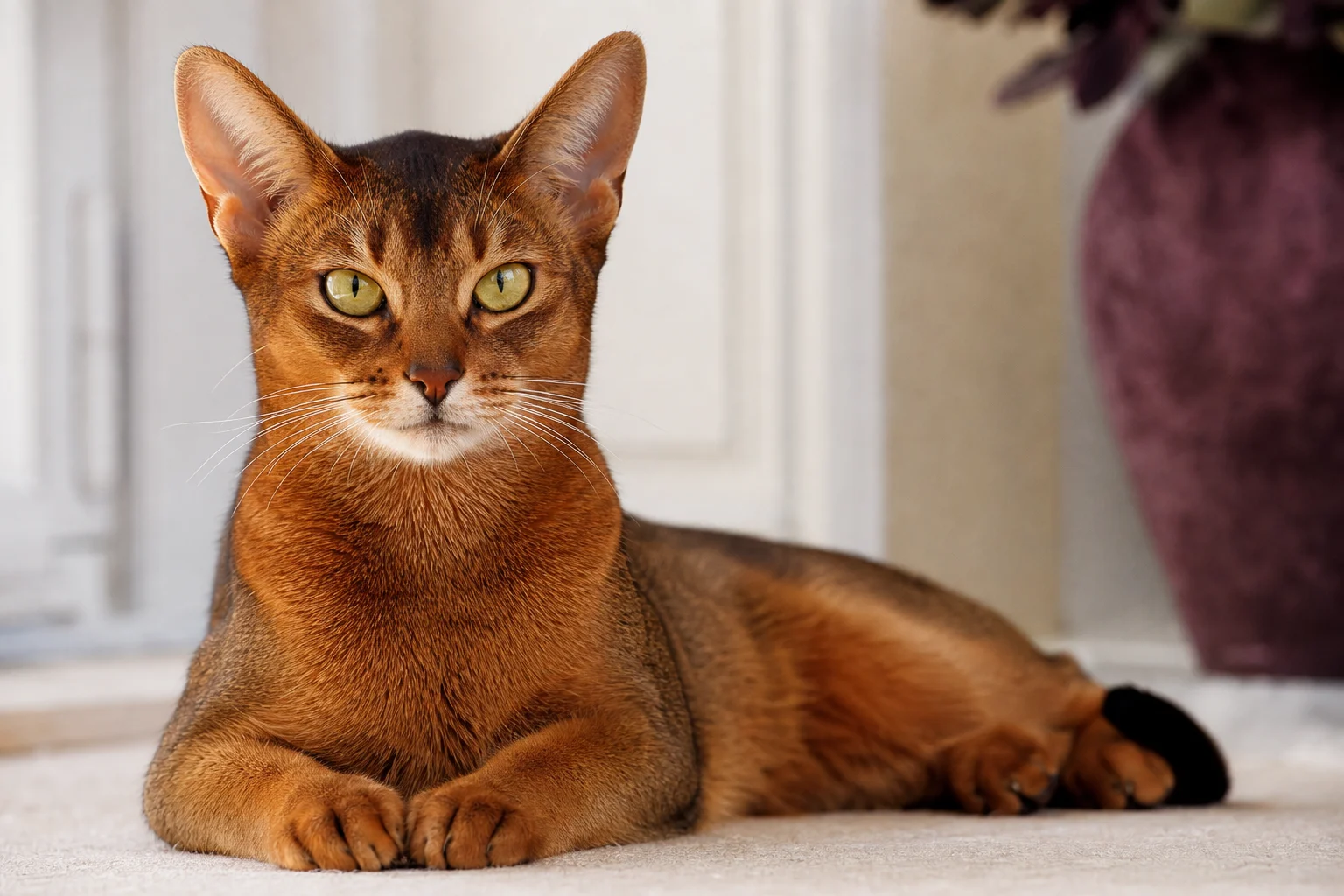
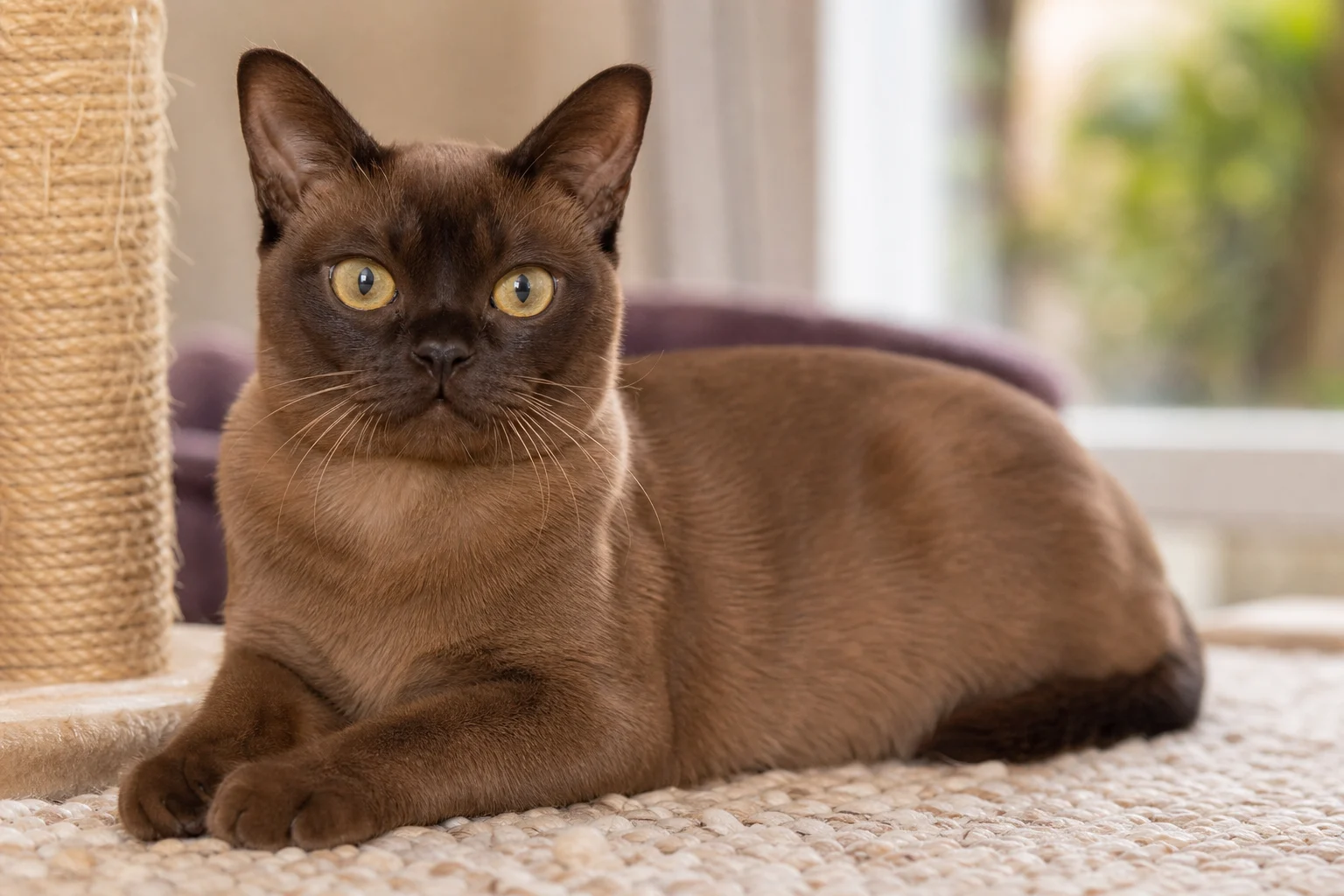
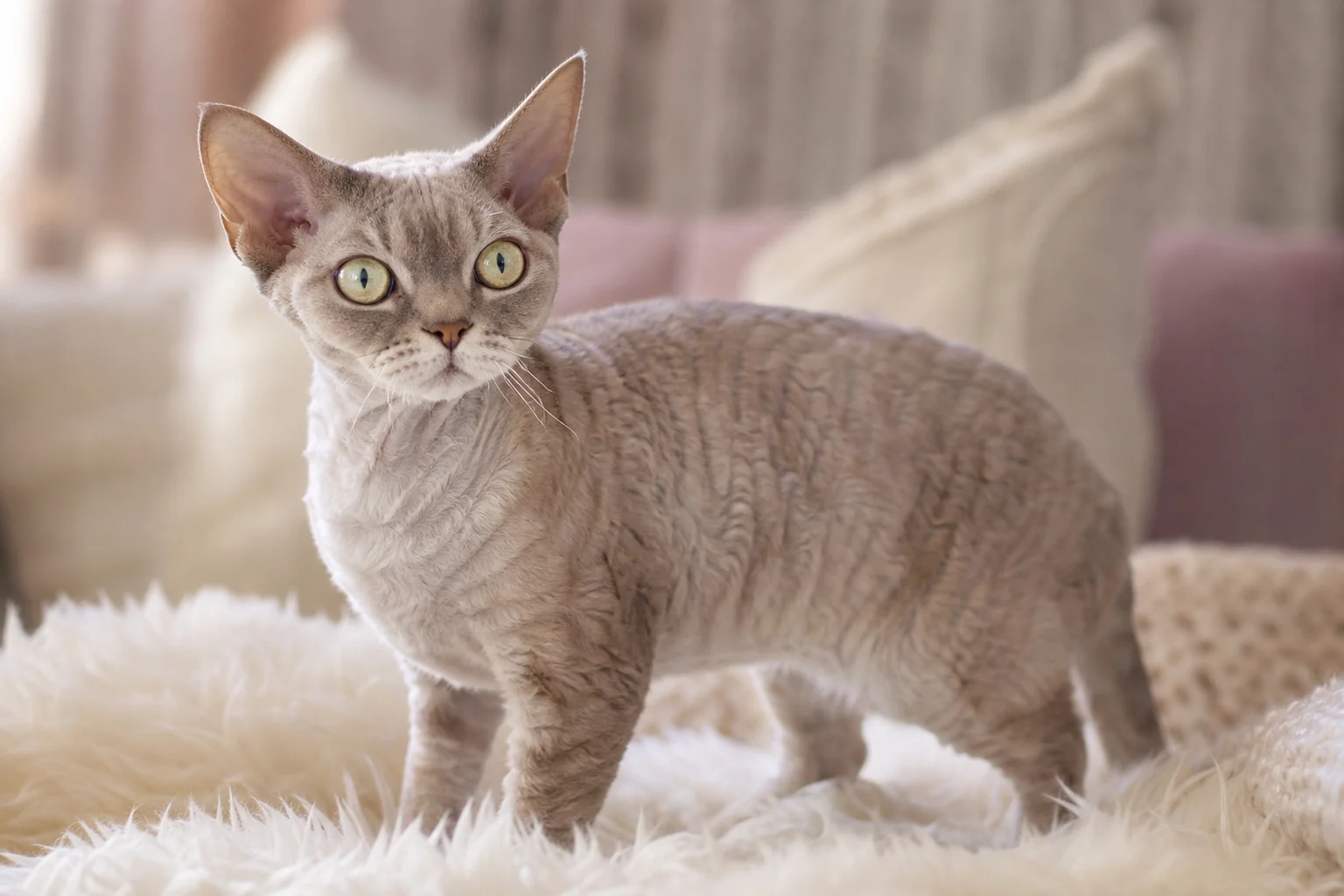
The Abyssinian is the bigger, busier ticking relative; the Devon Rex matches the small-format people focus in curls; the Burmese offers the people-devotion in a sturdier body.
Who this breed suits
Gentle, warm households that want a small, busy shadow with saucer eyes. The "Which cat fits me?" test checks the match.
Not sure what a Singapura may eat? The food checker rates individual foods on a traffic-light scale, and the food guide explains what cats can eat and what is toxic.
A good fit for you if …
Frequently asked questions
How small is the Singapura really?
The smallest recognised breed: two to four kilograms fully grown — females often under three.
Which colours does the breed come in?
Exactly one: sepia agouti — ivory ground with warm brown ticking. The uniform is the breed.
Are Singapuras fragile?
Small but muscular — normal play is fine. What overwhelms them is rough handling and chaotic noise, not activity.
Which health tests matter?
The PK deficiency gene test, plus choosing serious breeders — the small gene pool makes cattery quality decisive.
Do Singapuras get along with children and dogs?
With considerate children and gentle animals, charmingly. Size-aware handling is the household rule.
Why does my Pura always find the warmest spot?
Tropical heritage — Singapore's drain cat never forgot the climate. Warm laps rank as prime territory.
Similar breeds
Sources: FIFe/TICA breed standard · breed association data · editorial assessment · Last updated 08/2026. On health questions this article never replaces a visit to the vet.