 AI
AIPeterbald
St. Petersburg's hairless aristocrat — oriental elegance, warm skin and total devotion.
| Size | Medium |
|---|---|
| Weight | 3–5 kg |
| Life expectancy | 12–15 years |
| Origin | Russia |
| Type | Pedigree breed (Russia) |
| Grooming | low |
| Activity needs | high |
| Beginner friendly | with some experience |
Temperament & suitability
Editorial assessment based on the FIFe breed standard and breed association data.
Guideline for movement & enrichment for this breed.
Traits
Origin & history
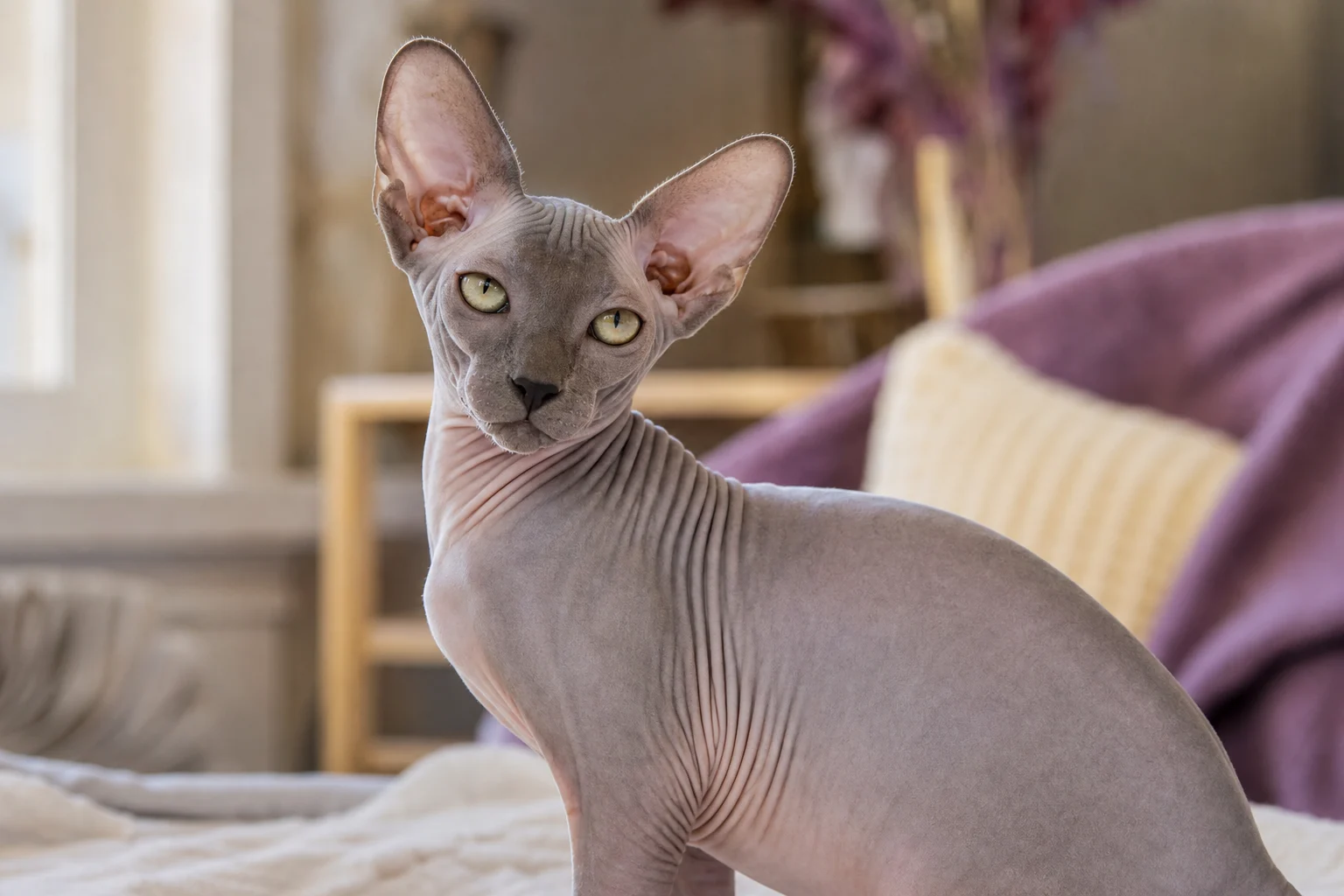
St. Petersburg, 1994: a Donskoy tom met an Oriental Shorthair champion, and their kittens combined the Don hairless gene with oriental lines — the Peterbald was born and named for its city. Continued Oriental and Siamese outcrossing built today's type: a hairless (or nearly hairless) cat of pure oriental architecture. The coat spectrum is a breed curiosity in itself, from fully bald through suede-like "flock" to the fine "brush" coat — and some kittens change texture as they mature.
Appearance & size
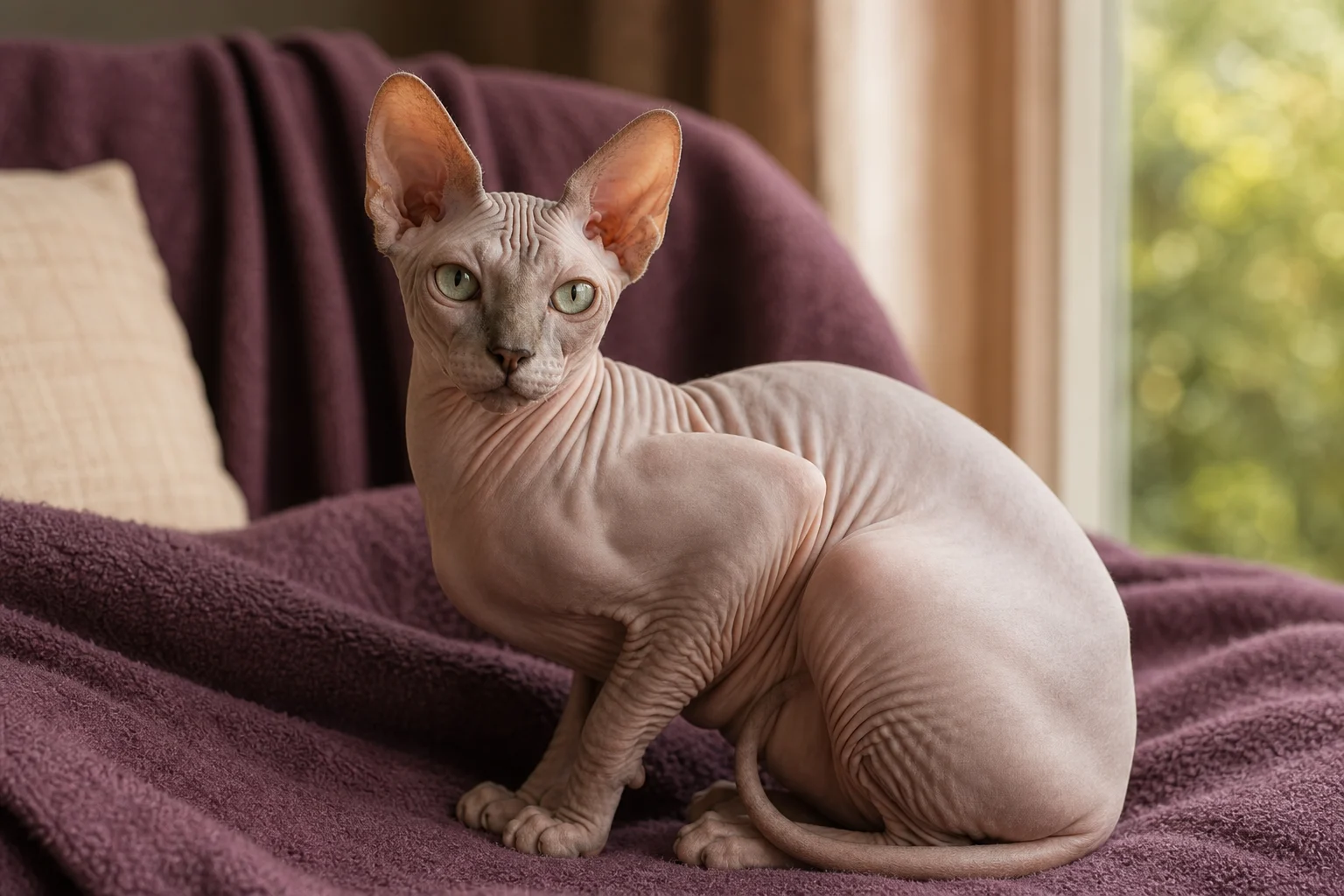
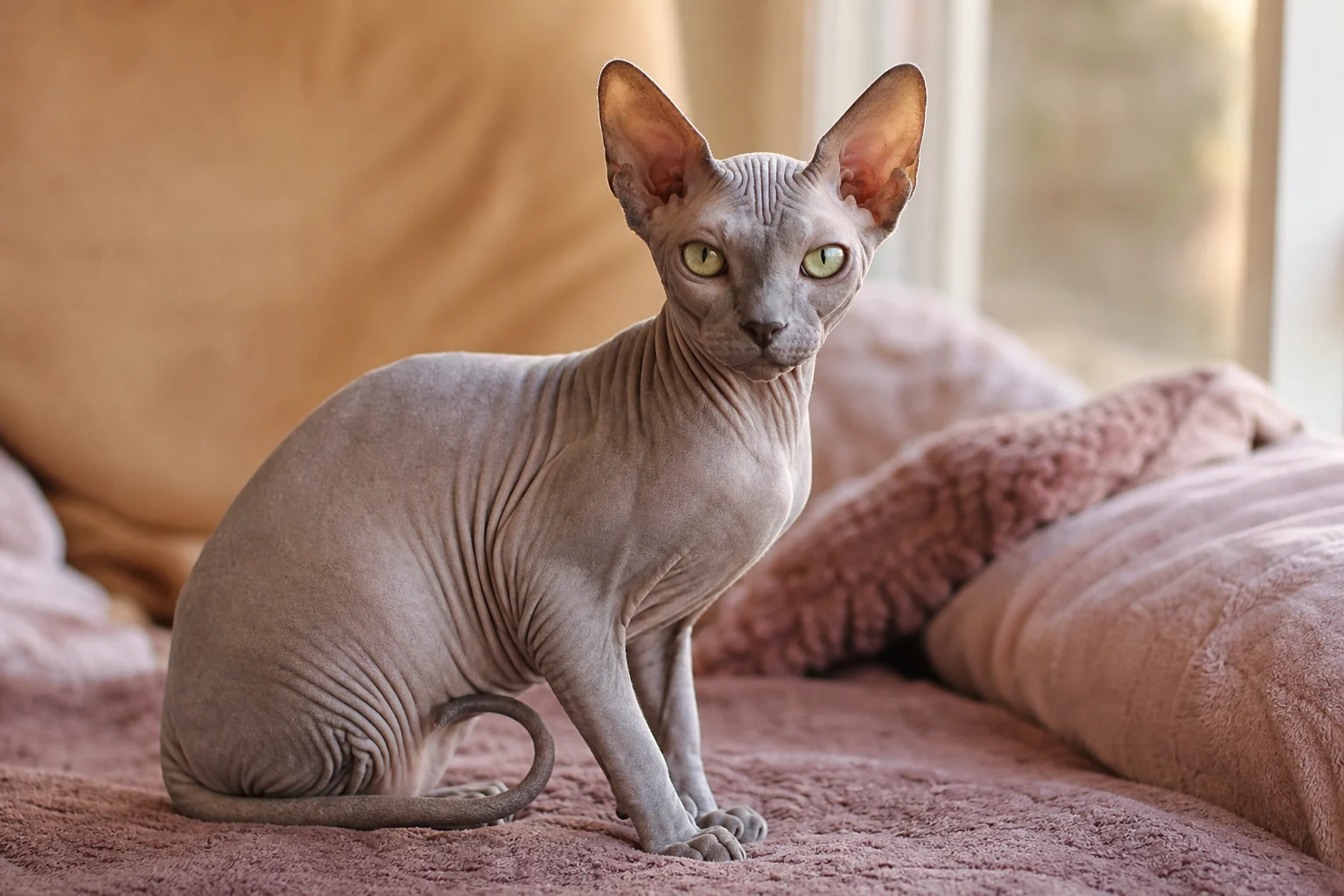
An Oriental in skin: three to five kilograms of long lines, fine bones, a wedge head with oversized ears and almond eyes — the whole Siamese-family silhouette, rendered in warm, wrinkle-detailed skin or fine down. Skin pigment shows every colour and pattern including points. Elegant is the word; fragile it is not — dense muscle works underneath.
Personality & temperament
The Peterbald doubles its inheritances: Sphynx-class people-hunger plus Oriental-class intelligence and voice. It follows everywhere, sleeps under blankets skin-to-skin, comments conversationally, learns fetch and tricks in passing and treats visitors as new staff. Alone-time is genuine hardship — this breed was designed, in effect, for constant companionship.
Indoor or outdoor living
Strictly indoors: no insulation, sunburn risk, total trust. Warmth infrastructure — heated beds, sunny sills, blanket access — and reliable company define quality of life; a second social cat is close to mandatory for working households. Frame in Indoor cat or outdoor cat?
Enrichment & activity
Daily genuine engagement: fetch, clicker sessions, puzzle rotations, climbing paths. The oriental head needs employment as much as the skin needs warmth.
Grooming
Skin care replaces brushing: gentle wipe-downs or occasional baths against the sebum film — less oily than the Sphynx in many individuals — plus regular ear cleaning and sun protection awareness. Brush-coated cats need a soft weekly pass.
Feeding & health
The bare skin radiates heat and the metabolism compensates: hearty portions via the food amount calculator. Screening: HCM ultrasounds as in all hairless breeds, and general line documentation — the young breed rewards careful catteries. Note the hairless-gene distinction: the Peterbald carries the dominant Don gene, discussed under the Donskoy; welfare-conscious buyers choose brush or flock variants with intact whiskers.
Costs
Kittens from tested lines cost €1,000–1,600. Add warmth infrastructure and steady vet care; the cat cost calculator totals honestly.
For beginners, children and other pets
Character-wise a warm family companion — gentle with children, sociable with cats and dog-tolerant. The care duties and company requirement make it a breed for committed households rather than casual first-timers.
Similar breeds compared
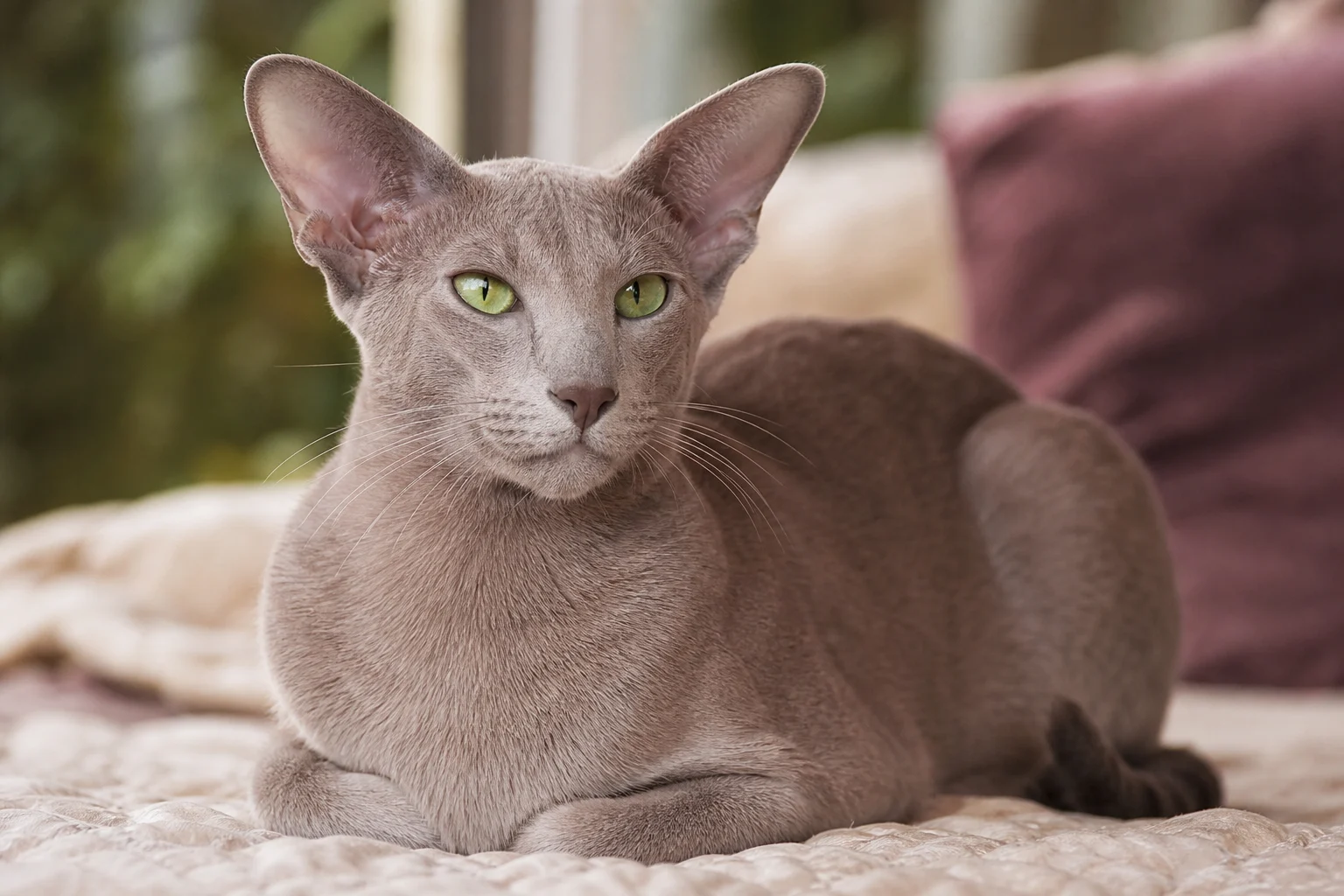
The Sphynx is the rounder, Canadian hairless classic; the Donskoy the Russian founder line; the Oriental Shorthair delivers the identical soul in full coat.
Who this breed suits
Warm, present households that want oriental brilliance in skin. The "Which cat fits me?" test checks whether your home runs at Peterbald temperature.
Not sure what a Peterbald may eat? The food checker rates individual foods on a traffic-light scale, and the food guide explains what cats can eat and what is toxic.
A good fit for you if …
Frequently asked questions
What coat variants does the Peterbald have?
From fully bald through suede-like flock to fine brush coat — and kittens can change texture while maturing. Welfare-conscious lines keep whiskers intact.
How does it differ from the Sphynx?
Architecture and gene: the Peterbald is an Oriental in skin (Don gene, dominant), the Sphynx rounder and Canadian (recessive gene). Both share the people-hunger.
How much skin care is needed?
Gentle wipe-downs or occasional baths, ear cleaning and sun awareness — often less oily than the Sphynx, but a real routine.
Which health checks matter?
HCM ultrasounds and clean line documentation — standard for hairless breeds.
Can a Peterbald stay alone?
Poorly — the breed combines two clingy heritages. A second social cat is near-mandatory for working homes.
Is the Peterbald hypoallergenic?
Only conditionally: Fel d 1 lives in saliva and skin. Some allergy sufferers cope well — test days of contact first.
Similar breeds
Sources: FIFe/TICA breed standard · breed association data · editorial assessment · Last updated 08/2026. On health questions this article never replaces a visit to the vet.