 AI
AIDonskoy
Russia's wrinkled original — devoted and warm, with a dominant hairless gene that demands scrutiny.
| Size | Medium |
|---|---|
| Weight | 3–5 kg |
| Life expectancy | 12–15 years |
| Origin | Russia |
| Type | Pedigree breed (Russia) |
| Grooming | low |
| Activity needs | high |
| Beginner friendly | with some experience |
Temperament & suitability
Editorial assessment based on the FIFe breed standard and breed association data.
Guideline for movement & enrichment for this breed.
Traits
Origin & history
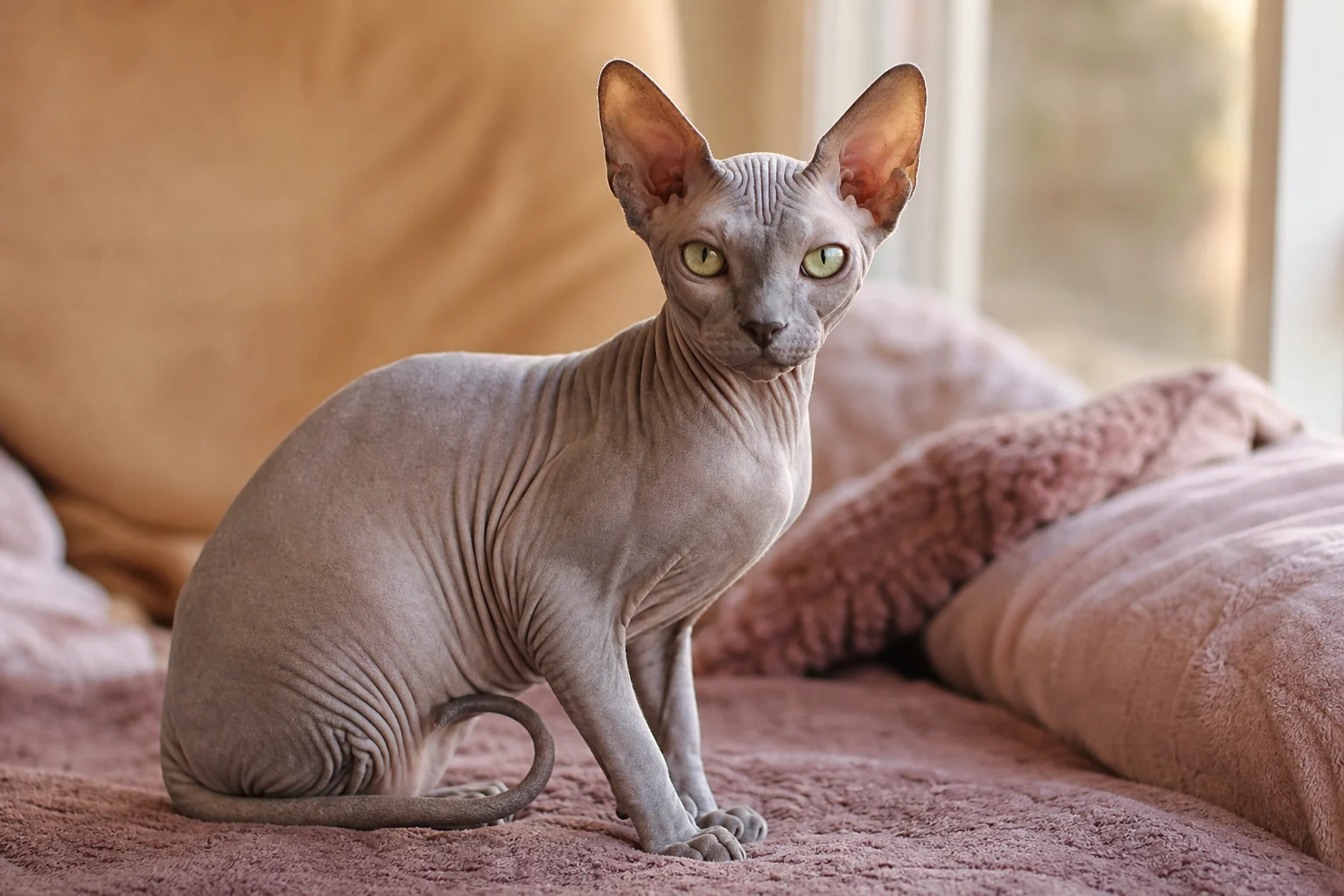
Rostov-on-Don, 1987: Elena Kovaleva rescued a kitten from street boys — Varvara, who progressively lost her coat. What looked like illness proved a new dominant mutation, and Varvara's descendants founded the Donskoy. The gene differs fundamentally from the Sphynx's recessive one, and here honesty is due: because dominant hairlessness has been associated with feline ectodermal-dysplasia effects (missing whiskers, dental and skin issues in homozygous cats), FIFe refuses recognition on welfare grounds, while TICA and WCF accept the breed. Responsible catteries never pair hairless with hairless and preserve whiskers wherever possible.
Appearance & size
A muscular, medium three-to-five-kilogram cat in warm, deeply wrinkled skin — forehead, neck and legs fold like soft leather — with large ears and almond eyes. Four coat classes exist: born-bald "rubber bald", flock, velour and brush; some individuals grow a winter down and shed it in summer. Skin pigment shows all colours.
Personality & temperament
The Donskoy is warmth seeking warmth: intensely people-bound, gentle, curious and playful, it burrows under blankets, supervises from shoulders and greets visitors with tactile interest. Russian fanciers praise an almost therapeutic calm in handling — this is a cat that wants hands on it. Alone-time wounds it accordingly.
Indoor or outdoor living
Strictly indoors with warmth infrastructure: heated beds, sunny sills, draught-free rooms — the naked skin forgives no cold and burns in summer sun. A shaded, secured balcony in warm months is the outdoor maximum. Company is a keeping requirement; frame in Indoor cat or outdoor cat?
Enrichment & activity
Daily play and shared routines: teaser hunts, puzzle feeders, gentle tricks. Energy is warm mid-range — the priority is participation, not exhaustion.
Grooming
Skin routine as with all hairless cats: regular gentle wipe-downs or baths against sebum, ear cleaning, claw care and sun awareness. Brush-coated individuals need soft weekly passes.
Feeding & health
Hearty portions for the heat-radiating metabolism via the food amount calculator. The honest chapter: the dominant gene's dysplasia association makes cattery quality decisive — never hairless × hairless pairings, documented dental health, preserved whiskers, HCM ultrasounds. Ask all of it; walk away from breeders who bristle. Buyers wanting hairless charm with a cleaner genetic story may prefer the recessive-gene Sphynx.
Costs
Kittens from documented lines cost €900–1,500. Add warmth infrastructure and attentive vet care; the cat cost calculator totals it.
For beginners, children and other pets
Temperament-wise gentle and family-warm — good with considerate children, cats and calm dogs. The care duties, company needs and breeder-diligence requirements place it with committed, informed keepers.
Similar breeds compared
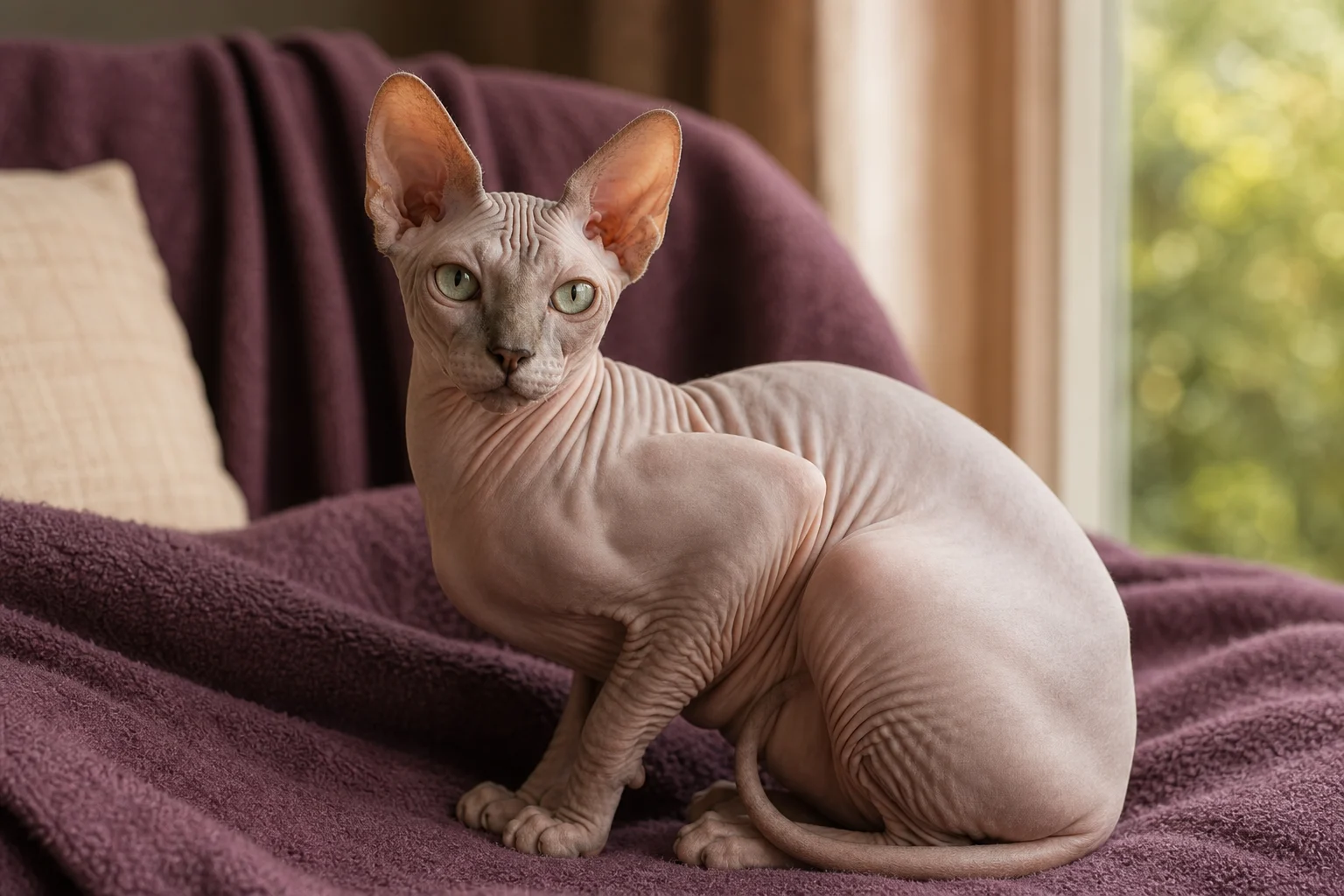
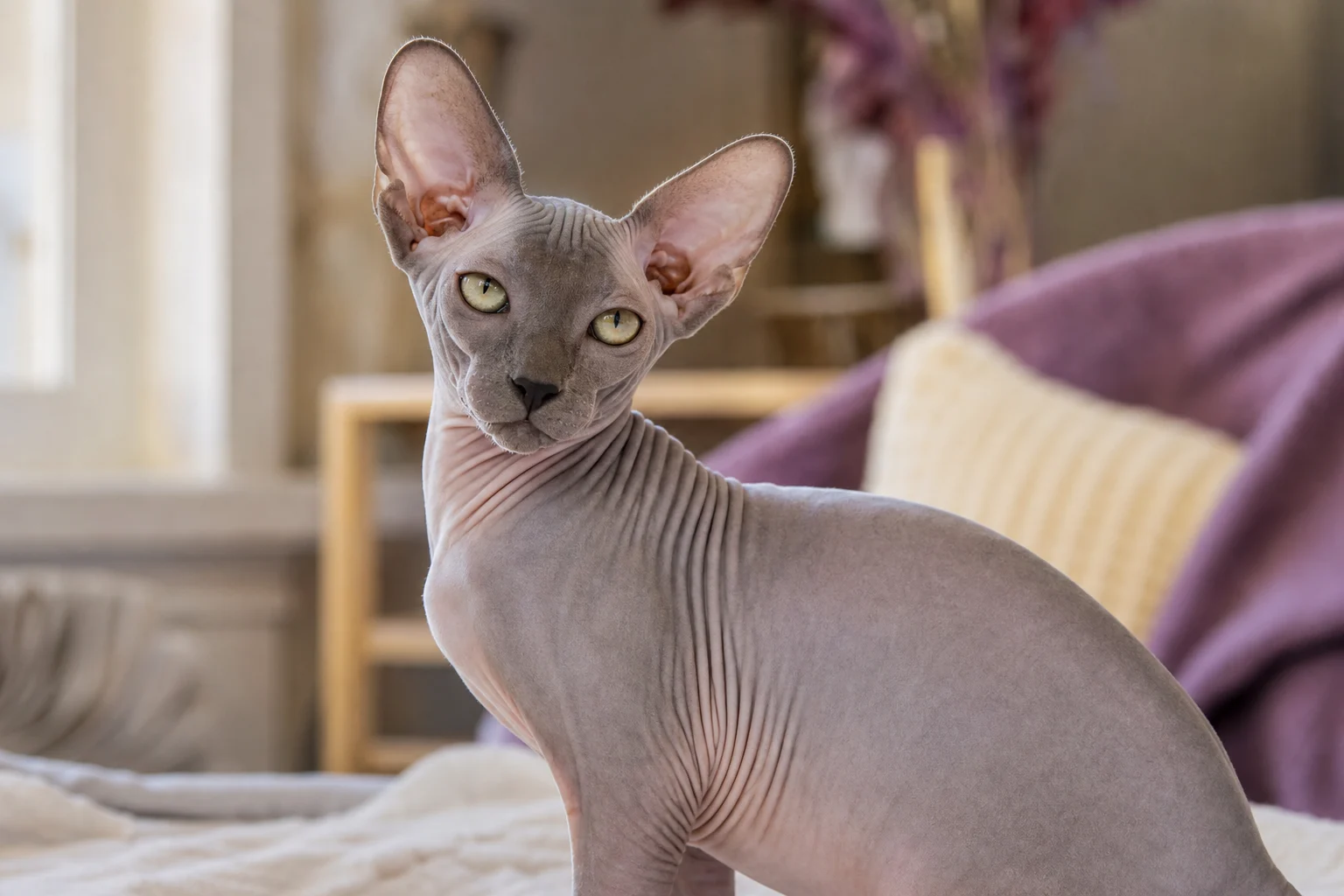
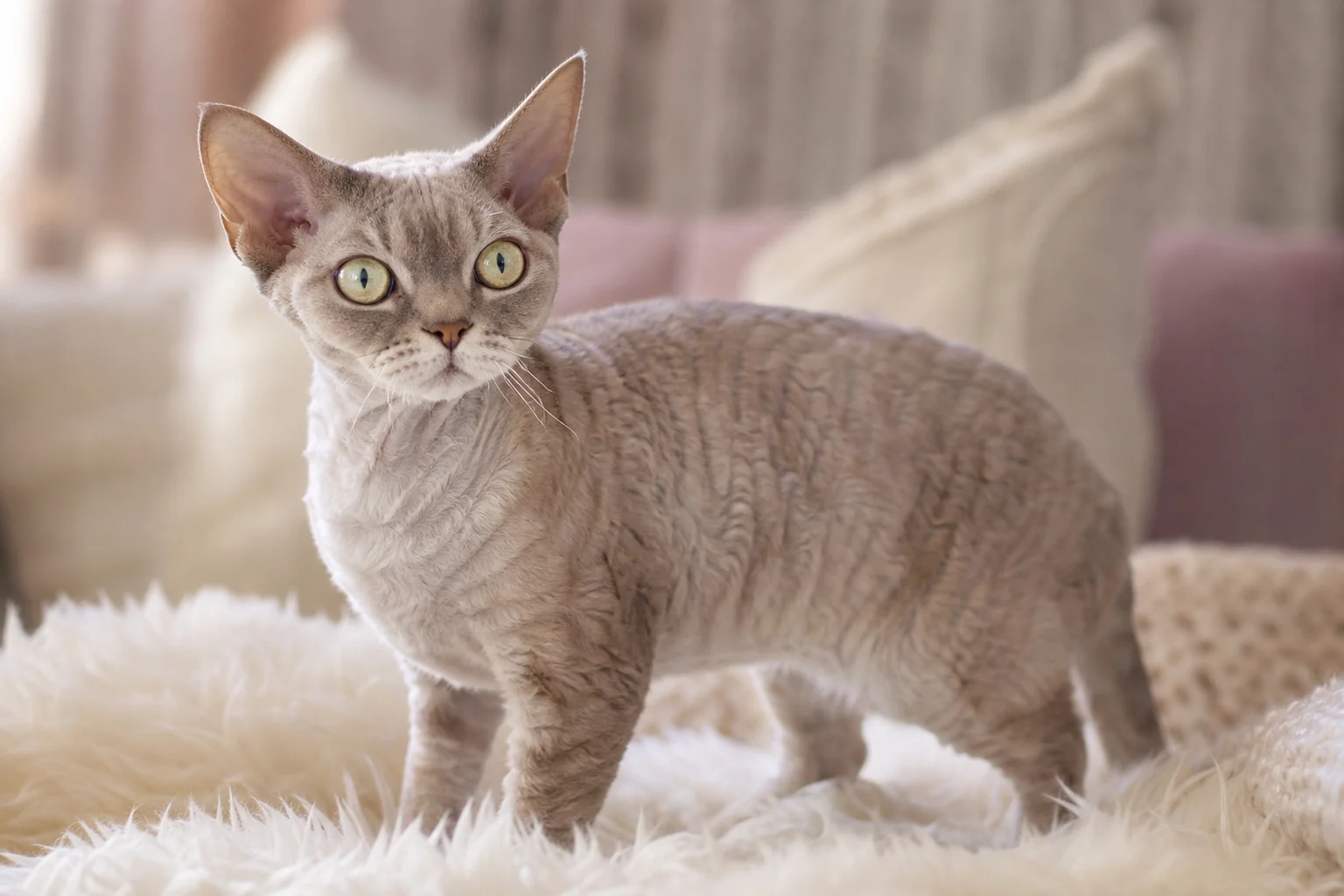
The Sphynx carries the recessive, less contentious gene; the Peterbald is the Don gene in oriental dress; the Devon Rex offers skin-close warmth with a light coat.
Who this breed suits
Informed, warm households that do the breeder homework rigorously. The "Which cat fits me?" test checks the everyday half; this profile is the other half.
Not sure what a Donskoy may eat? The food checker rates individual foods on a traffic-light scale, and the food guide explains what cats can eat and what is toxic.
A good fit for you if …
Frequently asked questions
How does the Donskoy gene differ from the Sphynx gene?
The Don gene is dominant, the Sphynx gene recessive. Dominant hairlessness has been associated with ectodermal-dysplasia effects, which is why FIFe refuses recognition while TICA/WCF accept the breed.
What must responsible breeders do?
Never pair hairless with hairless, preserve whiskers where possible, document dental and skin health and run HCM ultrasounds. Ask for all of it.
What are the four coat types?
Rubber bald (born bare), flock, velour and brush — some cats grow winter down and shed it in summer.
Is the Donskoy hypoallergenic?
Only conditionally — Fel d 1 lives in skin and saliva. Test personal contact over days.
How much warmth does the breed need?
A lot: heated sleeping spots, draught-free rooms, sun protection in summer. Naked skin forgives nothing.
Sphynx or Donskoy?
Similar hearts, different genetics: the Sphynx's recessive gene carries the cleaner welfare story. If that matters to you, choose accordingly.
Similar breeds
Sources: FIFe/TICA breed standard · breed association data · veterinary literature on dominant hairlessness · editorial assessment · Last updated 08/2026. On health questions this article never replaces a visit to the vet.