 AI
AIToyger
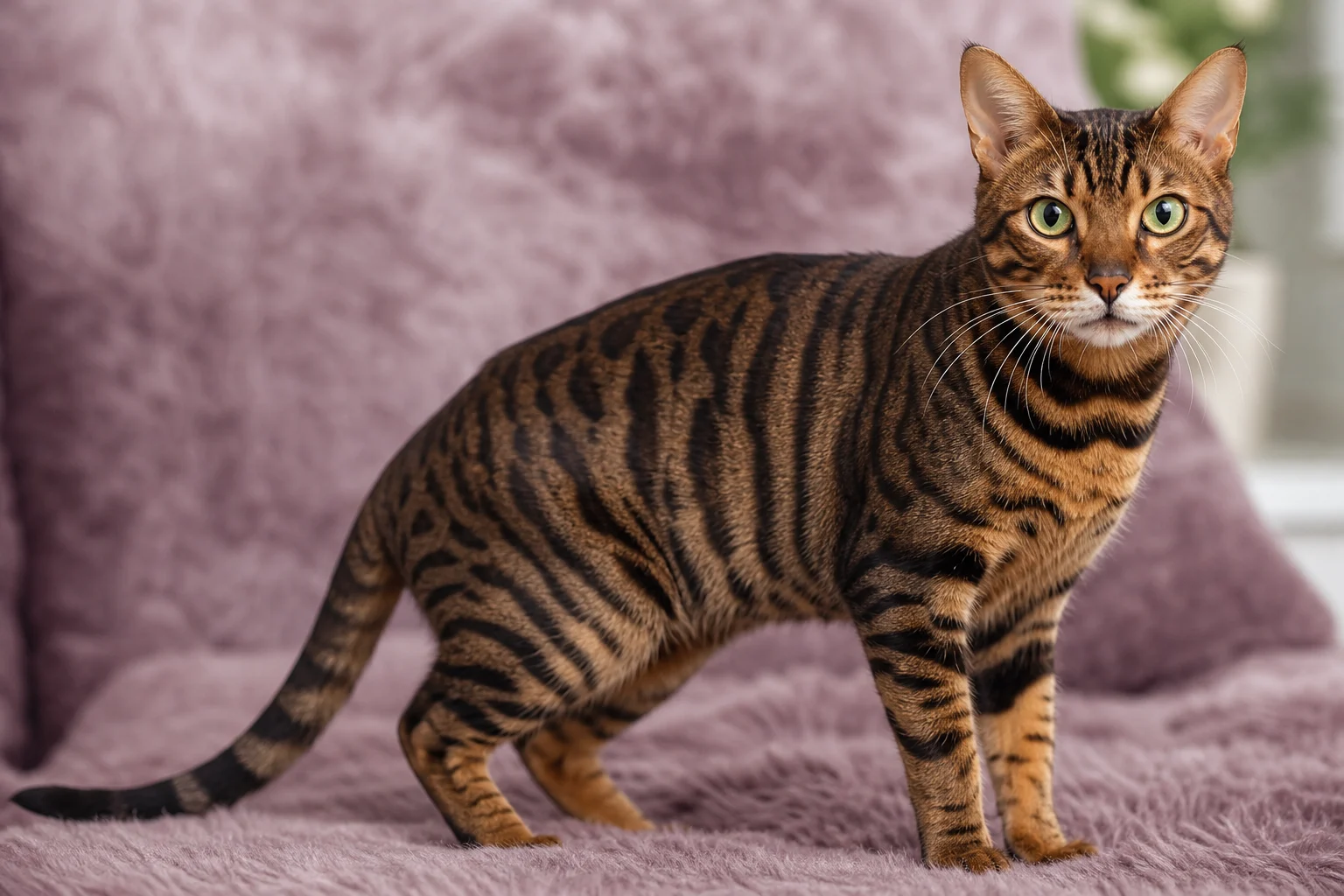
A pocket tiger by design — flowing stripes, trainable brains and housecat manners throughout.
| Size | Medium |
|---|---|
| Weight | 4–7 kg |
| Life expectancy | 12–15 years |
| Origin | United States |
| Type | Pedigree breed (USA) |
| Grooming | low |
| Activity needs | high |
| Beginner friendly | with some experience |
Temperament & suitability
Editorial assessment based on the FIFe breed standard and breed association data.
Guideline for movement & enrichment for this breed.
Traits
Origin & history
In the 1980s, Californian breeder Judy Sugden — daughter of Bengal founder Jean Mill — set out to paint a tiger onto a housecat: vertically flowing, branching stripes instead of ordinary tabby mackerel, circular face markings, a long low silhouette. Bengals and striped domestic shorthairs supplied the palette; no wild blood joined directly. The declared mission was conservation awareness — a living reminder of the real tiger — and the "toy tiger" gained TICA championship status in 2007.
Appearance & size
A medium-long, muscular cat of four to seven kilograms built low and rolling like big cats move. The coat shows bold, branched vertical stripes on vivid orange-brown ground — ideally circularly arranged on the face — often dusted with golden glitter inherited from the Bengal line. Every Toyger is a one-off print; breeders chase the tiger ideal knowingly unfinished.
Personality & temperament
The tiger act is strictly visual: Toygers are friendly, people-oriented and notably trainable — leash walks, fetch and trick repertoires build fast, and the breed's laid-back confidence handles visitors, children and travel better than most. Energy is real but civilised: substantial play needs with a working off switch. Breeders deliberately selected for easy temperament, and it shows.
Indoor or outdoor living
Indoors with climbing paths and ideally a secured balcony or catio; the striking looks invite theft, the trusting nature invites trouble. Space needs are moderate for the energy class — engagement quality matters more than square metres. Frame in Indoor cat or outdoor cat?
Enrichment & activity
Daily sessions of fetch, chase and clicker work — the Toyger absorbs training like a retriever and enjoys leash adventures. Puzzle feeders and a companion animal round the schedule; under-employment is answered Bengal-style, with projects.
Grooming
A weekly polish keeps the glittered stripes gleaming; shedding is modest.
Feeding & health
Feed the athlete via the food amount calculator. Breeder questions: HCM ultrasounds (the breed's main topic) and PK deficiency where lines carry Bengal heritage. The young breed benefits from breeders who screen consistently — insist on documentation.
Costs
The tiger print costs: kittens from tested lines run €1,200–2,000, show-quality more. Running costs stay ordinary; the cat cost calculator totals them.
For beginners, children and other pets
A friendly family cat for engaged households: patient with children, dog-sociable and cat-compatible. Committed beginners manage — the temperament forgives, the energy schedule does not. Its confidence makes it one of the easier "wild look" choices.
Similar breeds compared
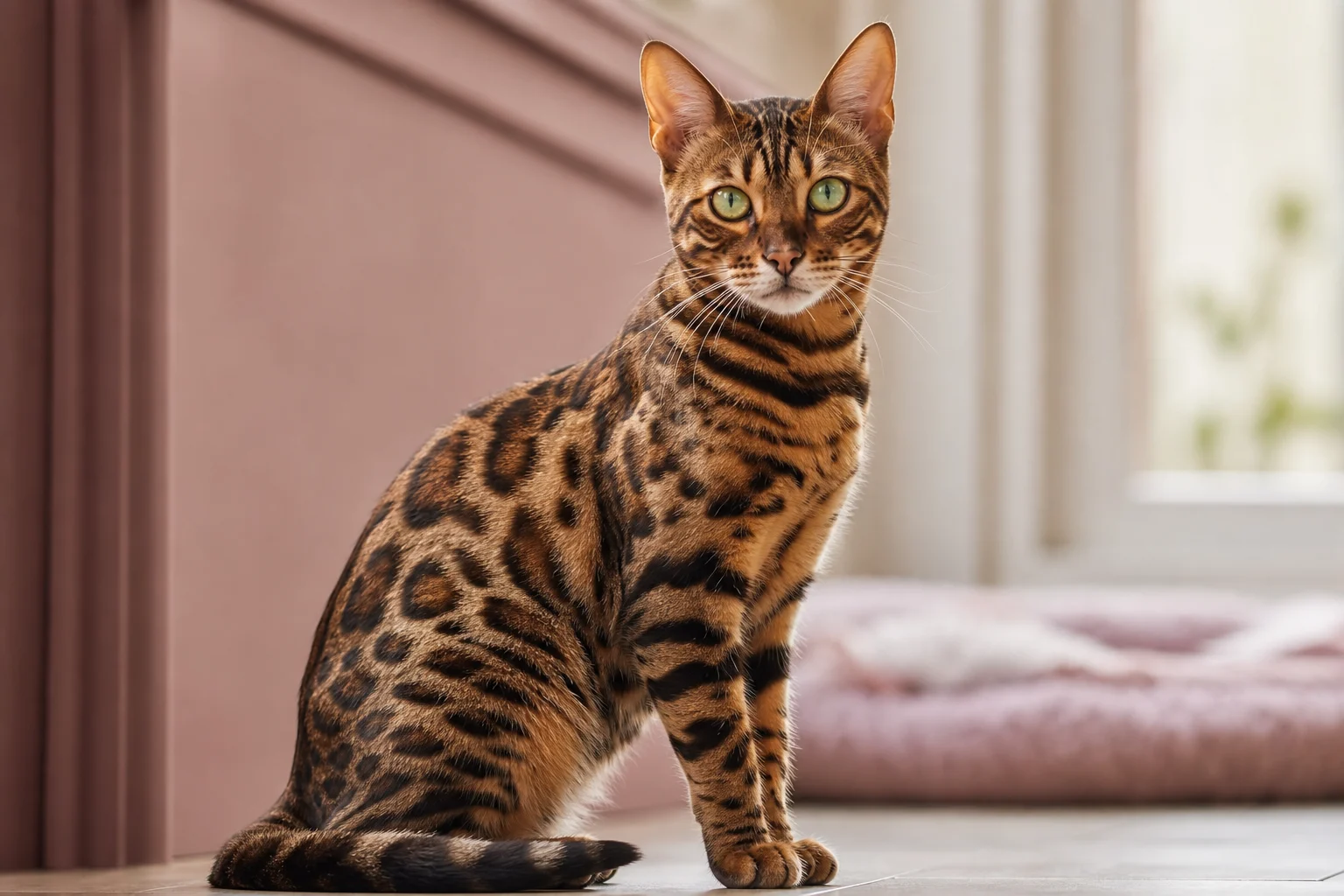
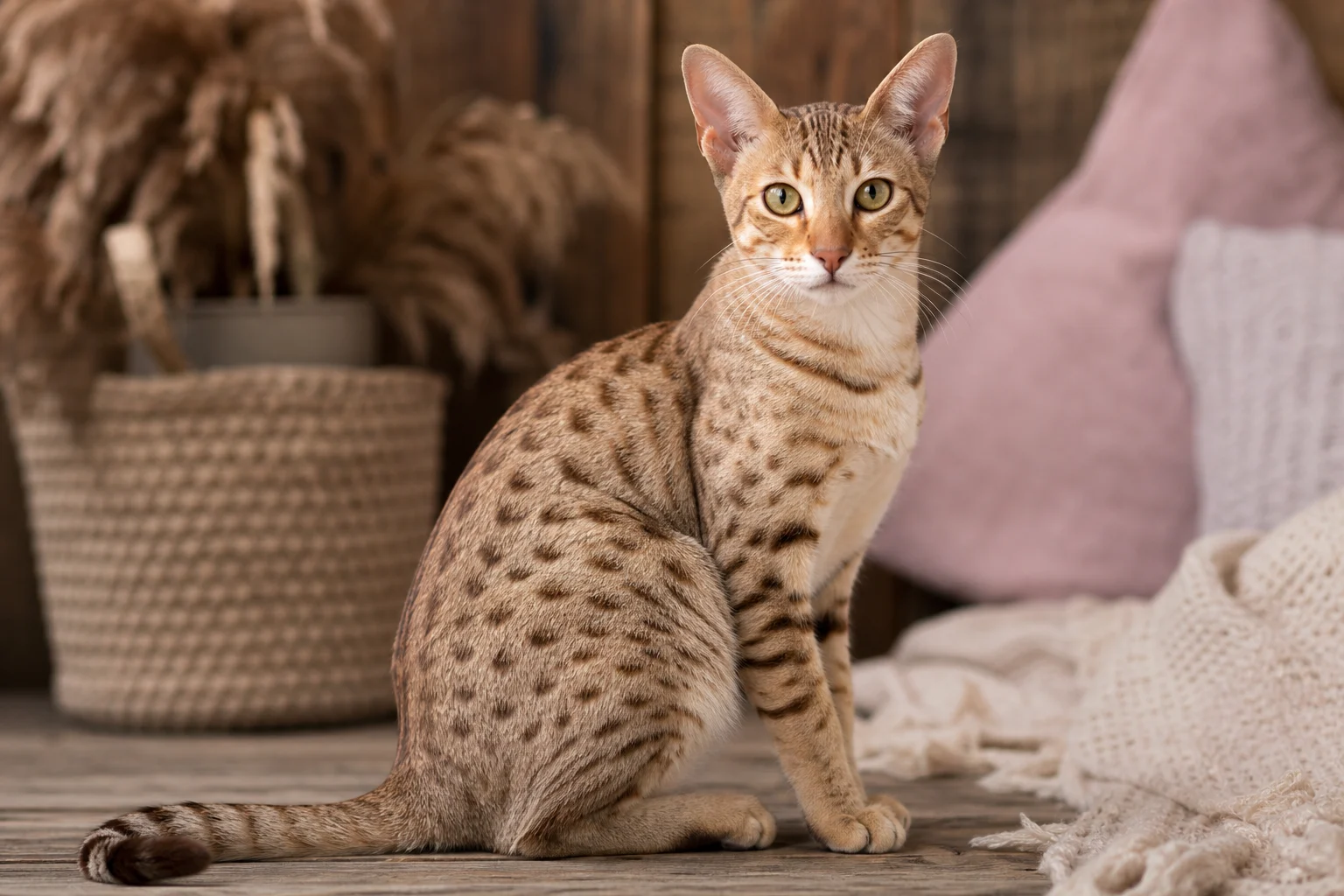
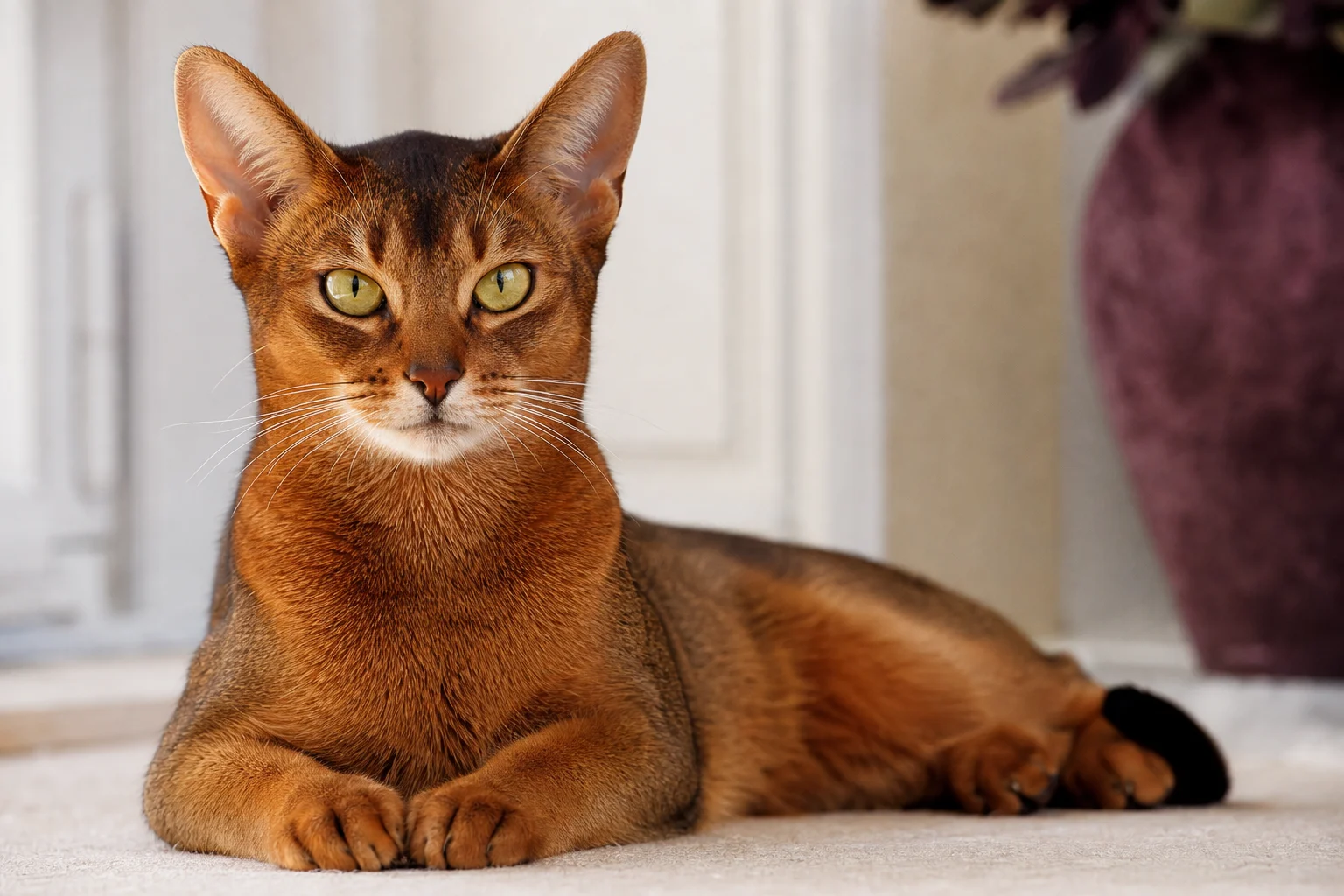
The Bengal is the wilder, more demanding parent line; the Ocicat offers spots with the same dog-like ease; the Egyptian Mau natural spots with selective reserve.
Who this breed suits
Households that want tiger aesthetics with trainable, sociable substance. The "Which cat fits me?" test checks whether your engagement budget matches.
Not sure what a Toyger may eat? The food checker rates individual foods on a traffic-light scale, and the food guide explains what cats can eat and what is toxic.
A good fit for you if …
Frequently asked questions
Does the Toyger contain tiger blood?
None — the stripes come from Bengal and striped domestic lines by design. The tiger is aesthetic mission, not ancestry.
How does the Toyger differ from the Bengal?
Deliberately easier: bred for laid-back, trainable temperament at civilised energy. The Bengal runs hotter in every respect.
Which health tests matter?
HCM ultrasounds above all, PK deficiency in Bengal-heritage lines. The young breed rewards strict breeder selection.
Are Toygers trainable?
Notably — leash, fetch and tricks build fast. The breed enjoys working with its people.
Why are Toygers so expensive?
A young, rare breed with an ambitious standard: tested, well-marked kittens run €1,200–2,000.
Are Toygers loud?
Moderate — conversational chirps rather than Siamese announcements.
Similar breeds
Sources: FIFe/TICA breed standard · breed association data · editorial assessment · Last updated 08/2026. On health questions this article never replaces a visit to the vet.