 AI
AISelkirk Rex
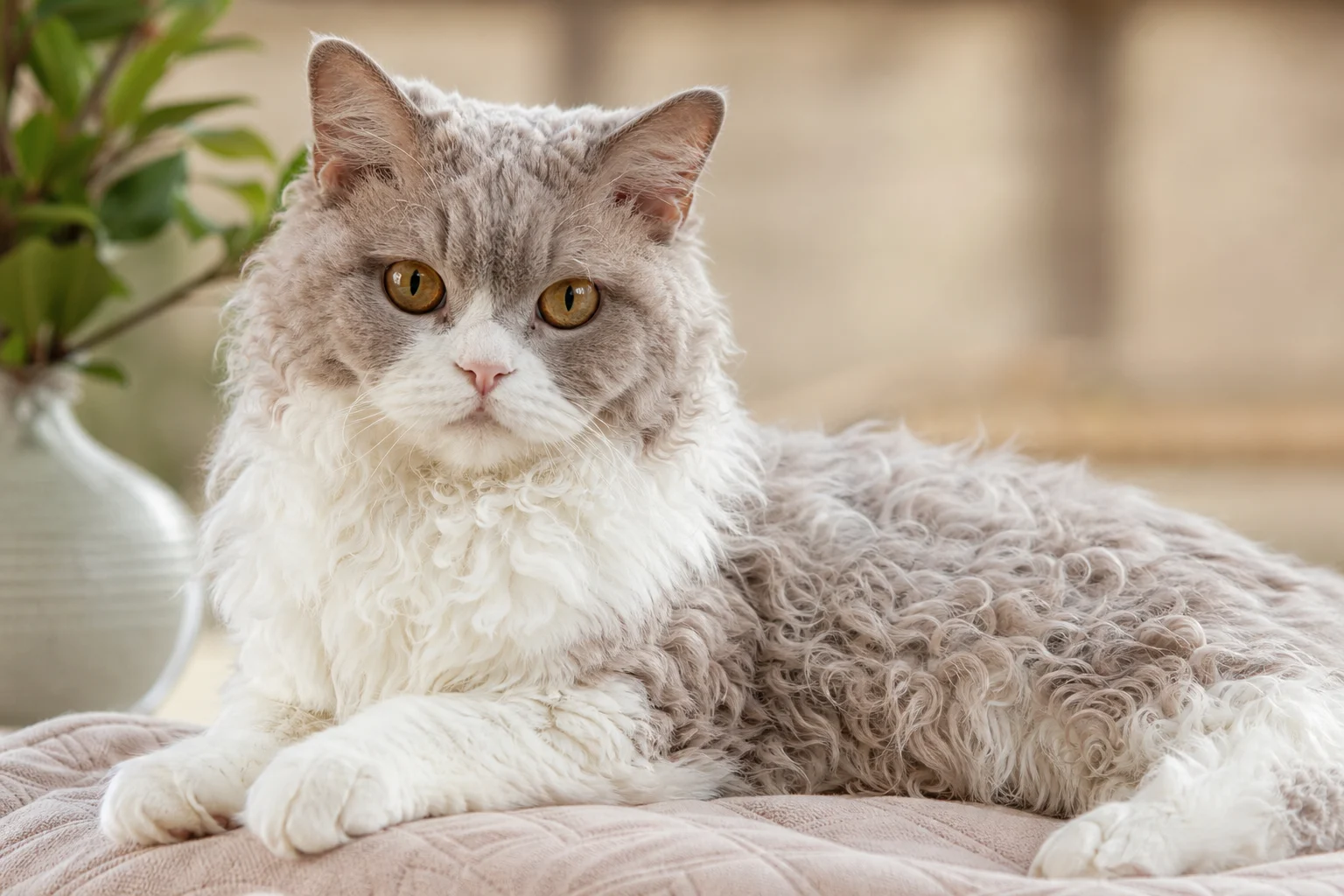
A cat in sheep's clothing — plush random curls over British calm and family-proof patience.
| Size | Large |
|---|---|
| Weight | 3–7 kg |
| Life expectancy | 12–16 years |
| Origin | United States |
| Type | Pedigree breed (USA) |
| Grooming | high |
| Activity needs | medium |
| Beginner friendly | well suited |
Temperament & suitability
Editorial assessment based on the FIFe breed standard and breed association data.
Guideline for movement & enrichment for this breed.
Traits
Origin & history
Montana, 1987: in a shelter litter sat one curly kitten — Miss DePesto, founder of the third great rex breed and the only one with a dominant curl gene. Breeder Jeri Newman crossed her with Persians and British Shorthairs, building substance under the curls; the breed name honours her stepfather, making the Selkirk the only cat breed named after a person. Unlike Cornish and Devon, the Selkirk keeps all three hair layers — just curled, which makes the coat full and woolly instead of thin.
Appearance & size
A sturdy, round-headed cat of three to seven kilograms wearing loose, random curls — plush in shorthair, sheep-like in longhair — in every colour and pattern. Even the whiskers curl. Straight-coated littermates exist (the gene is dominant, not universal); curl intensity varies with age, hormones and climate, peaking in adults after a plainer kitten phase.
Personality & temperament
Under the perm works British-Persian serenity with a playful streak: the Selkirk is patient, cuddly, quiet-voiced and sociable without drama. It tolerates family bustle, likes company — humans, cats, gentle dogs — and plays in comfortable moderation. Breeders describe a clownish humour that surfaces in trusted company; strangers meet friendly calm.
Indoor or outdoor living
An easy indoor cat: moderate space, window seats, a solid tree and company cover the needs, with a secured balcony as bonus. The trusting calm argues against roaming. Setup basics in Indoor cat or outdoor cat?
Enrichment & activity
Moderate but daily: wand games, food puzzles, short fetch rounds keep the plush frame fit. Like all comfortable breeds it will not demand its sessions — routine is your job, and the appetite makes it matter.
Grooming
Counter-intuitive: combing too much straightens the curls. Right is a weekly pass with a wide-tooth comb against mats — longhairs a little more, especially in moult — then hands off; many owners finger-tousle with a damp hand to define curls. Ears need regular checks, as curled inner-ear hair holds wax.
Feeding & health
Portion via the food amount calculator — the calm engine gains readily. Breeder questions come from the founding lines: PKD (Persian side) and HCM (British side) screening; responsibly bred Selkirks are robust companions.
Costs
Kittens from tested lines cost €900–1,400; curled kittens command the premium. Running costs are ordinary — the cat cost calculator totals them.
For beginners, children and other pets
A first-class family and beginner cat: patient with children, harmonious with cats and gentle dogs, unshockable and low-drama. The teddy look invites carrying — teach children that even sheep-cats decide their own cuddles.
Similar breeds compared
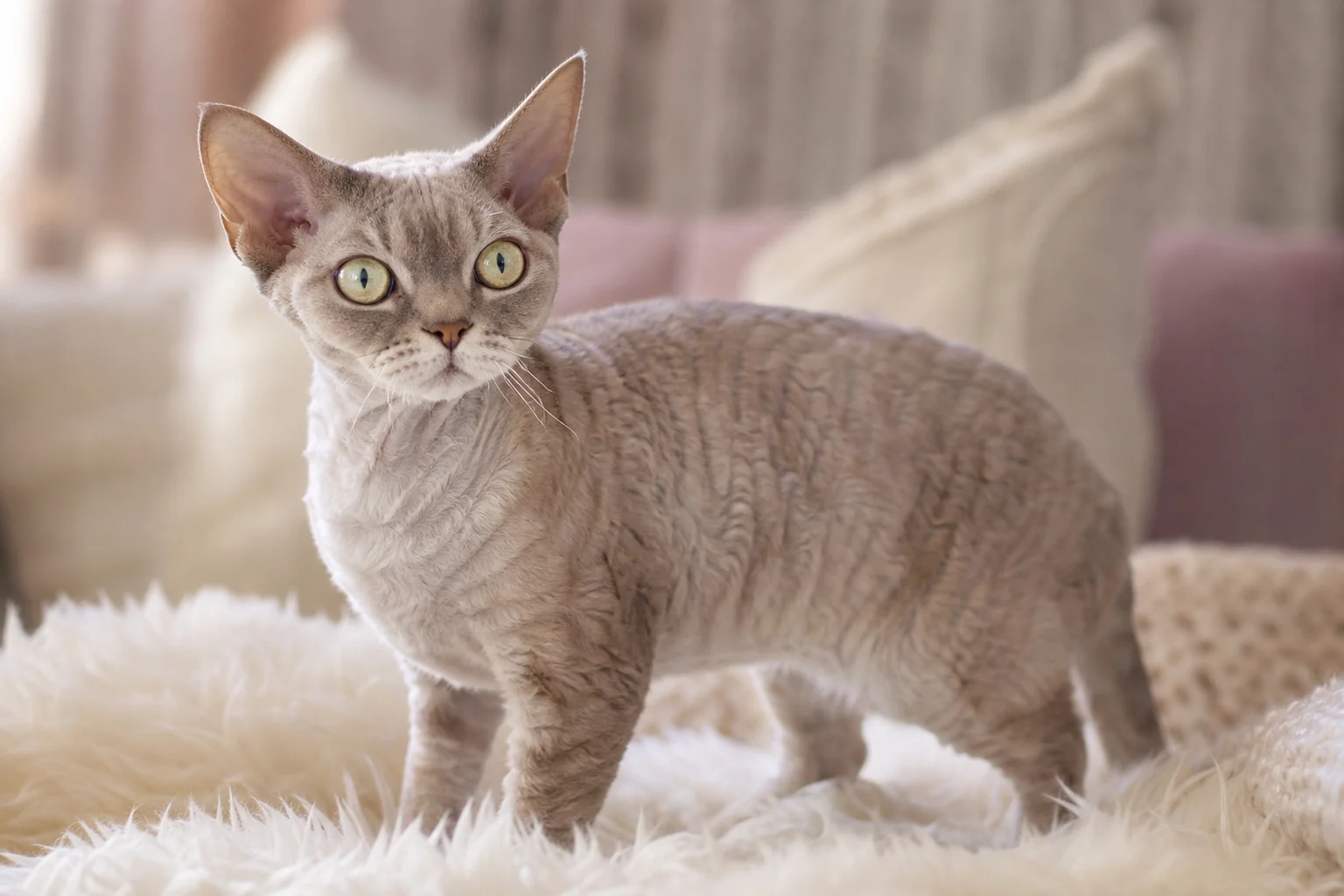
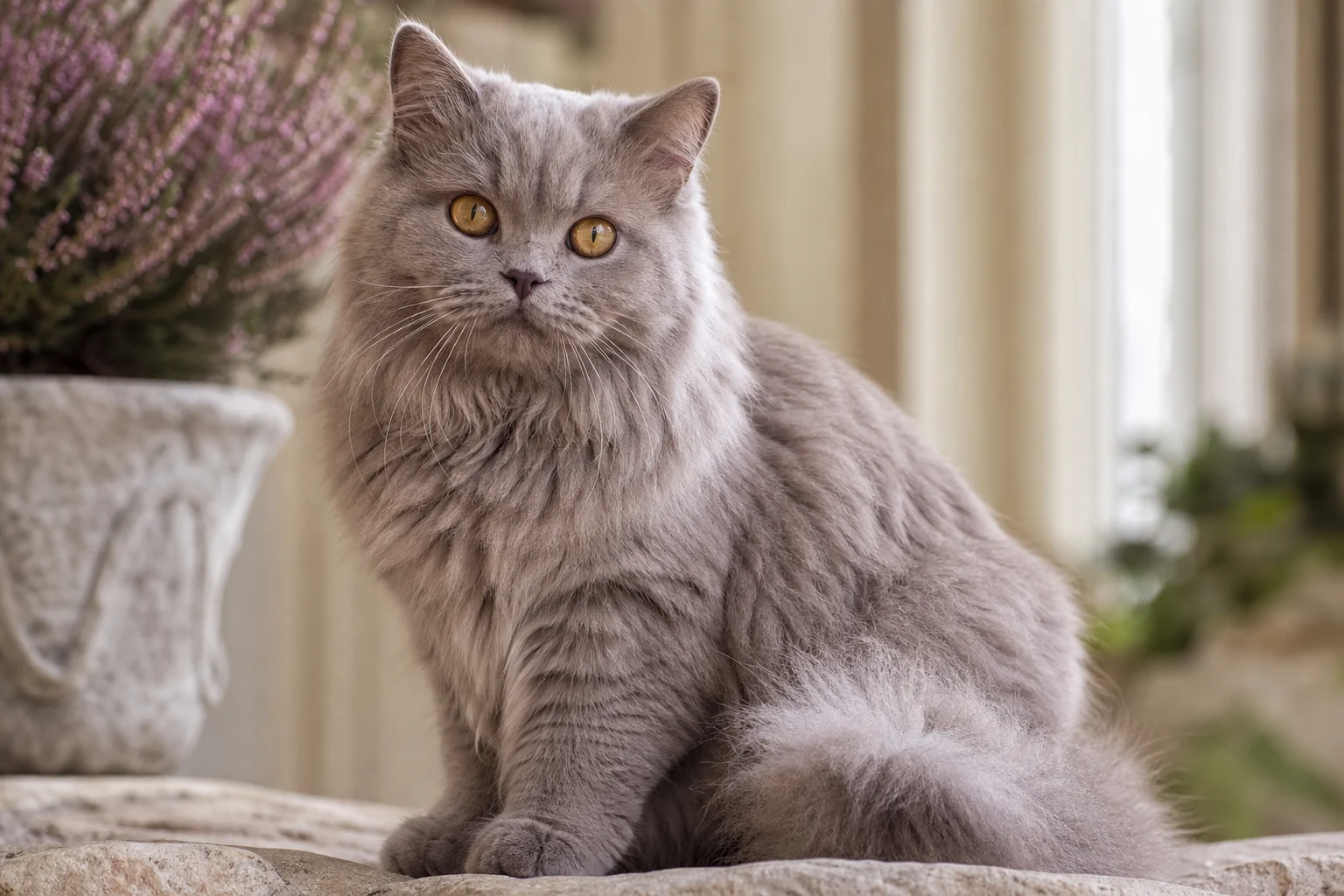
The British Shorthair delivers the calm in straight plush; the Devon Rex curls at triple the energy; the British Longhair offers flowing calm without the perm.
Who this breed suits
Families and calm households that want teddy looks with easy-going substance. The "Which cat fits me?" test confirms the fit.
Not sure what a Selkirk Rex may eat? The food checker rates individual foods on a traffic-light scale, and the food guide explains what cats can eat and what is toxic.
A good fit for you if …
Frequently asked questions
Why does brushing ruin the curls?
Frequent combing pulls the loose curls straight. Right is a weekly wide-tooth pass against mats, then finger-tousling — less is more.
Are all Selkirk kittens curly?
No — the dominant gene means curly and straight littermates. Curly kittens are born with curled whiskers, the giveaway.
How does the Selkirk differ from Devon and Cornish Rex?
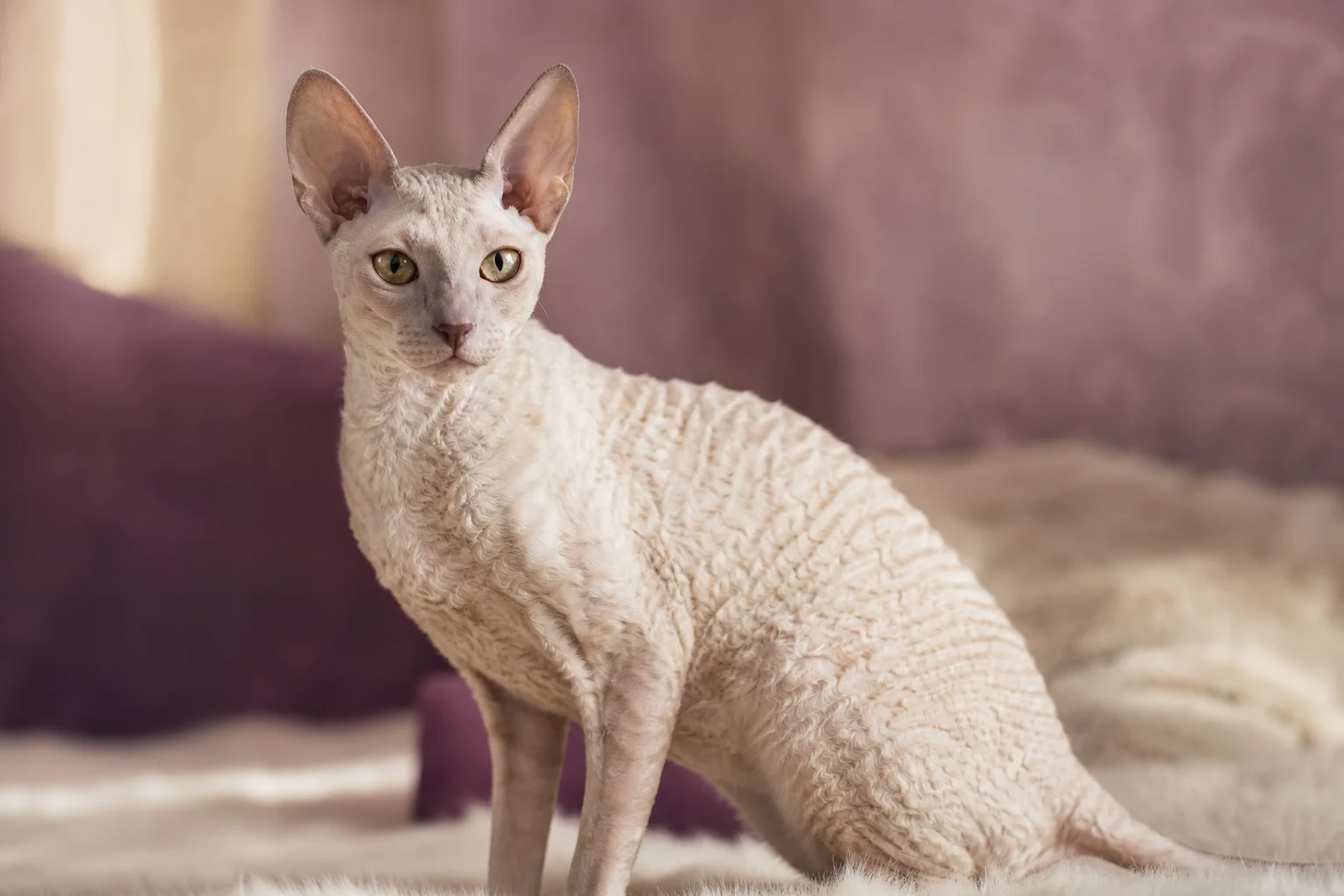
All three hair layers stay, just curled: the coat is full and woolly instead of thin waves — over a far calmer temperament.
Which health tests matter?
PKD (Persian heritage) and HCM (British heritage) screening of the parents.
Are Selkirks good with children?
Very — patient, sturdy and unshockable. The one rule: the teddy decides its own cuddle times.
Shorthair or longhair Selkirk?
Both exist: plush random curls in short, sheep-like locks in long. The longhair needs slightly more mat control.
Similar breeds
Sources: FIFe/TICA breed standard · breed association data · editorial assessment · Last updated 08/2026. On health questions this article never replaces a visit to the vet.