 AI
AIHimalayan
Persian serenity in Siamese dress — point colours, blue eyes and the full longhair commitment.
| Size | Large |
|---|---|
| Weight | 3–6 kg |
| Life expectancy | 12–16 years |
| Origin | United States / United Kingdom |
| Type | Pedigree breed |
| Grooming | very high |
| Activity needs | very low |
| Beginner friendly | better for experienced owners |
Temperament & suitability
Editorial assessment based on the FIFe breed standard and breed association data.
Guideline for movement & enrichment for this breed.
Traits
Origin & history
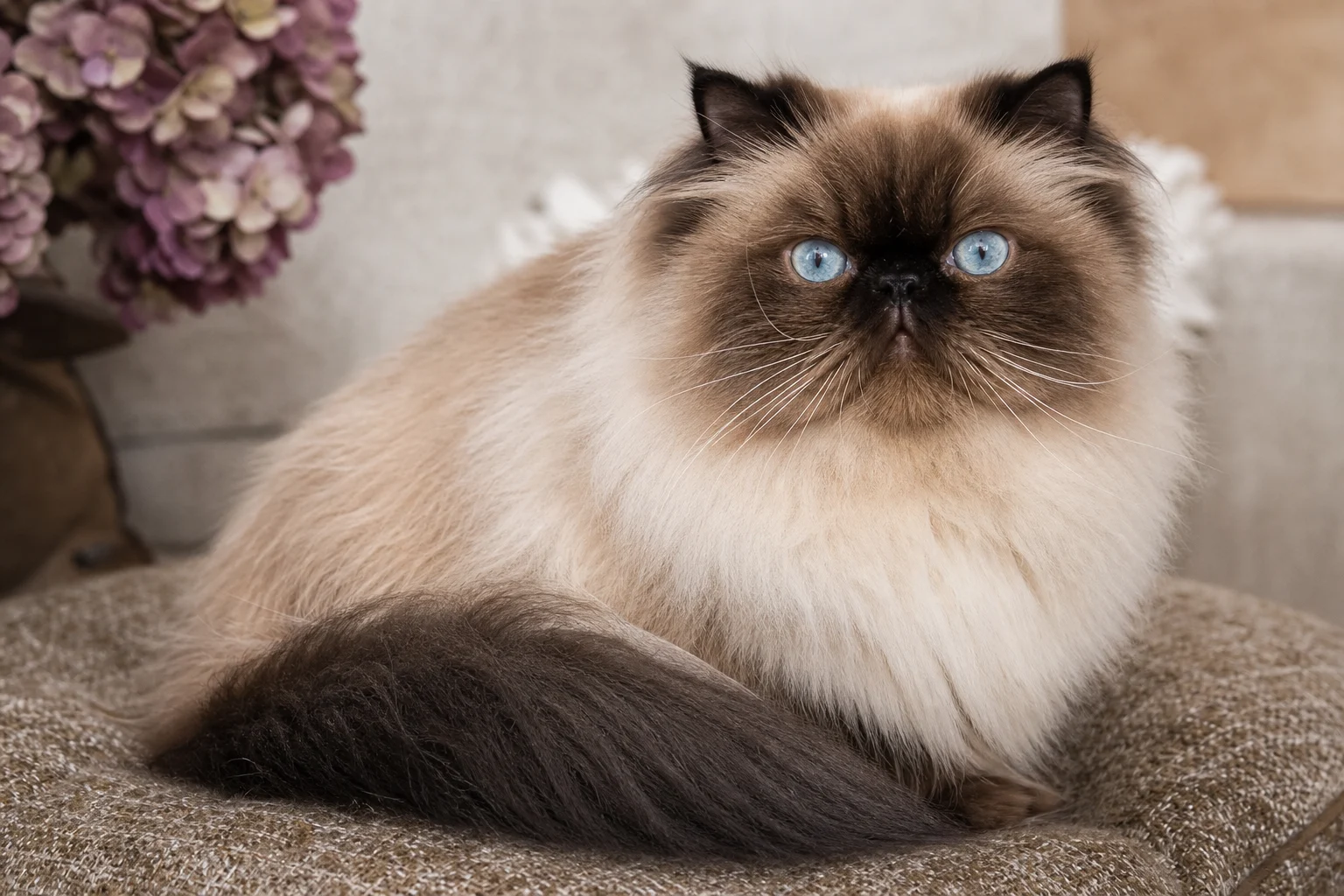
What happens when Persian meets Siamese? Breeders in 1930s America and Britain wanted to know, and by the 1950s the answer was a recognised breed: the Himalayan, named after the pointed pattern of Himalayan rabbits. Registries disagree to this day whether it is its own breed or a Persian colour class — for the cat on your sofa, the distinction is academic: it is a Persian in point dress.
Appearance & size
The full Persian package — compact three-to-six-kilogram body, round head, enormous flowing coat — wearing Siamese colours: seal, blue, chocolate, lilac, red and tortie points against a cream body, always with deep blue eyes. The contrast of dark mask against pale ruff makes the Himalayan one of the most photographed cats in existence. Moderate head types with visible noses are, as with all Persians, the welfare-conscious choice.
Personality & temperament
Persian calm with a Siamese seasoning: profoundly serene, quiet and lap-loving, but many Himmies show a notch more playfulness and chattiness than solid Persians — a distant echo of the pointed ancestor. The baseline remains a gentle, ornamental companion that loves routine, familiar laps and peace.
Indoor or outdoor living
Strictly a calm indoor cat: the coat, the trusting serenity and the show looks all rule out roaming. A predictable flat with warm resting places and a secured balcony covers every need. Setup notes in Indoor cat or outdoor cat?
Enrichment & activity
Short, gentle daily play keeps joints and weight in order — the Himalayan enjoys feather teasers in Persian slow motion. Fixed rituals beat variety; this breed loves its schedule.
Grooming
The full Persian programme applies: daily combing without exception, or the magnificent coat turns into felt within days. Add daily eye wiping in flatter-faced individuals and the occasional bath. This is the breed's real entry requirement — budget the time honestly before falling for the blue eyes.
Feeding & health
Health topics mirror the Persian: PKD screening is mandatory breeder homework, brachycephaly issues scale with face flatness, HCM checks are good practice. Portion via the food amount calculator — the serene metabolism gains weight readily.
Costs
Kittens from tested, moderate lines cost €900–1,400. Add grooming tools, possible professional grooming and attentive vet care; the cat cost calculator makes it concrete.
For beginners, children and other pets
Temperament-wise ideal for calm homes, seniors and gentle families; the daily grooming duty is the honest barrier for beginners. With quiet cats and calm dogs it coexists graciously — commotion is simply beneath its dignity.
Similar breeds compared
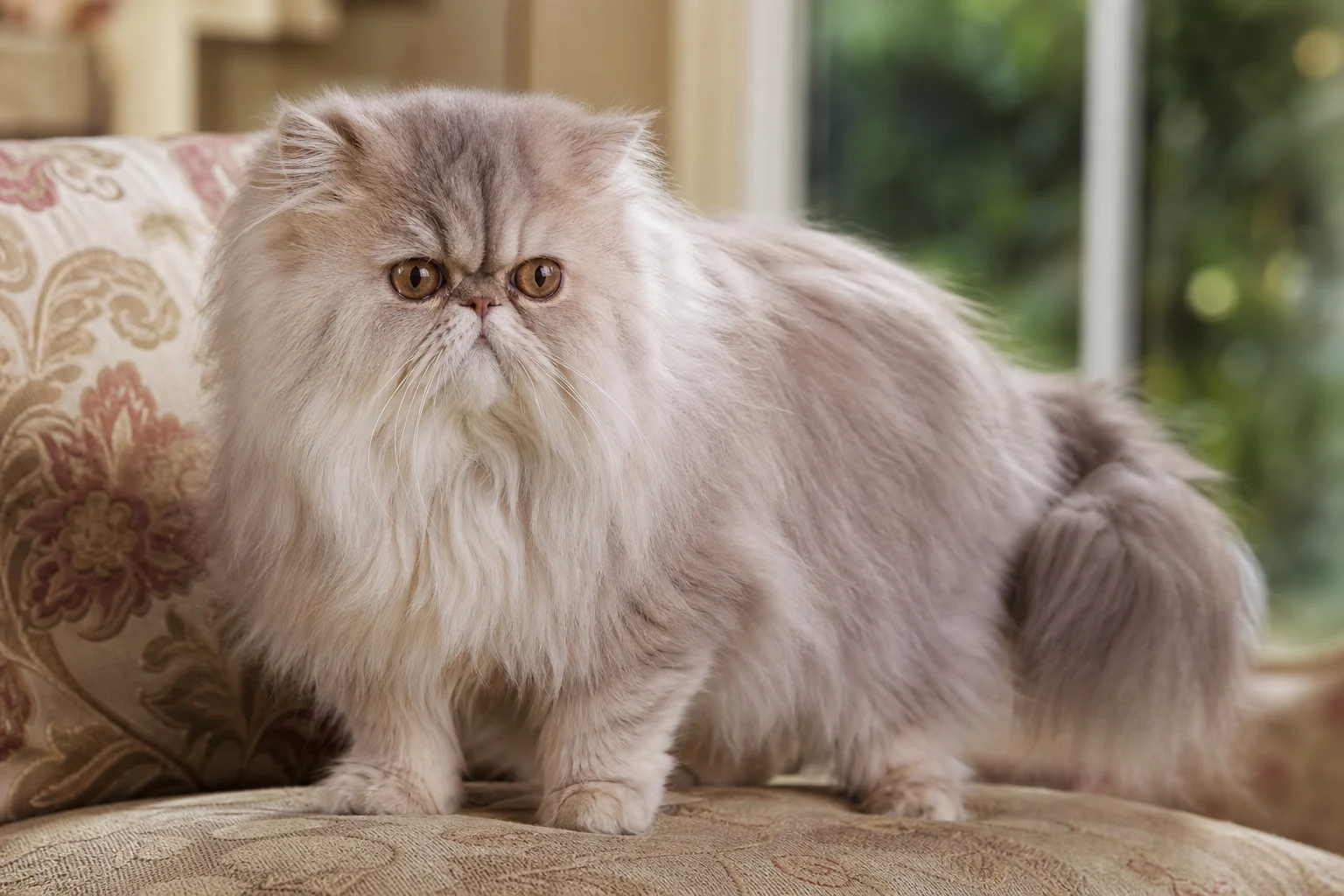
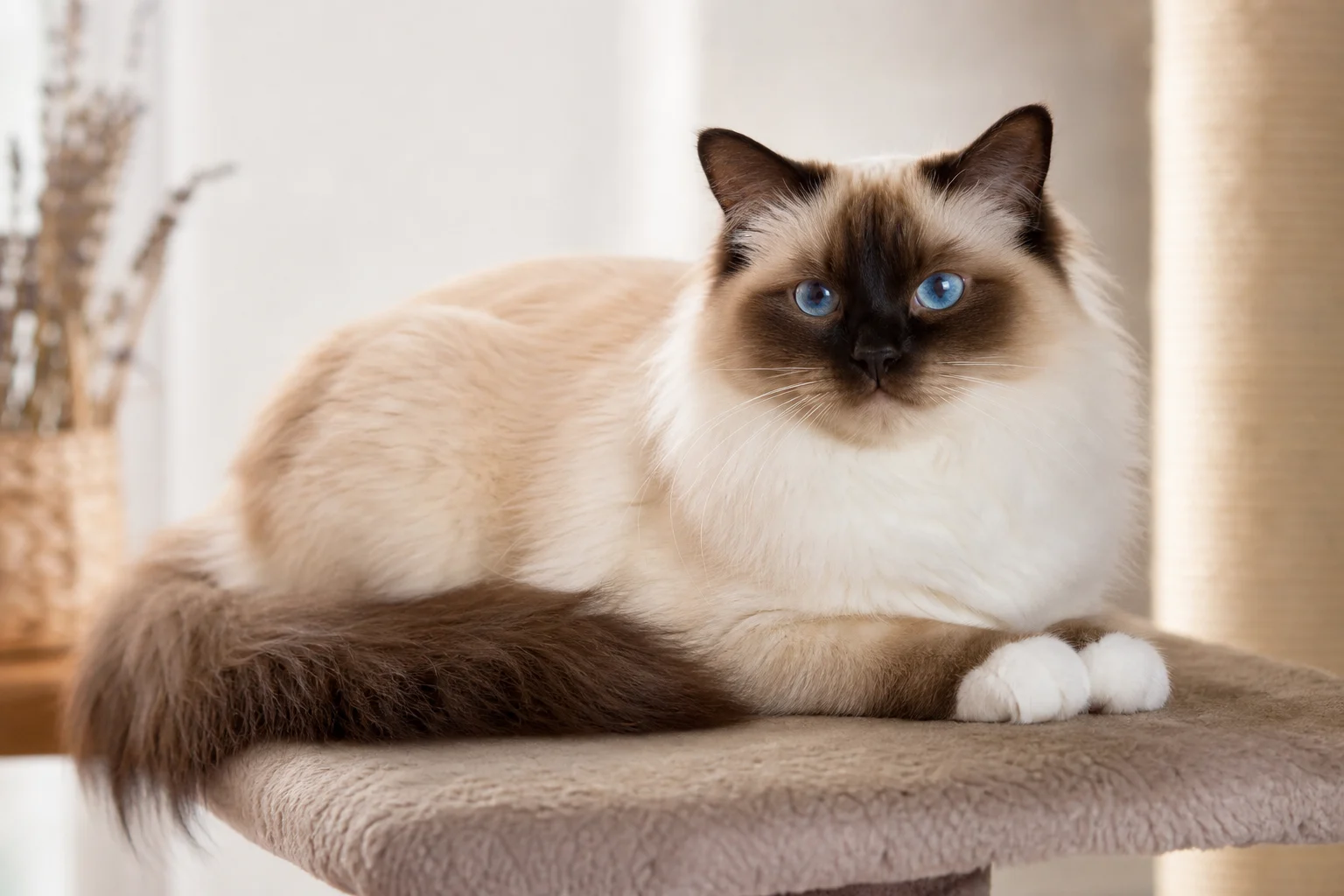
The Persian is the same cat in solid and silver dress; the Exotic Shorthair ends the grooming duty at the cost of the flowing coat; the Birman offers pointed blue-eyed beauty with a far easier silk coat.
Who this breed suits
Devoted groomers with calm homes who want Persian serenity in the most striking colour dress. If the daily comb gives you pause, the "Which cat fits me?" test will happily point you to the Birman or Exotic instead.
Not sure what a Himalayan may eat? The food checker rates individual foods on a traffic-light scale, and the food guide explains what cats can eat and what is toxic.
A good fit for you if …
Frequently asked questions
Is the Himalayan its own breed?
Depends on the registry: some list it separately, others as a Persian colour class. Practically it is a Persian in Siamese point colours.
How much grooming is needed?
The full Persian programme: daily combing without exception, plus eye care in flatter-faced cats. It is the breed's defining commitment.
Where do the blue eyes come from?
From the point gene inherited from the Siamese ancestors — it always brings blue eyes with it.
Which health tests matter?
PKD screening above all, HCM checks, and choosing moderate head types against brachycephaly problems.
Are Himalayans more active than Persians?
Often a touch — a small Siamese echo in playfulness and voice. The baseline remains deeply calm.
What is the easier alternative with similar looks?
The Birman: pointed, blue-eyed, semi-long silk with a fraction of the grooming — or the Exotic Shorthair for the Persian soul in plush.
Similar breeds
Sources: FIFe/TICA breed standard · breed association data · editorial assessment · Last updated 08/2026. On health questions this article never replaces a visit to the vet.