 AI
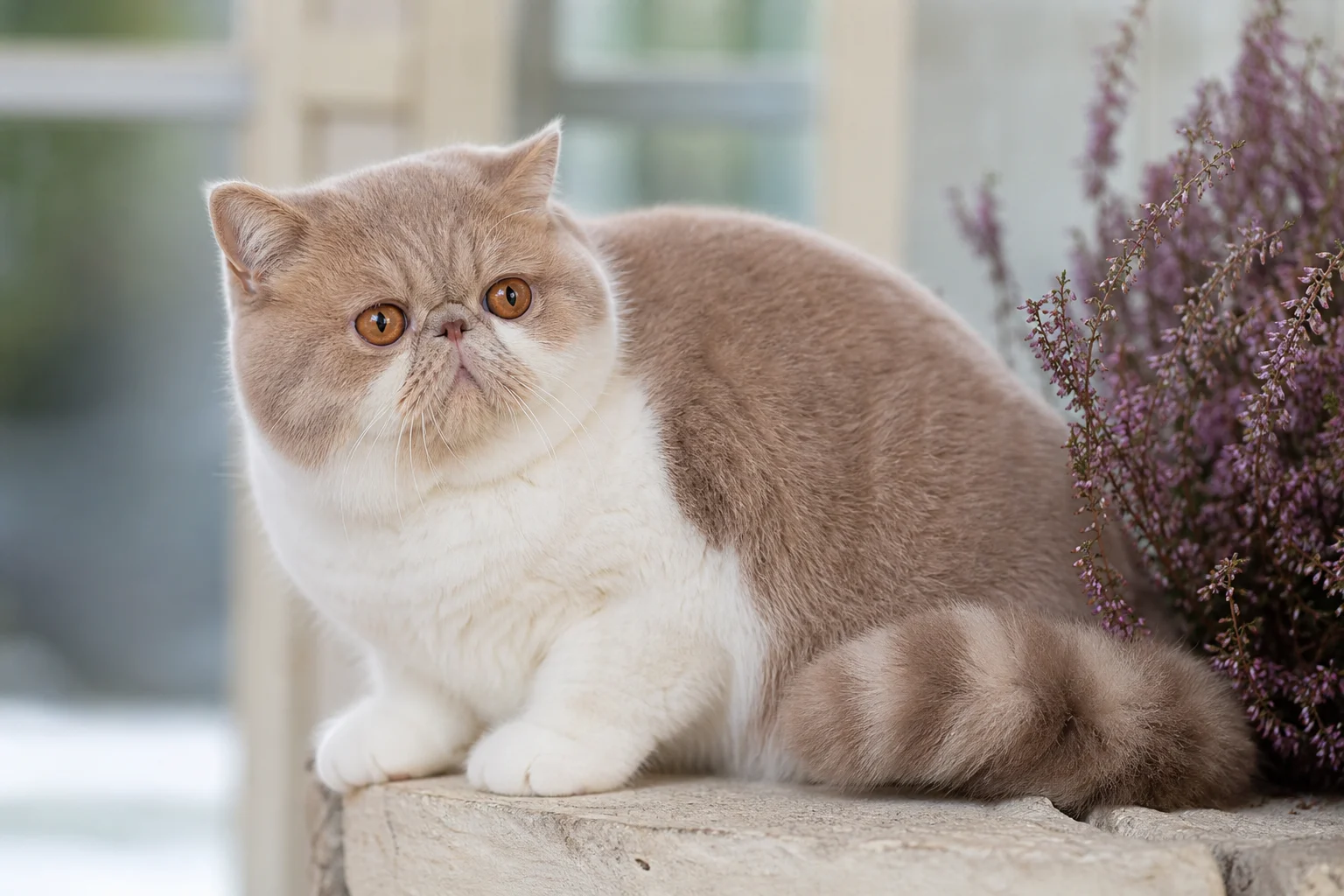
AIExotic Shorthair
The Persian in comfy plush — same serene soul, a fraction of the grooming.
| Size | Large |
|---|---|
| Weight | 3–6 kg |
| Life expectancy | 12–16 years |
| Origin | United States |
| Type | Pedigree breed (USA) |
| Grooming | low |
| Activity needs | low |
| Beginner friendly | well suited |
Temperament & suitability
Editorial assessment based on the FIFe breed standard and breed association data.
Guideline for movement & enrichment for this breed.
Traits
Origin & history
The Exotic began as an American breeding accident with a happy ending: crosses of American Shorthairs with Persians in the 1950s produced plush-coated cats with the full Persian head — and breeders realised they had found the answer to the most common Persian complaint. Since the 1960s the Exotic has been bred as the shorthaired Persian, sharing standard, colours and soul with its longhaired parent breed.
Appearance & size
A compact, round cat of three to six kilograms — round head, round eyes, round everything — in a dense, soft plush coat slightly longer than a typical shorthair. All Persian colours occur, from solid and silver to pointed. The teddy-bear comparison is unavoidable and accurate. As with the Persian, moderate head type with a visible nose is the welfare-conscious choice; extreme flat faces carry the same problems here.
Personality & temperament
The Persian character in full: profoundly calm, quiet-voiced, affectionate on a lap-cat level and content with a predictable, gentle day. Many Exotics are a touch livelier than Persians — the shorthair ancestors left a small playful streak — but the baseline remains serenity. It loves company without demanding it loudly and handles moderate alone-time better than clingier breeds.
Indoor or outdoor living
A born indoor cat: calm, trusting and unbothered by modest square meterage. Window seats, a warm spot and its people are the whole wish list; a secured balcony is a welcome extra. See Indoor cat or outdoor cat? for the setup.
Enrichment & activity
Low drive, real enjoyment: short daily wand-toy sessions and food puzzles keep weight and joints in order. Like all calm breeds the Exotic will not demand play — the routine is your job, and it matters double in a breed built for comfort.
Grooming
The breed's founding promise, kept: the plush coat needs brushing once or twice a week instead of the Persian's daily programme, plus extra passes in moult. Flat-faced individuals still need daily eye wiping — one more argument for moderate type.
Feeding & health
Health mirrors the Persian: PKD screening is essential, brachycephaly-related issues (tear ducts, breathing, dental crowding) scale with face flatness, and HCM checks are good practice. The placid temperament plus hearty appetite makes portion discipline via the food amount calculator a lifelong topic.
Costs
Kittens from tested, moderate-type lines cost €900–1,300. Running costs are ordinary; flat-faced individuals add eye and dental care. The cat cost calculator totals it.
For beginners, children and other pets
A wonderfully easy companion for beginners, families with gentle children and seniors — the Persian recommendation without the grooming barrier. It coexists peacefully with calm cats and dogs; wild playmates simply get watched from the sofa.
Similar breeds compared
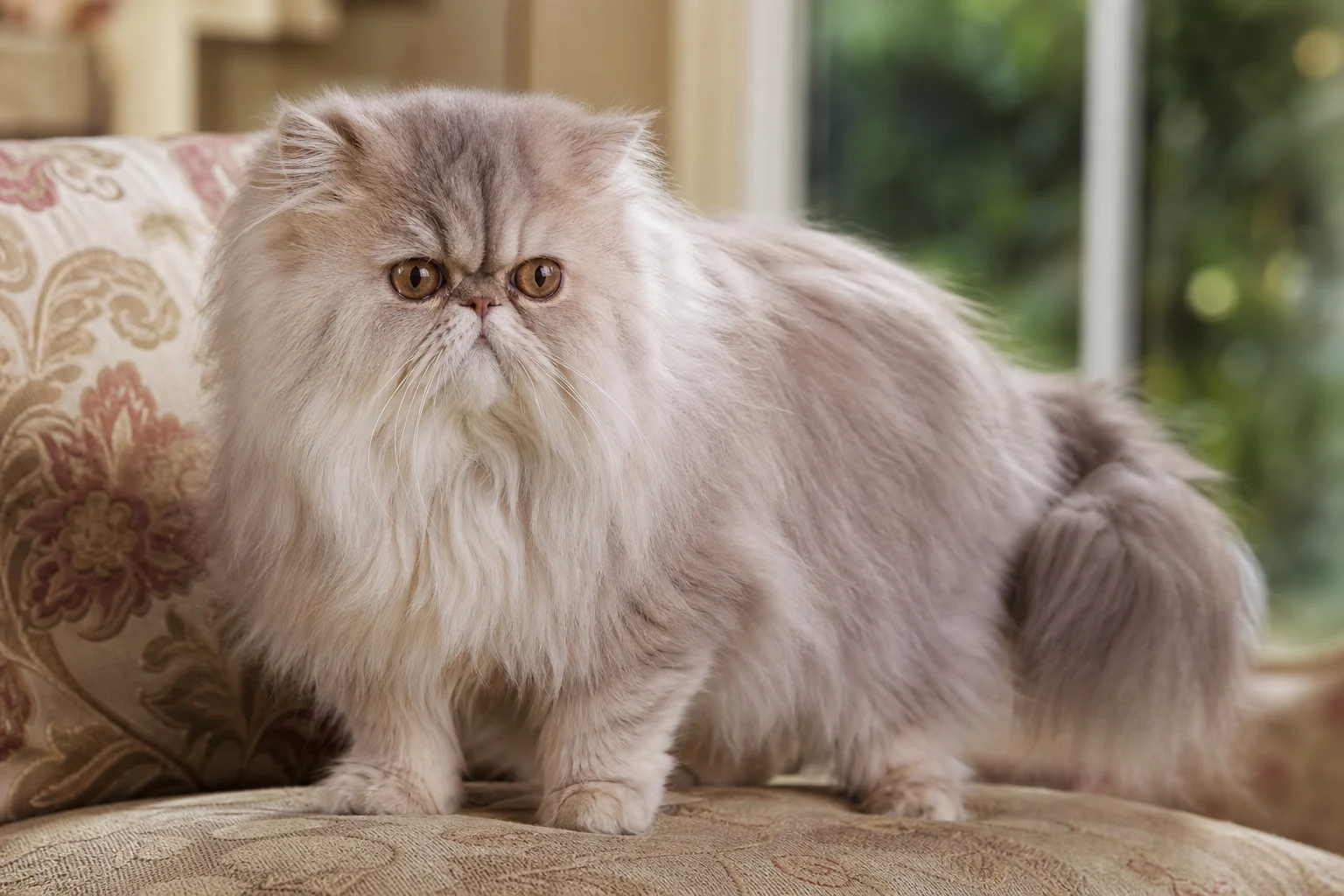
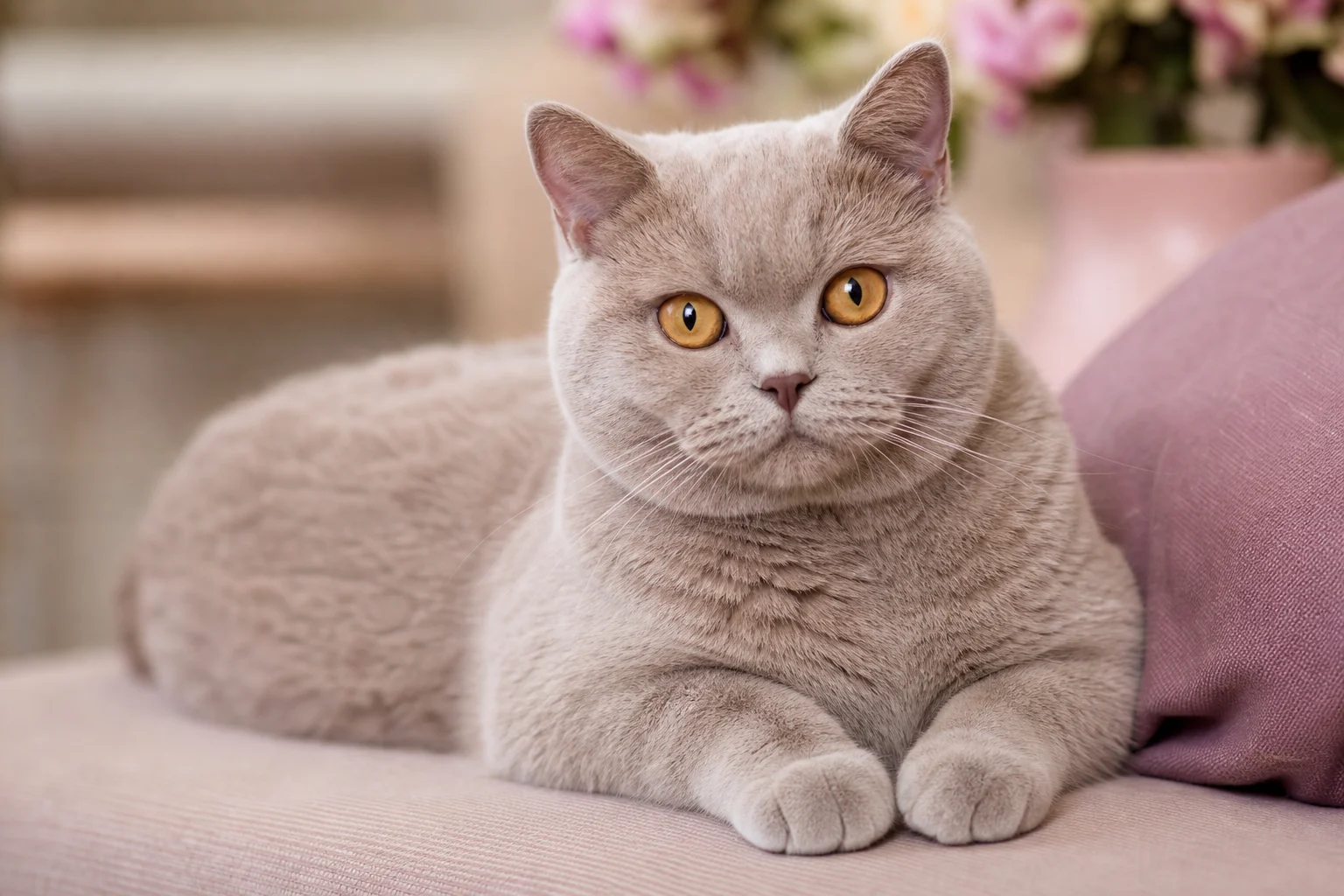
The Persian is the longhaired original with the daily coat duty; the British Shorthair offers similar plush calm with more independence; the Himalayan is the pointed Persian for those drawn to the colour.
Who this breed suits
Everyone who loves the Persian temperament but not the Persian brush: calm households, working couples, seniors. The "Which cat fits me?" test confirms the match.
Not sure what a Exotic Shorthair may eat? The food checker rates individual foods on a traffic-light scale, and the food guide explains what cats can eat and what is toxic.
A good fit for you if …
Frequently asked questions
What is the difference to the Persian?
The coat: dense plush instead of flowing longhair, needing brushing once or twice weekly instead of daily. Character and look are otherwise Persian.
Are Exotics completely grooming-free?
No — weekly brushing yes, and flat-faced individuals need daily eye wiping. Still a fraction of the Persian programme.
Which health tests matter?
PKD above all, plus HCM checks — and deliberately choosing moderate head types avoids most brachycephaly problems.
Are Exotics playful?
In gentle doses: short daily sessions are enjoyed and needed against weight gain. The baseline remains calm.
Can an Exotic stay alone during work hours?
Moderately well — better than clingy breeds, happier with a calm feline companion or present humans.
Exotic or British Shorthair?
Both plush and calm: the Exotic is the rounder lap-oriented Persian type, the British keeps more distance and a sturdier build.
Similar breeds
Sources: FIFe/TICA breed standard · breed association data · editorial assessment · Last updated 08/2026. On health questions this article never replaces a visit to the vet.