 AI
AIHavana Brown
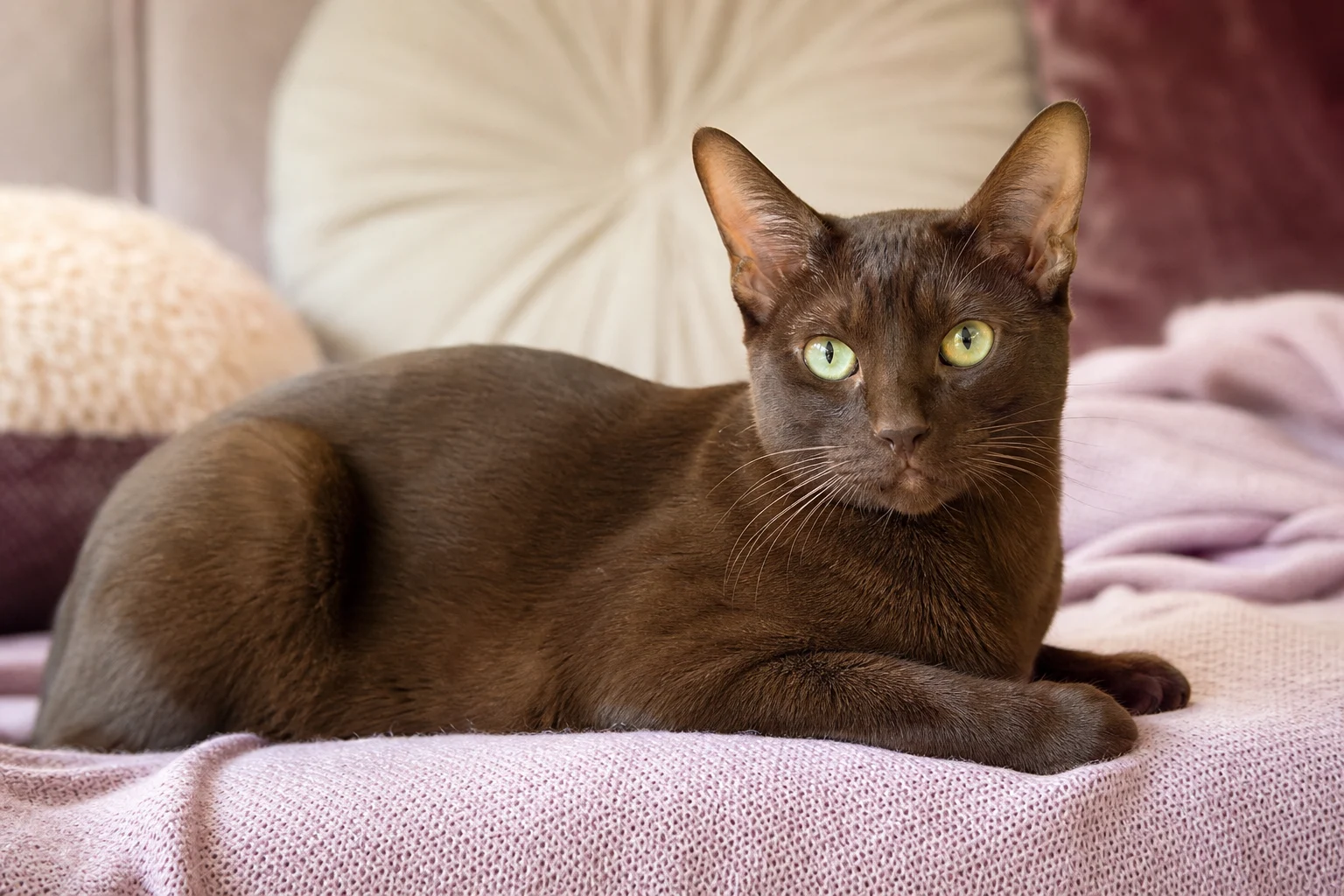
Chocolate from whiskers to toes — a rare, curious charmer that investigates the world paw-first.
| Size | Medium |
|---|---|
| Weight | 3–5 kg |
| Life expectancy | 12–15 years |
| Origin | United Kingdom |
| Type | Pedigree breed |
| Grooming | low |
| Activity needs | high |
| Beginner friendly | well suited |
Temperament & suitability
Editorial assessment based on the FIFe breed standard and breed association data.
Guideline for movement & enrichment for this breed.
Traits
Origin & history
Solid brown cats from Siam appeared at Victorian shows as "Swiss Mountain Cats", vanished, and were deliberately recreated in 1950s England: Siamese crossed with black shorthairs and Russian Blues produced the self-chocolate line named — depending on whom you ask — after the cigar or the rabbit breed of the same shade. American breeding froze the 1950s type; the breed stayed rare enough that dedicated preservation programmes guard its gene pool today.
Appearance & size
Warm chocolate everywhere: coat, whiskers — the only breed whose standard specifies brown whiskers — nose and rosy-brown paw pads, over three to five kilograms of graceful muscle. The head shows a distinctive "corn cob" muzzle with a pronounced pinch; the eyes glow vivid green. A lilac dilution exists alongside the classic chocolate.
Personality & temperament
The Havana investigates paw-first — famously reaching out to touch new objects and people like a small brown hand. It is curious, people-near and quietly playful: Siamese heritage shows in intelligence and attachment, but the volume stayed behind — this cat murmurs where cousins lecture. It follows its family, rides shoulders, learns fetch and dislikes empty homes; company keeps the charm running.
Indoor or outdoor living
An indoor companion with secured-balcony bonus: rare, trusting and valuable is the wrong profile for roaming. Moderate space plus company covers it; a second social cat carries work hours well. Frame in Indoor cat or outdoor cat?
Enrichment & activity
Daily interactive play — teaser hunts, fetch, puzzle feeders the paws can manipulate — suits the tactile intelligence. Energy sits pleasantly mid-range: real sessions, real sofa evenings.
Grooming
A weekly chamois polish keeps the mahogany gleam; shedding is minimal.
Feeding & health
Portion via the food amount calculator. The small gene pool makes breeder quality decisive: ask for general health documentation, heart checks and how the cattery manages diversity (outcross programmes exist). Individual cats are typically robust into the mid-teens.
Costs
Kittens cost €900–1,400 where available at all — Europe counts few breeders, and waiting lists are the norm. Running costs stay modest; see the cat cost calculator.
For beginners, children and other pets
A gentle, playful family companion: good with considerate children, sociable with cats and friendly dogs. Committed beginners manage well; the only real hurdle is finding one.
Similar breeds compared
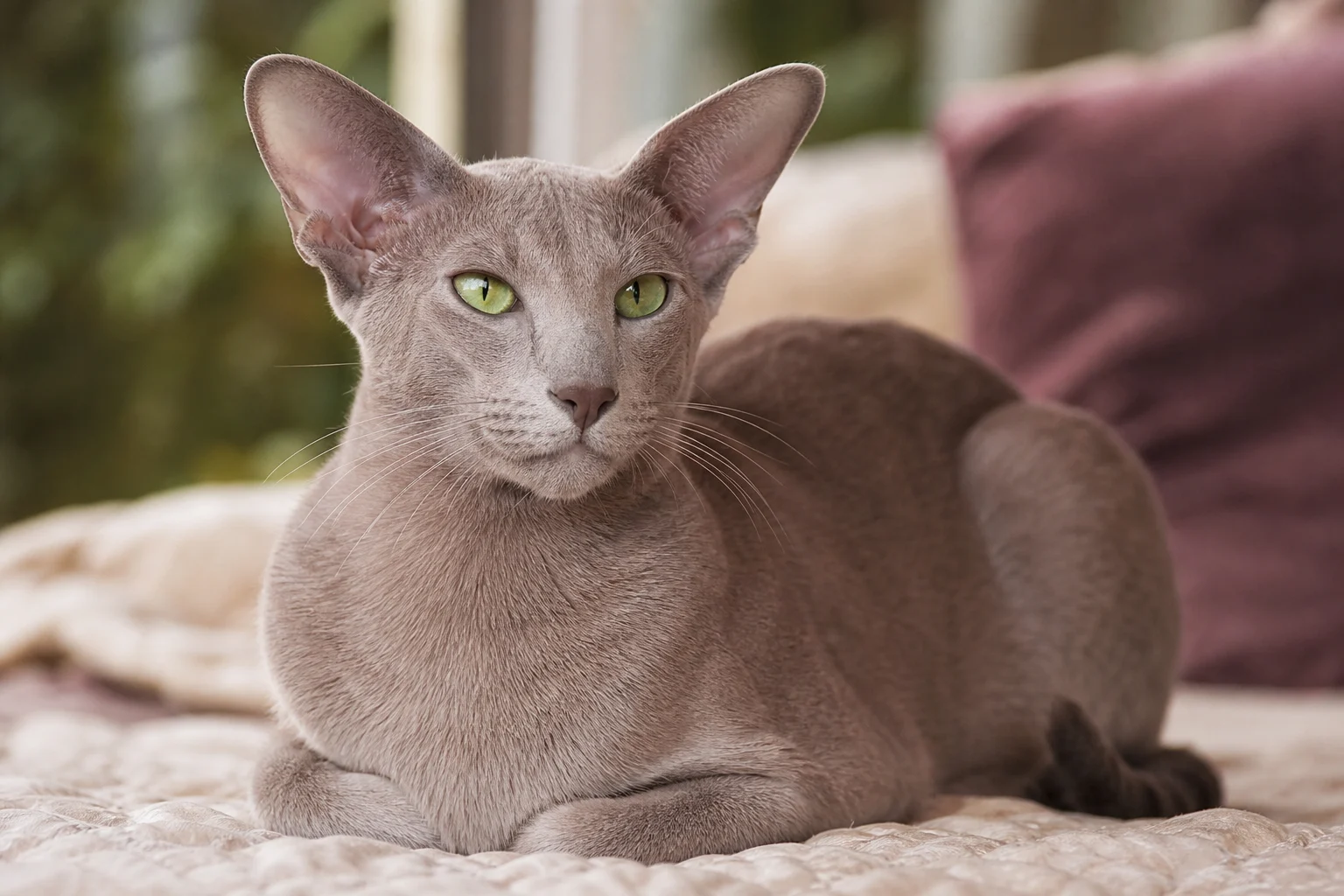
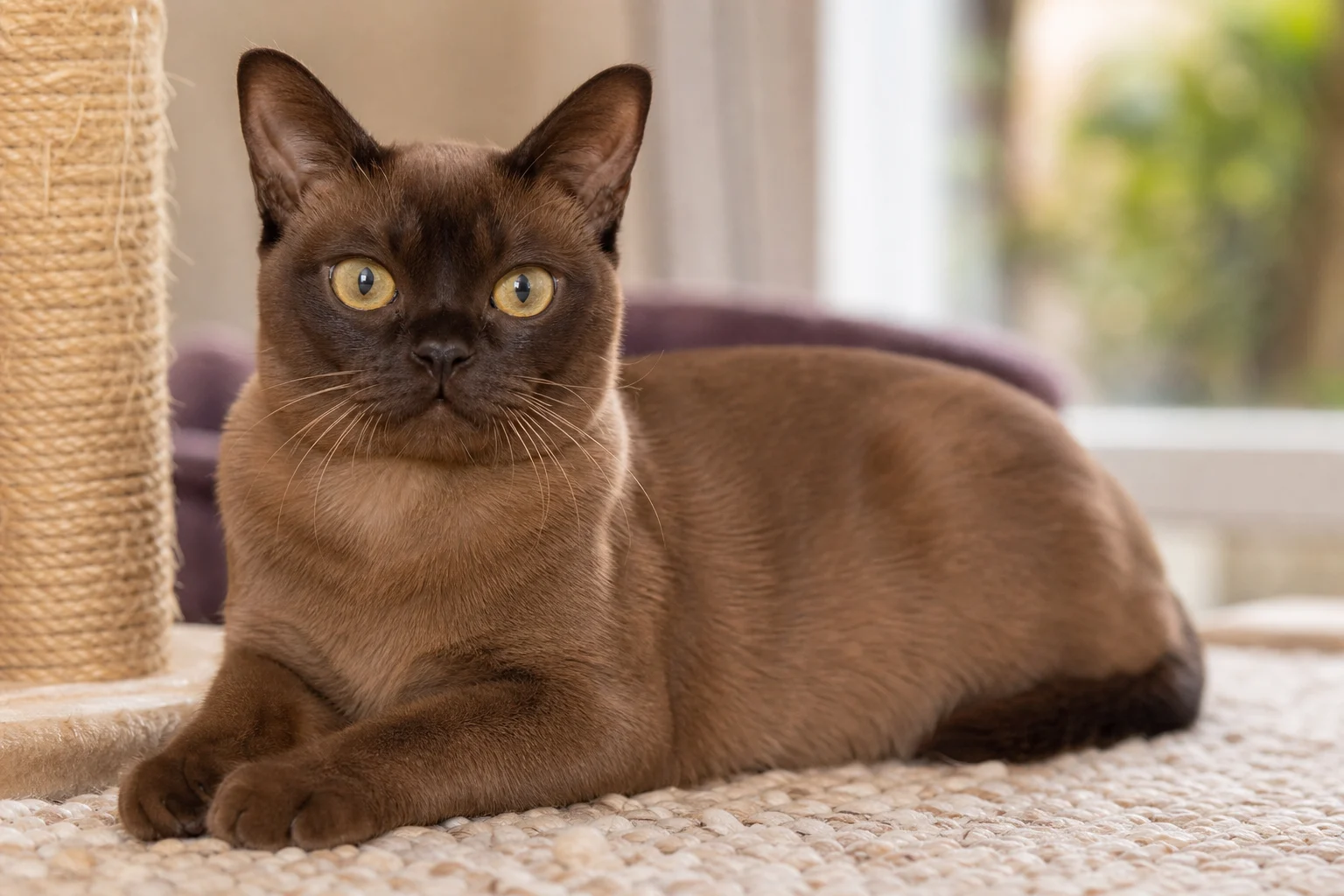
The Oriental Shorthair in chestnut delivers the look with full Siamese volume; the Burmese offers brown warmth with velcro intensity; the Korat matches the rare-treasure profile in silver-blue.
Who this breed suits
Households charmed by a rare, quiet investigator in chocolate. The "Which cat fits me?" test checks the everyday fit — the breeder search is the real quest.
Not sure what a Havana Brown may eat? The food checker rates individual foods on a traffic-light scale, and the food guide explains what cats can eat and what is toxic.
A good fit for you if …
Frequently asked questions
Why brown whiskers?
The Havana is the only breed whose standard requires them — the chocolate covers everything from coat to whiskers to paw pads.
Where does the name come from?
Either the cigar or the identically coloured rabbit breed — sources disagree charmingly.
How loud is the Havana?
Quiet: Siamese brains without Siamese opera. It murmurs and chirps.
Why do Havanas touch everything with their paws?
Breed signature: new objects and people get investigated paw-first, like a small brown hand reaching out.
How rare is the breed?
Genuinely rare — preservation programmes guard the gene pool, and European breeders are few. Plan a long search.
Which health questions matter?
General health documentation, heart checks and the cattery's handling of gene-pool diversity — the small base makes breeder quality decisive.
Similar breeds
Sources: FIFe/TICA breed standard · breed association data · editorial assessment · Last updated 08/2026. On health questions this article never replaces a visit to the vet.