 AI
AIUral Rex
Russia's oldest curl — dense soft waves from the Ural mountains on a calm, devoted family soul.
| Size | Medium |
|---|---|
| Weight | 3–5 kg |
| Life expectancy | 12–16 years |
| Origin | Russia |
| Type | Pedigree breed (Russia) |
| Grooming | low |
| Activity needs | medium |
| Beginner friendly | well suited |
Temperament & suitability
Editorial assessment based on the FIFe breed standard and breed association data.
Guideline for movement & enrichment for this breed.
Traits
Origin & history
Curly cats around Yekaterinburg were reported as early as the 1930s and reappeared after the war — making the Ural line possibly the oldest rex mutation on record, isolated in the mountains long before Cornwall's famous barn litter. Systematic breeding began in the 1980s; genetic tests confirmed the recessive Ural gene as distinct from Cornish, Devon and German Rex. WCF recognised the breed, which remains a Russian rarity with a small, devoted breeder circle.
Appearance & size
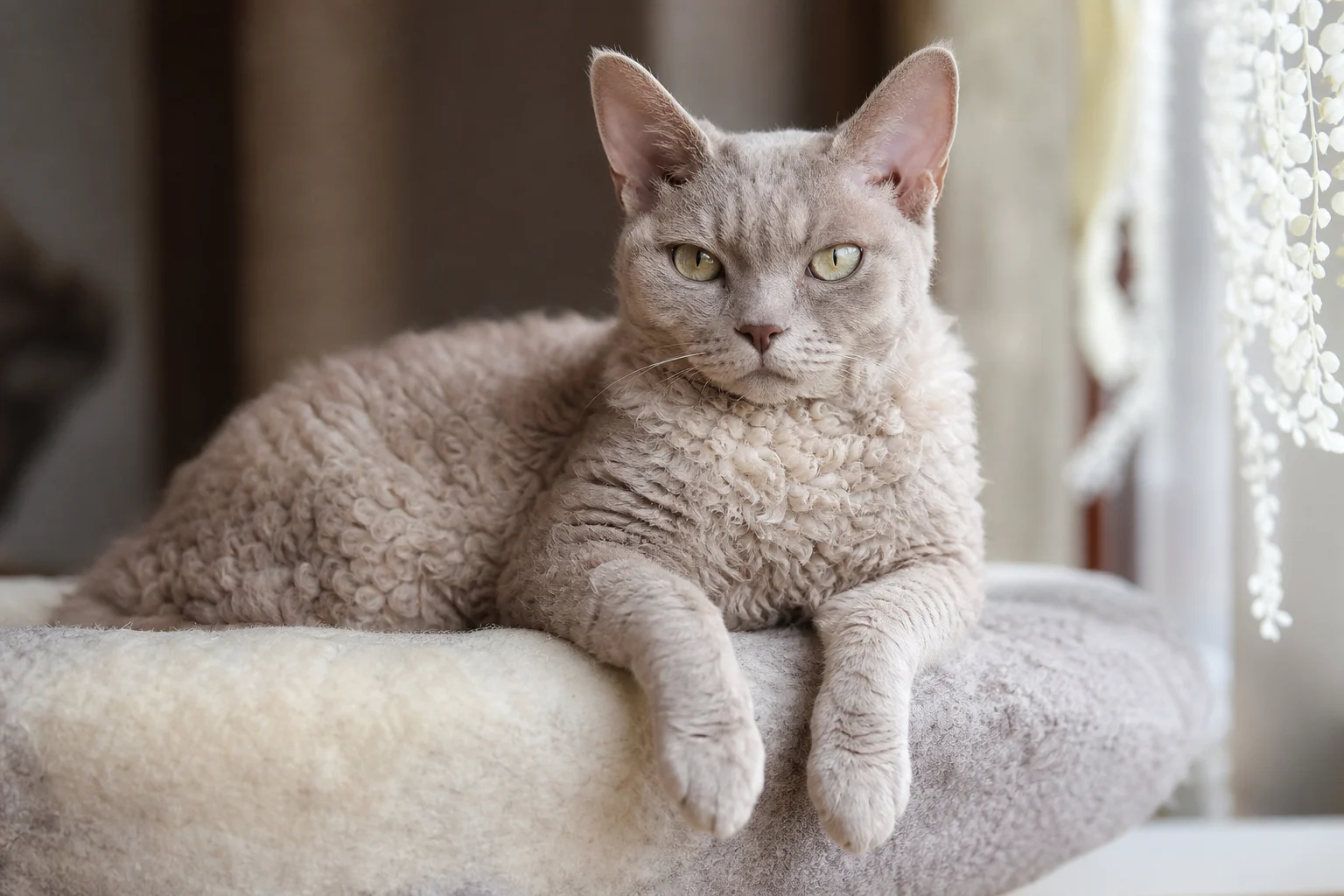
A medium, muscular three-to-five-kilogram cat under the densest curls of the rex family: tight, elastic waves in short and semi-long, covering the body fully — no thin spots, no bare patches — across all classic colours. The wedge head carries large expressive eyes; the whole cat looks freshly crimped and solidly built at once.
Personality & temperament
The Ural is the calm pole of the rex world: even-tempered, gentle and family-devoted without live-wire theatrics — it follows warmly, plays in comfortable doses, converses quietly and treats children with noted patience. Russian fanciers describe an easy, balanced companion that adapts to household rhythms rather than dictating them.
Indoor or outdoor living
An easy indoor cat with secured-balcony bonus; the rare curls deserve protection. Space needs are ordinary — warmth spots and company matter more. Frame in Indoor cat or outdoor cat?
Enrichment & activity
Daily gentle sessions and puzzle feeders in friendly mid-range doses; the balanced energy leaves proper lap evenings.
Grooming
The dense elastic curls are sturdier than Devon-Cornish delicacy: a weekly soft combing keeps them ordered, semi-longs slightly more. Shedding is famously light — the wave holds loose hair until combed out.
Feeding & health
A robust line without known breed-specific diseases; general heart checks and the small gene pool's management are the standard asks. Portion via the food amount calculator. Light shedding makes it an allergy candidate — test personal contact, as always.
Costs
Kittens cost €800–1,300 via mostly Russian and Eastern European catteries — a genuine search. Running costs are modest; the cat cost calculator totals them.
For beginners, children and other pets
A gentle family recommendation: patient with children, sociable with cats and calm dogs, beginner-suitable and undramatic — the rex look without the rex whirlwind. The search is the single hurdle.
Similar breeds compared
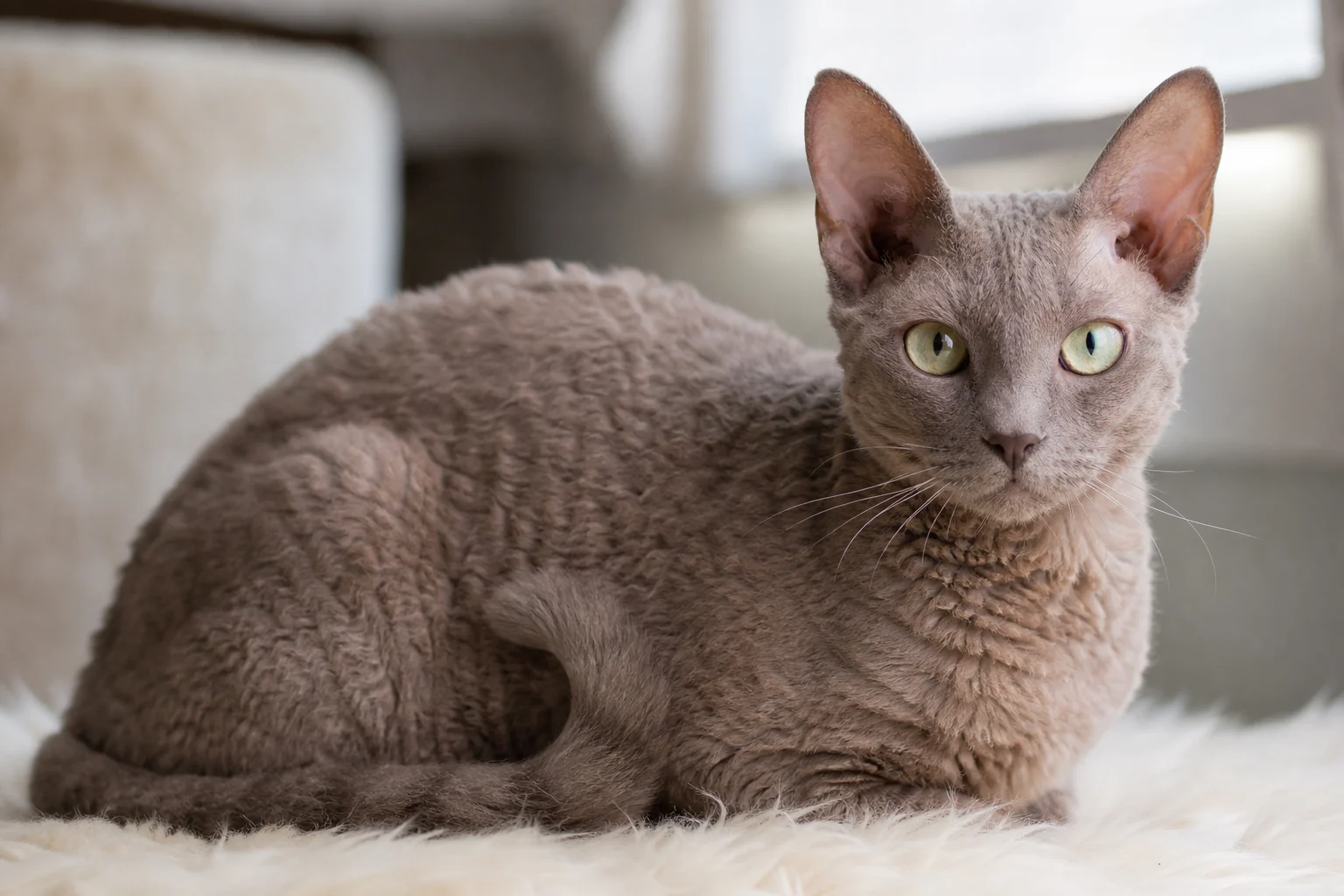
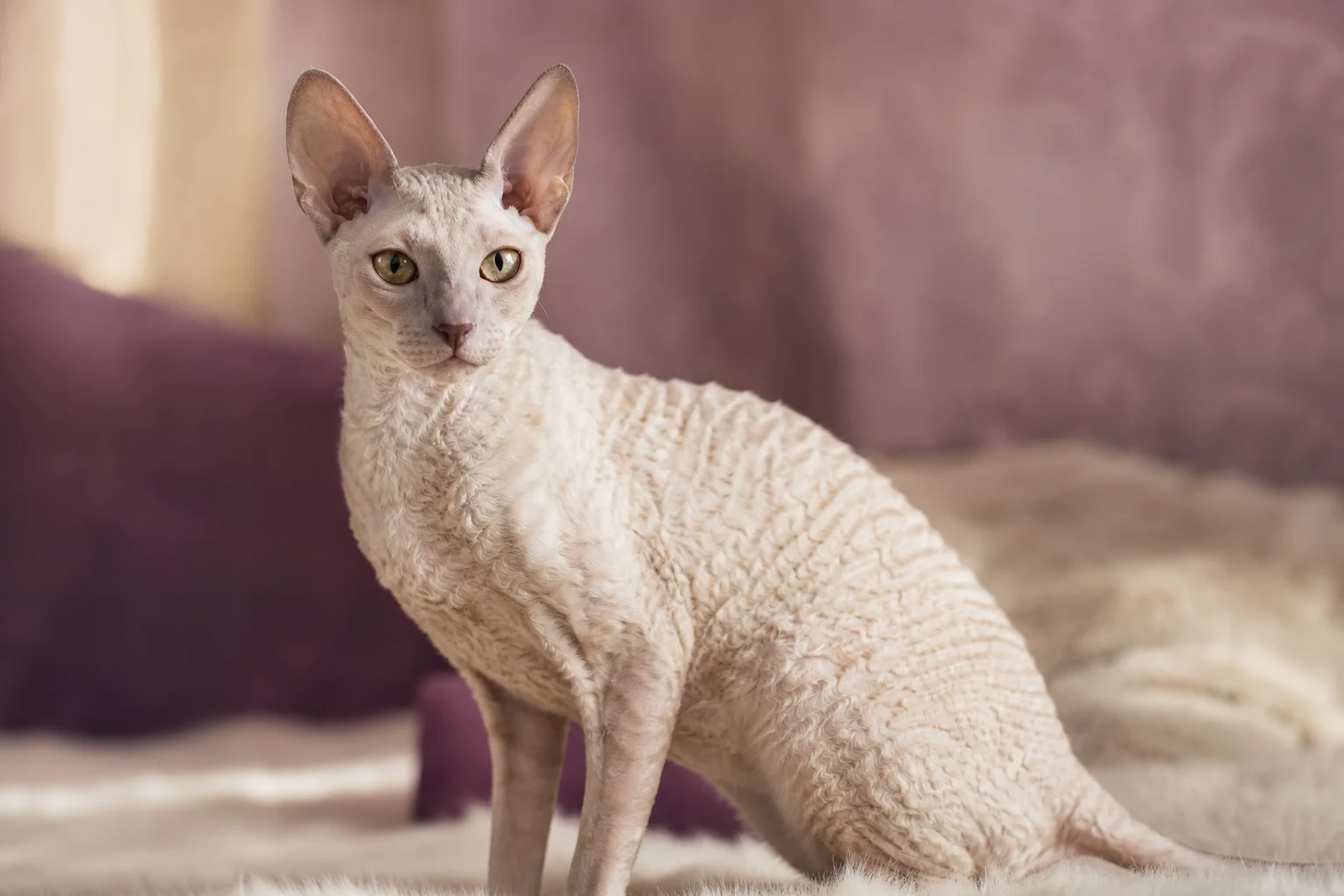
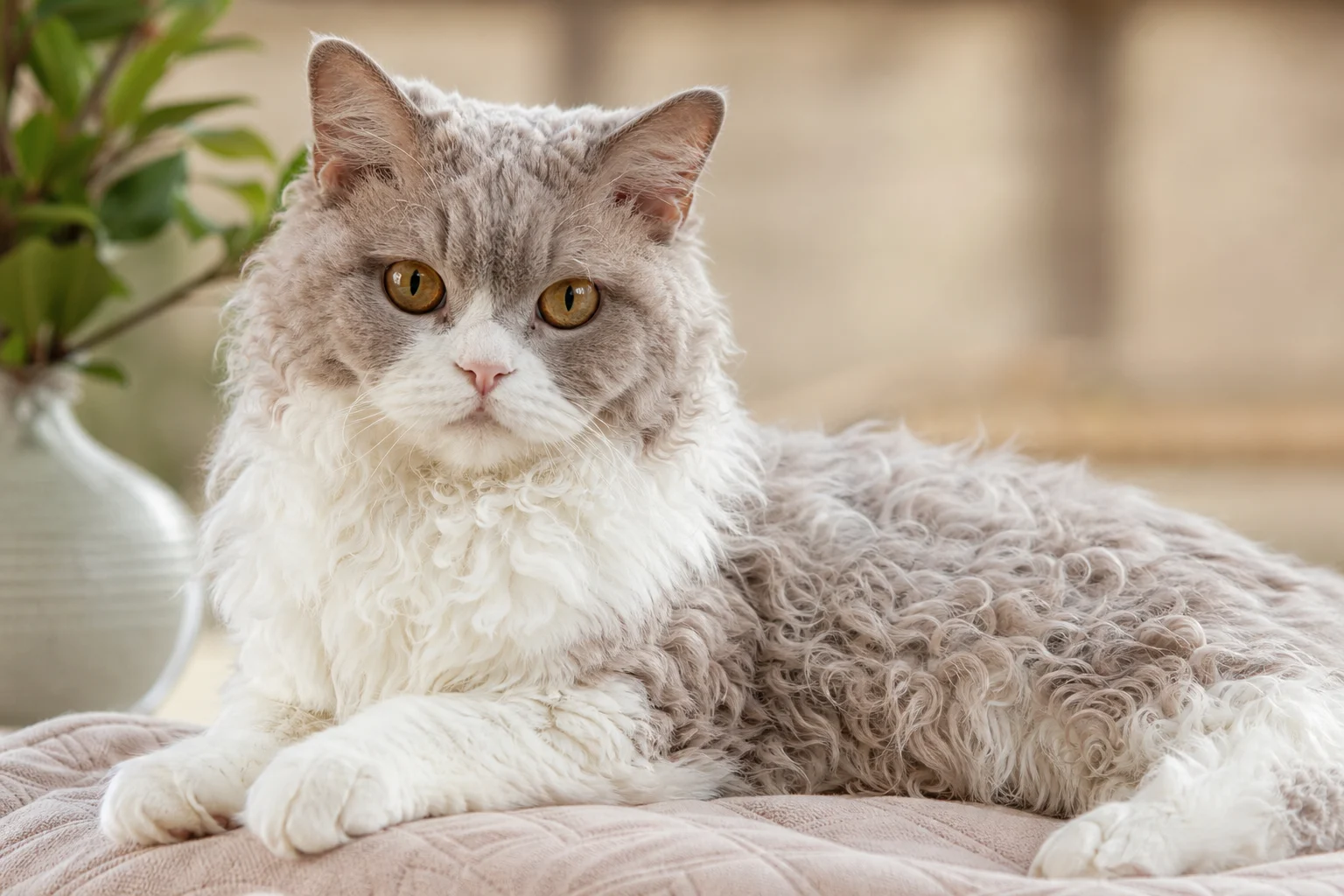
The German Rex is the easy European parallel; the Selkirk Rex the plush random-curl cousin; the Cornish Rex the athletic wave in racing trim.
Who this breed suits
Families and calm households that want dense curls on an even keel — and enjoy a rare-breed quest. The "Which cat fits me?" test confirms the easy fit.
Not sure what a Ural Rex may eat? The food checker rates individual foods on a traffic-light scale, and the food guide explains what cats can eat and what is toxic.
A good fit for you if …
Frequently asked questions
Is the Ural Rex the oldest rex mutation?
Possibly — curly cats around Yekaterinburg were documented from the 1930s, before Cornwall's famous litter. The recessive Ural gene is genetically distinct from all other rex genes.
How do the curls differ from other rex breeds?
Denser and sturdier: tight elastic waves covering the body fully, without the thin spots of Devon-Cornish coats.
How calm is the breed really?
The calm pole of the rex family — even, gentle and family-devoted, with friendly mid-range play energy.
Which health questions matter?
General heart checks and the cattery's gene-pool management — no known breed-specific diseases.
Is the Ural Rex allergy-friendly?
Tendentially, through famously light shedding — the waves hold loose hair until combed. Personal testing decides.
How rare is the breed?
A genuine Russian rarity — plan an Eastern European breeder search.
Similar breeds
Sources: FIFe/TICA breed standard · breed association data · editorial assessment · Last updated 08/2026. On health questions this article never replaces a visit to the vet.