 AI
AIGerman Rex
The first curly cat of Europe — Berlin street origins, plush waves and an easy, affectionate soul.
| Size | Medium |
|---|---|
| Weight | 4–5 kg |
| Life expectancy | 12–16 years |
| Origin | Germany |
| Type | Pedigree breed (Germany) |
| Grooming | low |
| Activity needs | high |
| Beginner friendly | well suited |
Temperament & suitability
Editorial assessment based on the FIFe breed standard and breed association data.
Guideline for movement & enrichment for this breed.
Traits
Origin & history
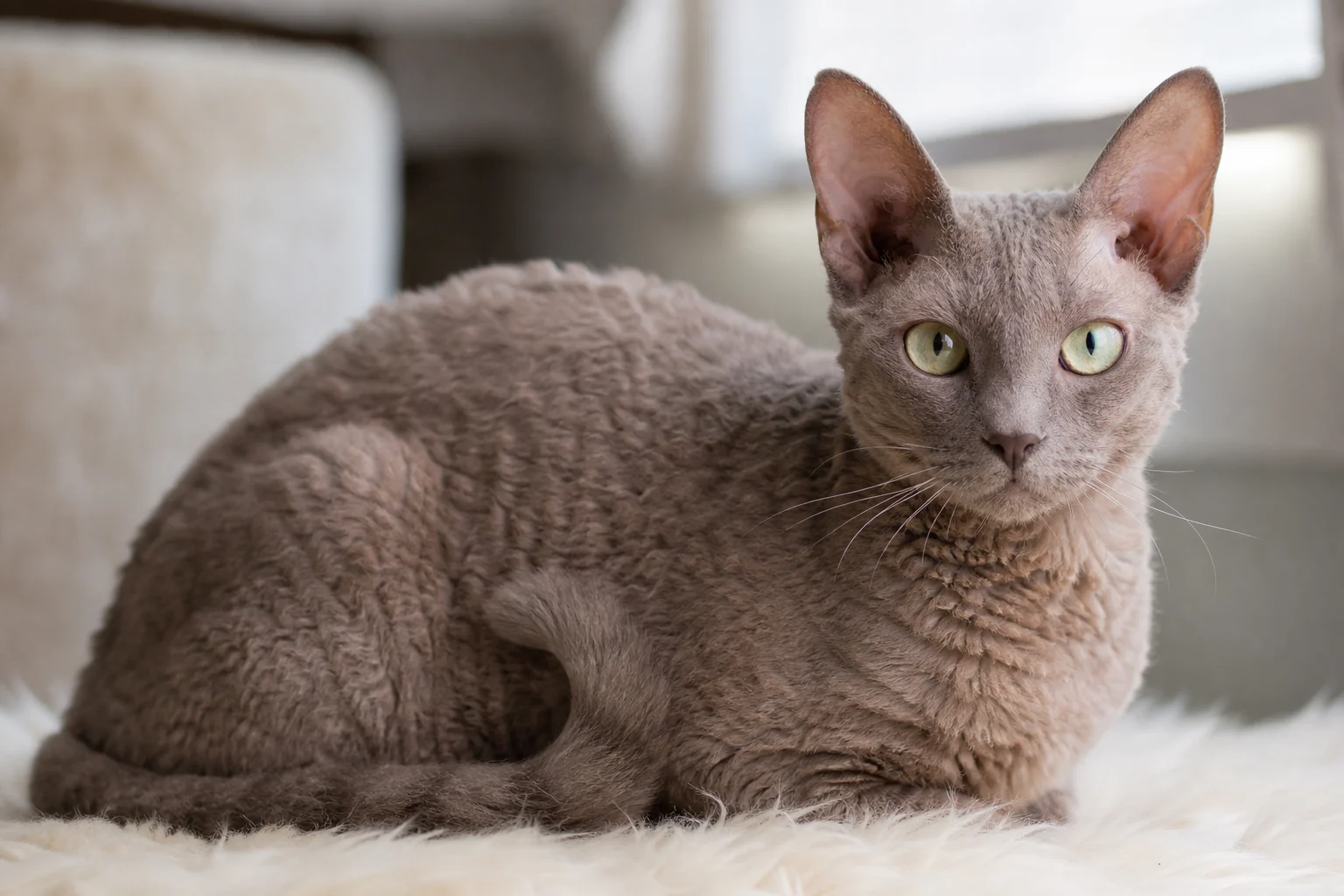
Berlin, 1951: in the rubble around the Hufeland hospital, doctor Rose Scheuer-Karpin noticed a black cat with waved fur — Lämmchen ("little lamb"), the founding mother of Europe's first rex breed. Her mutation later proved identical to the Cornish gene, but the German line developed its own sturdier type on domestic-shorthair base. The breed stayed small — a piece of Berlin history that survives through a handful of devoted catteries.
Appearance & size
A medium, rounded four-to-five-kilogram cat — sturdier than the greyhound Cornish — in soft, open waves without guard hairs, plush like velvet lamb's wool, across all classic colours. Curled whiskers complete the look; the overall impression is a friendly domestic cat someone gently crimped.
Personality & temperament
The German Rex kept the street-base pragmatism: affectionate, adaptable and even-tempered, it follows its family warmly, plays in merry mid-range doses, learns quickly and handles households — children, cats, visitors — without drama. The velvet coat comes with a warmth-seeking streak; laps and blankets rank high.
Indoor or outdoor living
Indoors with secured balcony: the light coat insulates modestly and the rarity deserves protection. Space needs are ordinary; warmth spots and company matter more. Frame in Indoor cat or outdoor cat?
Enrichment & activity
Daily play sessions and puzzle feeders in comfortable doses — the energy is friendly mid-range with proper sofa evenings.
Grooming
Gentle and minimal: a soft weekly pass or damp-chamois smoothing; hard brushing thins the delicate waves. Ears wax faster than average and want routine cleaning.
Feeding & health
A robust little breed on broad domestic base; general heart checks are the standard question, and the tiny gene pool makes cattery diversity management worth asking about. Portion via the food amount calculator — the metabolism runs slightly warm under thin fur. Light shedding makes it a frequent allergy candidate; test contact personally.
Costs
Kittens cost €800–1,200 — if you find one: the breed counts among Europe's rarest, and waiting lists span borders. Running costs are modest; the cat cost calculator totals them.
For beginners, children and other pets
An easy, warm family cat: patient with children, sociable with cats and gentle dogs, beginner-friendly and undramatic. The search is the only hard part — the cat itself is Berlin charm in waves.
Similar breeds compared
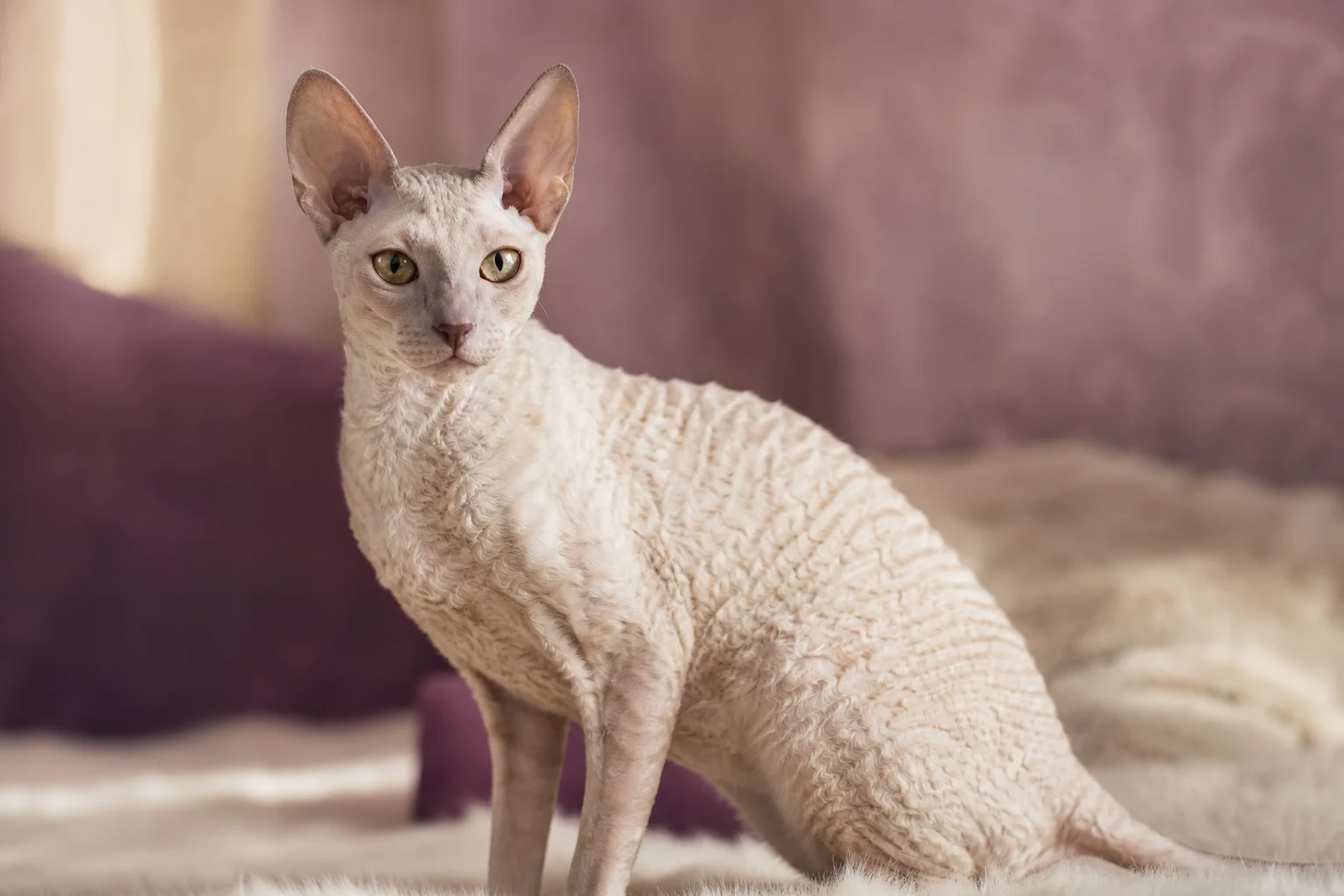
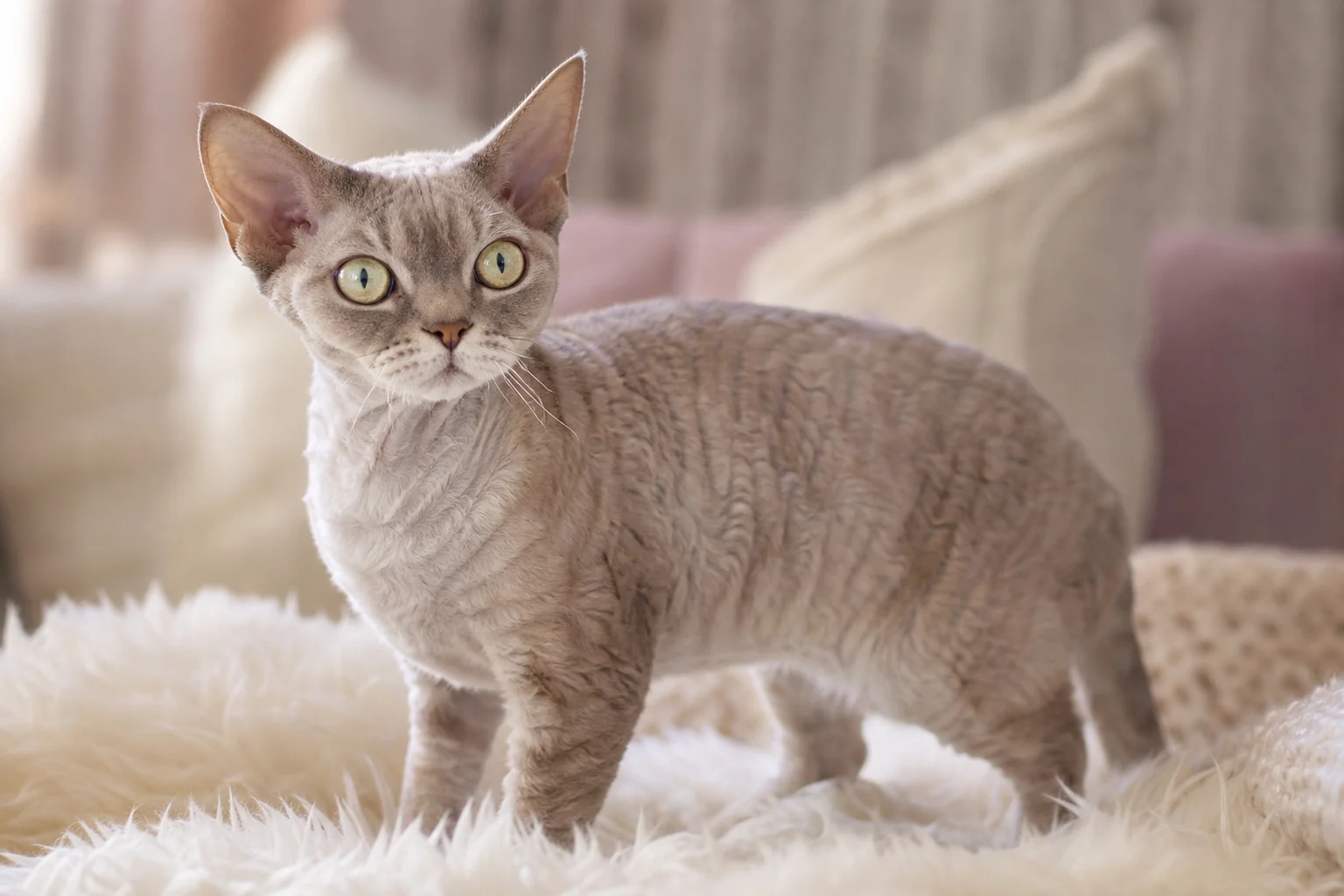
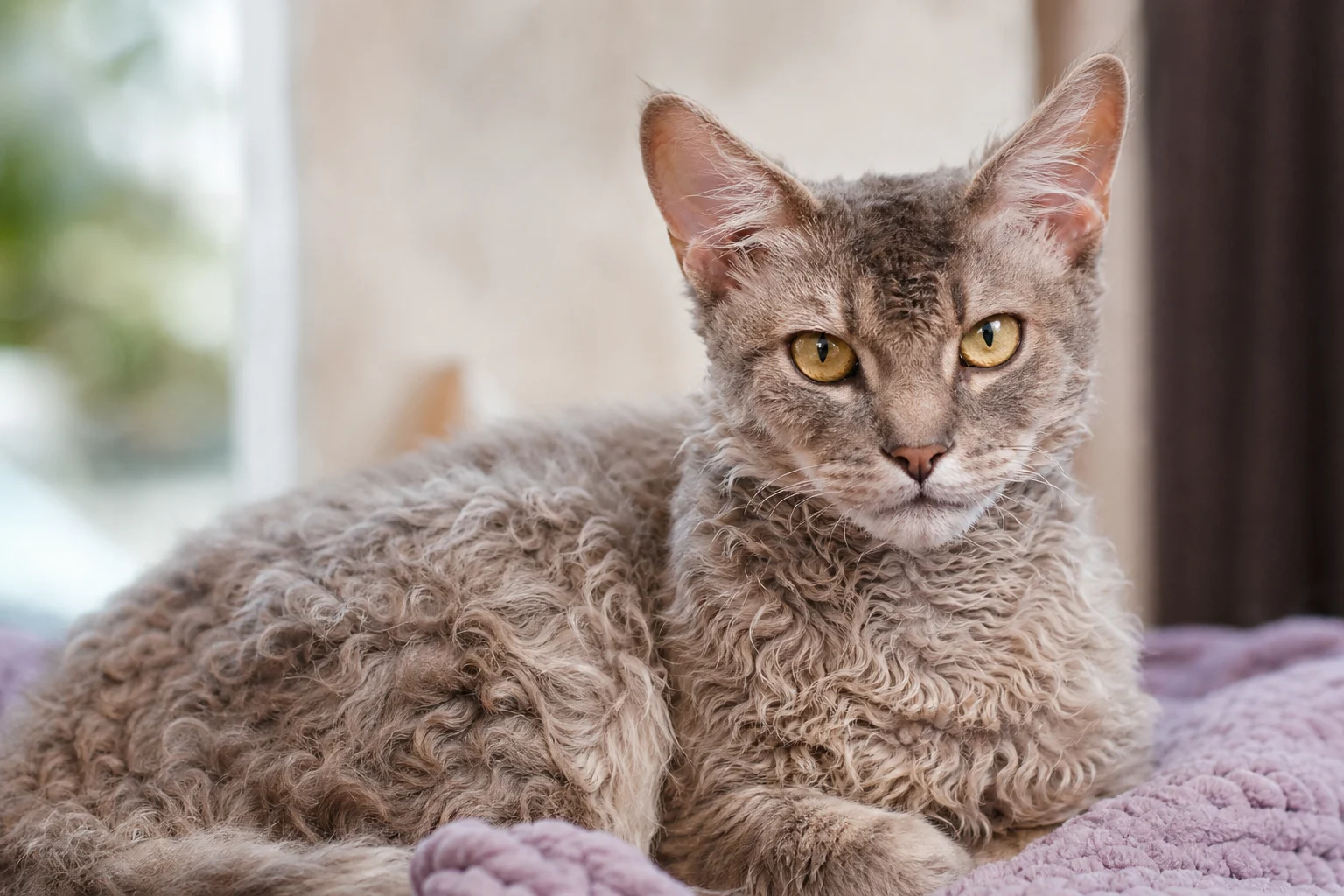
The Cornish Rex shares the gene in racing trim; the Devon Rex curls at higher intensity; the LaPerm matches the easy curly-family niche from the American side.
Who this breed suits
Households that want gentle curls, Berlin history and no drama — and enjoy a good breeder quest. The "Which cat fits me?" test confirms the easy fit.
Not sure what a German Rex may eat? The food checker rates individual foods on a traffic-light scale, and the food guide explains what cats can eat and what is toxic.
A good fit for you if …
Frequently asked questions
Is the German Rex the oldest rex breed?
Europe's first: founding mother Lämmchen was noticed in Berlin in 1951, before the Cornish line was established. The genes later proved identical.
How does it differ from the Cornish Rex?
Build: the German Rex kept a sturdier, rounded domestic body against the Cornish greyhound frame — same wave, different silhouette.
How rare is the breed?
Among Europe's rarest — a handful of catteries, cross-border waiting lists, and every kitten counts for preservation.
How much grooming do the waves need?
Minimal and gentle: soft weekly passes or damp smoothing, plus routine ear cleaning.
Is the German Rex allergy-friendly?
Tendentially, through light shedding — Fel d 1 remains, so test personal contact first.
Which health questions matter?
General heart checks and the cattery's gene-pool management — the small base makes diversity handling worth asking about.
Similar breeds
Sources: FIFe/TICA breed standard · breed association data · editorial assessment · Last updated 08/2026. On health questions this article never replaces a visit to the vet.