 AI
AISuphalak
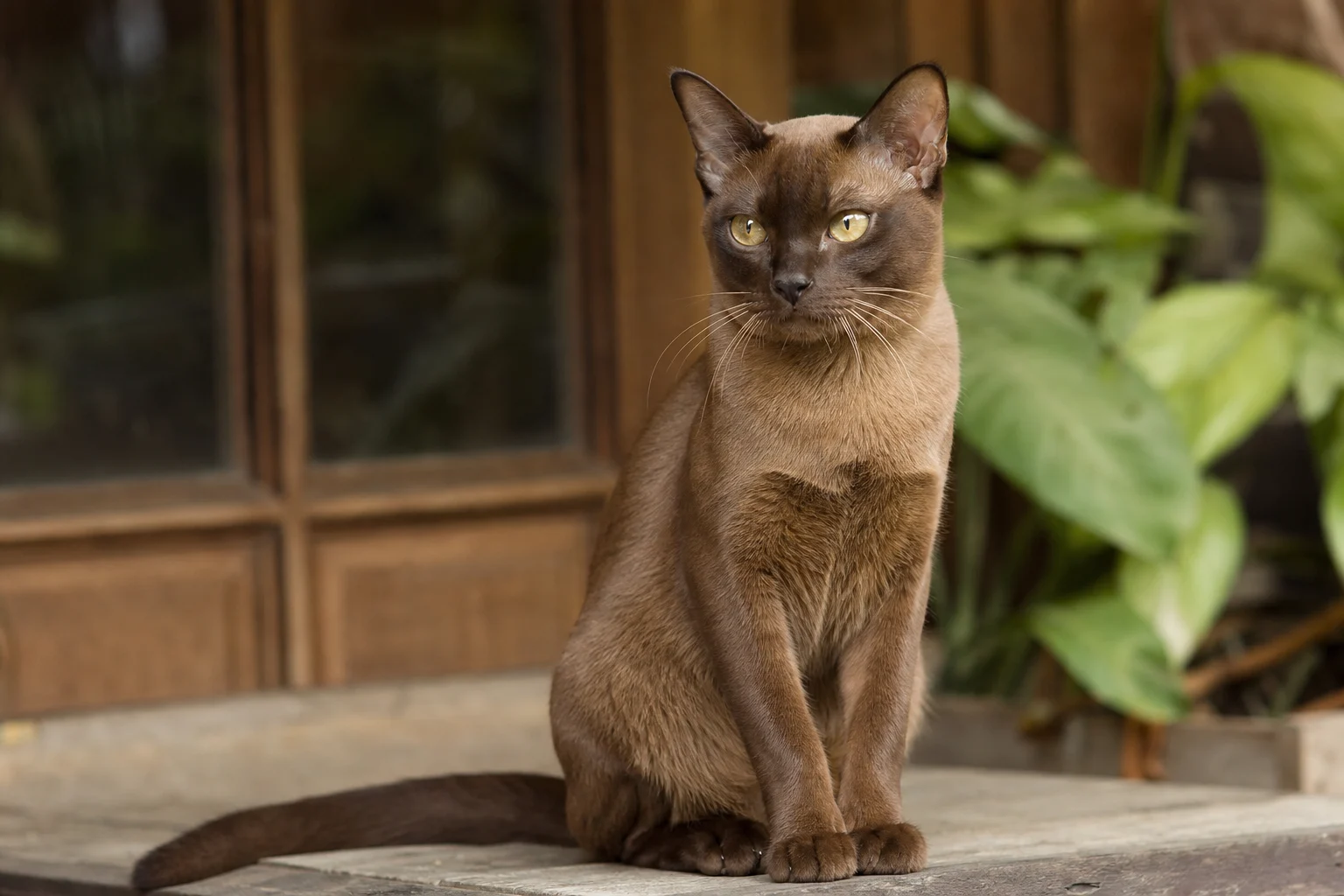
Thailand's copper treasure — a solid-red rarity from the old manuscripts with a loyal, talkative soul.
| Size | Medium |
|---|---|
| Weight | 3–5 kg |
| Life expectancy | 12–16 years |
| Origin | Thailand |
| Type | Natural breed (Thailand) |
| Grooming | low |
| Activity needs | high |
| Beginner friendly | well suited |
Temperament & suitability
Editorial assessment based on the FIFe breed standard and breed association data.
Guideline for movement & enrichment for this breed.
Traits
Origin & history
The Tamra Maew manuscripts that gave the world the Siamese, Korat and Khao Manee describe a fourth treasure: the Suphalak or Thong Daeng ("copper"), a solid reddish-brown cat whose keeper, legend promises, gains wealth — and whose loss to Burma in the 1767 fall of Ayutthaya folk history still mourns. Thai breeders have worked since the 2000s to re-establish the ancient type from surviving temple and village cats; TICA accepted the breed for registration in 2015. It remains one of the rarest living links to old Siam.
Appearance & size
A lithe, muscular three-to-five-kilogram cat in one uniform: warm, solid copper-brown from nose to tail — no points, no ticking, no white — with golden to amber eyes and a short, glossy coat. The build is moderate Thai: athletic, elegant, unexaggerated. Distinguishing it from the sable Burmese takes a second look: the Suphalak runs redder and fully solid.
Personality & temperament
The manuscripts promised loyalty, and the breed delivers: Suphalaks bond intensely, follow their people room to room, converse in expressive Siamese-family tones and involve themselves in everything with confident charm. They are clever, playful into age and sociable with known cats and gentle dogs; alone-time wounds them like all their manuscript cousins.
Indoor or outdoor living
Indoors with secured balcony: rarity, trust and value forbid roaming. Moderate space plus real company covers the needs; a second social cat carries work hours. Frame in Indoor cat or outdoor cat?
Enrichment & activity
Daily interactive sessions: fetch, teaser hunts, clicker games, puzzle rotations. Energy is warm mid-high — engagement is relationship maintenance for this breed.
Grooming
A weekly polish keeps the copper gleaming; shedding is light.
Feeding & health
A robust natural base; the tiny world population makes cattery quality decisive — ask for general documentation, heart checks and gene-pool management. Portion via the food amount calculator.
Costs
If you find one: kittens cost €1,200–2,000, mostly via Thai or specialist catteries with long waits. Running costs are ordinary; the cat cost calculator totals them.
For beginners, children and other pets
A warm family companion for present households: playful with children, sociable with cats and gentle dogs. Committed beginners manage; the search is the true test of dedication.
Similar breeds compared
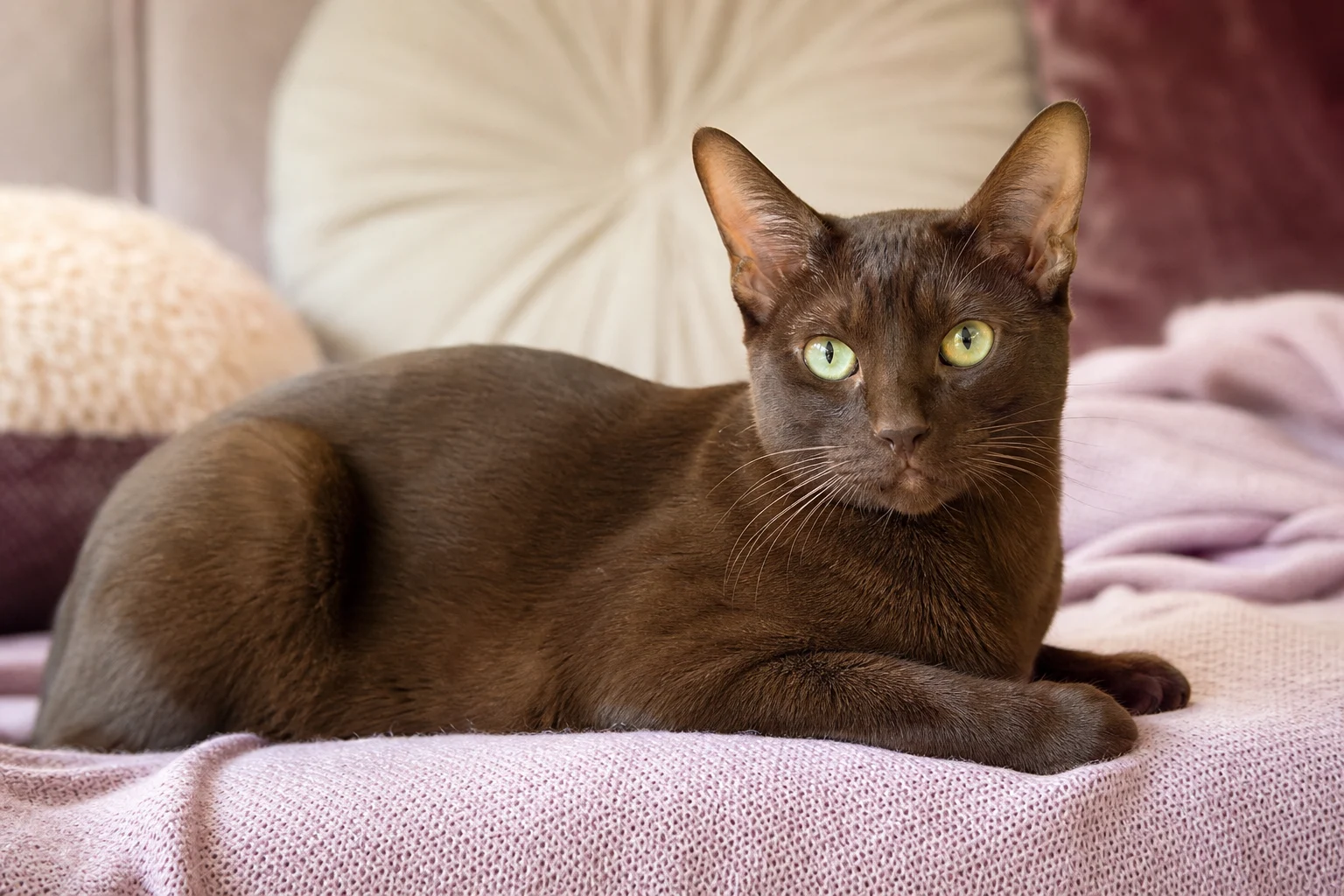
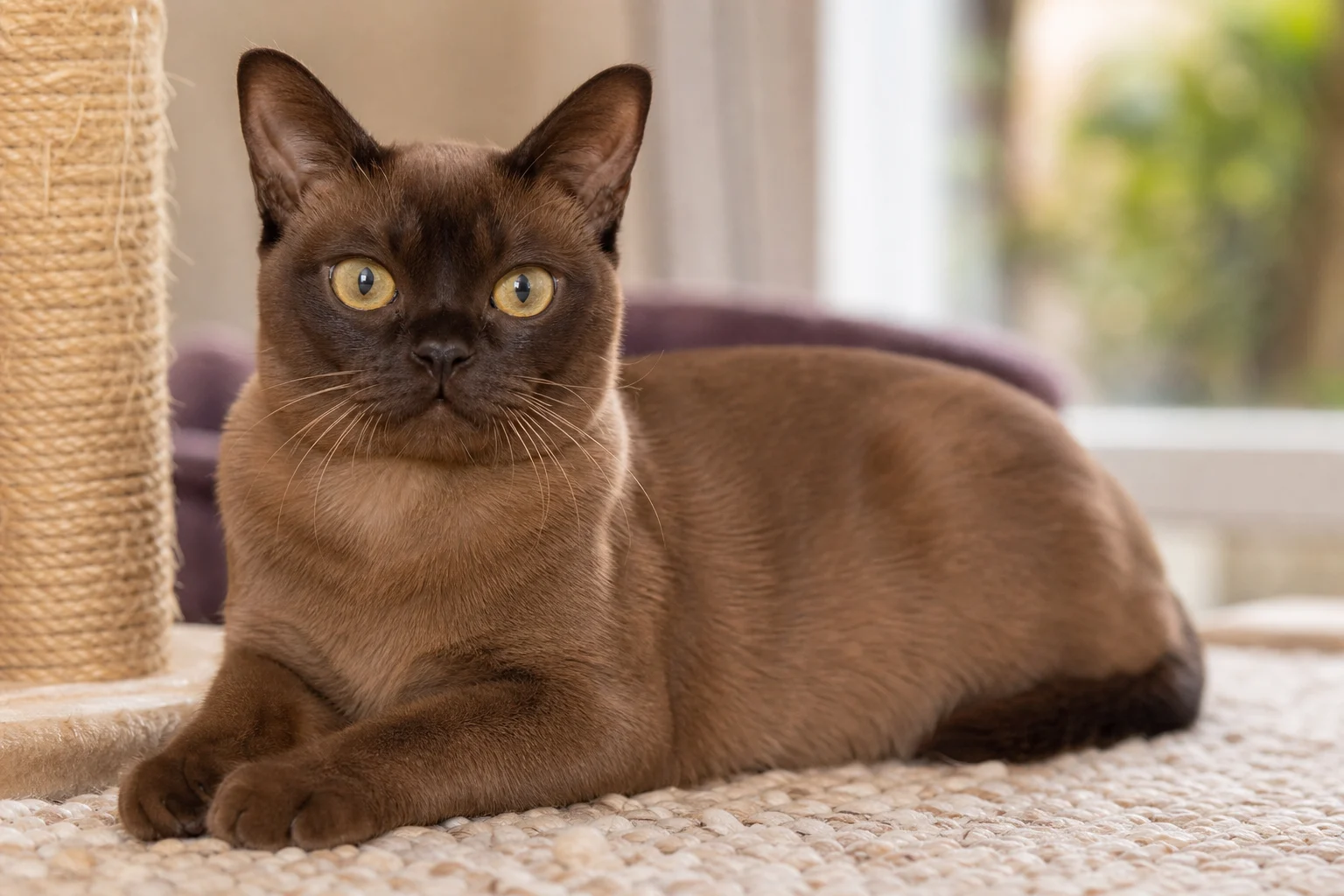
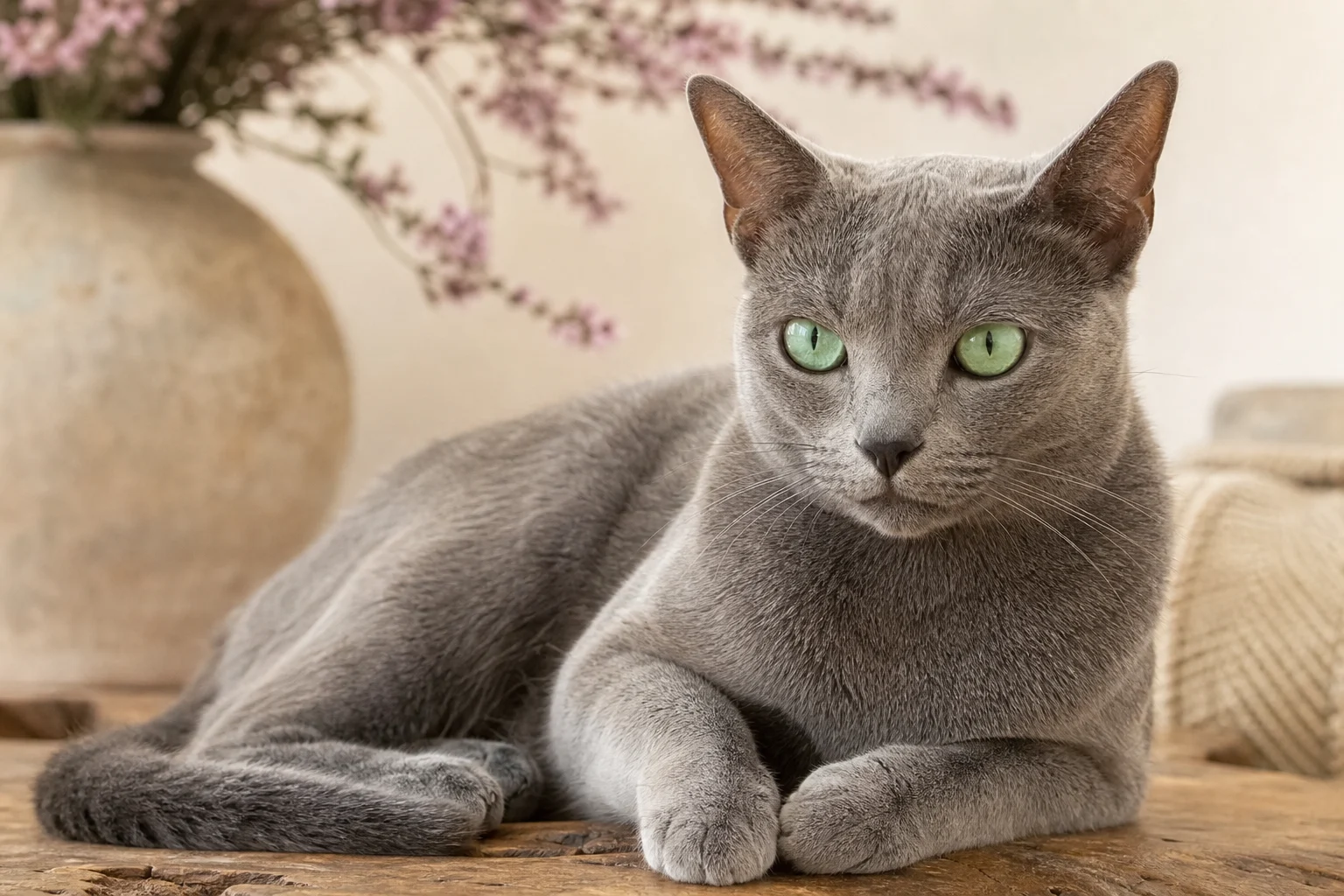
The Havana Brown is the Western chocolate parallel; the Burmese the sable cousin with velcro intensity; the Korat the silver-blue manuscript sibling.
Who this breed suits
Households that want a living piece of Thai history with loyal, talkative warmth — and bring patience for the search. The "Which cat fits me?" test confirms the everyday fit.
Not sure what a Suphalak may eat? The food checker rates individual foods on a traffic-light scale, and the food guide explains what cats can eat and what is toxic.
A good fit for you if …
Frequently asked questions
What does Suphalak mean?
The 'copper' treasure of the Thai Tamra Maew manuscripts — a solid reddish-brown cat whose keeper, legend says, gains wealth.
How does it differ from the Burmese?
Colour genetics: the Suphalak is fully solid copper-red without the Burmese sepia shading — and carries the older Thai type.
How rare is the breed?
Among the rarest recognised breeds — re-established from surviving Thai cats since the 2000s, with tiny worldwide numbers.
Which health questions matter?
General documentation, heart checks and the cattery's gene-pool management — the small base decides everything.
How talkative are Suphalaks?
Expressively — Siamese-family conversation at warm volume, plus full household involvement.
Where do I find a breeder?
Mostly in Thailand or via specialist catteries with long waiting lists — plan the search as part of the commitment.
Similar breeds
Sources: FIFe/TICA breed standard · breed association data · editorial assessment · Last updated 08/2026. On health questions this article never replaces a visit to the vet.