 AI
AISerengeti
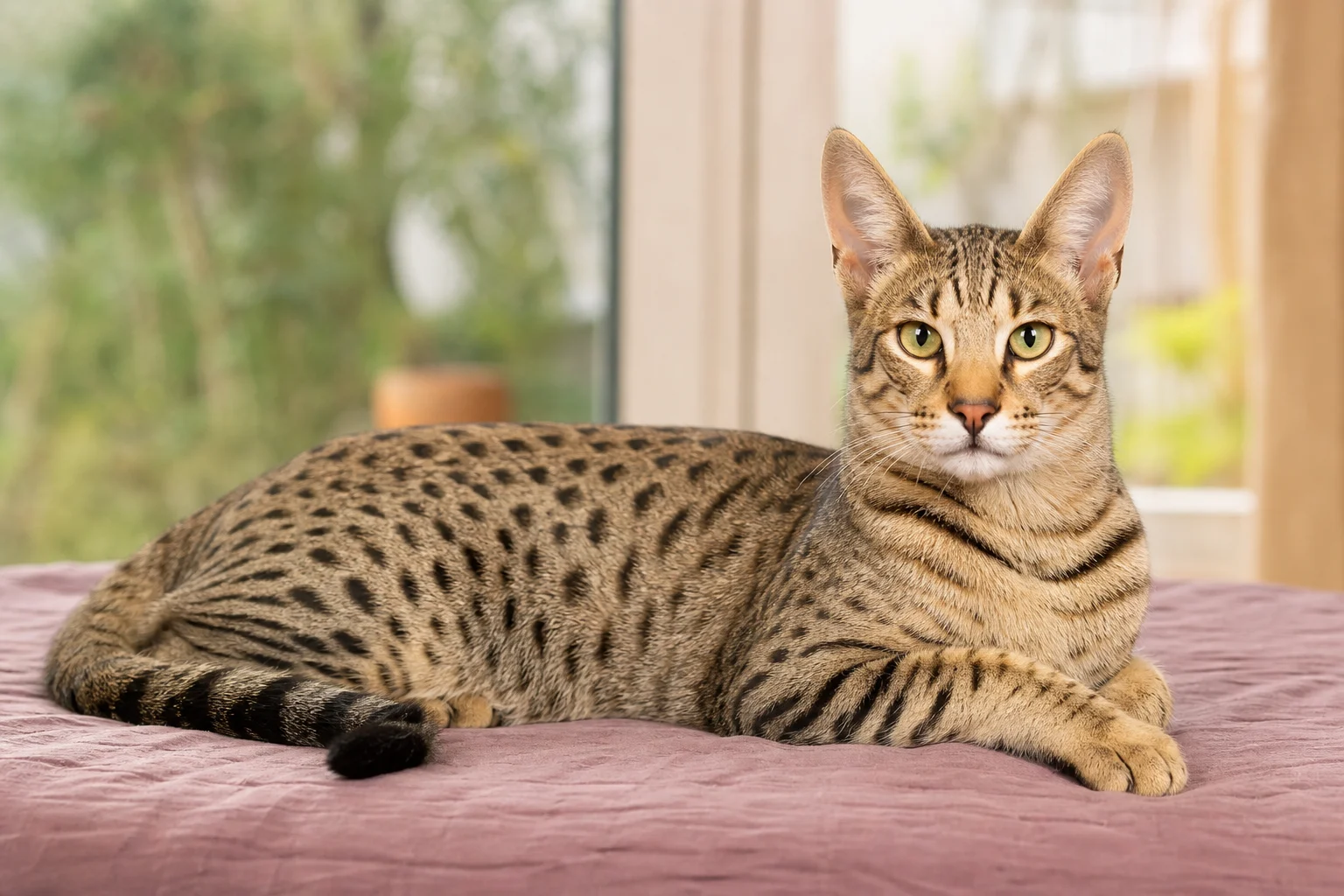
A serval look without a drop of wild blood — long legs, satellite ears and sociable spotted energy.
| Size | Large |
|---|---|
| Weight | 4–7 kg |
| Life expectancy | 10–15 years |
| Origin | United States |
| Type | Pedigree breed (USA) |
| Grooming | low |
| Activity needs | very high |
| Beginner friendly | with some experience |
Temperament & suitability
Editorial assessment based on the FIFe breed standard and breed association data.
Guideline for movement & enrichment for this breed.
Traits
Origin & history
Conservation biologist Karen Sausman asked in 1994 whether the serval look could exist without any serval: the Serengeti answers with pure domestic genetics — Bengal spots crossed onto Oriental Shorthair architecture, no wildcat generation anywhere in the pedigree. TICA carries the young breed in development; it remains rare, and its mission statement doubles as its charm: maximum savannah silhouette, zero hybrid complexity.
Appearance & size
Four to seven kilograms on the longest legs in the domestic catalogue, with strikingly large, upright ears — the serval's satellite dishes — over a small chin and long neck. Bold black spots pattern golden, silver or smoky ground; the whole cat stands tall and alert like its namesake plain's hunter.
Personality & temperament
The Oriental half shows immediately: Serengetis are people-seeking, talkative in soft chirps and openly affectionate once the brief initial shyness melts. The Bengal half adds athletic drive — running, climbing, leaping from those endless legs — and thorough curiosity. It follows its people devotedly, greets known guests and plays with lasting enthusiasm; solitary boredom is its one true enemy.
Indoor or outdoor living
Indoors with vertical infrastructure and ideally a secured balcony or catio: the athletic sprinter uses height and runways gratefully. The trusting attachment belongs behind safety nets. Frame in Indoor cat or outdoor cat?
Enrichment & activity
Daily real sessions: chase and fetch, climbing courses, clicker games, puzzle rotations. Energy sits high-mid — demanding, but with a functioning off switch on your lap afterwards. A playful companion cat shares the hours well.
Grooming
A weekly polish for the short spotted coat; shedding is modest.
Feeding & health
Portion the athlete via the food amount calculator. As a young rarity, documentation is the ask: general health records, HCM checks and PK-Def where Bengal lines carry it. The DE data notes a wider lifespan band (10–15) — one more argument for careful catteries.
Costs
Kittens from documented lines cost €1,000–1,600 — few breeders worldwide, waiting lists standard. Running costs are ordinary; the cat cost calculator totals them.
For beginners, children and other pets
A sociable companion for active households: playful with children, dog-friendly and cat-compatible. The energy and rarity place it with engaged keepers; committed beginners with time budgets manage.
Similar breeds compared
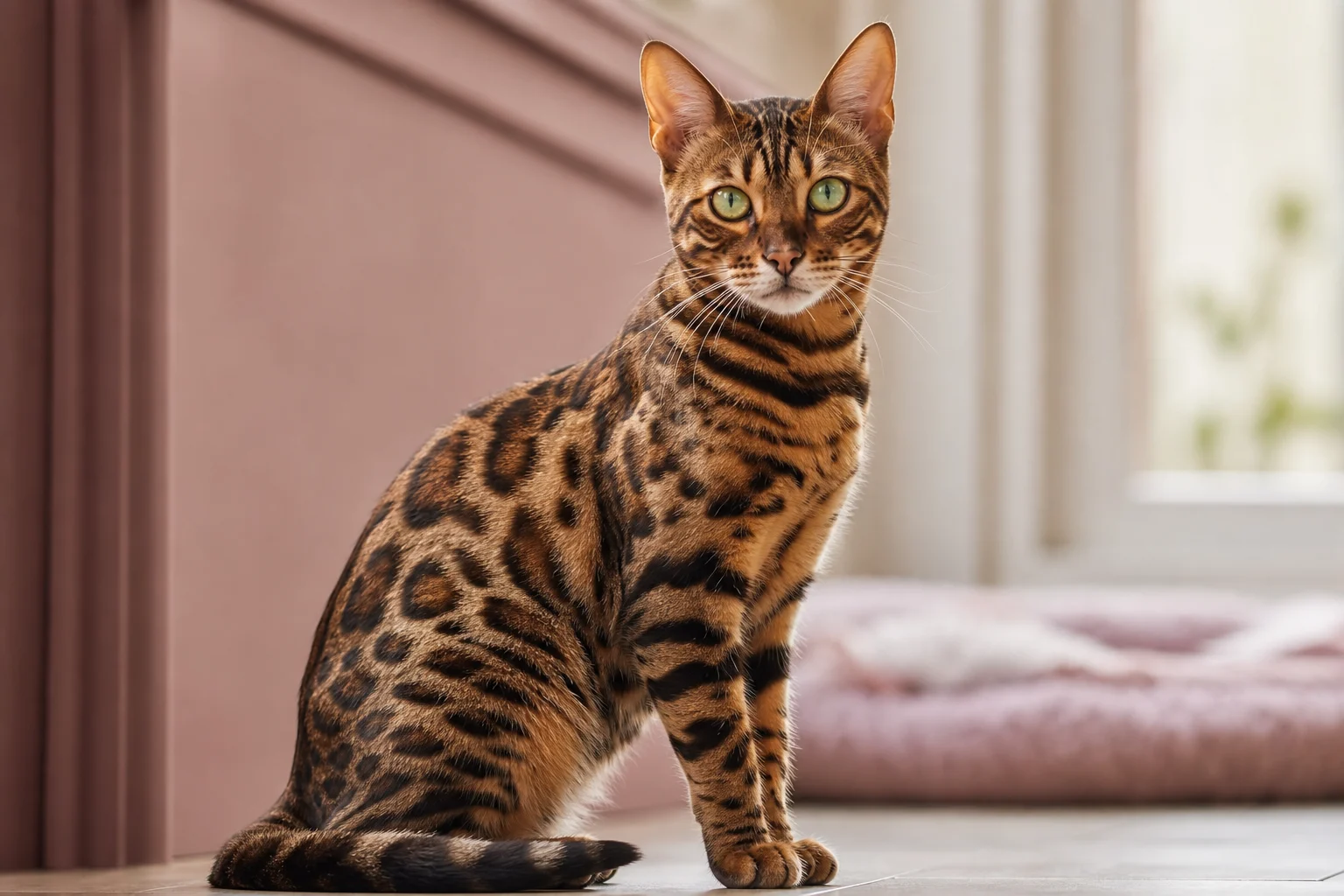
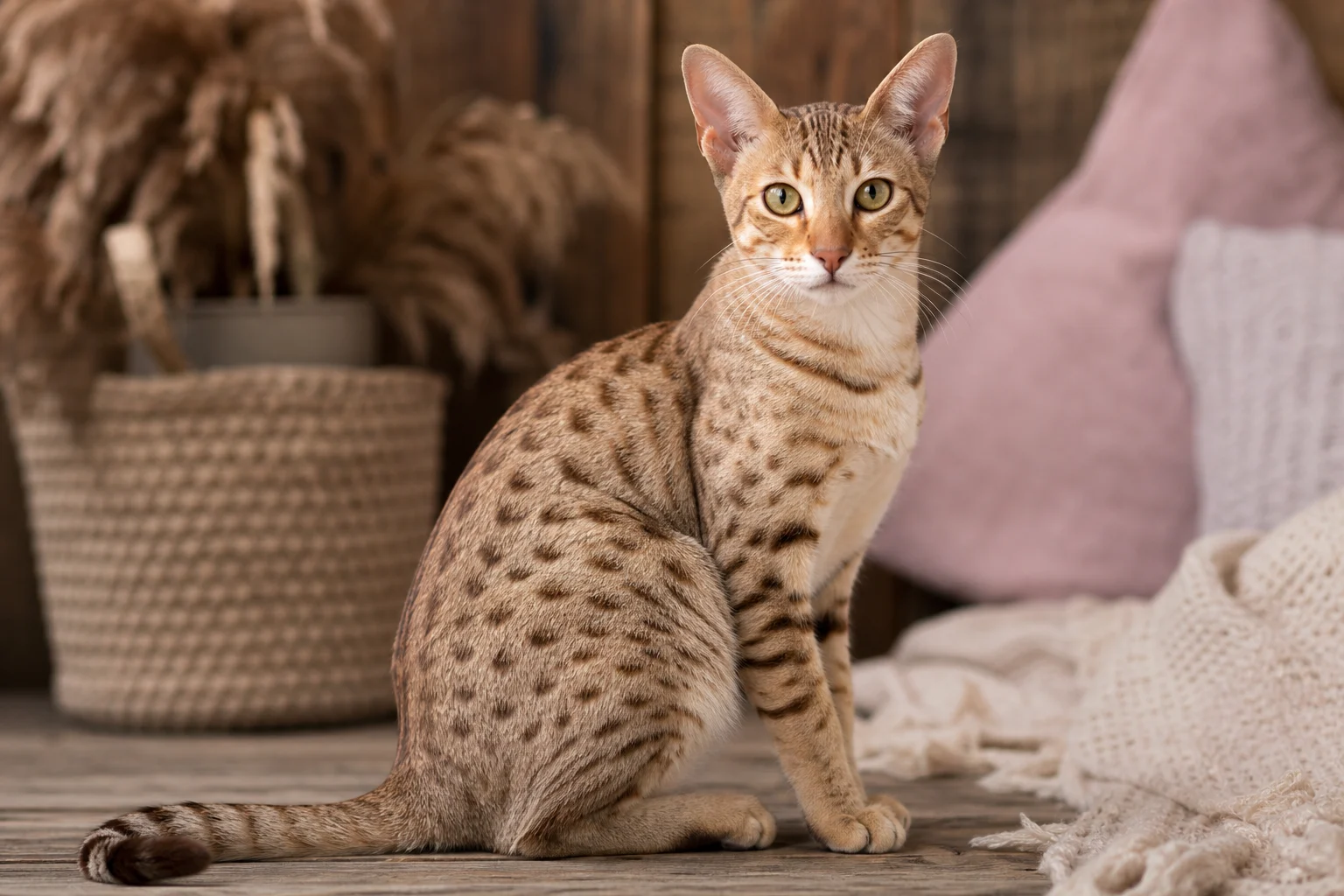
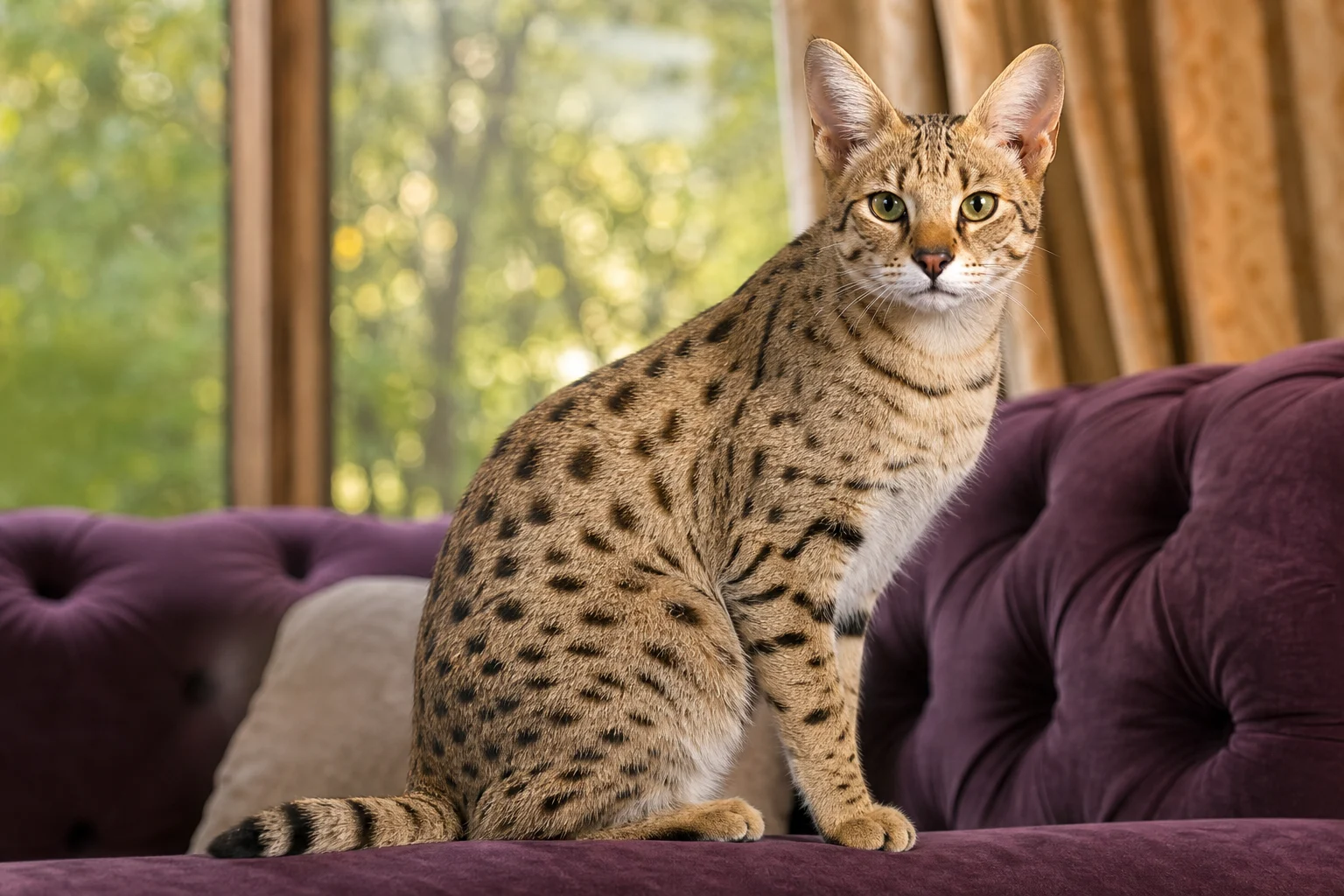
The Savannah is the actual serval hybrid with specialist demands; the Bengal the wilder-blooded spot classic; the Ocicat the third way to spots with maximum ease.
Who this breed suits
Households that want savannah looks with sociable, hybrid-free substance. The "Which cat fits me?" test checks the energy match.
Not sure what a Serengeti may eat? The food checker rates individual foods on a traffic-light scale, and the food guide explains what cats can eat and what is toxic.
A good fit for you if …
Frequently asked questions
Does the Serengeti contain serval blood?
None — the look is built purely from Bengal and Oriental Shorthair genetics. That is the breed's founding mission.
How does it differ from the Savannah?
Fundamentally: the Savannah is a true serval hybrid with legal and keeping complexity; the Serengeti delivers the silhouette as a normal domestic cat.
How tall are Serengetis?
The longest legs in the domestic catalogue — four to seven kilograms standing remarkably high, with satellite-dish ears completing the look.
Which health questions matter?
General documentation, HCM checks and PK-Def where Bengal heritage carries it — the young breed rewards diligence.
Are Serengetis talkative?
Softly — Oriental-heritage chirps and comments, well below Siamese volume.
How rare is the breed?
Genuinely rare worldwide — plan a patient breeder search.
Similar breeds
Sources: FIFe/TICA breed standard · breed association data · editorial assessment · Last updated 08/2026. On health questions this article never replaces a visit to the vet.