 AI
AIMinskin
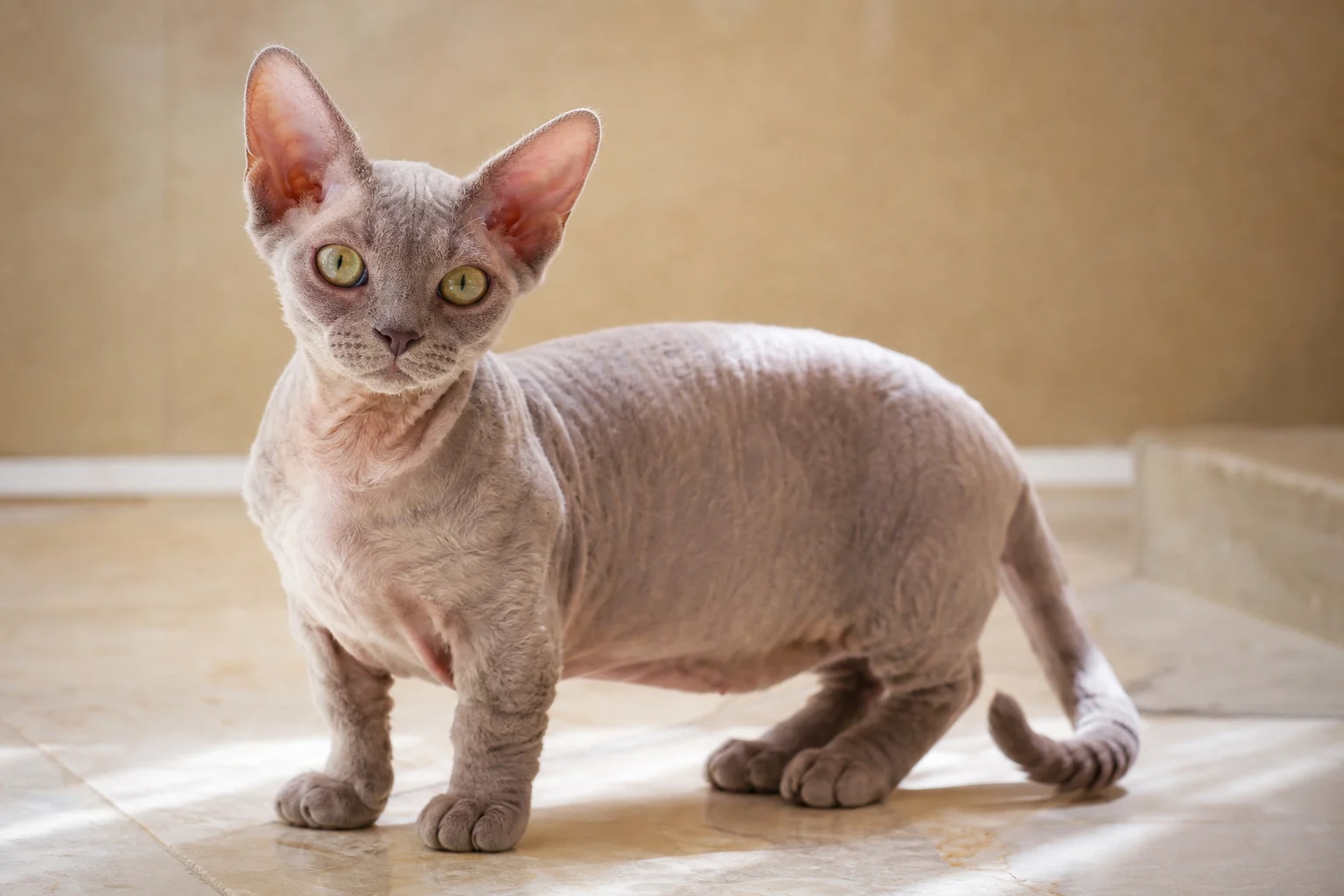
Hairless, short-legged, tiny — a triple-design experiment whose sweet nature cannot carry the maths.
| Size | Small |
|---|---|
| Weight | 2–4 kg |
| Life expectancy | 12–15 years |
| Origin | United States |
| Type | Pedigree breed (USA) |
| Grooming | low |
| Activity needs | high |
| Beginner friendly | with some experience |
Temperament & suitability
Editorial assessment based on the FIFe breed standard and breed association data.
Guideline for movement & enrichment for this breed.
Traits
Origin & history
Boston, 1998: breeder Paul McSorley combined Munchkin legs with Sphynx skin, adding Devon Rex and Burmese, and named the result Minskin — miniature plus skin. The design goal was "fur points": sparse down concentrated on face, ears, legs and tail over a largely bare body, on the shortest possible frame. TICA carries it as an experimental preliminary breed only; European registries refuse, and under German harmful-breeding criteria the stacked genetics — chondrodysplasia plus hairlessness — sit exactly where the Bambino sits. We profile it for searchers, with the arithmetic open.
Appearance & size
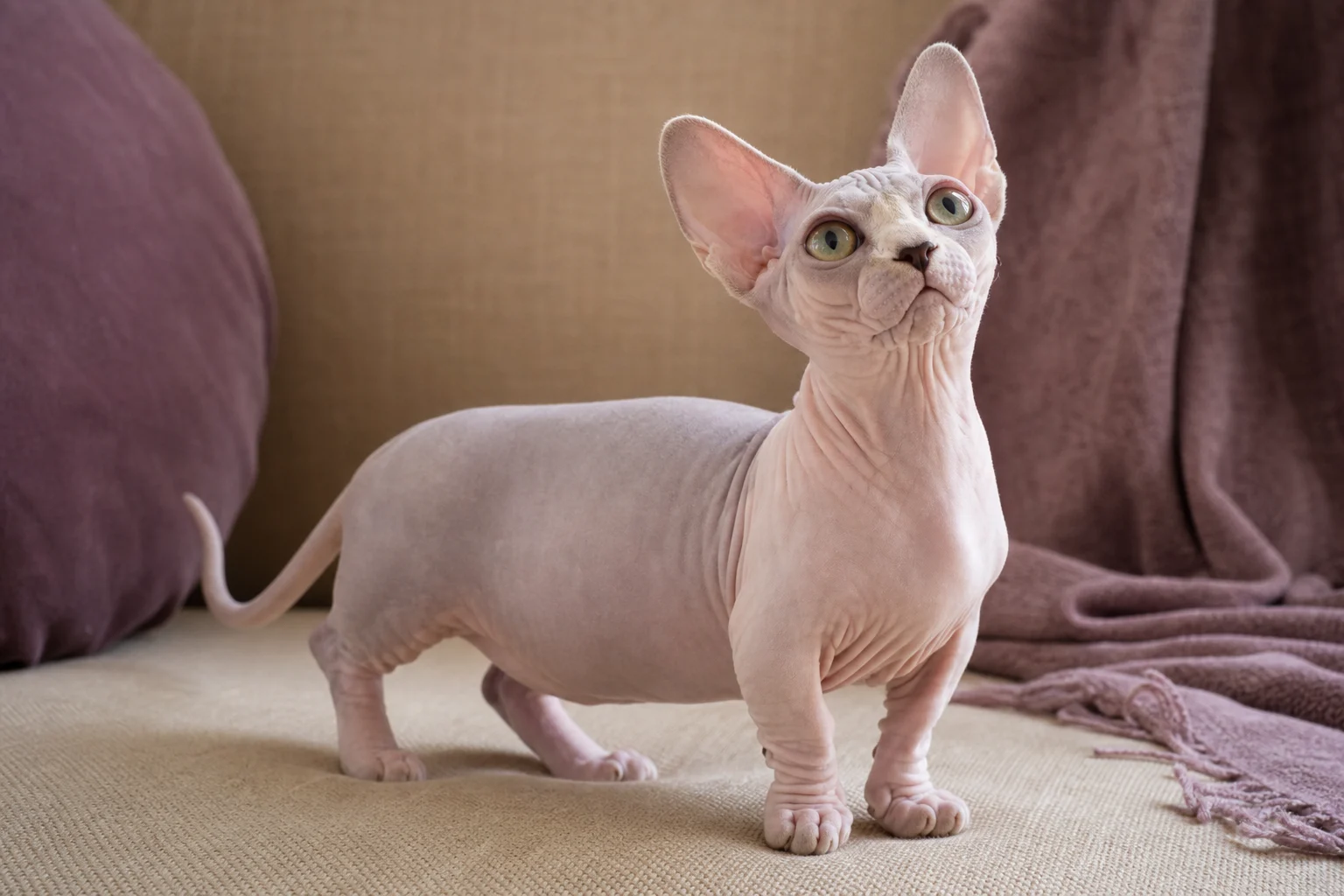
Two to four kilograms on the shortest legs in catdom, wrapped in warm, wrinkled near-bare skin with downy "fur points" — a kitten silhouette for life, in all skin colours including points. Long-legged and coated littermates occur and carry lighter packages.
Personality & temperament
The heritage mix yields genuine sweetness: Minskins are people-glued, playful at floor level, sofa-warm and sociable with children, cats and gentle dogs. The Burmese line added conversational warmth. None of this is disputed — the skeleton and skin genetics are.
Indoor or outdoor living
Strictly indoors with full warmth infrastructure and ramp-equipped furniture; naked skin and rationed jumping both demand it. Company is essential. Frame in Indoor cat or outdoor cat?
Enrichment & activity
Floor-level play, puzzle feeders, gentle routines — plus standing movement monitoring: reluctance or stiffness goes to the vet, not the anecdote folder.
Grooming
The hairless routine in full: gentle wipe-downs or baths, ear cleaning, claw care, sun awareness — plus hindquarter assistance where short legs cannot reach.
Feeding & health
The honest chapter: the Minskin stacks the Munchkin package (chondrodysplasia — lordosis, funnel-chest risk, joint loading) onto the hairless package (heat loss, HCM vigilance, skin care) on a deliberately minimised frame. Strict lean weight via the food amount calculator, annual cardiac ultrasounds and orthopaedic checks are the keeping minimum. European registry refusal and German criteria reflect the stacking; the Sphynx delivers the skin-warm devotion on sound anatomy.
Costs
Kittens command €1,500–2,500 via few, mostly US catteries — plus the lifelong cardiology-orthopaedics reserve. The cat cost calculator is the floor.
For beginners, children and other pets
Character-wise gentle and family-warm; the framing mirrors the Bambino: existing Minskins deserve informed, warm, vigilant homes — financing new triple-design breeding deserves refusal, and littermates with lighter packages deserve the attention.
Similar breeds compared
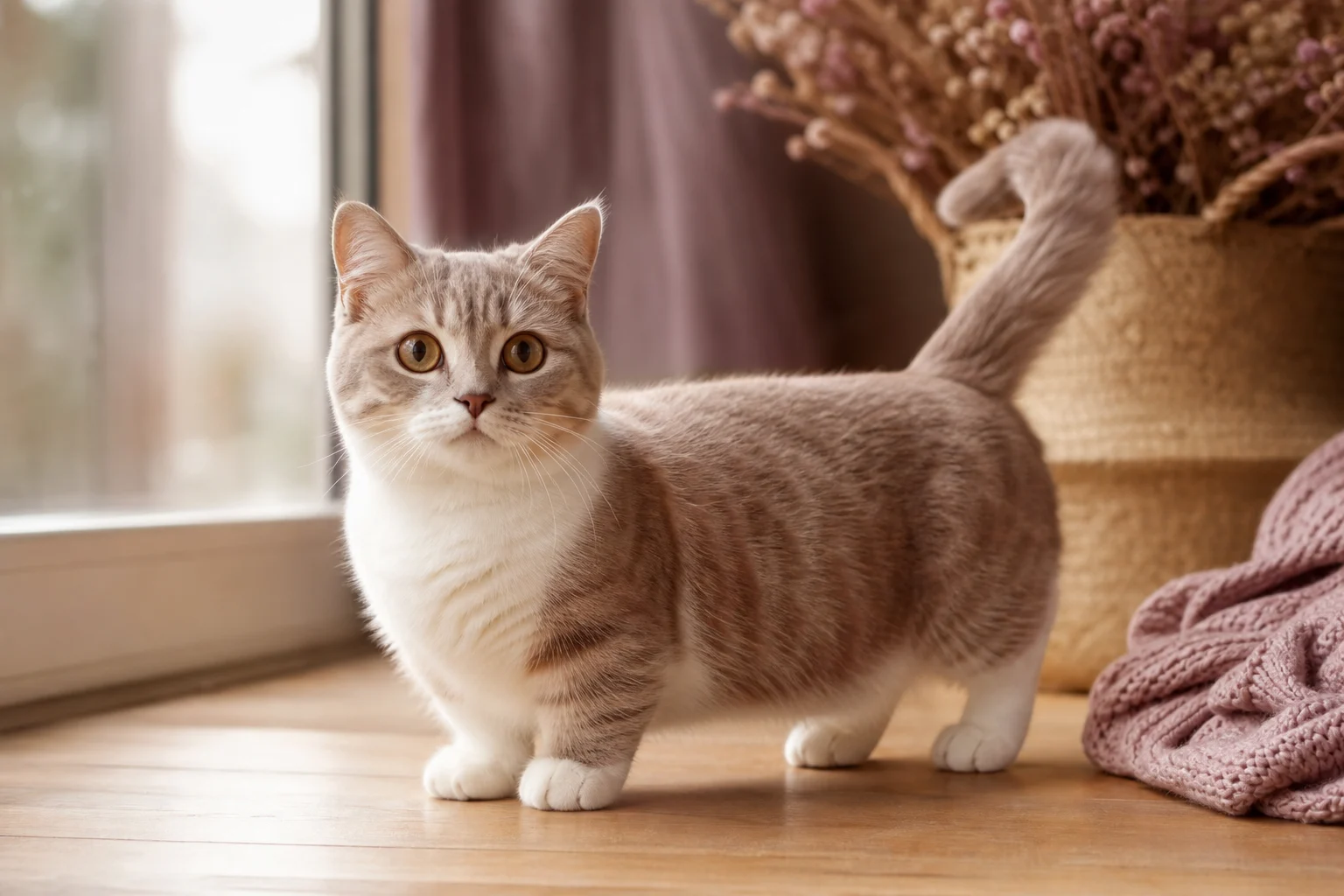
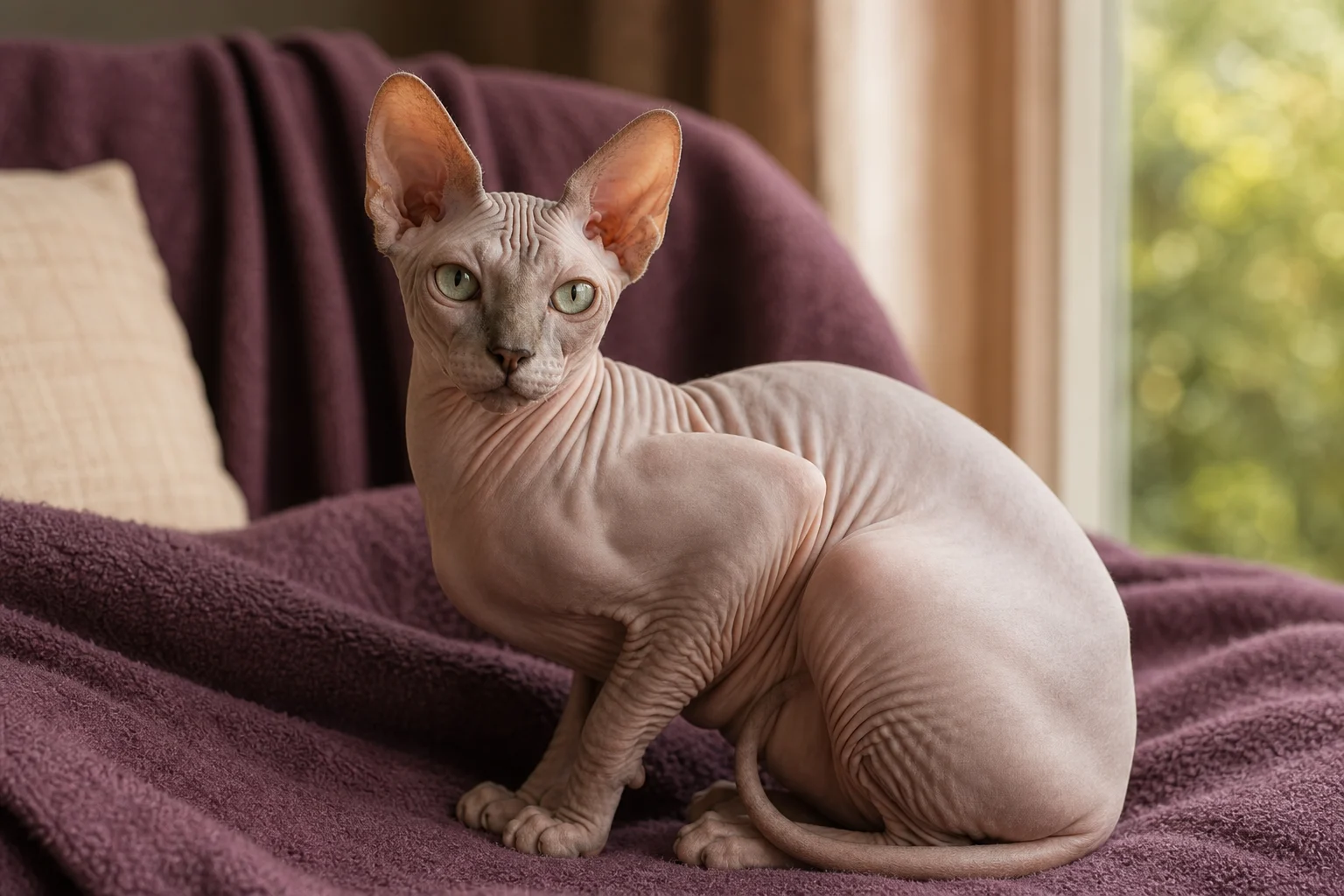
The Bambino is the parallel double-gene project; the Munchkin and Sphynx the single-package parents — the Sphynx being the sound answer to the actual wish.
Who this breed suits
Honestly: informed homes for existing cats. For purchases, the "Which cat fits me?" test surfaces the sounder alternatives without hesitation.
Not sure what a Minskin may eat? The food checker rates individual foods on a traffic-light scale, and the food guide explains what cats can eat and what is toxic.
A good fit for you if …
Frequently asked questions
What is a Minskin exactly?
A design experiment from 1998: Munchkin legs plus Sphynx skin with 'fur points', refined with Devon Rex and Burmese — miniature plus skin.
Why the criticism?
The stacking: chondrodysplasia plus hairlessness on a minimised frame. European registries refuse recognition, and German harmful-breeding criteria apply.
What must owners monitor?
Lean weight, honest movement observation, skin and ear routine, annual cardiac ultrasounds, warmth around the clock.
What are fur points?
The breed's signature: downy hair concentrated on face, ears, legs and tail over near-bare skin.
What do littermates carry?
Long-legged or coated siblings carry lighter packages — the kinder outcomes within such litters.
What is the sound alternative?
The Sphynx: identical skin-warm devotion on healthy anatomy, with the recessive single gene.
Similar breeds
Sources: FIFe/TICA breed standard · breed association data · veterinary literature on chondrodysplasia and hairlessness · editorial assessment · Last updated 08/2026. On health questions this article never replaces a visit to the vet.