 AI
AIBambino
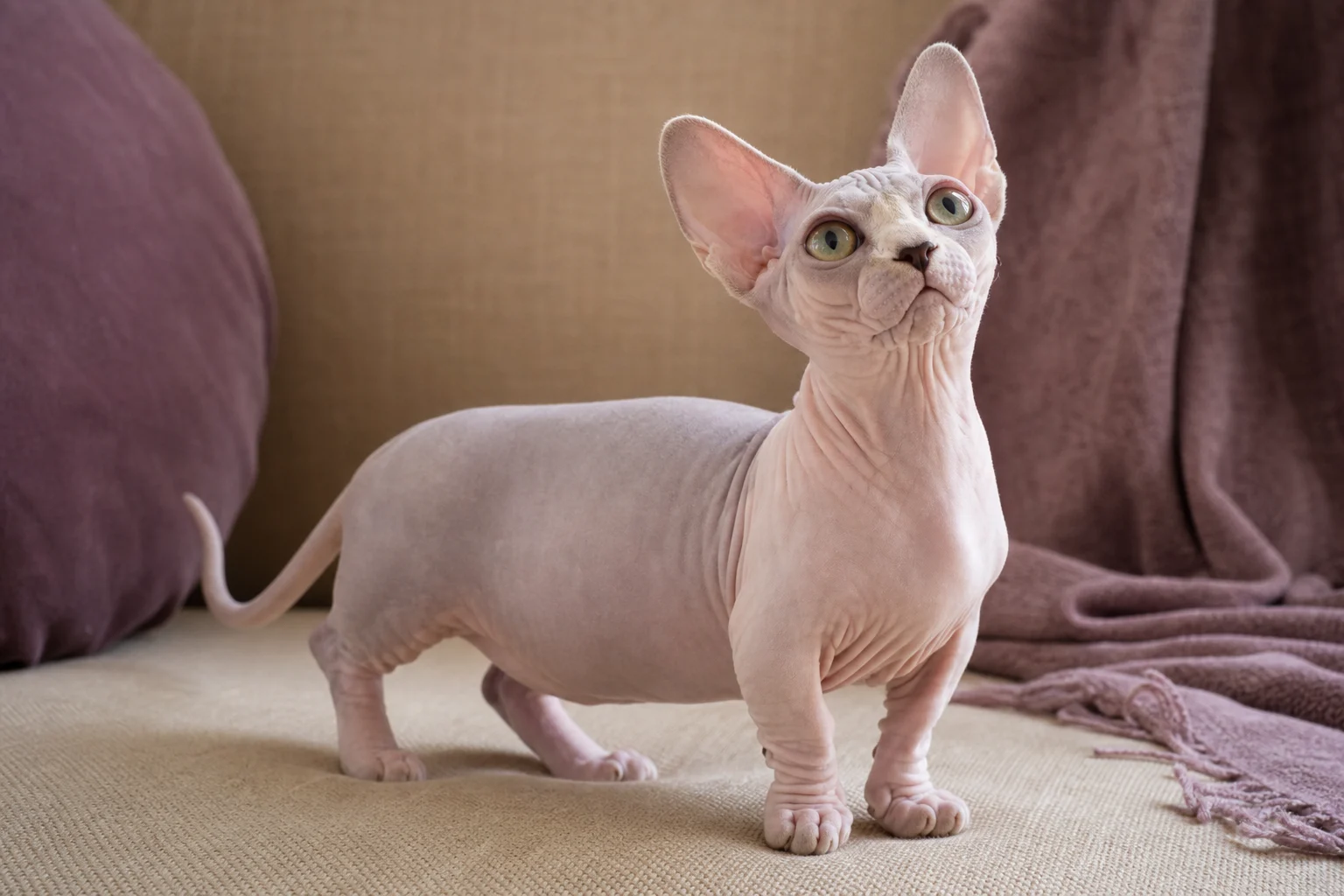
Hairless plus short-legged — a double-gene design whose sweet heart cannot offset the welfare maths.
| Size | Small |
|---|---|
| Weight | 2–4 kg |
| Life expectancy | 12–15 years |
| Origin | United States |
| Type | Pedigree breed (USA) |
| Grooming | low |
| Activity needs | high |
| Beginner friendly | with some experience |
Temperament & suitability
Editorial assessment based on the FIFe breed standard and breed association data.
Guideline for movement & enrichment for this breed.
Traits
Origin & history
Ohio, 2005: the Osborne cattery crossed Sphynx with Munchkin and registered the result as Bambino — Italian for baby, after the kitten-like proportions. The breed is the arithmetic of its parents: recessive hairlessness plus dominant short legs. Only TICA lists it experimentally; FIFe and the European mainstream refuse, and under German harmful-breeding criteria the deliberate combination of hairlessness with chondrodysplasia sits firmly on the critical list. We profile it because people search — with the maths stated openly.
Appearance & size
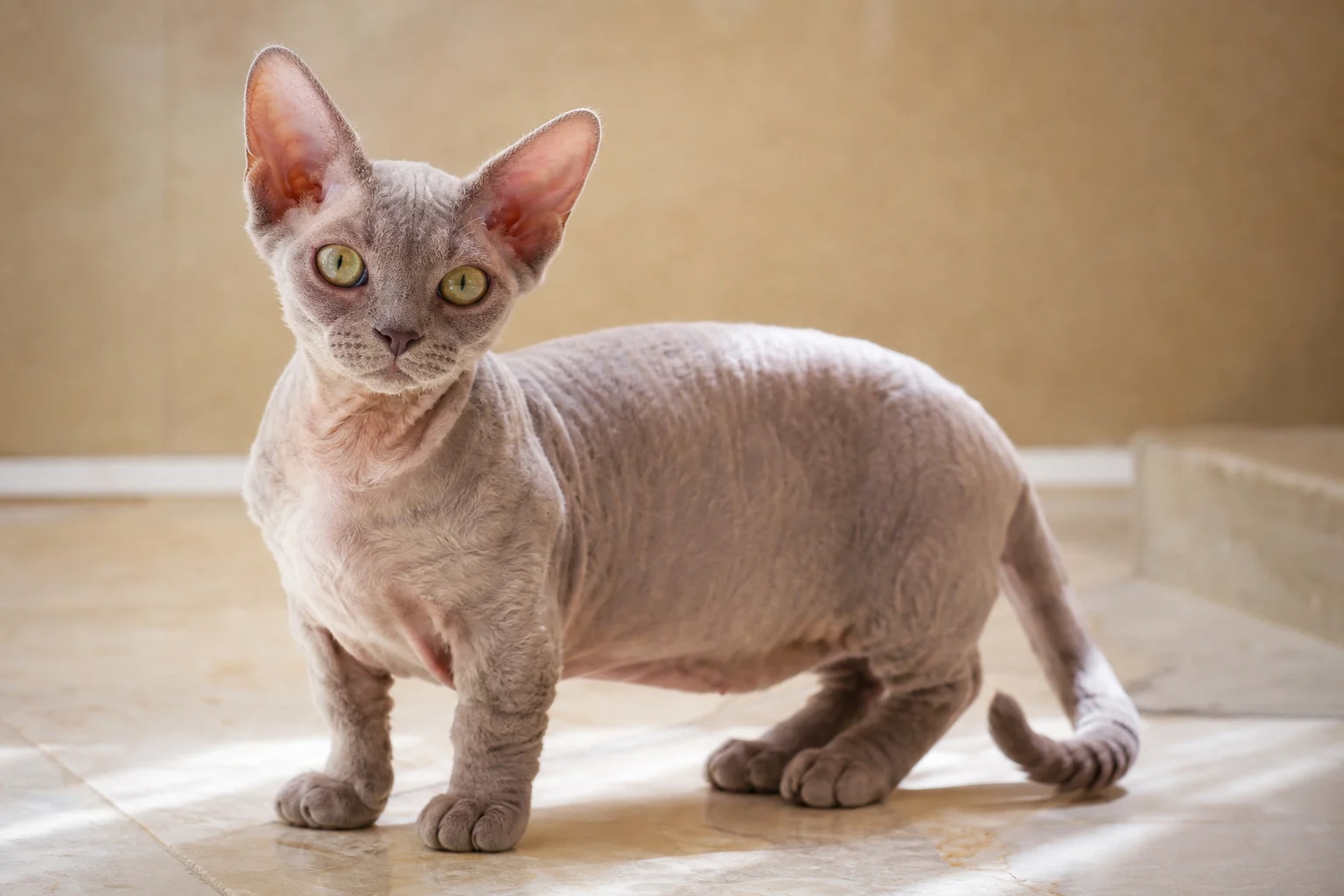
Two to four kilograms of wrinkled skin on shortened legs: the Sphynx look at Munchkin height, with large ears, lemon eyes and the pot-bellied elegance of both parents. Skin pigment shows all colours. Long-legged littermates occur in every litter and carry only the hairless package.
Personality & temperament
The temperament merges two affectionate heritages: Bambinos are warm, people-glued, playful and sofa-social — floor-level racing is quick, high jumping stays rationed by the leg gene. The sweetness is real; it is also not the point of welfare assessment.
Indoor or outdoor living
Strictly indoors with full warmth infrastructure and ramp-friendly furniture — the naked skin forgives no cold or sun, the legs no high landings. Company is essential. Frame in Indoor cat or outdoor cat?
Enrichment & activity
Floor-level play, puzzle feeders, gentle routines — and honest movement monitoring: reluctance or stiffness belongs at the vet immediately.
Grooming
The complete hairless routine (wipe-downs, baths, ears, sun) plus hindquarter assistance where short legs cannot reach.
Feeding & health
The honest chapter: the Bambino stacks the Sphynx package (heat-hungry metabolism, HCM frequency, skin care) onto the Munchkin package (chondrodysplasia with lordosis and funnel-chest risk). Both need managing at once: strict lean weight via the food amount calculator, annual cardiac ultrasounds, orthopaedic vigilance. European registries' refusal and German criteria reflect exactly this stacking. Long-legged littermates or a straight Sphynx carry half or none of it.
Costs
Kittens command €1,500–2,500 — and the honest budget adds cardiology plus orthopaedics for life. The cat cost calculator is the floor, not the ceiling.
For beginners, children and other pets
Character-wise gentle and family-warm. The responsible framing is unambiguous: existing Bambinos deserve informed, warm, vigilant homes — financing new double-gene breeding deserves refusal. The Sphynx delivers the naked devotion on sound legs.
Similar breeds compared
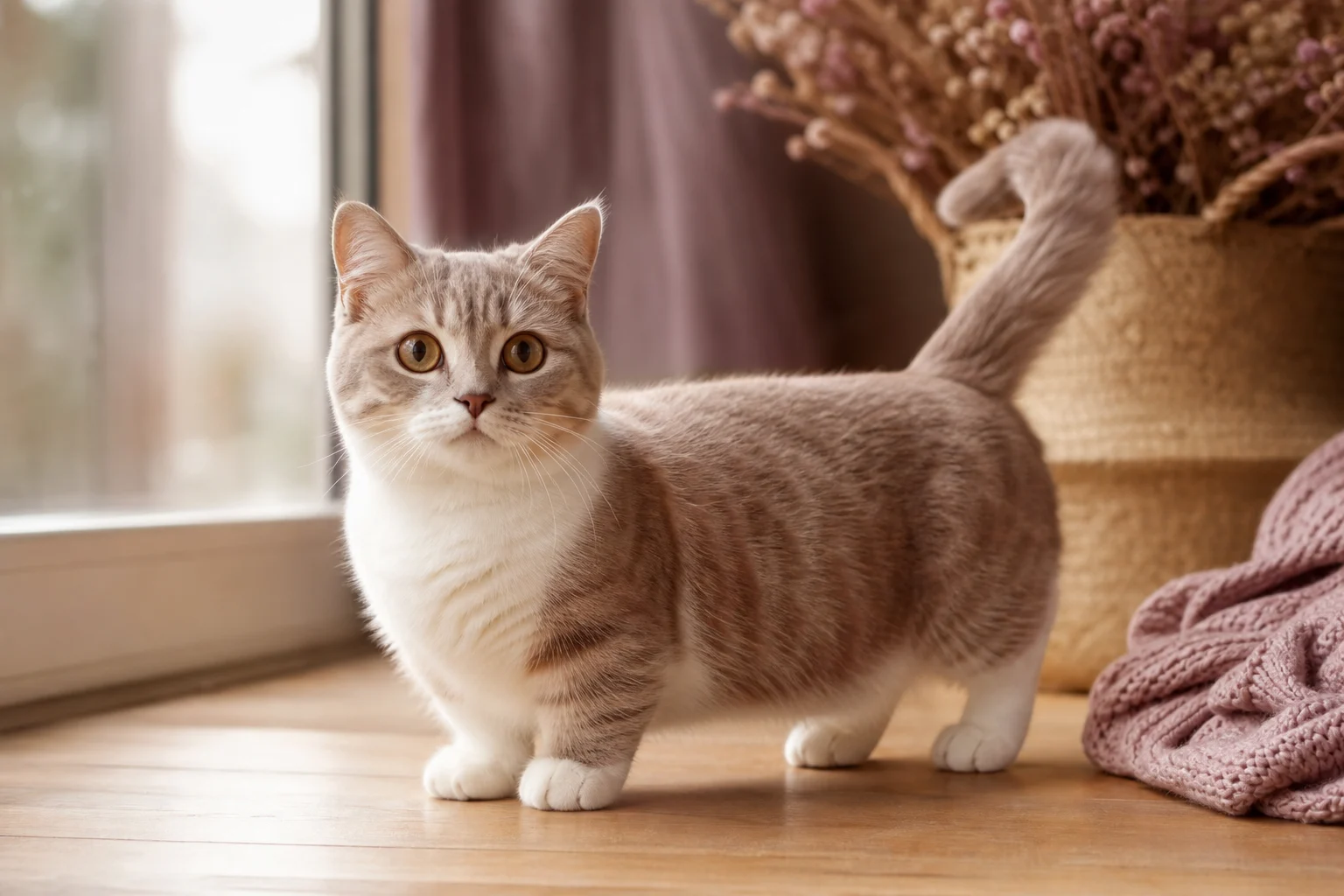
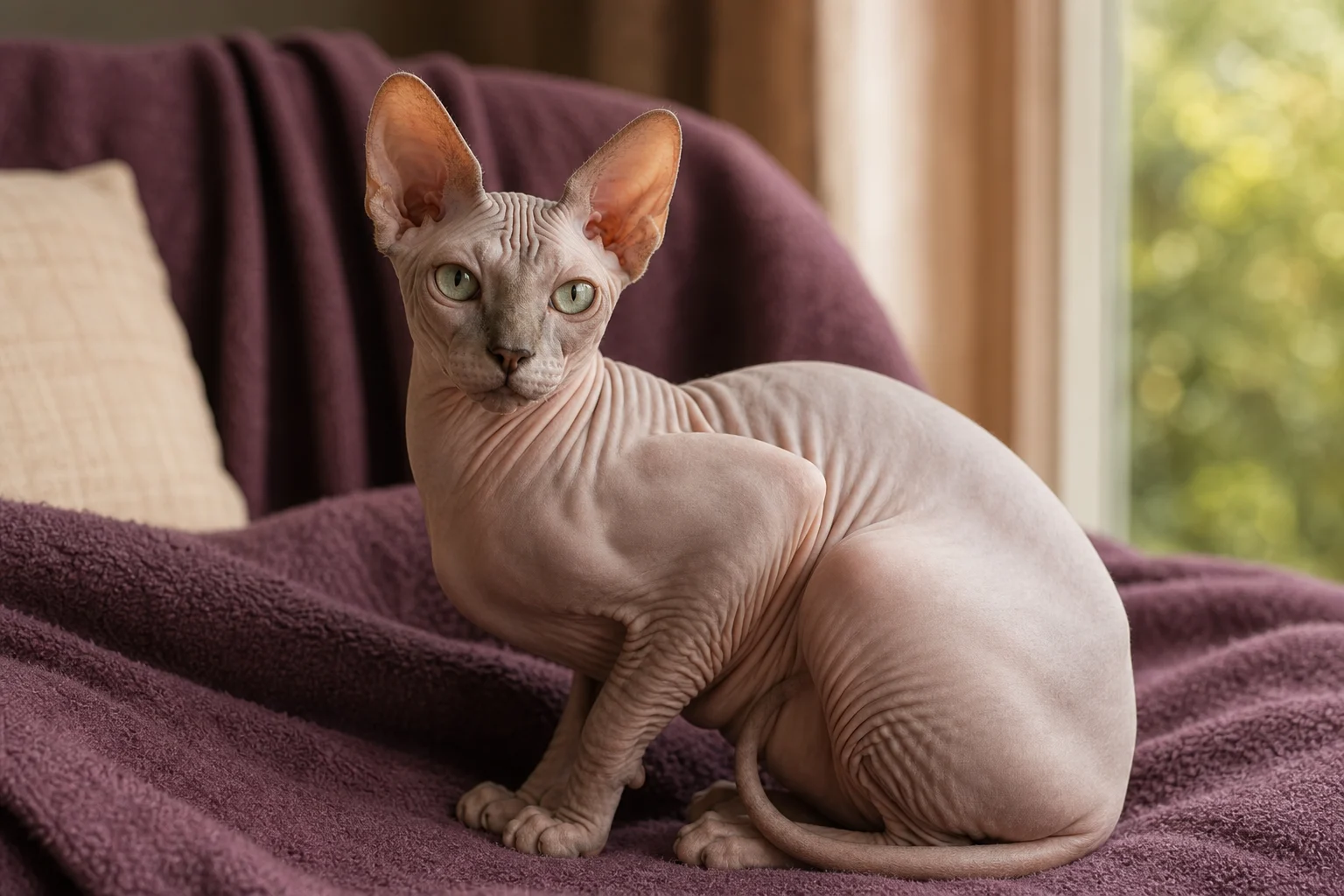
The Sphynx is the single-package parent; the Munchkin the other; the Minskin a parallel double-gene project reviewed under its own name.
Who this breed suits
Honestly: informed rescue-style homes for existing cats. For purchases, the "Which cat fits me?" test will point to the sounder single-gene alternatives.
Not sure what a Bambino may eat? The food checker rates individual foods on a traffic-light scale, and the food guide explains what cats can eat and what is toxic.
A good fit for you if …
Frequently asked questions
Why is the Bambino criticised?
It deliberately stacks two burdened genes: Sphynx hairlessness (heat loss, HCM frequency) plus Munchkin chondrodysplasia (joint and spine risks). European registries refuse it for exactly this.
Is keeping one legal in Germany?
Keeping yes — informed homes for existing cats are welcome. Breeding with the double package collides with harmful-breeding criteria.
What must owners monitor?
Weight strictly lean, movement honestly (stiffness → vet), skin and ear routine, annual cardiac ultrasounds and warmth around the clock.
What do long-legged littermates carry?
Only the hairless package — the welfare-kinder outcome within such litters.
What is the sound alternative?
The Sphynx: identical naked devotion on healthy legs, with the recessive single gene.
How expensive is a Bambino really?
€1,500–2,500 purchase plus lifelong cardiology and orthopaedics reserve — the sticker is the smallest number.
Similar breeds
Sources: FIFe/TICA breed standard · breed association data · veterinary literature on chondrodysplasia and hairlessness · editorial assessment · Last updated 08/2026. On health questions this article never replaces a visit to the vet.