 AI
AILykoi
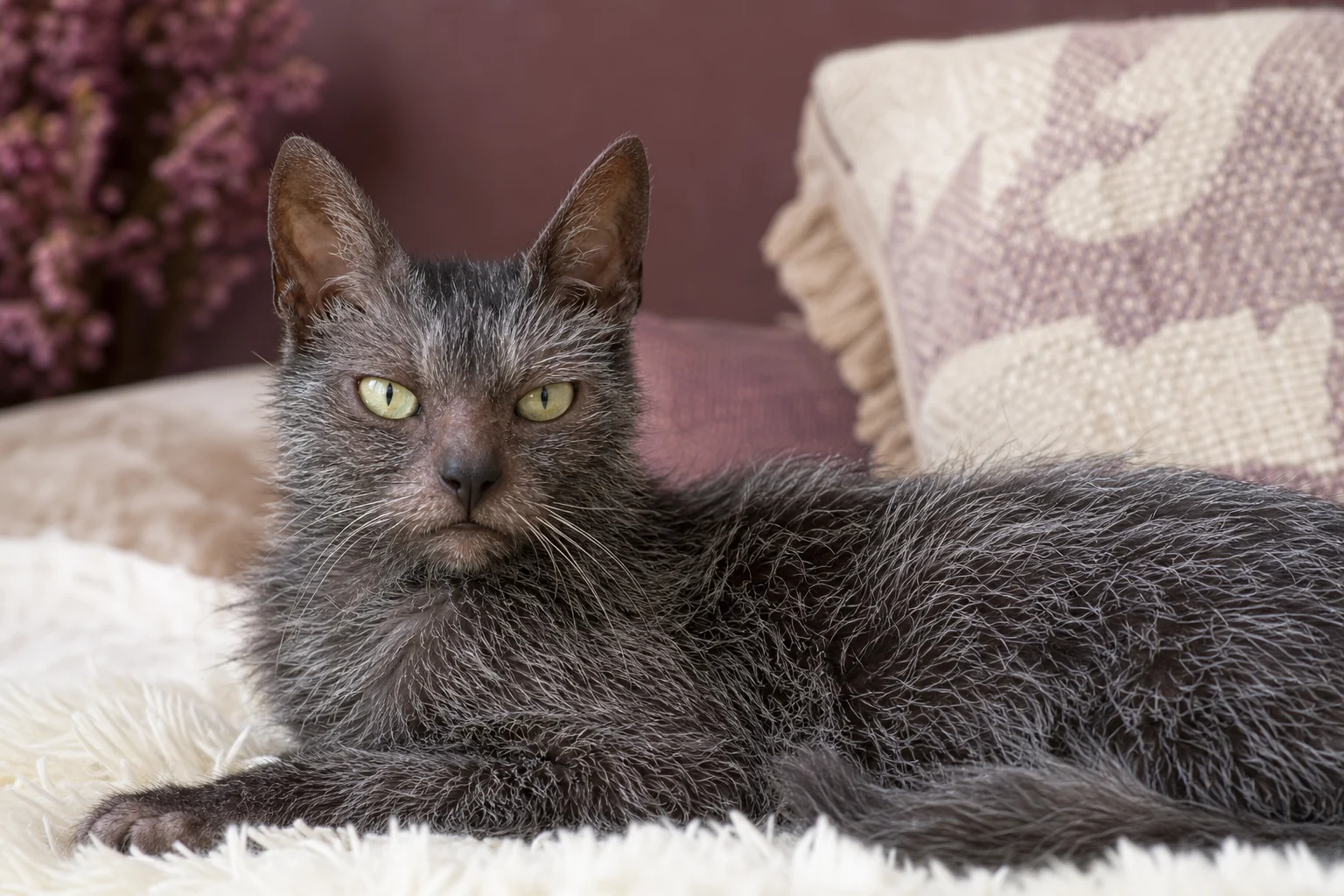
The werewolf cat — a natural roan mutation with wolfish looks and a hunter's merry heart.
| Size | Medium |
|---|---|
| Weight | 3–5 kg |
| Life expectancy | 12–15 years |
| Origin | United States |
| Type | Pedigree breed (USA) |
| Grooming | medium |
| Activity needs | very high |
| Beginner friendly | with some experience |
Temperament & suitability
Editorial assessment based on the FIFe breed standard and breed association data.
Guideline for movement & enrichment for this breed.
Traits
Origin & history
The werewolf cat was not designed — it appeared: feral litters in Virginia and Tennessee independently produced partially hairless, roan-coated kittens, and in 2011 the Gobble and Brittney Gobble breeding programme confirmed a new natural recessive mutation (named lykoi, Greek for wolf). Veterinary workups ruled out disease; the gene thins the coat by leaving follicles partially empty, without the dysplasia associations of dominant hairless genes. TICA granted championship status in 2017. The breed remains young, rare and — refreshingly — a mutation with a clean bill so far.
Appearance & size
Three to five kilograms of lean hunter wearing the werewolf mask: a hairless face rim around eyes, muzzle and chin, sparse roan coat — black hairs mixed with white — and often molting cycles in which individuals lose and regrow much of the coat seasonally. No undercoat exists; the skin shows through in places. The amber-eyed, wolfish stare is the breed's trademark; the silver-black roan its uniform.
Personality & temperament
Feral ancestry left a strong prey drive and clever independence, domestication a warm attachment: the Lykoi hunts toys with visible seriousness, patrols and investigates like a working cat, then wraps itself around its people in the evening. It is initially reserved with strangers, loyal at home, dog-tolerant and notably intelligent — fanciers describe hound-like behaviour, from scent interest to pack loyalty.
Indoor or outdoor living
Indoors with secured balcony: the thin roan neither insulates nor sun-protects, and the rarity deserves safety. Provide warmth spots and hunting-style play territory. Frame in Indoor cat or outdoor cat?
Enrichment & activity
Daily hunt sessions are the currency: prey games, puzzle feeders, food searches, climbing paths. The working intelligence self-employs given infrastructure — and invents projects without it.
Grooming
Peculiar but easy: gentle weekly passes over the sparse coat, occasional wipe-downs of hairless zones (mild sebum), ear cleaning and sun awareness. During molt phases the cat may go nearly bald — normal for the breed, alarming only to the uninformed.
Feeding & health
The thin coat costs warmth and the metabolism compensates — portion generously but controlled via the food amount calculator. Health so far reads clean for a mutation breed: no linked dysplasia found, with general HCM checks and cattery documentation as the standard asks. The young age of the breed itself is the caveat — long-term data is still accumulating.
Costs
Kittens from documented lines cost €1,500–2,500 — the werewolf is one of the most sought rarities. Running costs stay ordinary; the cat cost calculator totals them.
For beginners, children and other pets
Good with respectful children and known dogs; the initial stranger reserve and the hunting drive suit engaged homes over chaotic ones. Committed keepers manage well — the breed is uncomplicated in care, demanding only in play and price.
Similar breeds compared
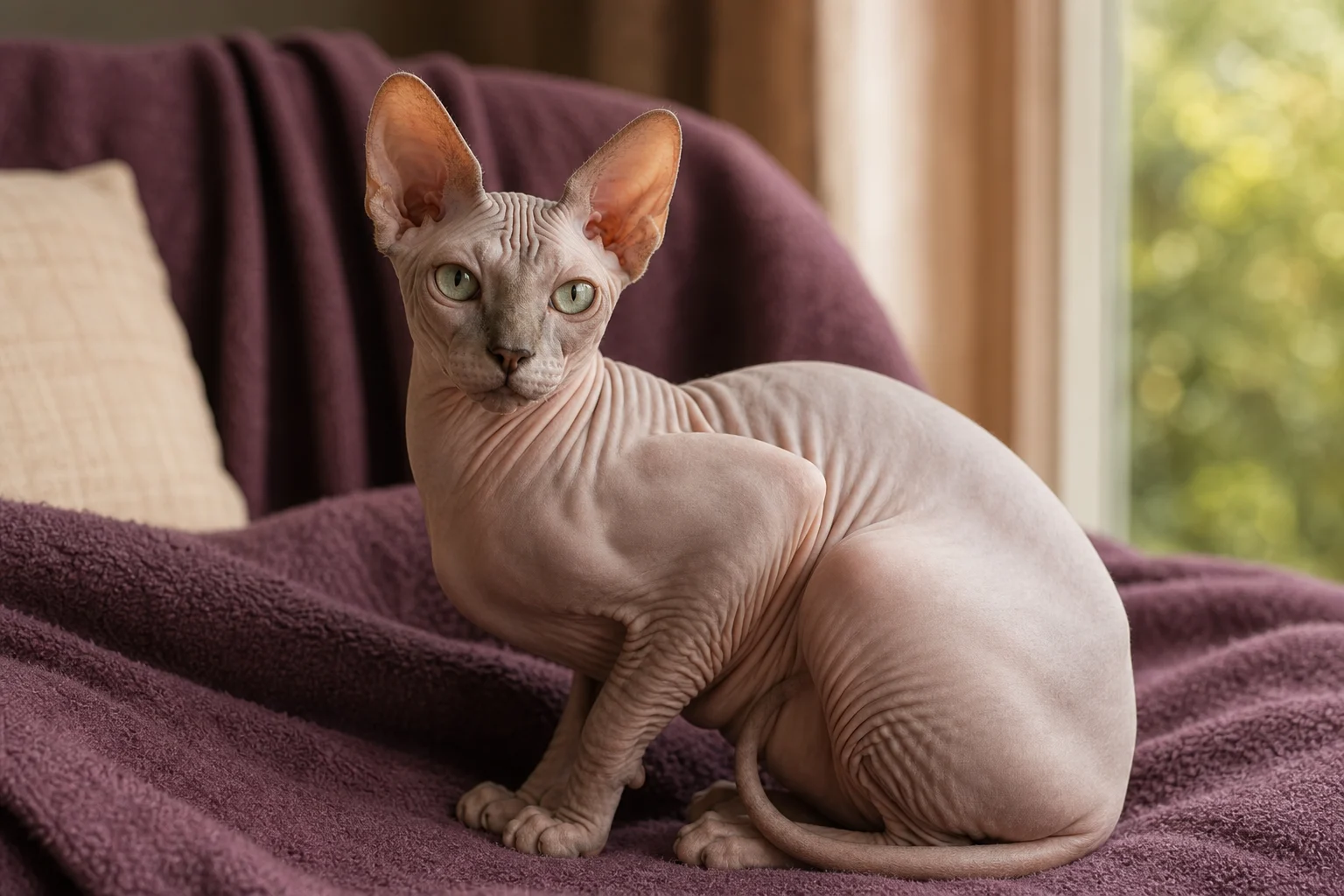
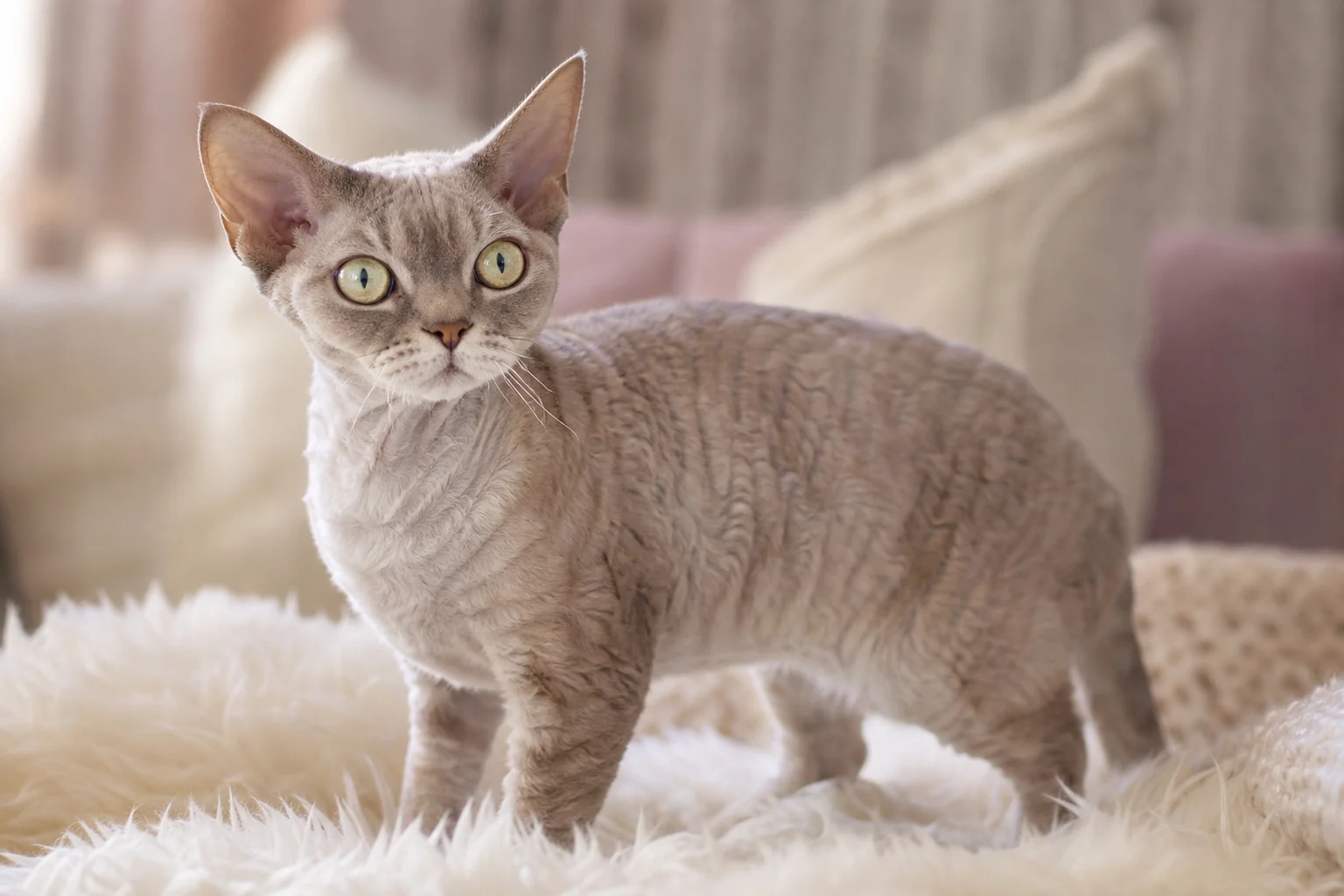
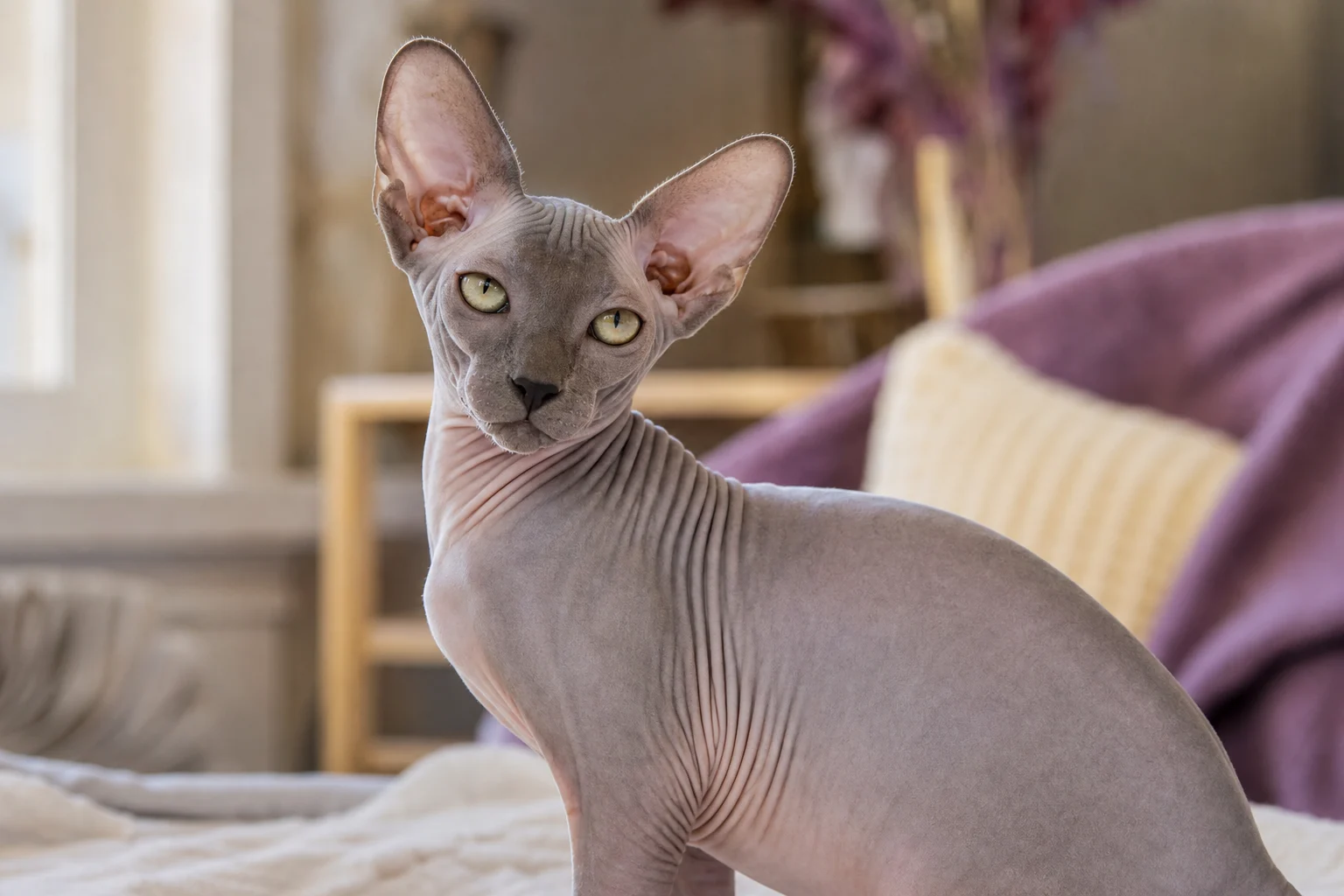
The Sphynx is the full-hairless devotion classic; the Devon Rex the light-coated pixie; the Peterbald the oriental skin variant.
Who this breed suits
Engaged households that want a rare natural oddity with hunter software and a clean genetic story. The "Which cat fits me?" test checks the fit.
Not sure what a Lykoi may eat? The food checker rates individual foods on a traffic-light scale, and the food guide explains what cats can eat and what is toxic.
A good fit for you if …
Frequently asked questions
Is the Lykoi sick or hairless by defect?
No — the recessive lykoi gene thins the coat naturally, and veterinary workups found no linked disease. It is the rare mutation breed with a clean bill so far.
Why does my Lykoi go almost bald sometimes?
Molt cycles are breed-normal: individuals periodically lose and regrow much of the roan coat. No cause for alarm.
What does lykoi mean?
Greek for wolf — after the werewolf mask of the hairless face rim and the roan grizzle.
Which health questions matter?
General HCM checks and cattery documentation; the breed's youth is the main caveat, as long-term data still accumulates.
Are Lykoi affectionate?
At home, warmly — with a hunter's independence and initial stranger reserve. Fanciers describe almost hound-like loyalty.
How rare and expensive is the breed?
Very: €1,500–2,500 from documented lines, with international waiting lists.
Similar breeds
Sources: FIFe/TICA breed standard · breed association data · editorial assessment · Last updated 08/2026. On health questions this article never replaces a visit to the vet.