 AI
AIHighlander
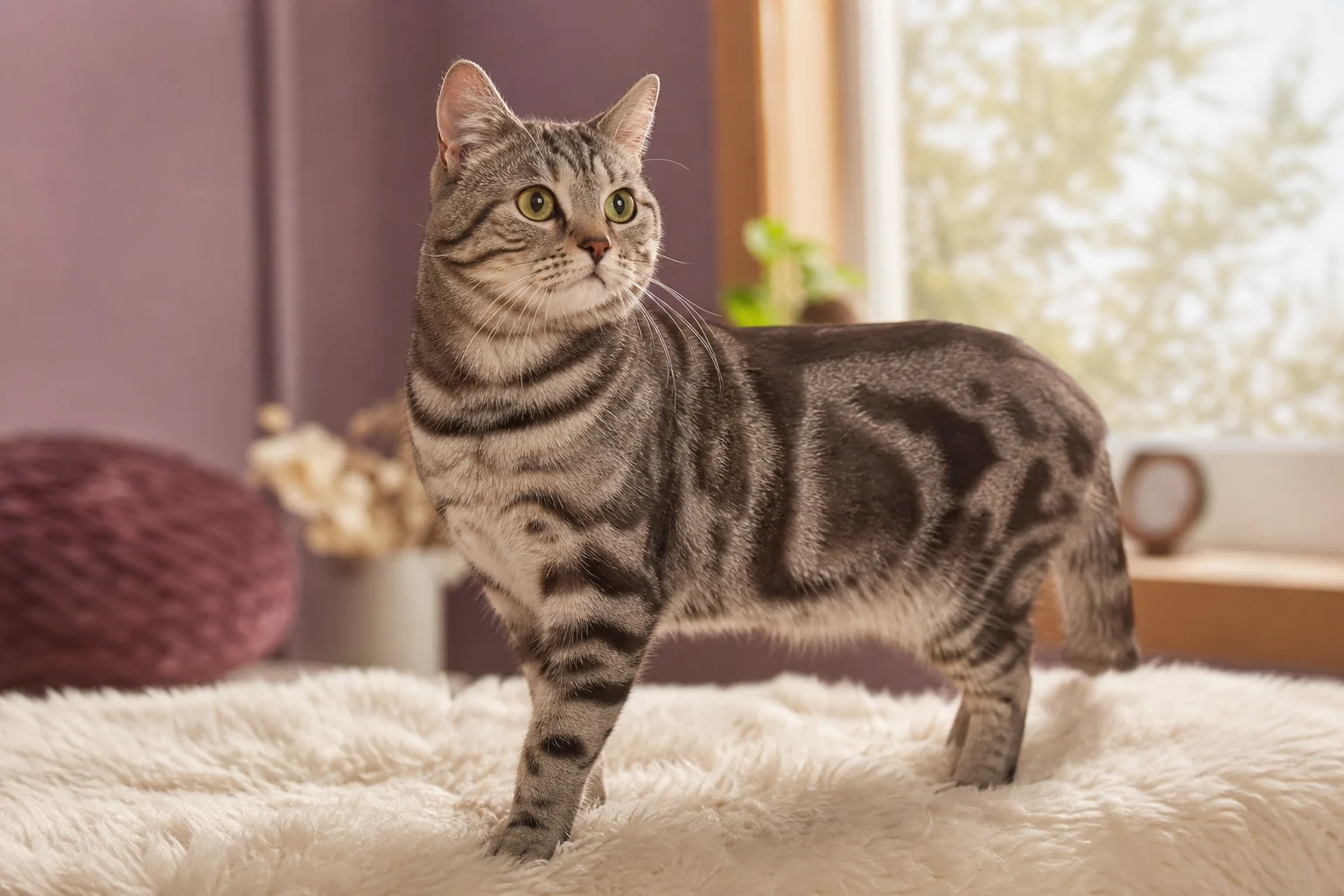
A big playful lynx lookalike — curled ears, bobbed tail and clown energy in one striking package.
| Size | Large |
|---|---|
| Weight | 4–9 kg |
| Life expectancy | 11–15 years |
| Origin | United States |
| Type | Pedigree breed (USA) |
| Grooming | medium |
| Activity needs | high |
| Beginner friendly | with some experience |
Temperament & suitability
Editorial assessment based on the FIFe breed standard and breed association data.
Guideline for movement & enrichment for this breed.
Traits
Origin & history
The Highlander emerged in 2004 from the Highland Lynx programme — itself a cross of two experimental bobbed and curl-eared lines (Desert Lynx and Jungle Curl), without any actual wildcat contribution despite the names. The declared goal: maximum wild lynx look on a proven housecat platform. TICA carries the breed in advancement; it remains young, rare and deliberately spectacular — curled ear tips, bobbed tail and big-cat swagger in one silhouette.
Appearance & size
Four to nine kilograms of substance on powerful hindquarters, with a naturally bobbed tail (5–15 cm), loosely backwards-curled ear tips — a softer arc than the American Curl — and a wild-toned spotted or clouded coat in short and semi-long. Slow maturing builds the full lynx presence over three to four years. Polydactyl paws occur and are accepted.
Personality & temperament
Behind the predator mask lives a certified clown: Highlanders chase, fetch, splash in water bowls, invent games and perform for audiences with visible delight. They bond strongly, greet visitors, get along with dogs famously and stay busy-playful into adulthood. The intelligence is quick, the humour constant — a household with a Highlander has live entertainment.
Indoor or outdoor living
Indoor life with serious play infrastructure suits the energy; a secured balcony or catio delights the athletic jumper. The trusting showmanship belongs behind safety nets. Frame in Indoor cat or outdoor cat?
Enrichment & activity
Daily real sessions: chase and fetch marathons, water games, clicker tricks, puzzle rotations. Energy is high-mid — demanding engagement, rewarding it double. A playful companion animal shares the load well.
Grooming
Weekly brushing for shorthairs, twice for semi-longs; the coat mats little. The curled ear tips want gentle handling and routine checks.
Feeding & health
Portion the athlete via the food amount calculator. As a young rare breed, documentation is the key ask: general health records, HCM checks, and how the cattery handles the bob and curl genes (both considered harmless here, but serious breeders track outcomes). The DE data honestly notes a slightly shorter typical lifespan band (11–15) — one more reason for careful lines.
Costs
Kittens from documented lines cost €1,000–1,800 — rare, with waiting lists and often imports. Running costs match a big active cat; the cat cost calculator totals them.
For beginners, children and other pets
A merry family companion for active households: robust with children, genuinely dog-friendly, cat-sociable. The energy and rarity place it with engaged keepers rather than first-timers seeking simplicity.
Similar breeds compared
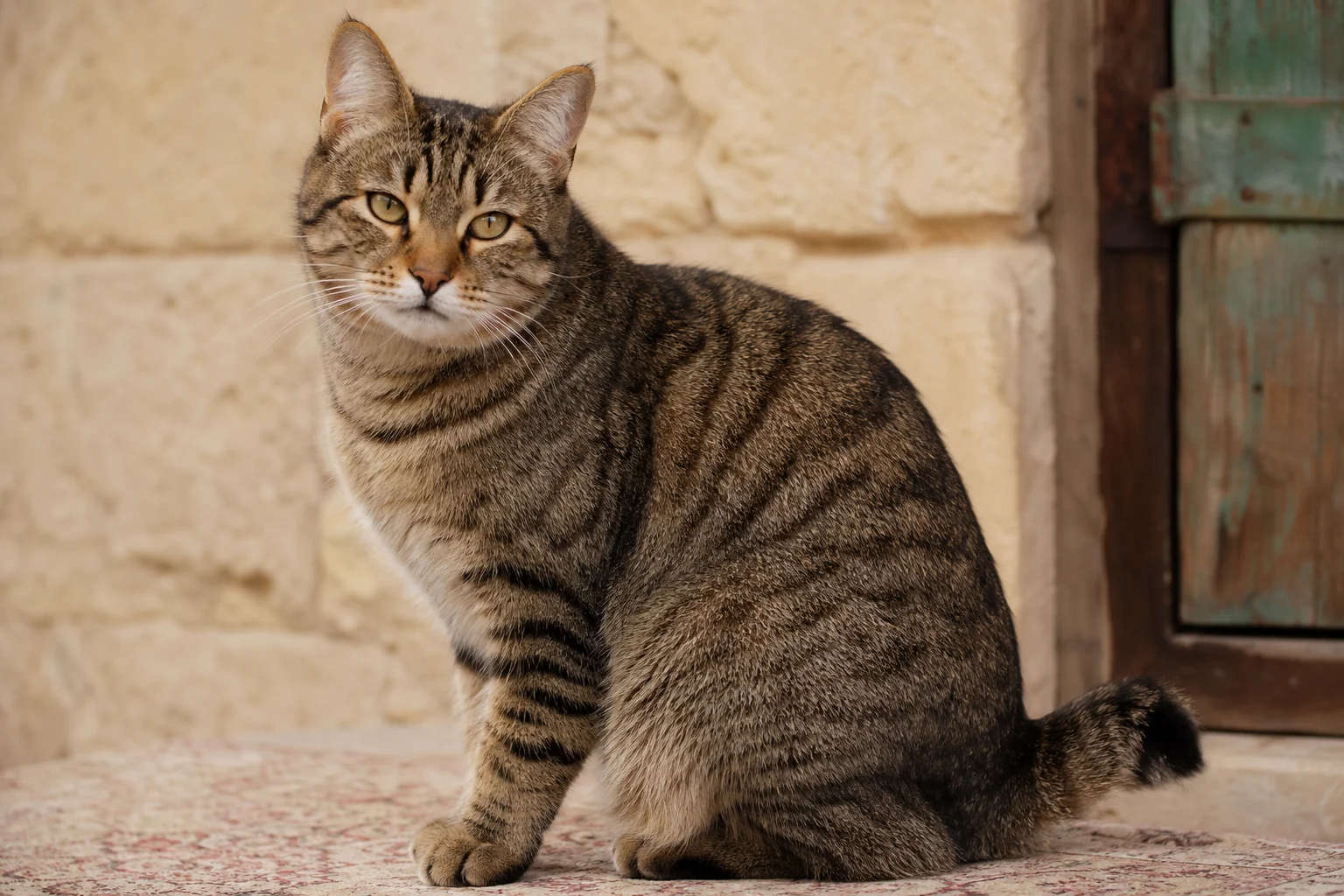
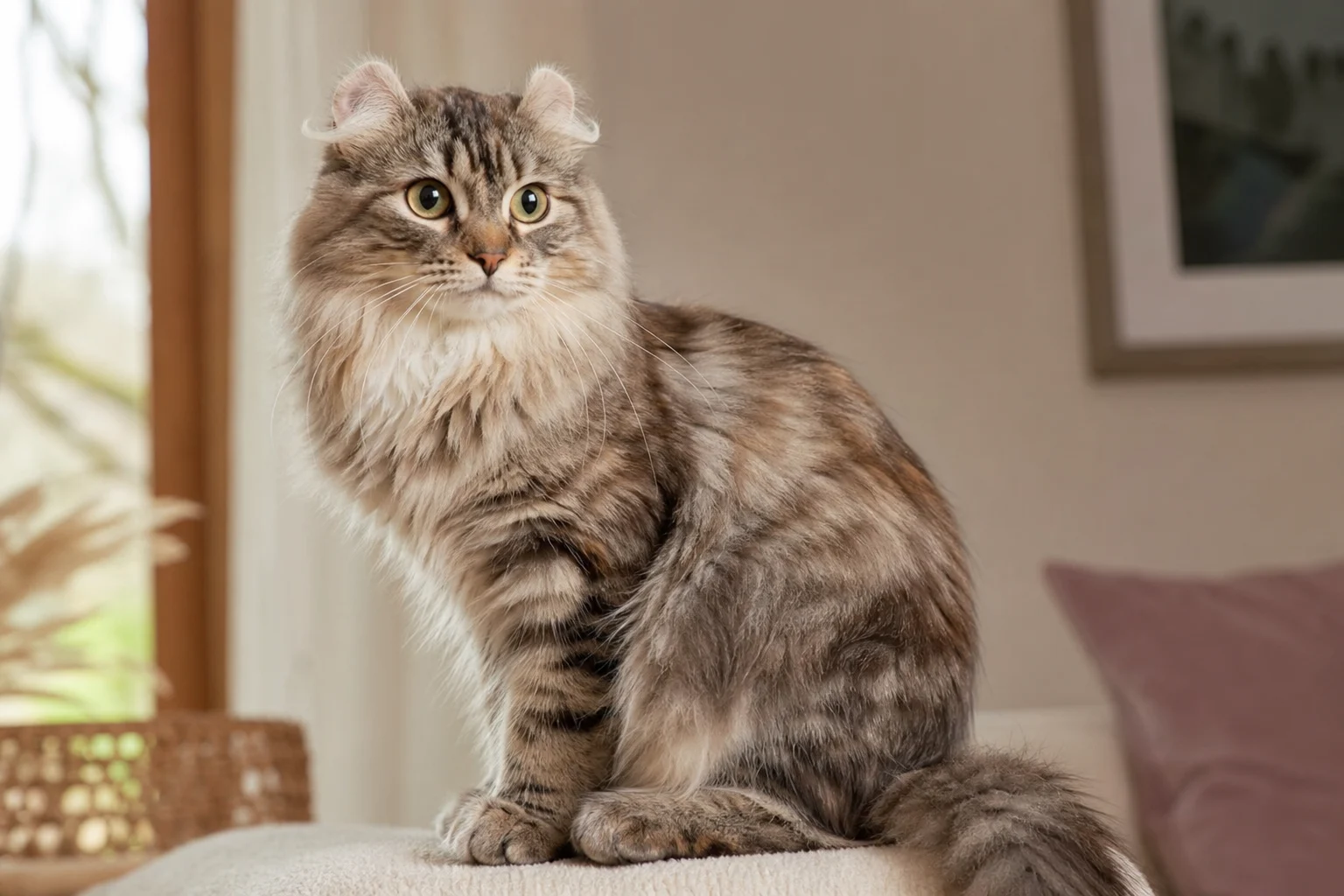
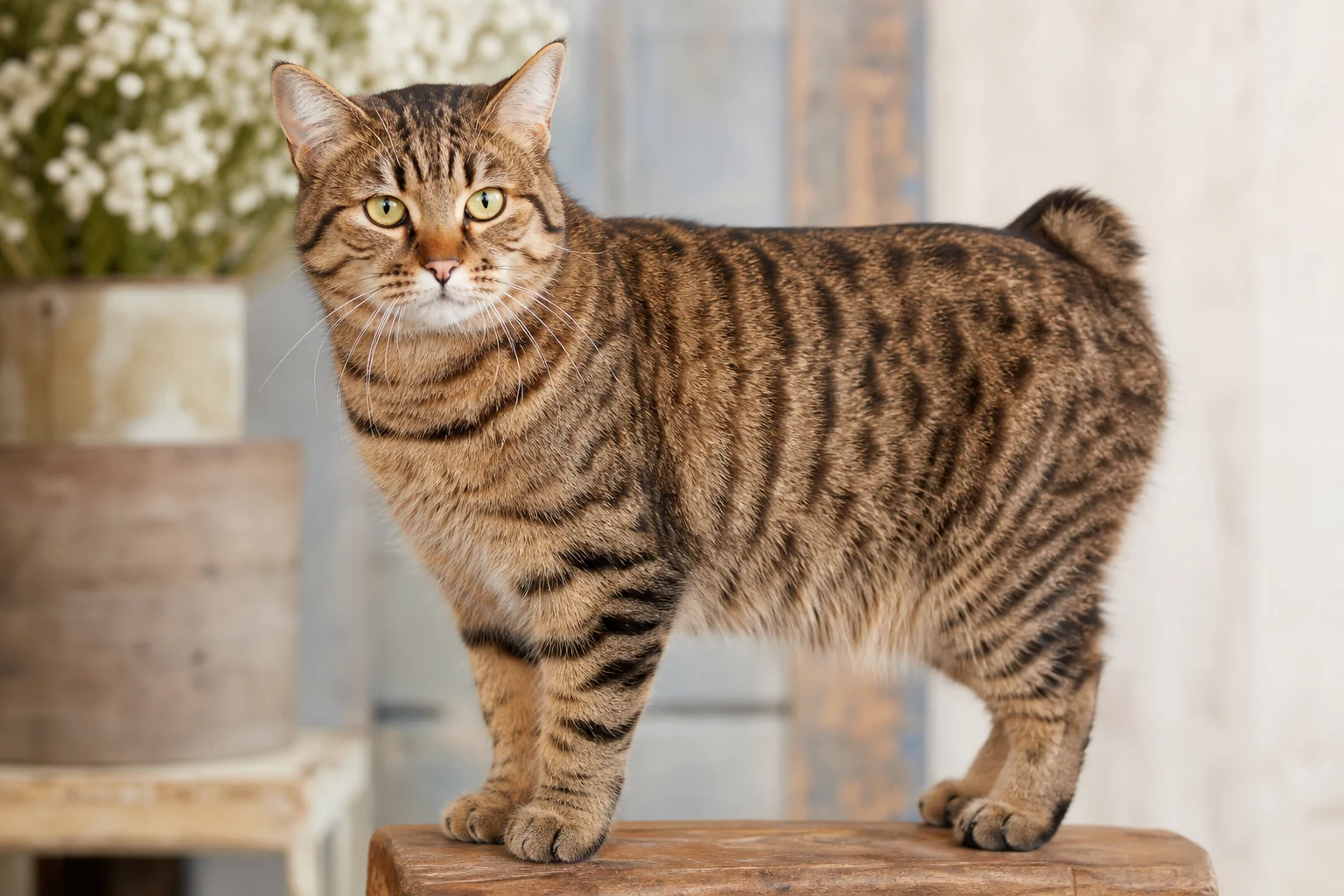
The Pixie-Bob delivers the bobcat look at calmer energy; the American Curl the ear signature in gentle format; the American Bobtail the rugged bob with travel ease.
Who this breed suits
Active, playful households that want a spectacular entertainer with dog manners. The "Which cat fits me?" test checks the energy match.
Not sure what a Highlander may eat? The food checker rates individual foods on a traffic-light scale, and the food guide explains what cats can eat and what is toxic.
A good fit for you if …
Frequently asked questions
Does the Highlander contain lynx blood?
No — despite ancestor names like Highland Lynx, the lines are fully domestic. The wild look is design, not descent.
Are the curled ears harmful?
The loose backwards curl is considered harmless like the American Curl's — gentle handling and routine checks suffice. Serious catteries track outcomes.
How big do Highlanders get?
Four to nine kilograms with full presence at three to four years — the show reads bigger than the scale.
Which health questions matter?
General documentation, HCM checks and the cattery's tracking of bob and curl genes — the young breed rewards diligence.
Are Highlanders good with dogs?
Famously — the confident clown energy pairs naturally with playful dogs.
Do Highlanders like water?
Many splash enthusiastically — bowls, taps and bath supervision included.
Similar breeds
Sources: FIFe/TICA breed standard · breed association data · editorial assessment · Last updated 08/2026. On health questions this article never replaces a visit to the vet.