 AI
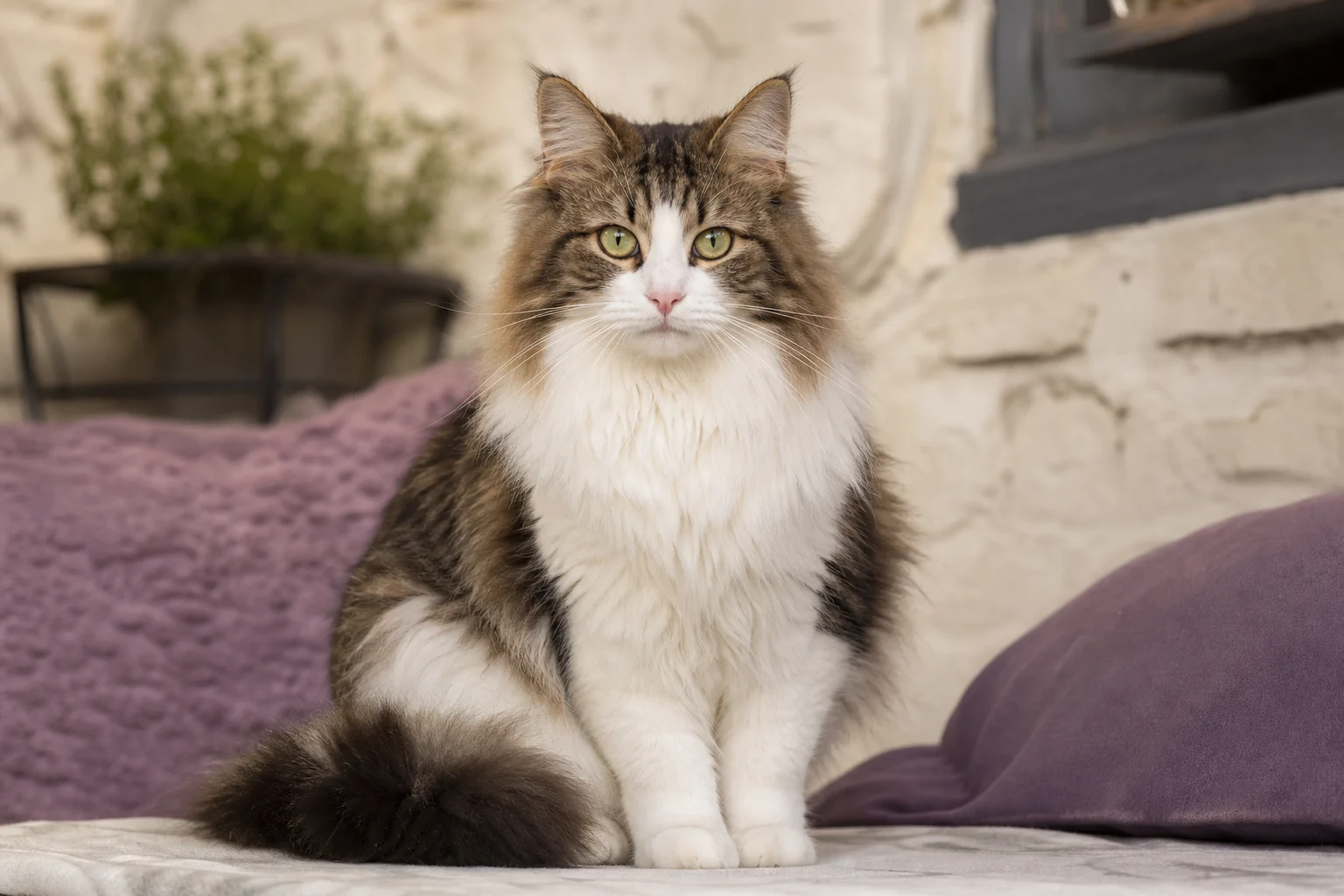
AIGerman Longhair
Germany's own longhair classic — moderate, robust and serene, the Persian alternative with a nose.
| Size | Large |
|---|---|
| Weight | 4–7 kg |
| Life expectancy | 14–18 years |
| Origin | Germany |
| Type | Natural breed / pedigree (Germany) |
| Grooming | high |
| Activity needs | medium |
| Beginner friendly | well suited |
Temperament & suitability
Editorial assessment based on the FIFe breed standard and breed association data.
Guideline for movement & enrichment for this breed.
Traits
Origin & history
Germany once had its own longhair answer to the Persian: the Deutsch Langhaar, described by zoologist Friedrich Schwangart in 1929 as a deliberately moderate type — full coat, normal face, working-cat body. The breed flourished, vanished almost completely after the war under the Persian tide, and was revived by dedicated German breeders from the 2000s on old-type foundation cats. Today it is a small, growing programme with an explicit welfare stance: longhair beauty without brachycephaly.
Appearance & size
A sturdy, slightly stretched four-to-seven-kilogram cat under a flowing coat with ruff, britches and plumed tail — clearly longhaired, clearly un-extreme: the head keeps a straight profile and a real nose, the eyes sit normally, the body works. All classic colours occur. Life expectancy rewards the moderation: fourteen to eighteen years.
Personality & temperament
The DLH is composed warmth: calm without passivity, affectionate without clinging, patient with household bustle and quietly devoted to its people. It plays in measured doses, watches from good vantage points and treats life with farm-cat pragmatism under the glamour coat — the temperament its founder described as the German ideal: gelassen.
Indoor or outdoor living
Flexible: content indoors with normal equipment, happy with a secured balcony or garden — the robust base handles weather well. The valuable rarity belongs behind safety nets. Frame in Indoor cat or outdoor cat?
Enrichment & activity
Moderate daily play and food puzzles keep the serene frame lean; fixed routines suit it. It will not demand sessions — schedule them anyway.
Grooming
The full coat needs honest work: brushing two to three times weekly, daily in moult — less than a Persian (no extreme undercoat pile), clearly more than a shorthair. The straight face spares you the daily eye-wiping of flat types.
Feeding & health
Robust by revival design — the broad foundation base avoided bottlenecks; ask breeders for general documentation and HCM/PKD checks where Persian-type ancestors appear in lines. Portion via the food amount calculator against the calm appetite.
Costs
Kittens cost €800–1,300 from the small breeder circle — waiting lists are normal for Germany's own rarity. Running costs are ordinary plus grooming tools; the cat cost calculator totals them.
For beginners, children and other pets
A gentle family classic: patient with children, sociable with cats and calm dogs, beginner-suitable for households that commit to the brushing routine. For everyone drawn to Persian serenity but deterred by its face and coat extremes, this is the domestic answer.
Similar breeds compared
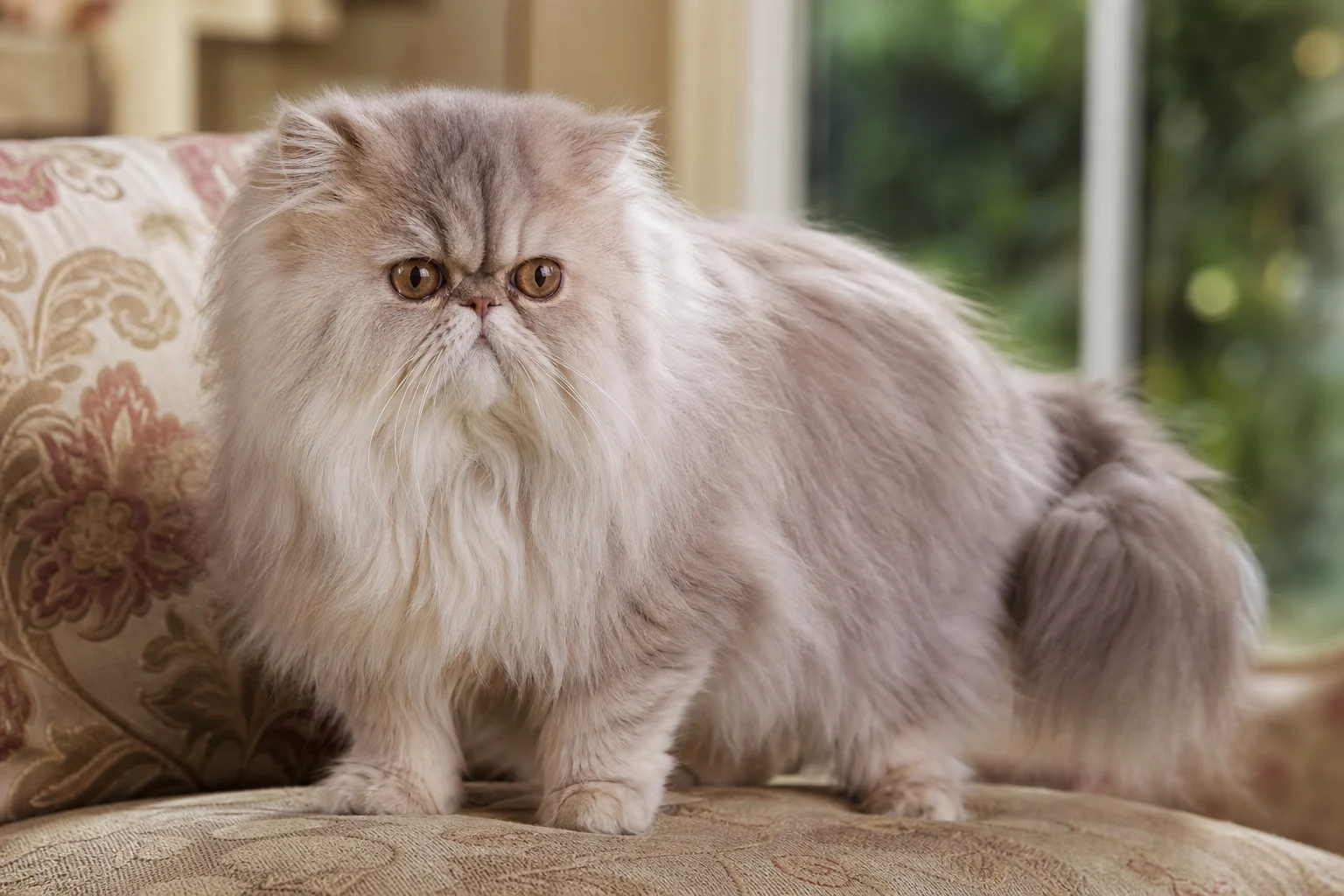
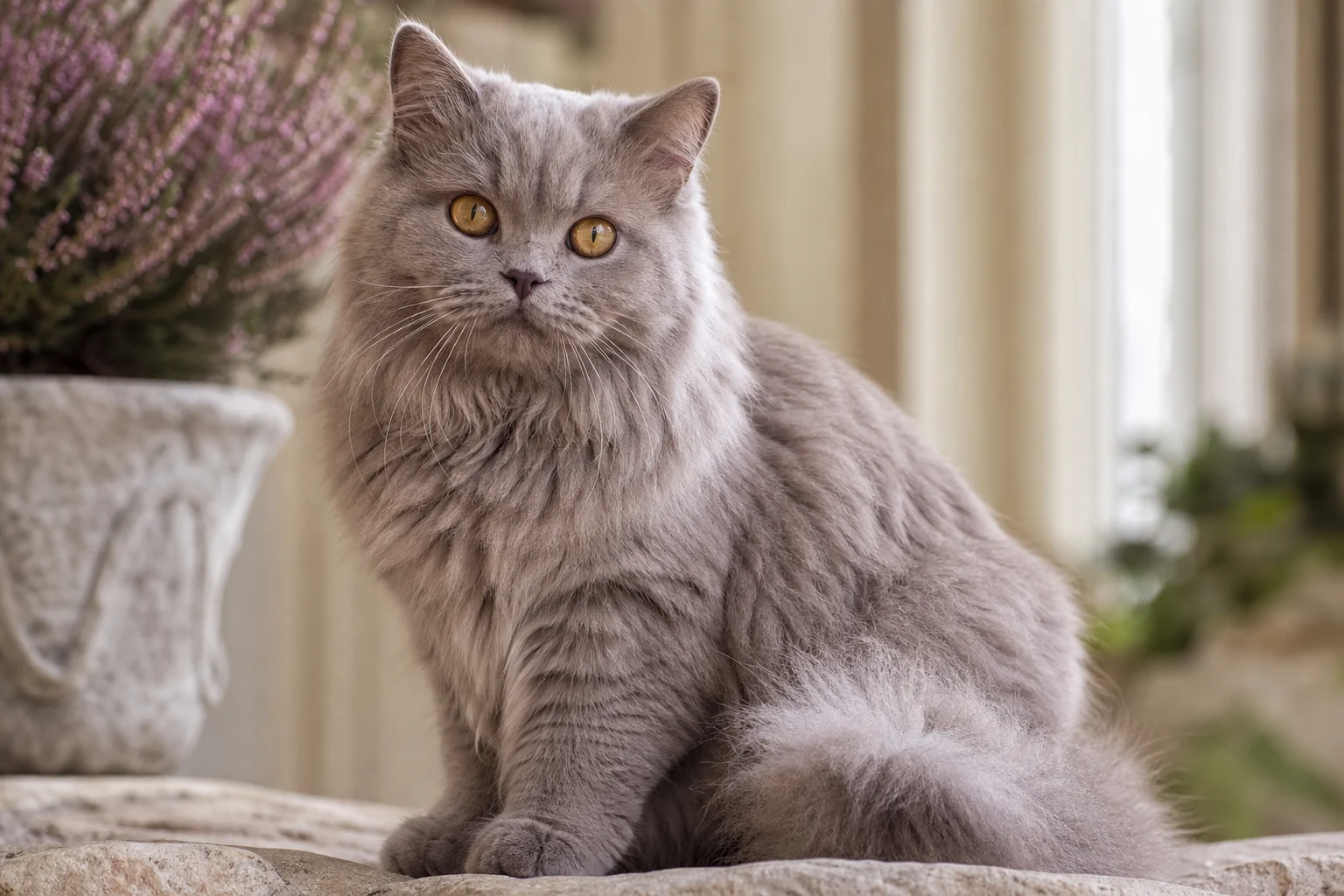
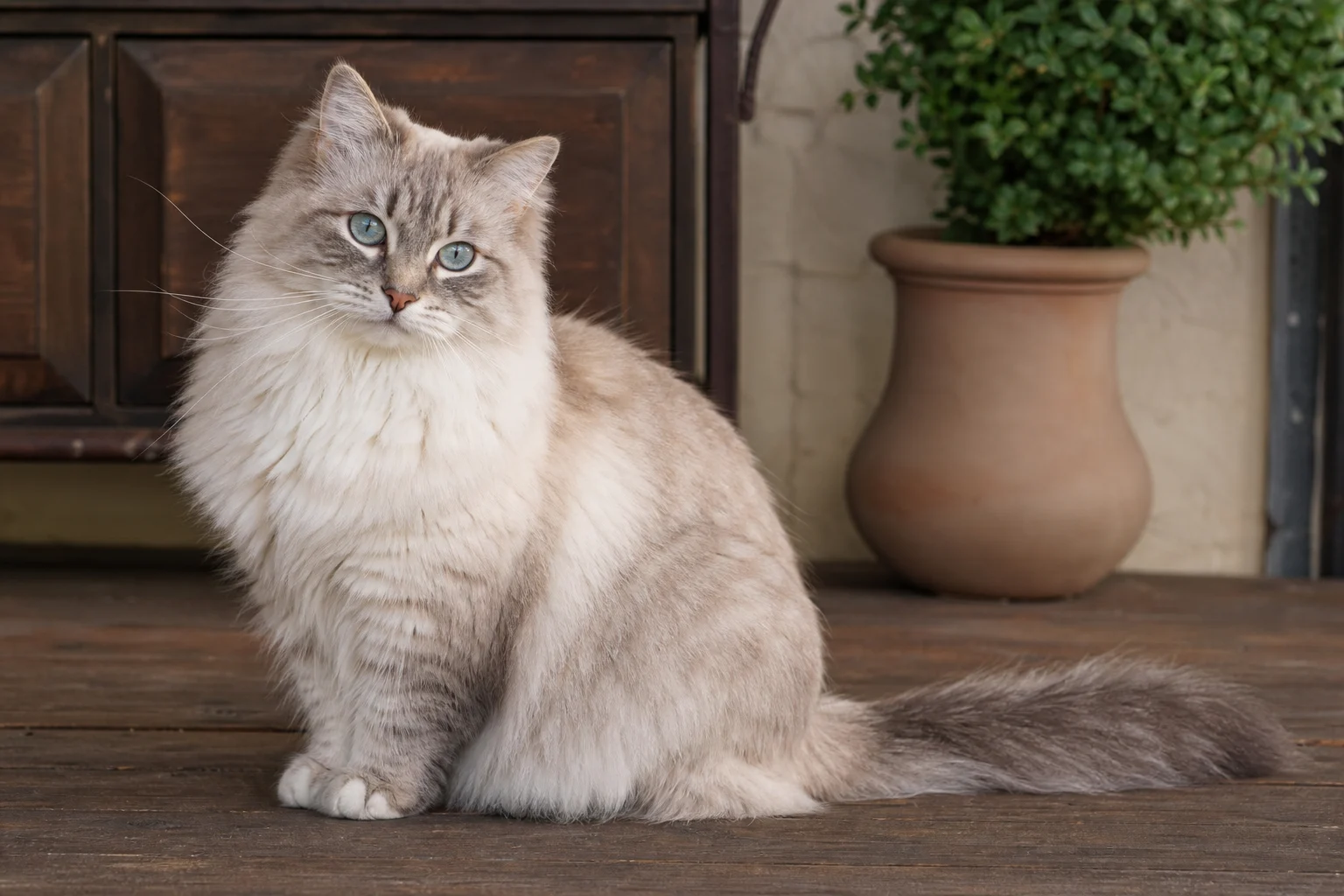
The Persian is the extreme-coated, flat-faced comparison; the British Longhair the plush-round British parallel; the Ragamuffin the softest of the moderate longhairs.
Who this breed suits
Households wanting longhair beauty with health and a nose — and a piece of German breed history. The "Which cat fits me?" test confirms the calm fit.
Not sure what a German Longhair may eat? The food checker rates individual foods on a traffic-light scale, and the food guide explains what cats can eat and what is toxic.
A good fit for you if …
Frequently asked questions
What is the Deutsch Langhaar?
Germany's own longhair breed, described in 1929 as a deliberately moderate type and revived from the 2000s — full coat, normal face, robust body.
How does it differ from the Persian?
Everything extreme is absent: straight profile, real nose, workable coat. Serenity stays, the daily eye-wiping goes.
How much grooming is needed?
Brushing two to three times weekly, daily in moult — honest longhair work below Persian intensity.
Which health checks matter?
General documentation plus HCM/PKD checks where old Persian-type ancestors appear. The broad revival base serves health well.
How old do they get?
Fourteen to eighteen years — moderation pays out in lifespan.
How rare is the breed?
A small, growing German programme — waiting lists are normal, and every kitten supports the revival.
Similar breeds
Sources: FIFe/TICA breed standard · breed association data · editorial assessment · Last updated 08/2026. On health questions this article never replaces a visit to the vet.