 AI
AIRagamuffin
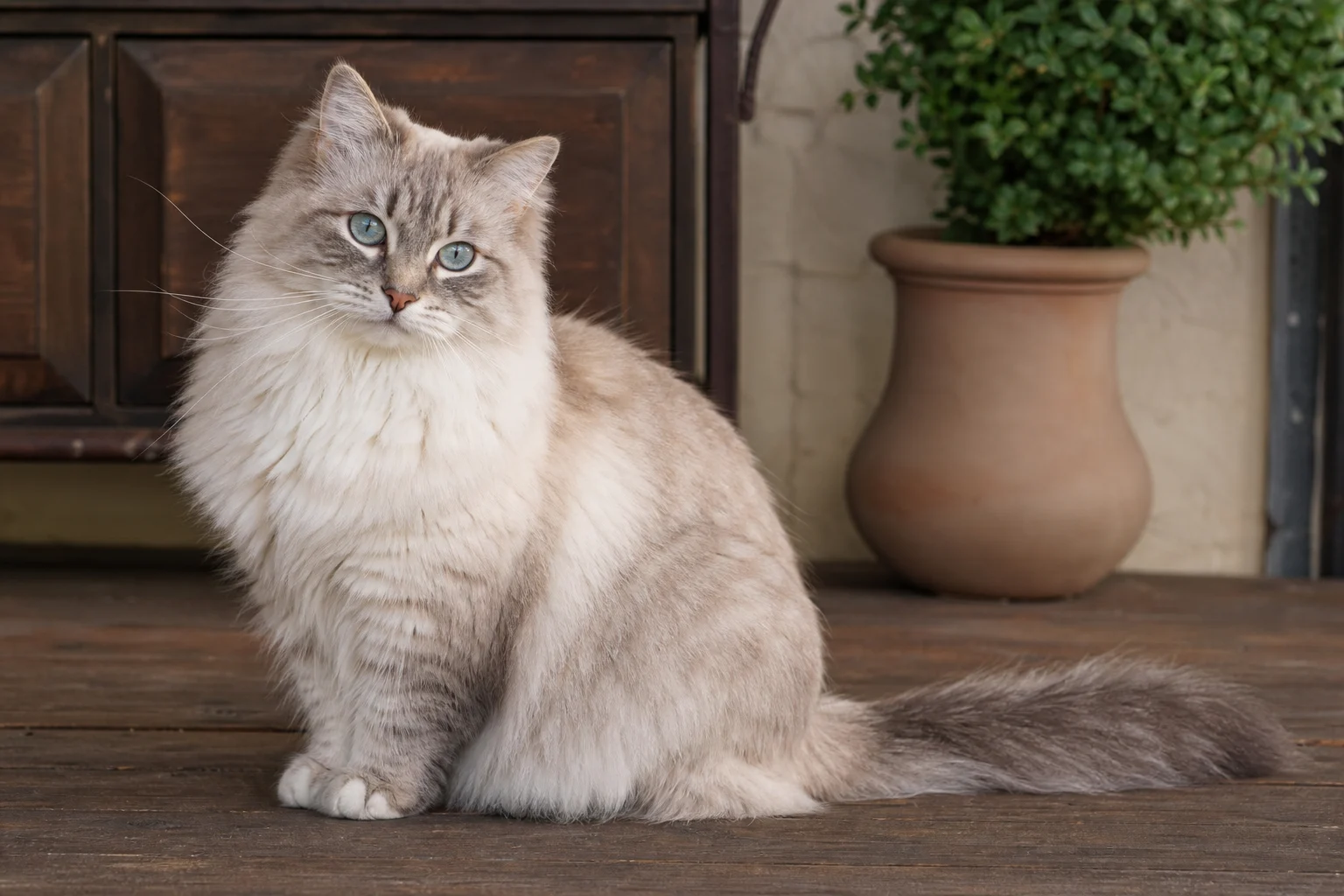
A plush giant with bottomless patience — the teddy bear among cats, built for family laps.
| Size | Very large |
|---|---|
| Weight | 5–9 kg |
| Life expectancy | 12–16 years |
| Origin | United States |
| Type | Pedigree breed (USA) |
| Grooming | medium |
| Activity needs | low |
| Beginner friendly | well suited |
Temperament & suitability
Editorial assessment based on the FIFe breed standard and breed association data.
Guideline for movement & enrichment for this breed.
Traits
Origin & history
The Ragamuffin is the Ragdoll's liberated sibling: when Ragdoll founder Ann Baker bound her breed to restrictive contracts in the 1970s and 80s, a group of breeders split off, widened the gene pool with Persians and longhaired domestics — and in 1994 registered their line under a new name. The wink in "Ragamuffin" (street urchin) is deliberate. The result kept the legendary temperament and gained colours the Ragdoll standard forbids.
Appearance & size
A five-to-nine-kilogram teddy bear in silky, low-matting semi-long fur, with a sweet, round-cheeked face and large walnut eyes in any colour — unlike the strictly pointed, blue-eyed Ragdoll, the Muffin comes in every coat and eye combination, solid to tortie to mink. Maturity takes four years; the softness lasts a lifetime.
Personality & temperament
Patience is the breed superpower: Ragamuffins go floppy on arms, tolerate careful children like professionals, greet visitors and treat household chaos as background music. They are lap cats by conviction, gentle-voiced, moderately playful into age and deeply people-attached — a Muffin follows the family and considers separation a design flaw. Docility this deep also means poor self-defence: this cat endures instead of protesting.
Indoor or outdoor living
Indoors only: the trusting docility has zero street value. A secured balcony covers fresh air; otherwise the Muffin measures happiness in shared sofa hours, not territory size. For working households a second gentle cat is the fair setup — see keeping several cats.
Enrichment & activity
Gentle daily sessions keep the big frame moving: slow feather games, food puzzles, short fetch rounds. Nothing about it demands much — which makes fixed routines your responsibility, since the plush appetite meets a calm engine.
Grooming
The silky coat is merciful: brushing twice a week prevents the few mats, a little more in moult. Many Muffins purr through the ritual — start early and it becomes bonding.
Feeding & health
Portion firmly via the food amount calculator — weight is the breed's main everyday risk. Breeder questions: HCM and PKD screening (the heritage lines carry both topics). The widened gene pool otherwise serves health well; twelve to sixteen years are normal.
Costs
Kittens from tested lines cost €900–1,400 — the breed is rare in Europe. Running costs match a big cat; the cat cost calculator adds it up.
For beginners, children and other pets
Among the best family cats bred anywhere: patient with children, harmonious with cats and dogs, forgiving with beginners. Two rules protect it: teach children that endless tolerance is not an invitation, and never leave it lonely — gentleness needs company.
Similar breeds compared
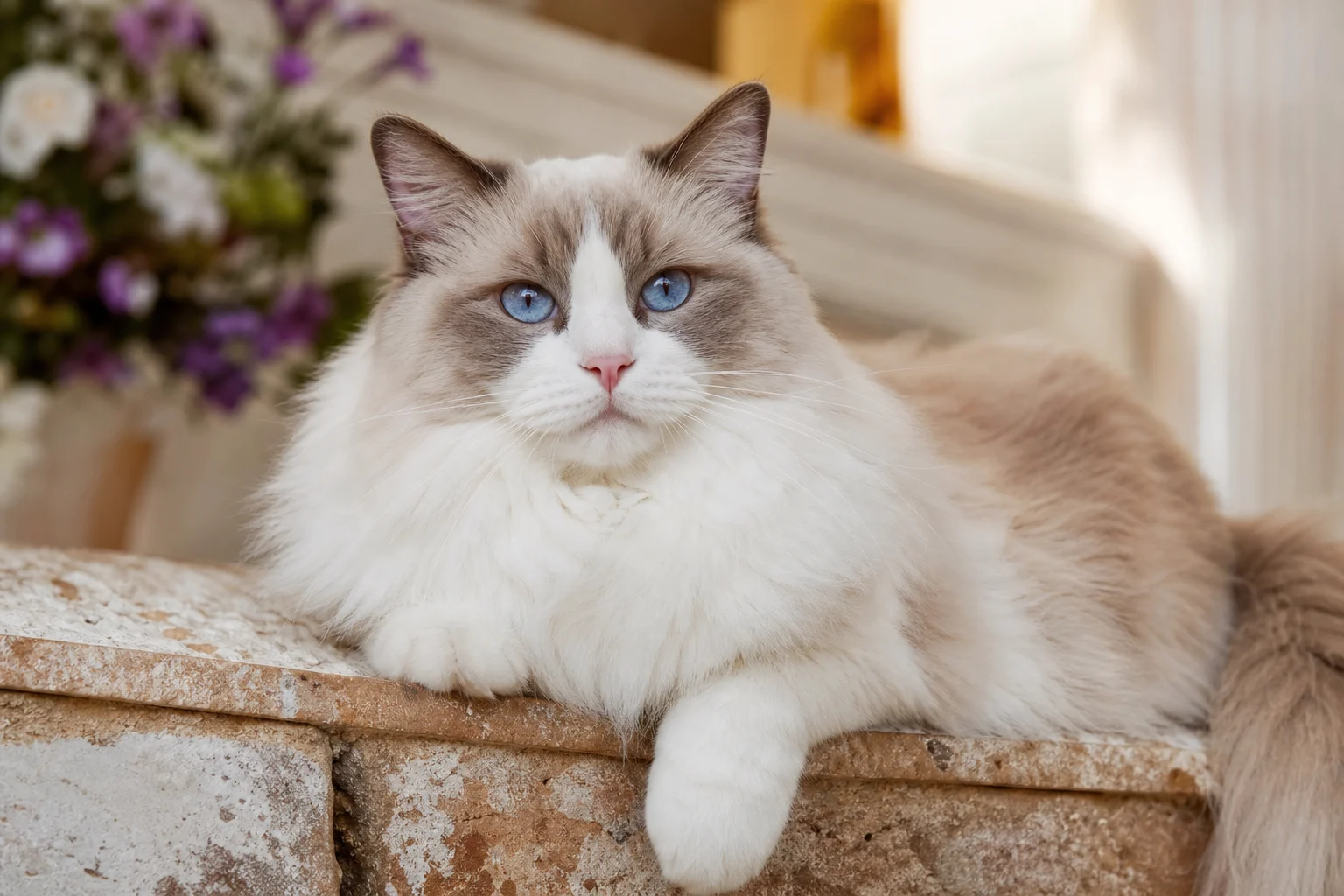
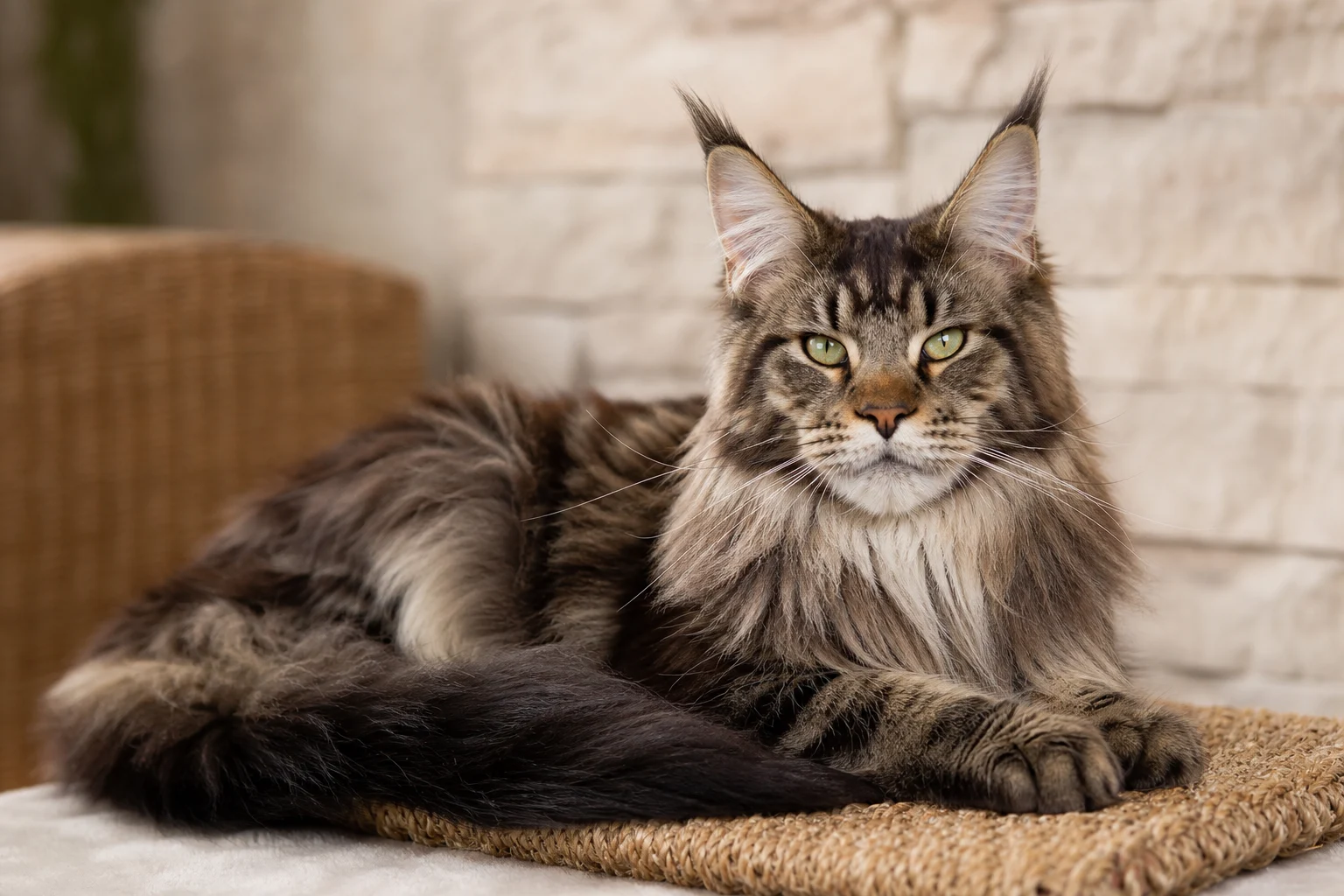
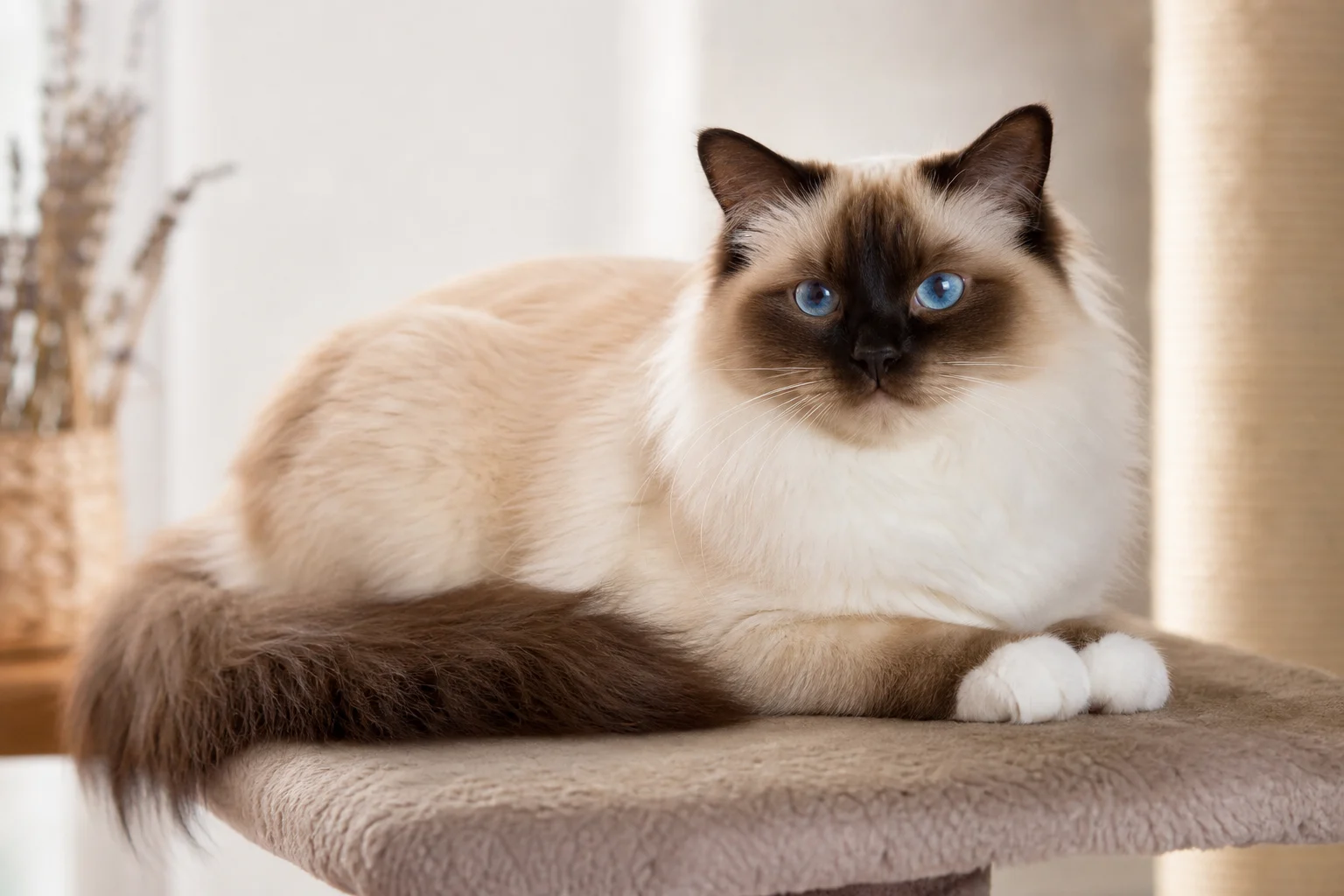
The Ragdoll is the pointed, blue-eyed sibling with identical softness; the Maine Coon adds playful independence at the same scale; the Birman offers the gentle-family package in a smaller frame.
Who this breed suits
Families and present households that want maximum patience and plush devotion. The "Which cat fits me?" test will happily confirm the obvious.
Not sure what a Ragamuffin may eat? The food checker rates individual foods on a traffic-light scale, and the food guide explains what cats can eat and what is toxic.
A good fit for you if …
Frequently asked questions
What is the difference to the Ragdoll?
History and colours: the Ragamuffin split from Ragdoll breeding, widened the gene pool and allows every coat and eye colour. Temperament remained identically gentle.
Are Ragamuffins really that patient?
Famously — floppy carrying, child tolerance and visitor-greeting are standard. Protect the patience: it never defends itself.
How much grooming does the coat need?
Little for the length: the silky texture mats rarely. Twice-weekly brushing suffices.
Which health tests matter?
HCM and PKD screening of the parents — the heritage-line questions.
Can a Ragamuffin stay alone?
Badly. The deep people-attachment needs presence or a second gentle cat.
How big do Ragamuffins get?
Five to nine kilograms, fully grown only at about four years — a true gentle giant.
Similar breeds
Sources: FIFe/TICA breed standard · breed association data · editorial assessment · Last updated 08/2026. On health questions this article never replaces a visit to the vet.