 AI
AIChausie
A jungle-cat hybrid for specialists — cougar looks, marathon energy and requirements to match.
| Size | Very large |
|---|---|
| Weight | 5–9 kg |
| Life expectancy | 12–15 years |
| Origin | United States / Egypt |
| Type | Hybrid breed |
| Grooming | low |
| Activity needs | very high |
| Beginner friendly | with some experience |
Temperament & suitability
Editorial assessment based on the FIFe breed standard and breed association data.
Guideline for movement & enrichment for this breed.
Traits
Origin & history
The jungle cat (Felis chaus) — a leggy wild hunter from Egypt to Asia — occasionally mated with domestic cats for millennia; Egyptians apparently kept such hybrids, and mummified jungle cats sit in tomb finds. American breeders formalised the cross in the 1990s, naming it after the wild parent. Like the Savannah, generations count from the wildcat: TICA registers from F4 as fully domestic; earlier generations may fall under German state wild-animal rules — check before considering. The breed remains rare and explicitly a specialist project.
Appearance & size
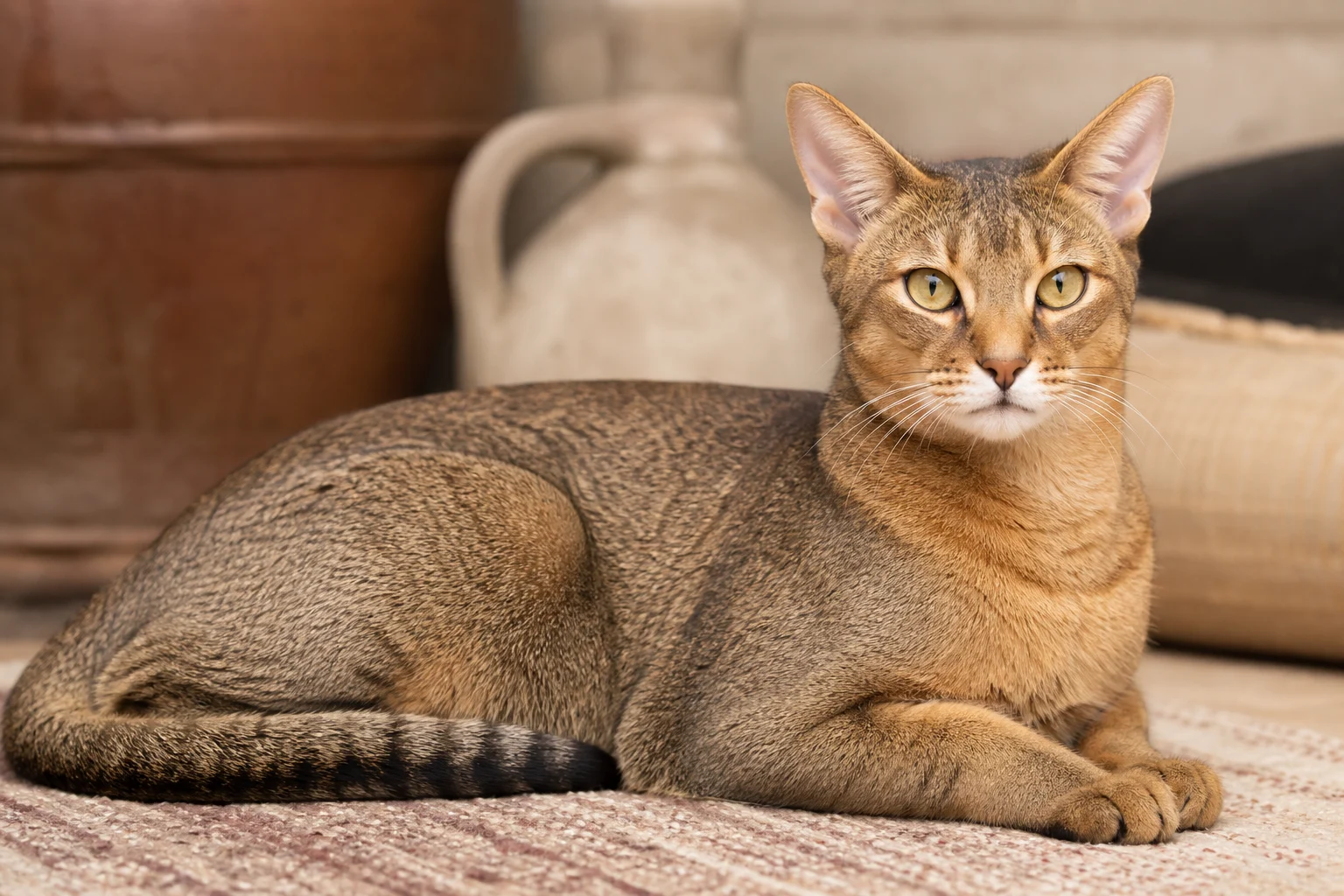
A five-to-nine-kilogram distance runner: long-legged, deep-chested, built for two-metre standing jumps, with a slightly shortened tail, tufted ears and a wild face. Three colours only — black, brown-ticked tabby and the striking silver-tipped black, a Chausie exclusive. The frame reads cougar; the scale reads large housecat.
Personality & temperament
Chausies bond deeply and actively: they follow like dogs, learn leashes and fetch fast, love water and stay kitten-busy for a decade. The flip side is intensity — this breed needs hours of genuine engagement, reacts badly to boredom and stays reserved toward strangers. Early-generation individuals amplify everything. It is a magnificent animal for the right keeper and a guaranteed problem for the wrong one.
Indoor or outdoor living
A normal flat is not the habitat: the Chausie needs space, height and ideally a large escape-proof catio or secured garden — its jumping power mocks standard cat-proofing. Plan infrastructure before cat, as with the Savannah. Frame in Indoor cat or outdoor cat?
Enrichment & activity
Hours daily: long play sessions, leash walks, water games, clicker training, puzzle rotations and a robust companion animal that keeps pace. Under-employment converts into strength-backed frustration — this breed punishes neglect at scale.
Grooming
The short coat is trivial: weekly polish, done. Everything else flows into engagement.
Feeding & health
A hearty athlete's intake of high-protein, meat-first food via the food amount calculator. Breed-specific: some Chausies — heritage of the wild digestive tract — tolerate gluten and plant-heavy foods poorly; quality high-meat diets solve it. Ask breeders for heart checks and clean generation documentation.
Costs
Kittens (F4+) from documented lines cost €1,200–2,500, earlier generations more plus legal overhead. Add serious infrastructure and premium food; the cat cost calculator gives the sober total.
For beginners, children and other pets
Not a beginner cat, not a toddler companion: size, energy and assertiveness demand experience. Robust dogs often make ideal packmates; small pets read as prey. This is a lifestyle commitment for keepers who build their home around an athlete.
Similar breeds compared
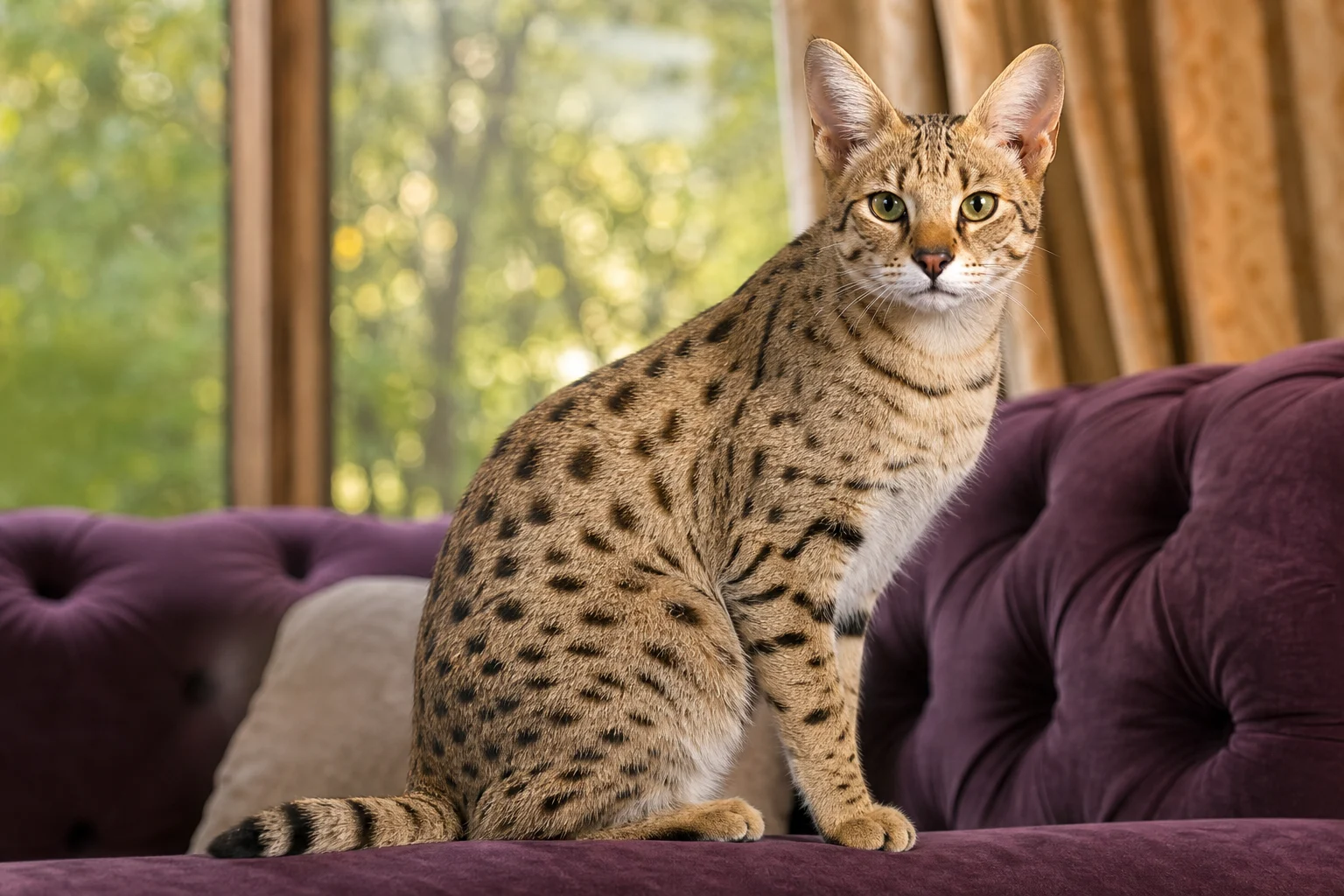
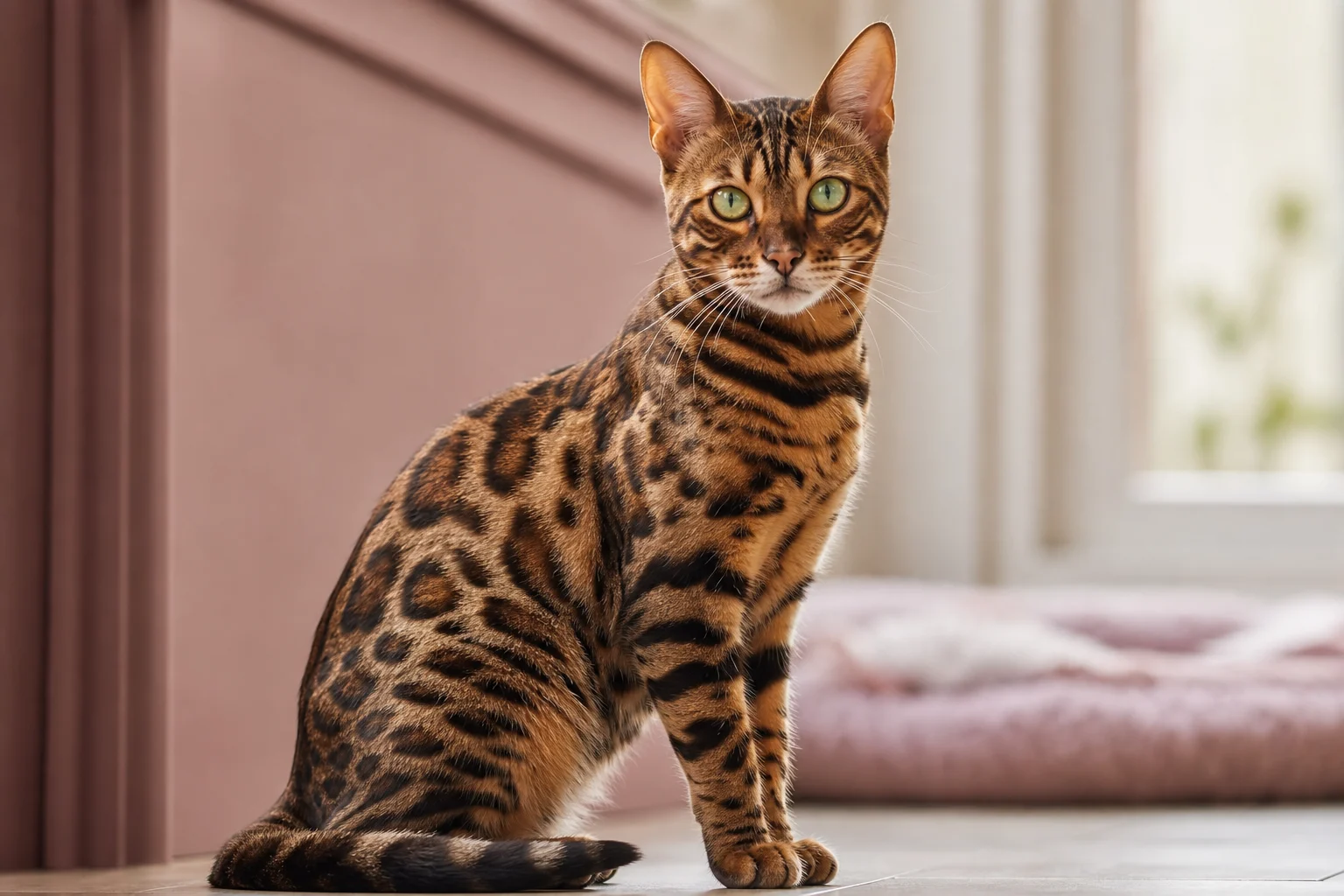
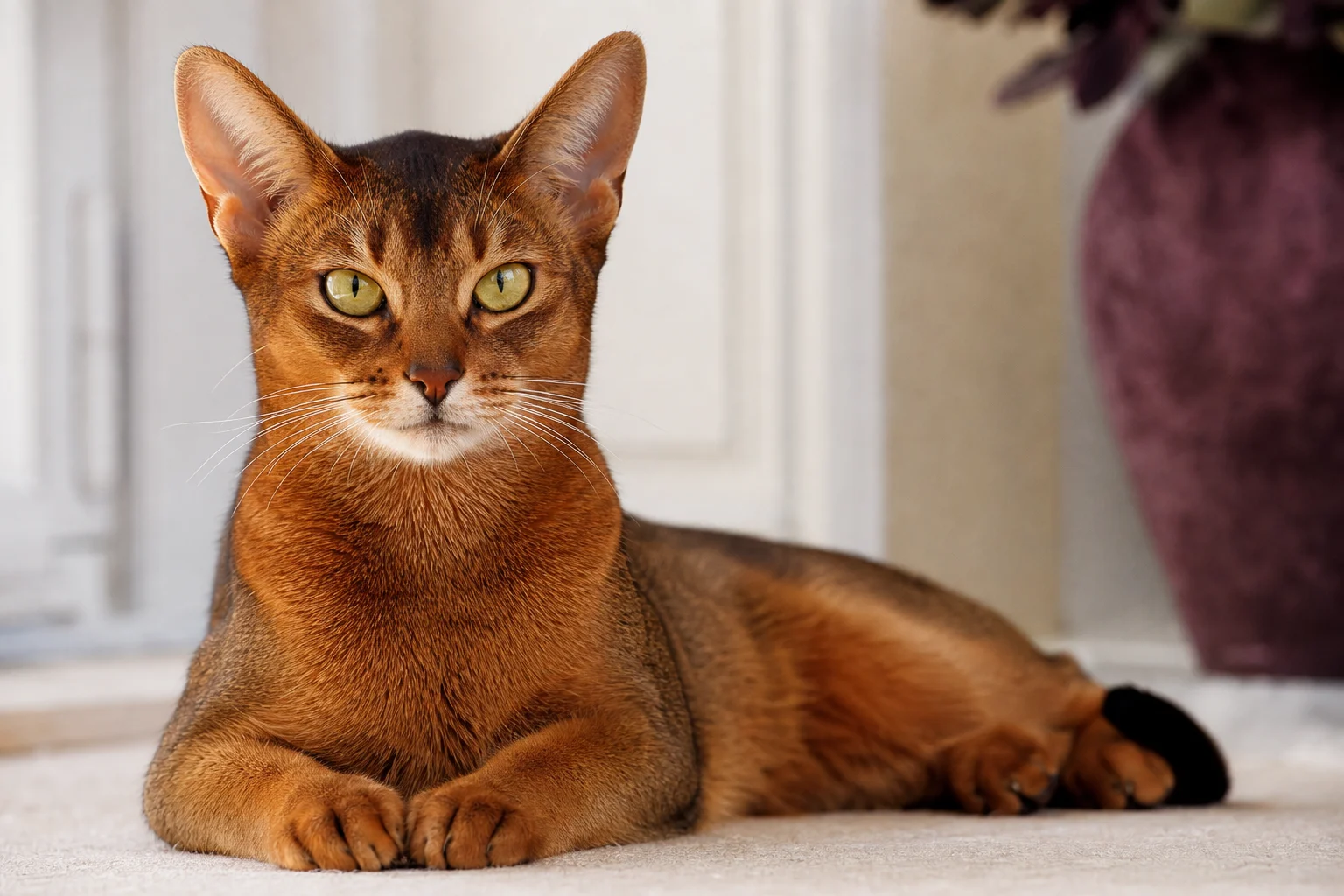
The Savannah is the taller serval-parallel with identical demands; the Bengal wild looks at household scale; the Abyssinian the fully domestic energy alternative.
Who this breed suits
Experienced keepers with space, catio, hours and budget. For everyone else, the "Which cat fits me?" test will point — correctly — to the Bengal or Aby.
Not sure what a Chausie may eat? The food checker rates individual foods on a traffic-light scale, and the food guide explains what cats can eat and what is toxic.
A good fit for you if …
Frequently asked questions
What is the Chausie bred from?
From the jungle cat (Felis chaus) crossed with domestic cats — an ancient pairing formalised as a breed in the 1990s.
Is keeping one legal in Germany?
F4 and later count as domestic cats. Earlier generations may fall under state wild-animal regulations — check your federal state before any purchase.
Why the gluten warning?
Some Chausies inherited a shorter wild-type digestive tract that tolerates plant-heavy food poorly. High-meat quality diets prevent the trouble.
How much exercise does a Chausie need?
Hours of genuine engagement daily plus jumping and climbing infrastructure — the two-metre standing jump is standard equipment.
Chausie or Savannah?
Parallel projects: the Savannah (serval heritage) runs taller and more spectacular, the Chausie (jungle cat heritage) more compactly athletic. Requirements match.
Are Chausies affectionate?
Deeply, with their people — dog-like following and real bonds. Strangers meet reserve; boredom meets consequences.
Similar breeds
Sources: FIFe/TICA breed standard · breed association data · legal framework of the German federal states · editorial assessment · Last updated 08/2026. On health questions this article never replaces a visit to the vet.